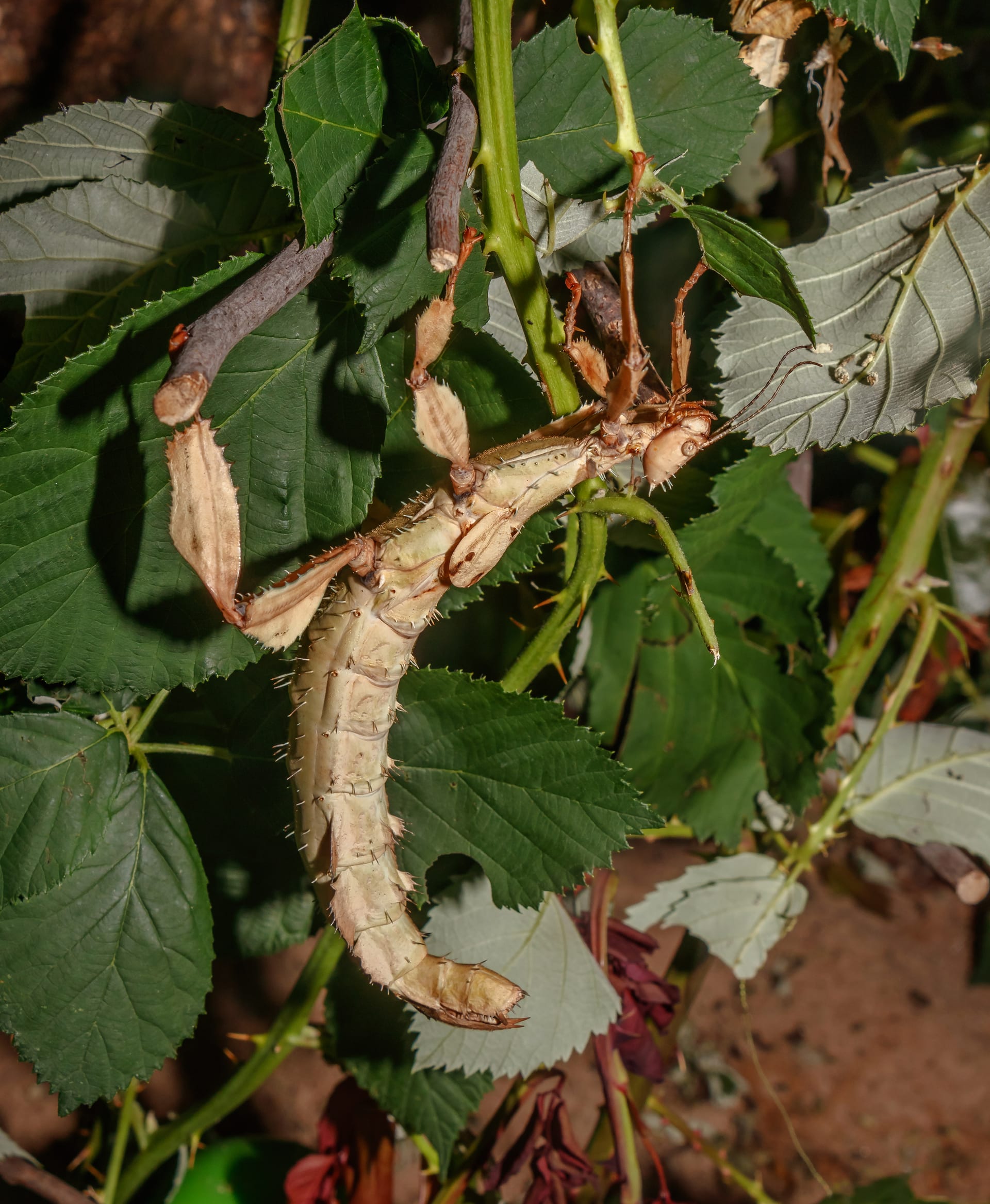
 © H. Zell / CC BY-SA 3.0
Giant Prickly Stick Insect
Native to Australia's tropical rainforests, this large, striking stick insect is best known for its spiny, bark-like camouflage. Females can reach about 20 cm in length and are covered head to tail in thorn-like projections, blending almost seamlessly into foliage when still, while the slimmer males top out around 11 cm and are strong, active fliers. Newly hatched nymphs are reddish in color and mimic ants in both appearance and movement, adding another layer of fascination as the insect transforms through its life stages. Their calm, unhurried nature makes them a rewarding species for keepers who enjoy quiet, attentive care.
View Giant Prickly Stick Insect encyclopedia →成交手续费0%!2026年9月30日前注册,前 2 笔成交免佣金!
繁殖者 招募中!
在BreederDirect发布商品,直接销售给全国客户!
Br-choku承诺的 6 个透明度要点
刊登昆虫时,繁殖者会明示以下信息。我们保证成长阶段与繁殖配对的透明性。
- 阶段明示
- 代次明示
- 实物照片
- 繁殖单位
- 原产国
- 体长明示
查看全部296个品种
昆虫分类正在招募认证繁殖者
繁殖者正在陆续注册,即将上架。设置上架通知,不错过新商品。
「接收上架通知」需免费注册会员即可设置。当有符合您保存条件的新商品上架时,我们会通过邮件和站内通知提醒您。
关于Giant Prickly Stick Insect
A guide to the Giant Prickly Stick Insect: females reach about 20cm and males about 11cm and fly well. Covers its spiny camouflage, ant-mimicking nymphs, care difficulty, and what to know before bringing one home.
迎接Giant Prickly Stick Insect前需要了解的7件事
1A master of spiny camouflage
The thorn-like projections covering its entire body let it blend convincingly into twigs and bark. Because it moves so slowly, it can be almost impossible to spot while at rest.
2Females and males look very different
Females are stocky, reach about 20 cm, and show off prominent spines, while males are slender, about 11 cm, and fly readily on their wings. The difference between the sexes is striking, so it's worth knowing this before you bring one home.
3Nymphs disguise themselves as ants
Just after hatching, nymphs take on a reddish color and ant-like movements to help protect themselves from predators. Watching them gradually change into their adult form as they grow is part of the enjoyment of keeping this species.
4Best suited to keepers with some experience
While not an especially delicate species, it does require solid basics such as temperature and humidity control and a steady supply of food plants. It suits keepers with some prior insect-keeping experience rather than a very first insect.
5Needs a tall, roomy enclosure
Because it grows quite large, provide an enclosure with enough height and space for molting and for spreading its wings. A cramped setup can lead to problems during molting.
6Line up food plants in advance
As a plant-eating species, it needs a steady, ongoing supply of suitable food plants. It's reassuring to secure a reliable source before bringing one home.
7A calm species suited to quiet observation
It is calm and moves very little, staying still for most of the day. This is an insect better suited to quiet observation than to active handling.
Giant Prickly Stick Insect的常见问题
- Q.How large does it grow?
- A.Females are a large species reaching about 20 cm in length. Males are smaller, growing to around 11 cm.
- Q.Is it venomous or safe to touch?
- A.Its body is covered in spiny projections, so it should always be handled gently to avoid stressing the animal. If you're unsure about handling, it's fine to simply observe rather than touch it.
- Q.What do the nymphs look like?
- A.Freshly hatched nymphs closely resemble ants in both color and movement, which is thought to be a defense against predators. As they grow, they gradually take on the spiny appearance of the adult form.
- Q.Is this species suitable for beginners?
- A.Its care level is considered intermediate, so having a basic grasp of temperature, humidity, and food-plant supply is helpful. It's best to gain some insect-keeping experience before taking one on.
- Q.Are there any international trade restrictions?
- A.The Giant Prickly Stick Insect is not listed under CITES.
适合饲养Giant Prickly Stick Insect的实用工具
在图鉴中详细了解Giant Prickly Stick Insect
查看Giant Prickly Stick Insect的图鉴条目 →
收录饲养难度、寿命、体长、食性等基础数据。