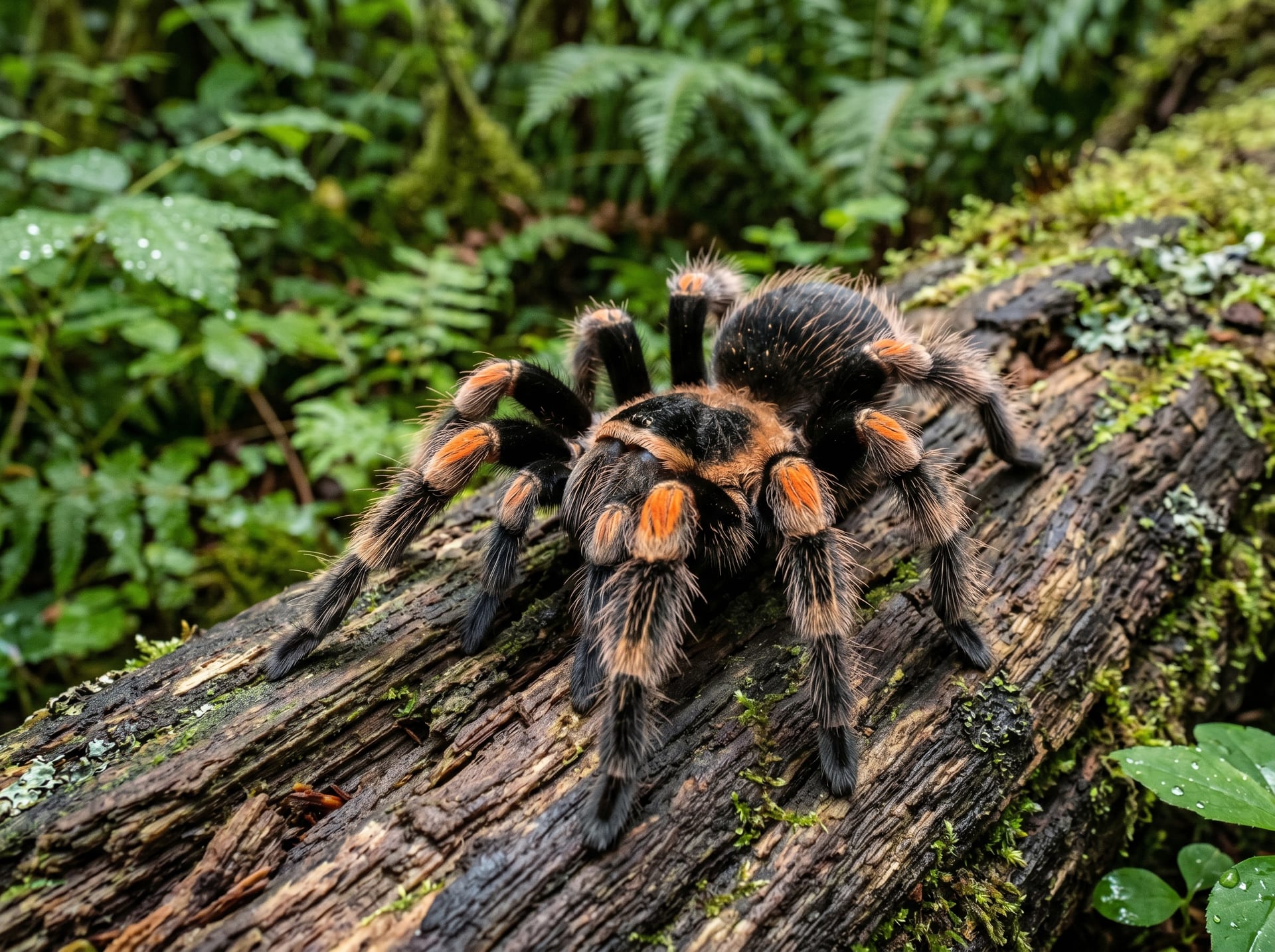
Tarantula
Among the worlds largest spiders. Despite hairy appearance, many species are docile. Mexican Red Knee popular for beginners.
View Tarantula encyclopedia →0% commission on your first sales!Register by September 30, 2026 and your first 2 sales are commission-free!
Breeder Wanted!
List on BreederDirect and sell directly to customers nationwide!
5 Transparency Standards You Can Trust
When listing Exotic Invertebrates, Breeders disclose the following. We guarantee transparency on growth stage and breeding unit.
- Real Photos
- Breeding Unit
- Generation Info
- Body Length (mm)
- Country of Origin
No listings match your filters
Adjust your filters, or get notified when new listings arrive.
Getting alerts is free with a member account. When new listings match your saved search, we'll notify you by email and in-app.
Browse other categories
Verified breeders (preview)
Are you raising exotic invertebrates?
Register as a breeder and connect with buyers directly.
Apply as a breederTarantula key facts
- Care level
- Intermediate
- Lifespan
- 10-30 years (female)
- Size
- Leg span 10-25cm
- Diet
- Insects like crickets (2-4 times monthly)
- Enclosure
- Plastic container sized for species
- Temperature
- 24-28°C
- Humidity
- 40-80% depending on species
- Feeding
- Avoid feeding before and after molting
- Notes
- Venomous but mild in most species. Watch for urticating hairs
About Tarantula
Tarantulas belong to the family Theraphosidae and are found across tropical and subtropical regions of Central and South America, Africa, and Asia. Their name traces back to the Italian city of Taranto, where medieval Europeans believed a bite would cause uncontrollable dancing. Today, however, their thick, hairy bodies and commanding presence are celebrated by collectors worldwide. Many species reach leg spans of 10–25 cm, making adult individuals truly impressive to observe. Temperament varies by species, but beginner-friendly choices like the Mexican Red Knee and Chilean Rose are calm and easy to handle. One of the greatest appeals of tarantula keeping is its practicality: low ongoing costs, minimal space requirements, and virtually no odor make them ideal even for apartment living. Watching them gradually grow larger with each molt over months and years offers a uniquely rewarding long-term experience.
7 things to know before welcoming a Tarantula
1Choosing the Right Enclosure
A floor space roughly 2–3 times the spider's body width is a useful guideline. Ground-dwelling (terrestrial) species do best in wider, horizontal enclosures, while tree-dwelling (arboreal) species prefer taller, vertical setups. Always use a secure, escape-proof lid.
2Substrate and Burrowing Behavior
Many terrestrial species are avid burrowers; providing 10–15 cm of coconut fiber or peat moss helps reduce stress. Arboreal species benefit from cork bark or driftwood to climb on. Keep one side of the substrate lightly misted to prevent molting problems caused by excessive dryness.
3Feeding Frequency and Prey Choice
Adult tarantulas are typically fed every 2–4 weeks using crickets or dubia roaches. Choose prey no wider than the spider's abdomen to avoid injury. Remove uneaten live prey within 24 hours, as it can stress or even injure the tarantula, especially during molting.
4Molting: Signs and Precautions
Before molting, tarantulas often stop eating and the abdomen may darken. During and immediately after a molt, the exoskeleton is extremely soft and vulnerable — avoid handling or feeding during this period. Allow 1–2 weeks after molting for the new exoskeleton to fully harden.
5Venom and Defensive Behaviors
All tarantulas are venomous, but many species have venom comparable in potency to a bee sting for most people. Individual allergic reactions are still possible. Old World species (from Asia and Africa) tend to be more defensive than New World species, so beginners are generally advised to start with New World varieties.
6Handling: When and How Often
Even docile species can find handling stressful, so keeping it infrequent and brief is advisable. Always handle close to the ground to minimize injury from falls. If the tarantula rubs its abdomen — a sign of releasing urticating hairs — avoid contact with your skin and eyes, as these hairs can cause irritation.
7Initial and Ongoing Costs
Initial setup costs for an enclosure, substrate, water dish, and thermometer typically range from roughly 5,000 to 15,000 yen. The price of individual spiders varies widely by species, from a few thousand to tens of thousands of yen, with rare species sometimes exceeding that. Monthly feeding costs are modest, but always verify CITES regulations when purchasing imported specimens.
Frequently asked questions about Tarantula
- Q.Are tarantulas really dangerous?
- A.Most commonly kept species have relatively mild venom, often compared to a bee sting. However, allergic reactions are possible, so it's advisable to seek medical advice if bitten, just to be safe.
- Q.Can I keep a tarantula while living alone?
- A.Absolutely. Tarantulas require minimal space and don't need daily attention, making them well-suited for busy individuals. Feeding is only needed once a week to a few times a month, and they can be left alone for short trips of a few days to a week.
- Q.Can I handle or play with a tarantula?
- A.Calm species can be held for observation, but extreme care is needed — a fall from height can be fatal to a tarantula. Most keepers prefer watching through the enclosure rather than frequent direct handling.
- Q.How long do tarantulas live?
- A.Females are notably long-lived, with many species reaching 10 to 30 years. Males, however, have much shorter lifespans after reaching maturity — often just 1 to 3 years. Females are therefore preferred as pets, so checking the sex before purchase is recommended.
- Q.Which species are best for beginners?
- A.The Mexican Red Knee (Brachypelma hamorii) and Chilean Rose (Grammostola rosea) are classic beginner choices. Both are slow-moving, docile, and hardy, making them widely recommended for first-time tarantula keepers.
Learn more about Tarantula in the encyclopedia
View Tarantula encyclopedia entry →
Care difficulty, lifespan, size and diet — all basics covered.
Tarantula related articles
The Complete Guide to Tarantula Molting Management | Pre-Molt Signs, Environmental Setup, Prevention and Treatment of Molting Failure
Tarantula molting is one of the most stressful events for keepers. This guide provides practical explanations of pre-molt signs, what not to do, humidity and substrate management, and how to handle stuck molts.
Beginner's Guide to Exotic Spider & Tarantula Care | Species, Equipment & Safe Handling
A beginner's guide to caring for exotic spiders, including tarantulas. This guide covers recommended species for beginners, selecting enclosures and substrate, feeding methods, molt care, safe handling, and regulatory compliance—all the essential knowledge needed for exotic spider care.
Introduction to Tarantula Care | A Beginner's Guide to Enclosures, Humidity, Molting, and Feeding
For first-time tarantula keepers. We provide a detailed explanation of basic knowledge from choosing an enclosure, managing humidity and temperature, substrate, how to feed them (crickets and dubia roaches), molting care, and handling precautions.
Tarantula and Scorpion Pre-Purchase Toxicity Risk Assessment Guide | Complete List of Safe and Dangerous Species
Explains the toxicity risks you must confirm before purchasing tarantulas or scorpions. This guide covers the definition of medical significance, safe species for beginners (such as Emperor Scorpions), a complete list of dangerous species you should never keep, and the response protocol if stung or bitten.
Types of Tarantulas and Their Difficulty to Keep | Venom, How to Choose Between Beginner-Friendly and Advanced Species
The difficulty of keeping tarantulas varies greatly depending on the species. This article compares beginner-friendly species like Grammostola with advanced species like bird eaters from the perspectives of venom, temperament, and environmental requirements, explaining the criteria for choosing.
Introduction to Tarantula Feeding and Care | Species Selection, Feeding Methods, and Handling Precautions
An introduction to tarantula care for beginners. We introduce beginner-friendly species, types of feed and feeding methods, setting up a care environment, and handling precautions.
More in this category
Can't find the one you're looking for?
Post your wishes for free and breeders with matching animals will contact you with introductions.