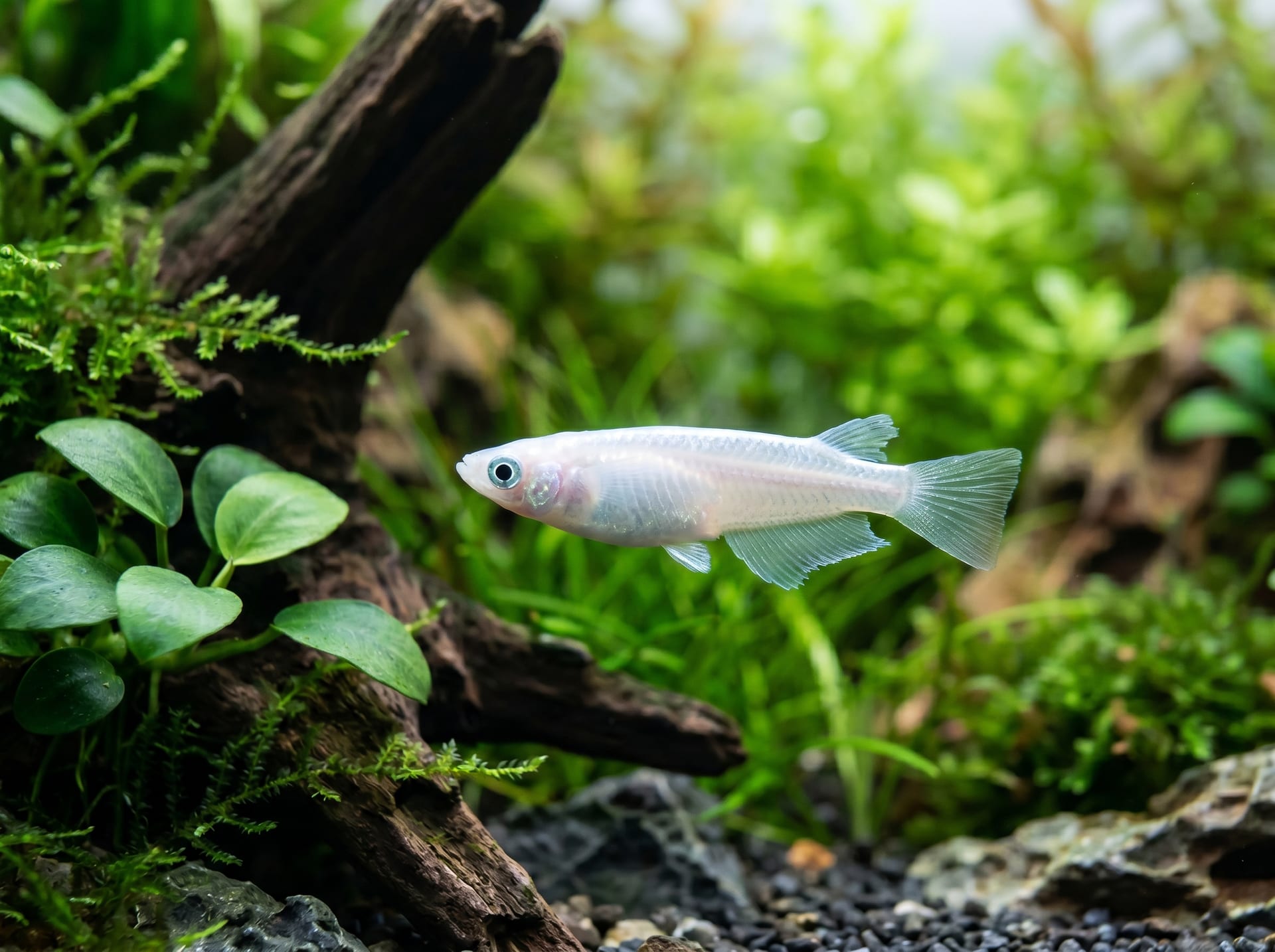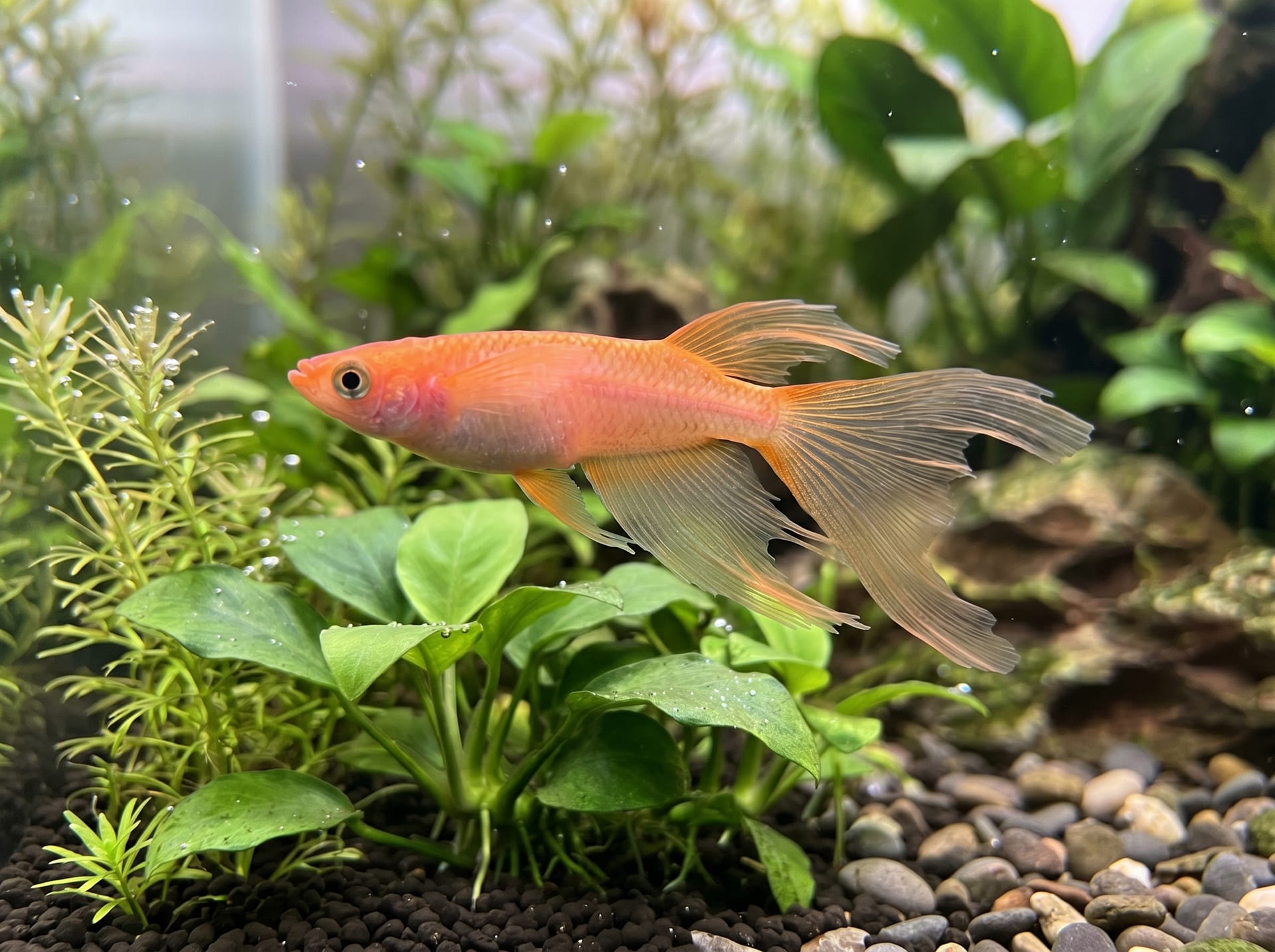
AI-generated image
Youkihi Long-Fin Medaka
IntermediateOryzias latipes
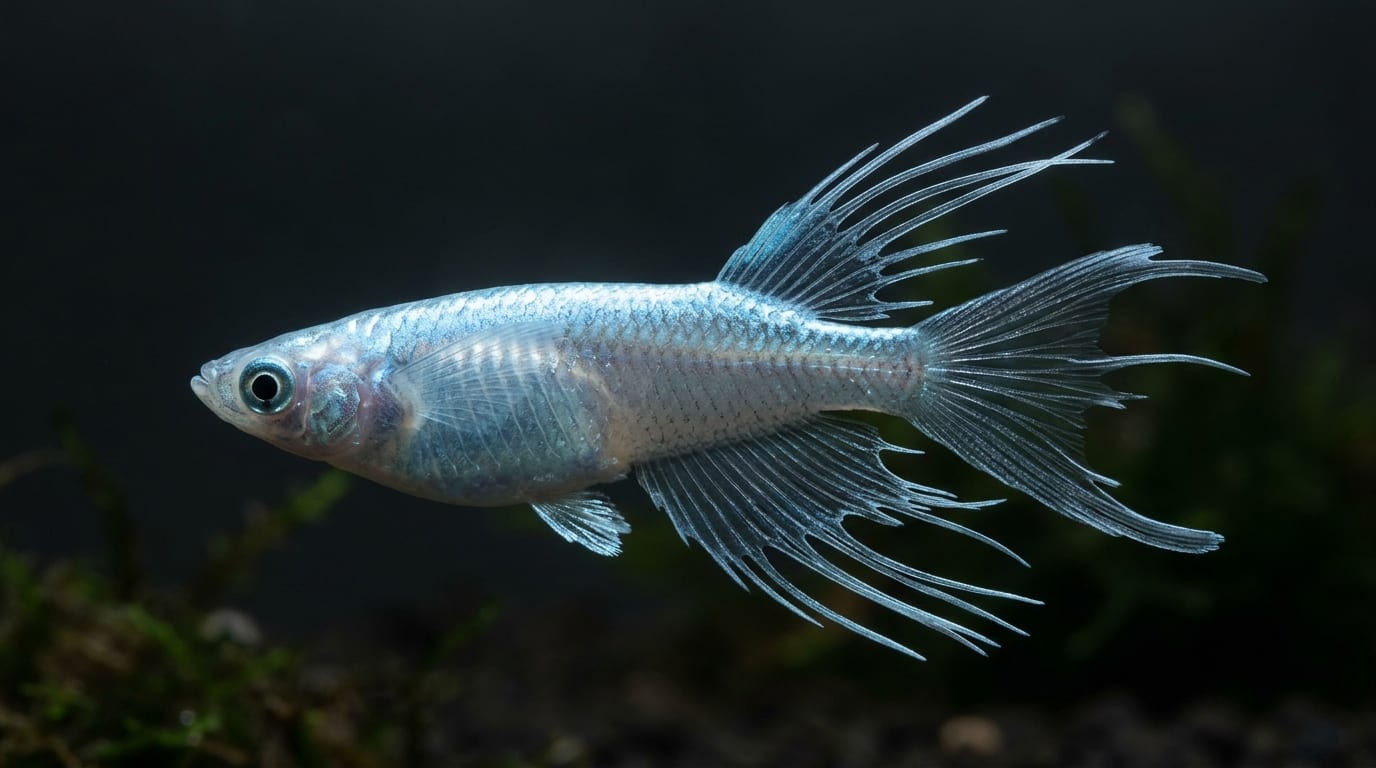
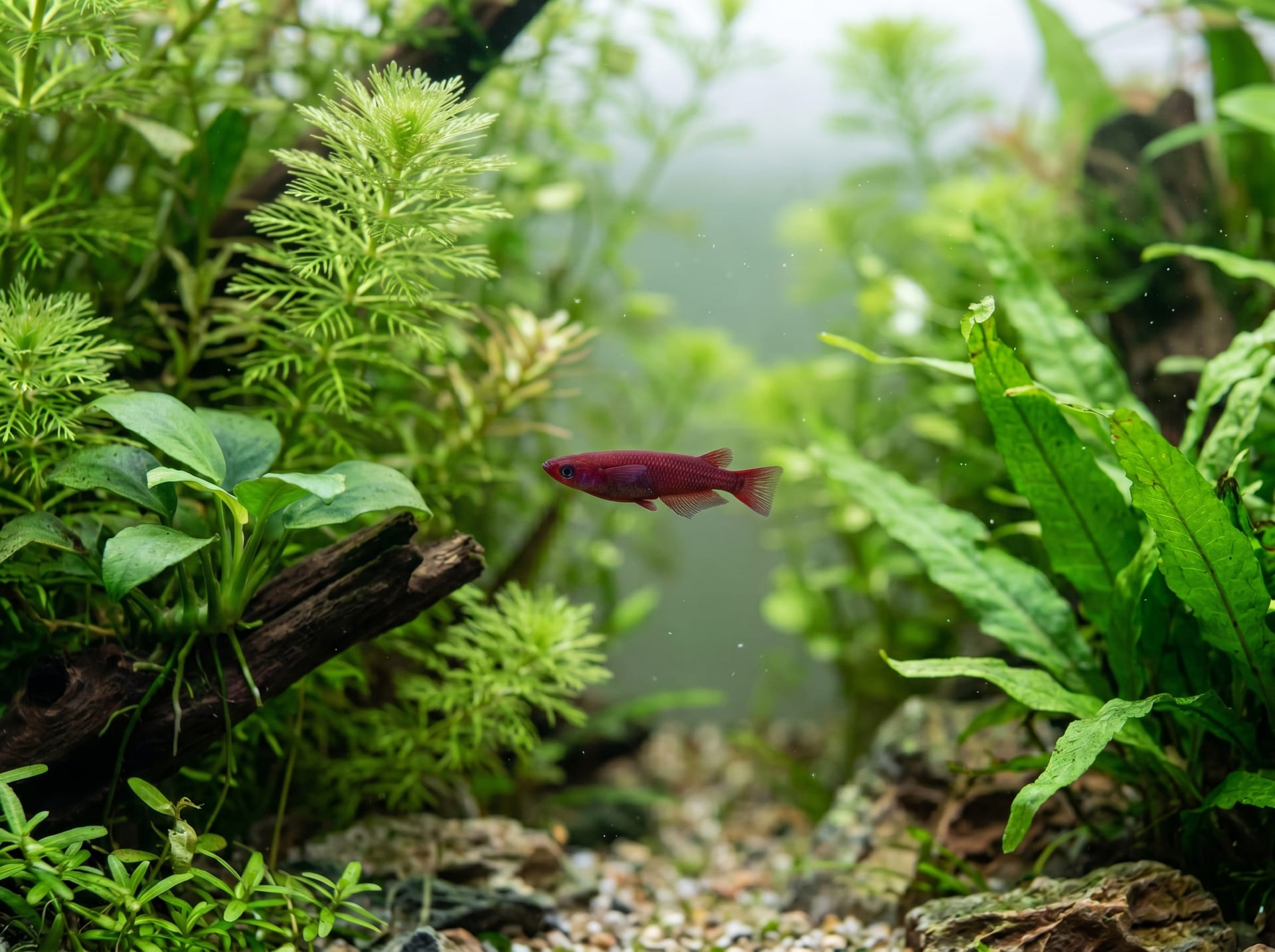
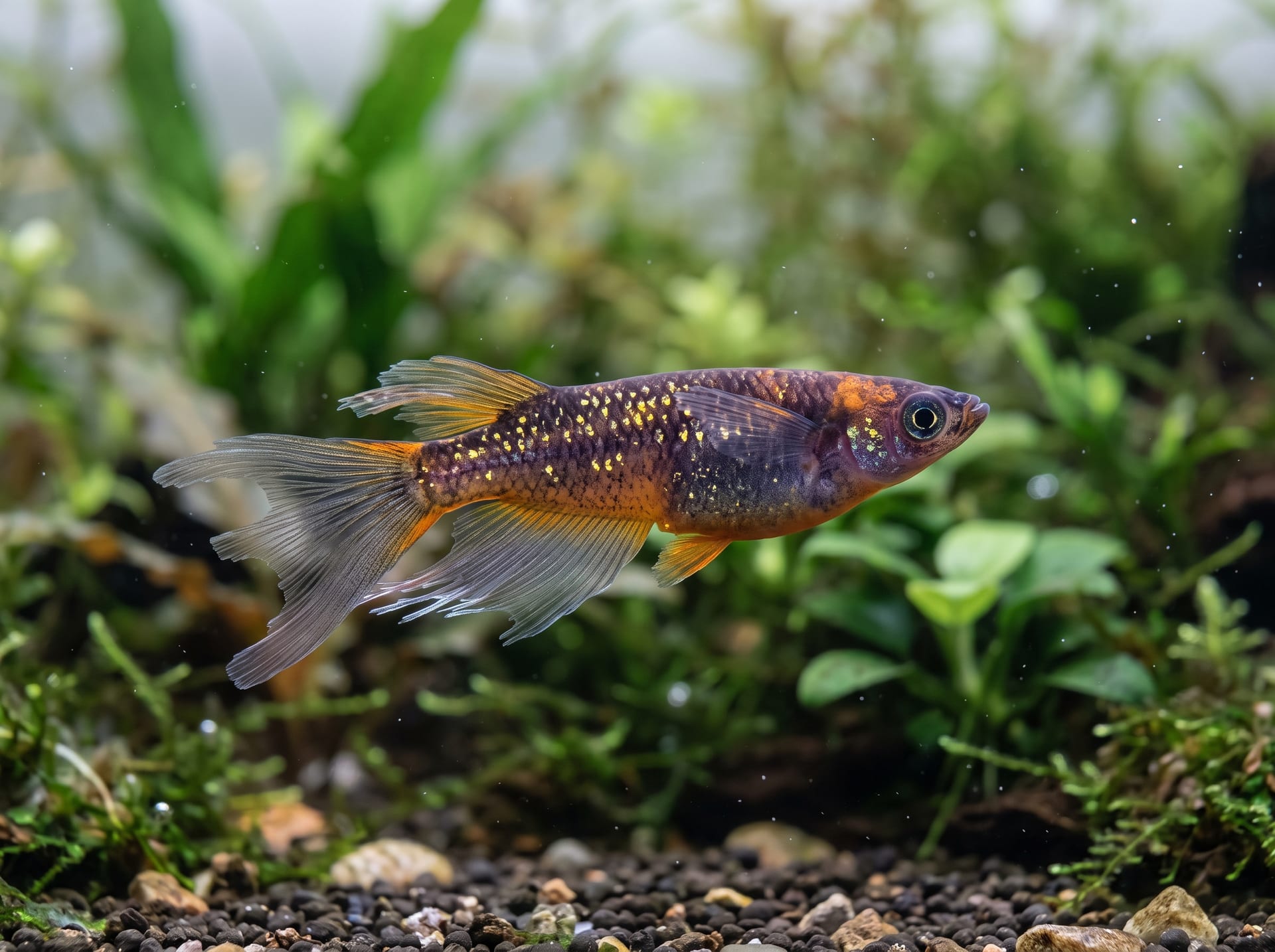
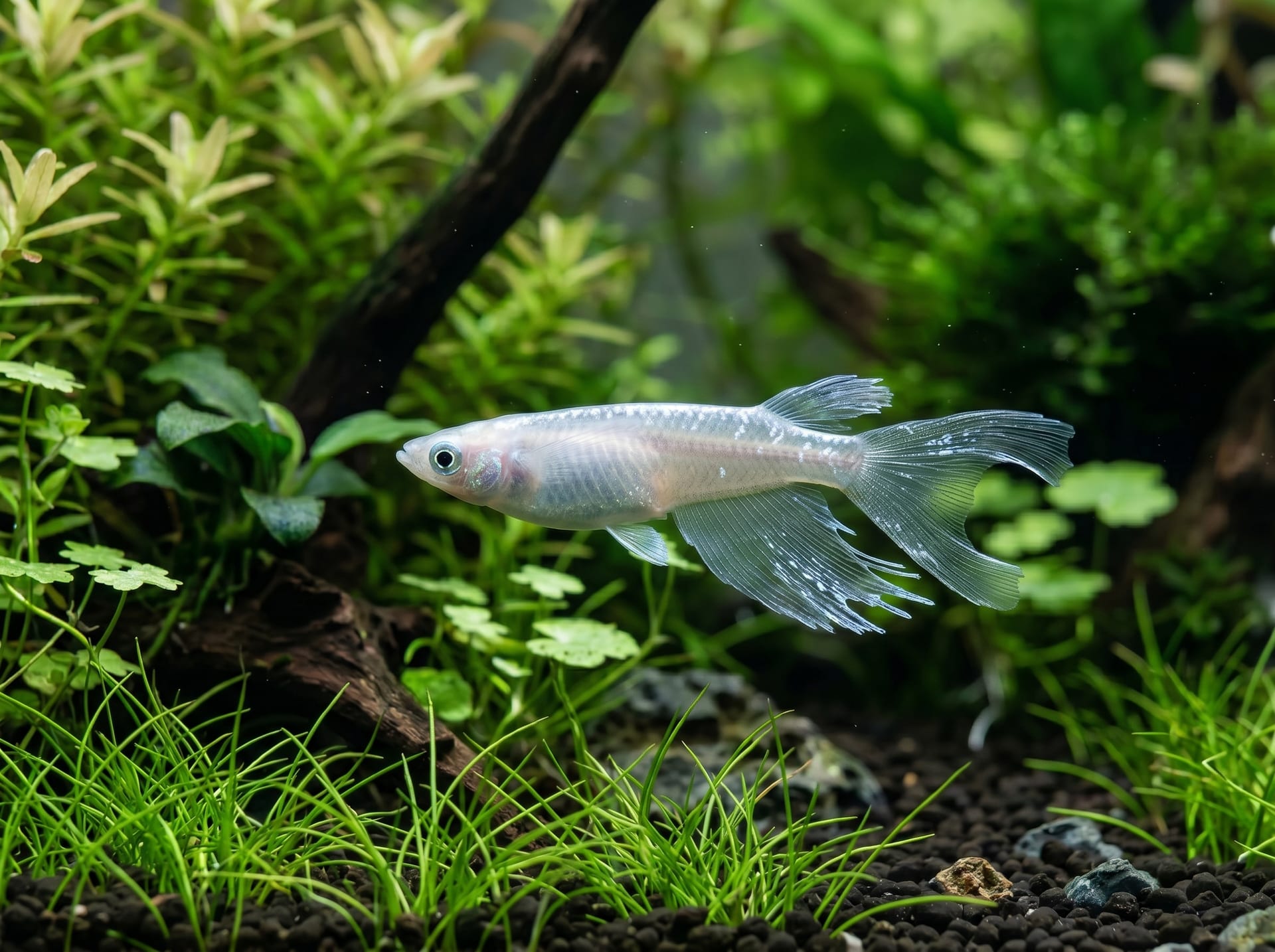
Beautiful orange-red of Youkihi with elongated fins. Side view shows elegant flowing fins. Available in Matsui long-fin and Swallow types.
Difficulty
Intermediate
Temperature
10〜30℃
Lifespan
2-3 years
Size
3-4cm
Diet
Medaka pellets, daphnia
About
Youkihi long-fin medaka is an improved variety combining the popular Youkihi medaka's beautiful vermilion-red body with a long-fin trait in which each fin extends elegantly. Viewed from the side, the interplay of the vermilion body and long flowing fins is gorgeous and graceful, giving it high display value. There are several fin types, such as Matsui long-fin and swallow. Roughly 3–4 cm. Because the fins are long, they are easily damaged, and the fish swims gracefully but slowly, so it should not be kept with fin-nipping or overly active varieties. The vermilion deepens with color-enhancing food and keeping in dark containers under sunlight. Selectively breeding parents with good fins and red maintains beautiful strains.
Lifespan of the Youkihi Long-Fin Medaka
The Youkihi Long-Fin Medaka lives 2-3 years.
Size of the Youkihi Long-Fin Medaka
The Youkihi Long-Fin Medaka grows to 3-4cm.
Temperature & humidity for the Youkihi Long-Fin Medaka
The ideal temperature for the Youkihi Long-Fin Medaka is 20〜28℃.
Hardy across roughly 10–30°C (optimal 20–28°C) in neutral to slightly alkaline water.
Basic Info
Origin
Japan (selectively bred variety)
Lifespan
2-3 years
Size
3-4cm
Care Specifications
- pH
- 7–8
- Hardness (GH)
- 9–19 dGH
- Water Temp.
- 20–28℃
PeacefulGroupBreeding: Easy
Sources: FishBase: Oryzias latipes / Seriously Fish: Oryzias latipes
Morphs (Varieties)
Selectively bred killifish are trait combinations of body form × body color × pattern × luminescence (internal/external) × scale types (transparent scales) × sparkle × fin morphology and so forth. Published entries include only confirmed traits constituting the given variety, with genetic inheritance patterns provided only for confirmed traits (uncertain cases omitted). Genetic patterns are provided as reference for breeding.
RecessiveVisual only with two copies; one copy = het (carrier).
Orange-red (hi) bodyMatsui fin-length
Sources: JMA Japan Medaka Association — Improved Medaka Variety Classification Manual (JA) / Improved Medaka Web Encyclopedia (medakazukan, JA)
A curated selection of notable morphs. Inheritance modes are a breeding-planning guide; actual appearance varies with combos.
References & Sources
Edited & verified by: BreederDirect editorial team
The taxonomic, regulatory, and husbandry data on this page are compiled and verified against the authoritative primary sources below.
Taxonomy & Authority
Accepted name: Oryzias latipes (Temminck & Schlegel, 1846)
Synonyms: Aplocheilus latipes (Temminck & Schlegel, 1846), Poecilia latipes Temminck & Schlegel, 1846, Oryzias latipes latipes (Temminck & Schlegel, 1846)
Authority databases: FishBase · GBIF · Japan Medaka Association — Variety Classification Manual (JA)
Nomenclature follows global taxonomic authority databases.
Regulations & Conservation Status
Not CITES-listed
Ornamental medaka varieties such as himedaka are listed by Japan's Ministry of the Environment as domestic-origin alien species that damage ecosystems. To prevent hybridisation with wild medaka, never release them into rivers, ponds or rice paddies.
Sources: Ministry of the Environment: List of Alien Species that Damage Ecosystems
Regulations may change. Always verify the latest information with the relevant authorities.
Youkihi Long-Fin Medaka Listings
Loading latest listingsFind listings for this species