Hercules Lichyi Beetle
AdvancedA subspecies of Hercules beetle. Lives in Ecuador/Colombia highlands with thick horns.
Difficulty
Advanced
Temperature
20〜28℃
Lifespan
Adult 3-10 months
Size
50-160mm
Humidity
60〜80%
Diet
Insect jelly, Banana
About
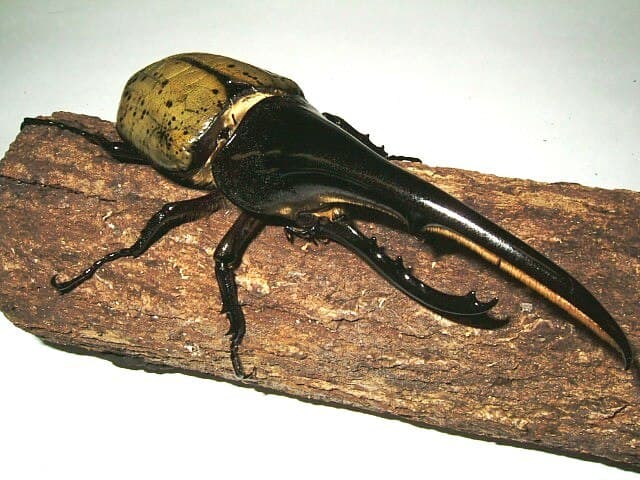
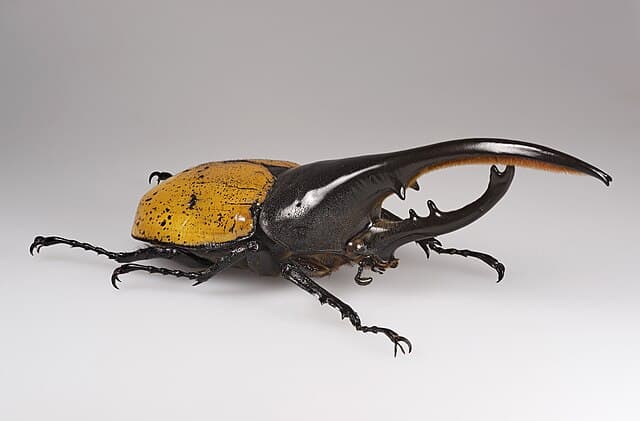
Dynastes hercules lichyi is a subspecies of the Hercules beetle native to the highlands of Colombia and Ecuador, and is the most commonly available and popular Hercules beetle subspecies in the hobby. Males reach 50–160 mm in total length, with notably straight, elongated thoracic horns. Body coloration is yellowish-green to black with dark spots, shifting with humidity like other Hercules subspecies. Captive temperature should be maintained at 20–25°C; temperatures above 28°C are harmful. A large enclosure with fermented substrate packed to at least 20 cm depth is required. Females lay 30–50 eggs per clutch in the substrate; larvae develop over approximately 12–24 months. Adults eat beetle jelly or banana and live 3–10 months. More accessible in price than the nominate Guadeloupe subspecies while still producing impressive large specimens, D. h. lichyi is the most widely chosen Hercules beetle subspecies among collectors worldwide.
Basic Info
Origin
highlands of Colombia and Ecuador
Lifespan
Adult 3-10 months
Size
50-160mm
Temperature
20〜28℃
Humidity
60〜80%
Diet
Insect jelly, Banana
Care Guide
Temperature
20-25°C management is ideal
Housing
Large case with deep substrate
Breeding
Larval period is 12-24 months
Notes
Smaller than nominate but thicker, more powerful horns
LichyiHercules subspeciesThick hornsHighland
Hercules Lichyi Beetle FAQ
QHow difficult is it to keep Hercules Lichyi Beetle?
A
Advanced. This is an advanced-level species. It requires specialized equipment and advanced husbandry skills with precise environmental control.
QWhat is the ideal temperature for Hercules Lichyi Beetle?
A
The ideal temperature for Hercules Lichyi Beetle is 20〜28℃. Recommended humidity is 60〜80%. Avoid sudden temperature changes and maintain a stable environment.
QWhat is the lifespan of Hercules Lichyi Beetle?
A
The average lifespan of Hercules Lichyi Beetle is Adult 3-10 months. With proper care and nutrition, they can live a long and healthy life.
QHow large does Hercules Lichyi Beetle get?
A
Hercules Lichyi Beetle typically reaches 50-160mm as an adult. Size may vary depending on care conditions and individual genetics.
QWhat should I feed Hercules Lichyi Beetle?
A
Hercules Lichyi Beetle feeds on: Insect jelly, Banana. Aim for a balanced diet with appropriate feeding frequency.
QWhat is the typical price for Hercules Lichyi Beetle?
A
The price of Hercules Lichyi Beetle varies significantly depending on morph, size, and lineage. Check our market price page for the latest pricing information.
Related Species
Find listings for this species
Browse Insect ListingsRelated Articles
Hercules Beetle Care & Breeding — From Larvae to Eclosion
Hercules beetle care and breeding from larval stage to adult eclosion: substrate, temperature management, and pupal cell care.
Hercules Beetle Care Guide — Raising the World's Largest Beetle
Guide to keeping Dynastes hercules: adult and larva care, enclosure size, temperature, diet, substrate changes, and breeding tips.
Hercules Beetle Rearing Guide — Complete Care from Larva to Adult
Complete guide to raising Hercules beetles from larva to adult: temperature control, substrate selection, stage-by-stage larval management, and adult feeding and care.
Hercules Beetle Care Guide — Raising Large Adults from Larvae
Complete Hercules beetle care guide: larval substrate selection, temperature management, using fungal substrate jars, and adult care for raising record-sized individuals.