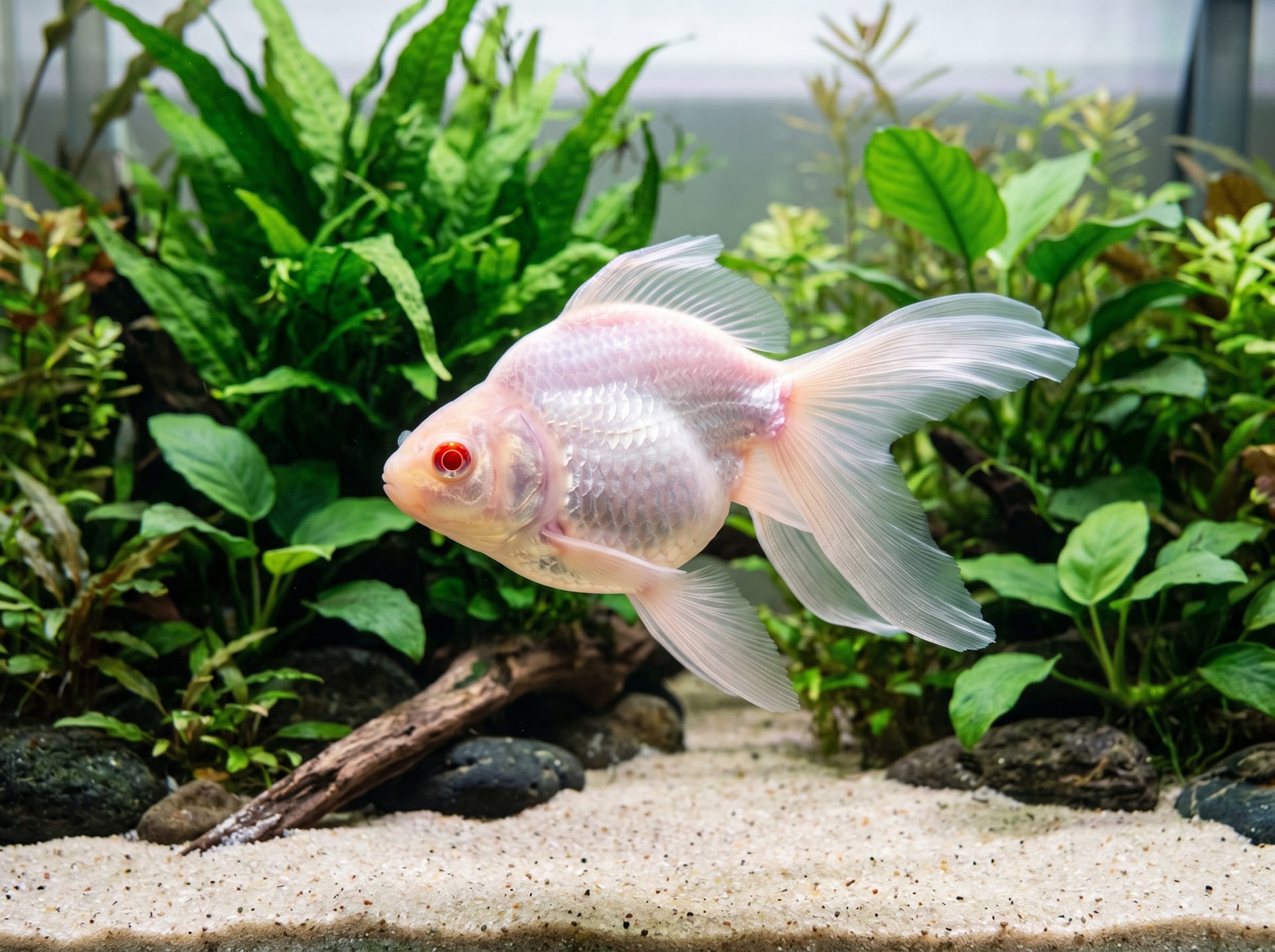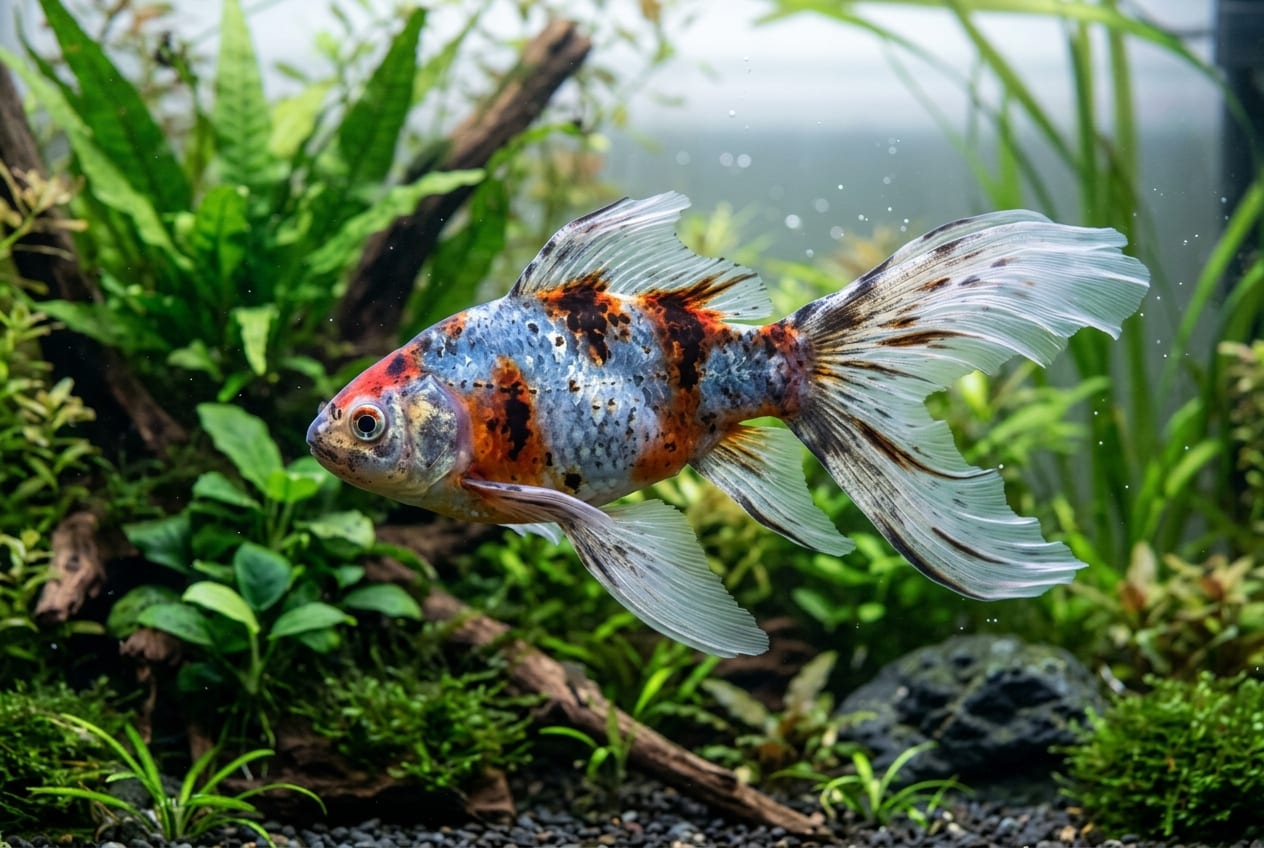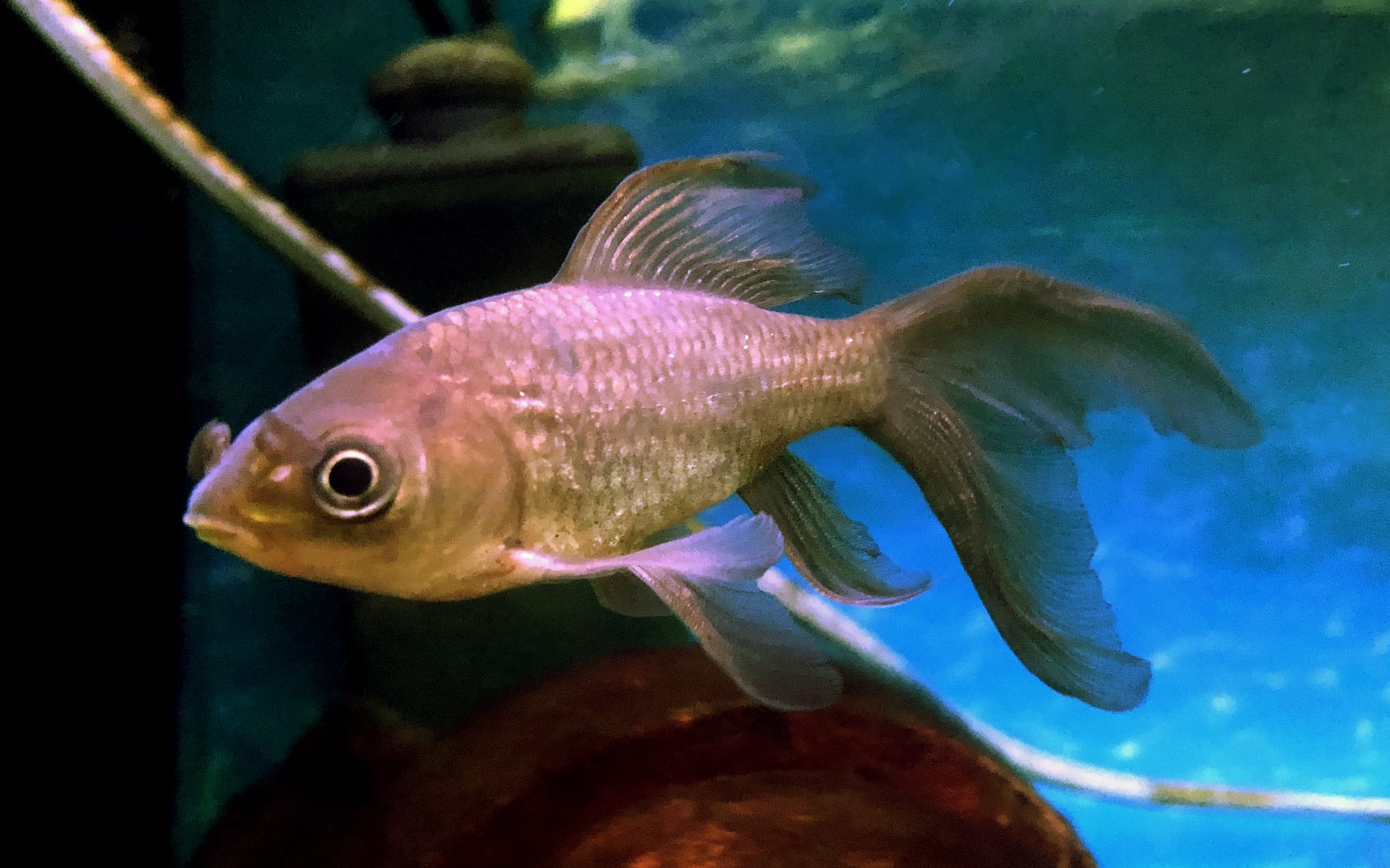
Source: Wikimedia Commons
Tetsugyo (Iron Fish)
BeginnerCarassius auratus
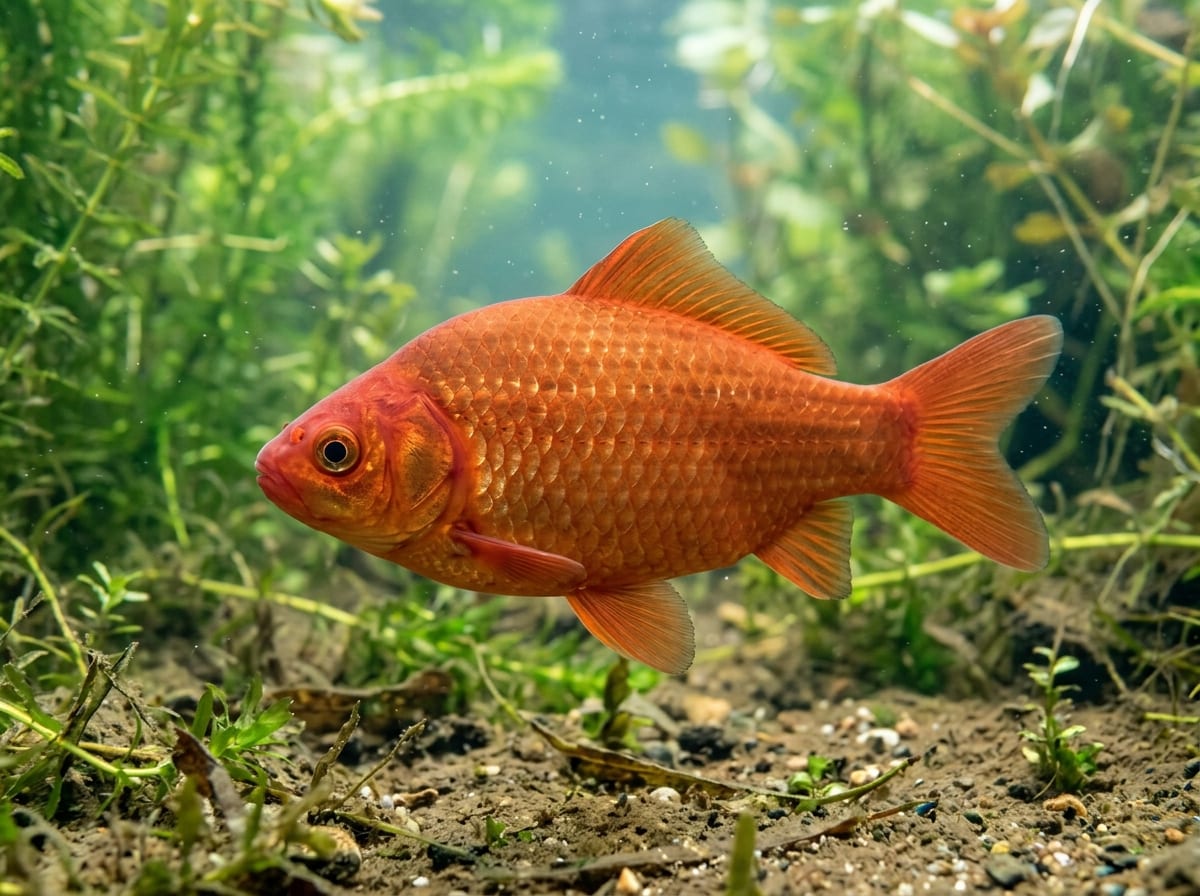
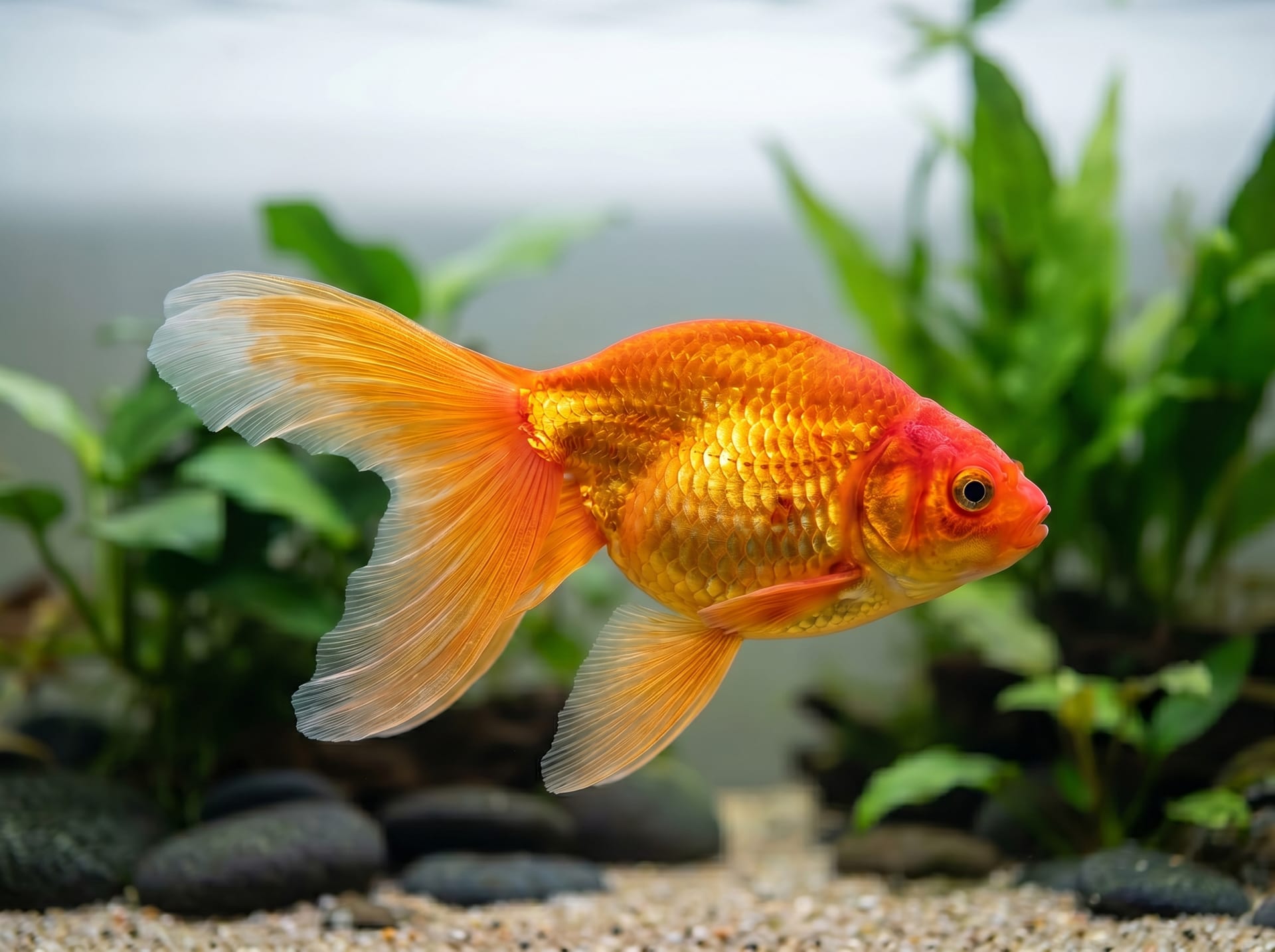
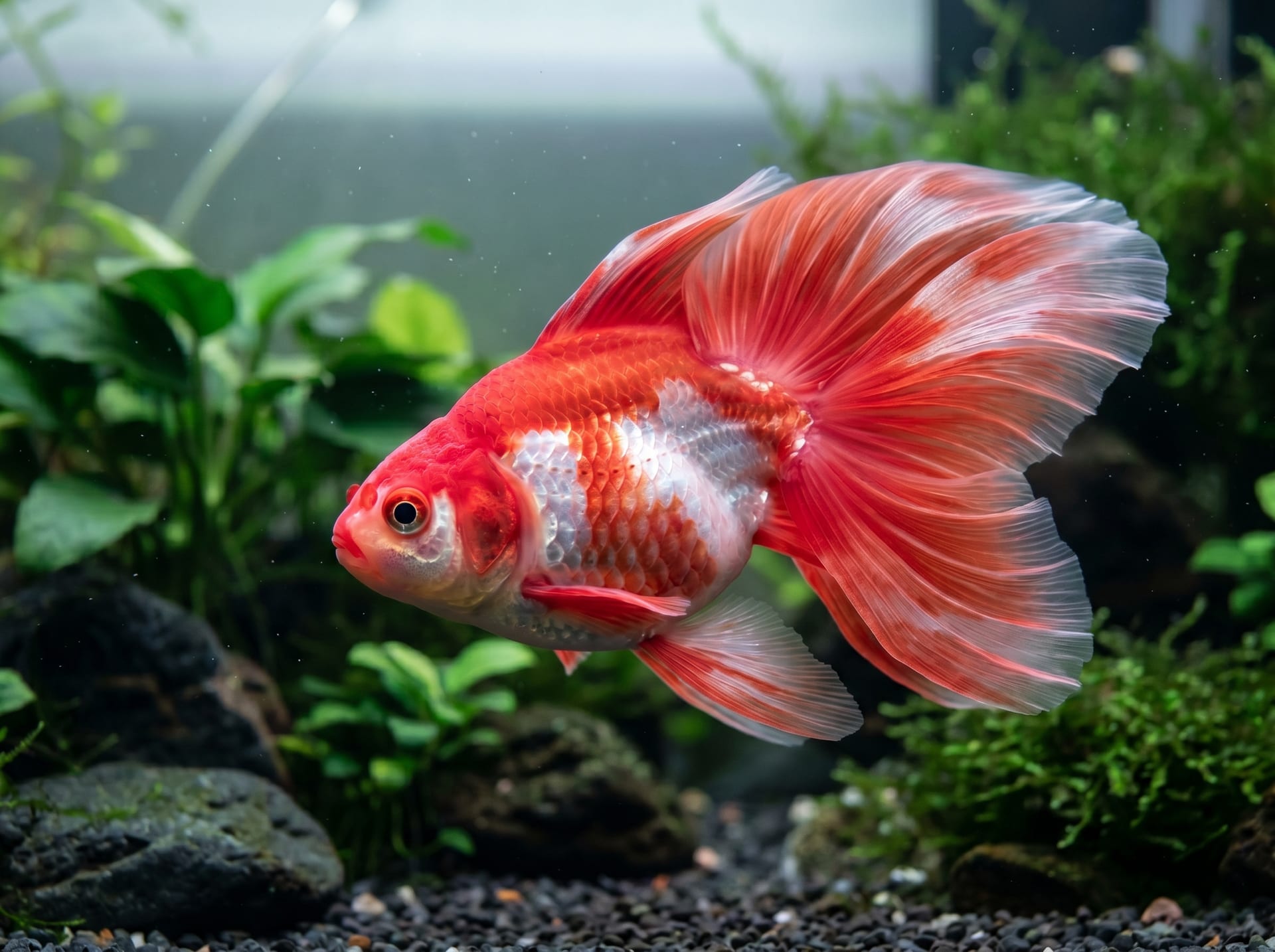
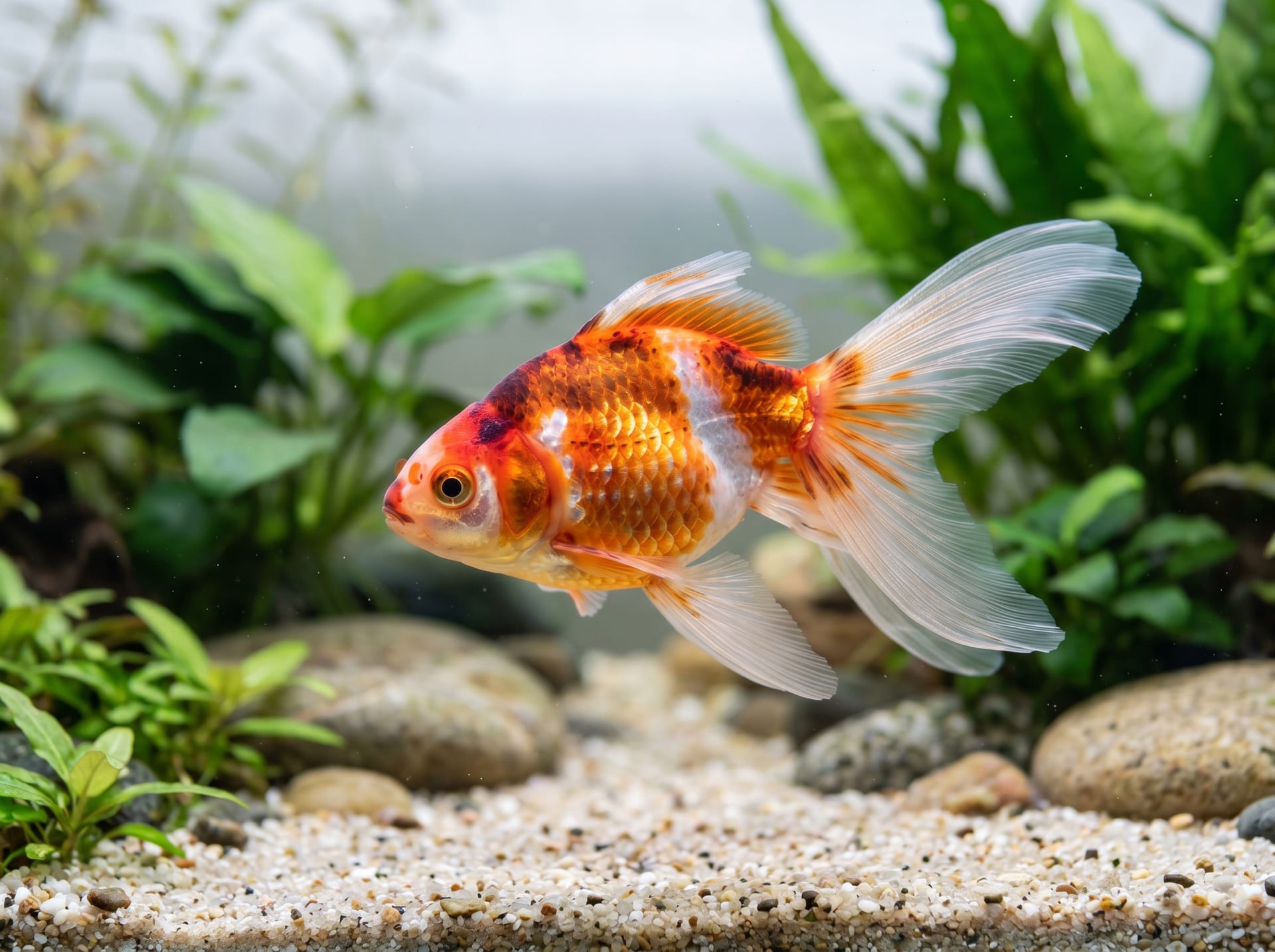
A crucian-carp-shaped fish with a rusty iron-colored body and long fins, especially the tail. It derives from hybrids between Japanese Carassius and goldfish; its habitat at Yutorinuma, Miyagi, is a national Natural Monument. Fish on the market are farm-bred.
Difficulty
Beginner
Temperature
5〜30℃
Lifespan
Little data on lifespan specific to Tetsugyo
Size
Reaches about 15 cm body length
Diet
Omnivore (goldfish pellets as the staple; also bloodworms and daphnia)
About
Tetsugyo ('iron fish') is a long-finned, crucian-carp-shaped fish found in 1922 at Yutorinuma pond in Kami, Miyagi Prefecture. Its fins, above all the tail, are long; the basic color is iron to rusty iron, but black, orange-yellow, white, red and red-and-white fish also occur, and some are close to wild crucian carp in shape. At first it was hailed as a possible ancestor of the goldfish, but crossing Ryukin with crucian carp produces similar fish, and mitochondrial and nuclear DNA analysis showed it is a hybrid of goldfish and Japanese Carassius other than the Gengoro-buna. It was not bred as a goldfish variety, yet it is sold by both goldfish and native-fish dealers. It resembles single-tailed Wakin or Comets, but its fins, especially the tail, and its nasal folds are markedly elongated. Yutorinuma lies at about 600 m, surrounded by old-growth forest, and the habitat was designated a national Natural Monument in 1933. Prefecture-designated Tetsugyo also live at Wakahata-numa (Yamagata) and a temple pond at Honen-ji (Mie). Fish on the market are farm-raised or line-maintained stock.
Source: Wikipedia (CC BY-SA 4.0)
Size of the Tetsugyo (Iron Fish)
The Tetsugyo (Iron Fish) grows to Reaches about 15 cm body length.
It reaches 15 cm in body length and moves quickly.
Basic Info
Origin
Japan (found in 1922 at Yutorinuma, Kami, Miyagi Prefecture)
Lifespan
Little data on lifespan specific to Tetsugyo
Size
Reaches about 15 cm body length
Temperature
References & Sources
Edited & verified by: BreederDirect editorial team
The taxonomic, regulatory, and husbandry data on this page are compiled and verified against the authoritative primary sources below.
Primary sources
- Wikipedia
- Cultural Heritage Online (Agency for Cultural Affairs): Yutorinuma Tetsugyo habitat
- Miyagi Prefecture: Yutorinuma Tetsugyo habitat (Natural Monument)
- e-Gov: Act on Protection of Cultural Properties (Art. 125)
- Species+ (CITES)
- National Museum of Nature and Science: Tetsugyo habitat
- GBIF
- FishBase: Carassius auratus
- 冨澤ら(2015)魚類学雑誌 62(1): ミトコンドリアDNA および核DNA の解析による魚取沼テツギョの起源
Taxonomy & Authority
Accepted name: Carassius auratus (Linnaeus, 1758)
Synonyms: Cyprinus auratus Linnaeus, 1758, Carassius auratus auratus (Linnaeus, 1758)
Authority databases: GBIF · GBIF: Carassius auratus · FishBase: Carassius auratus · 冨澤ら(2015)魚類学雑誌 62(1): ミトコンドリアDNA および核DNA の解析による魚取沼テツギョの起源
Nomenclature follows global taxonomic authority databases.
Regulations & Conservation Status
Not CITES-listed
The Yutorinuma Tetsugyo habitat (Kami, Miyagi) was designated a national Natural Monument in 1933. It is the habitat that is designated, and collecting there is not allowed (altering a Natural Monument requires permission from the Commissioner for Cultural Affairs under the Act on Protection of Cultural Properties). Tetsugyo at Wakahata-numa (Yamagata) and Honen-ji (Mie) are prefectural Natural Monuments. Fish on the market are farm-raised or line-maintained, and trading them is not itself regulated. Not listed by CITES.
Sources: Cultural Heritage Online (Agency for Cultural Affairs): Yutorinuma Tetsugyo habitat / Miyagi Prefecture: Yutorinuma Tetsugyo habitat (Natural Monument) / e-Gov: Act on Protection of Cultural Properties (Art. 125) / Species+ (CITES)
Regulations may change. Always verify the latest information with the relevant authorities.
Tetsugyo (Iron Fish) Listings
Loading latest listingsFind listings for this species