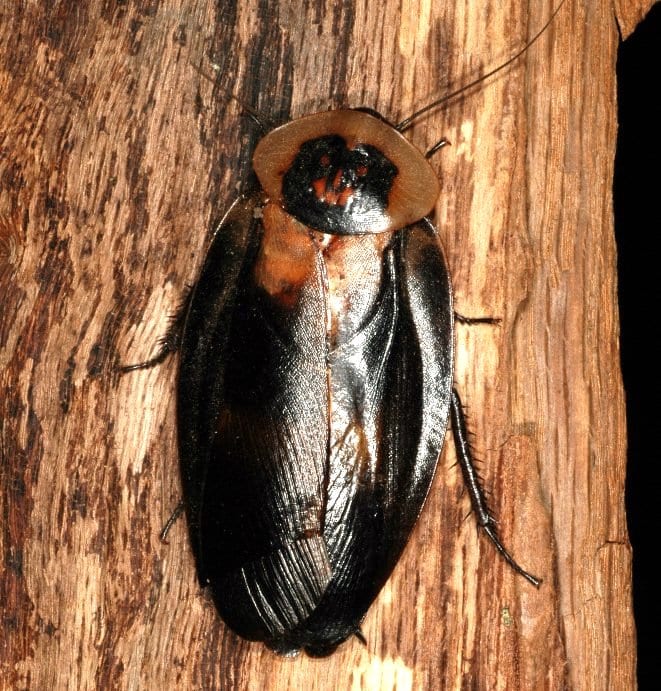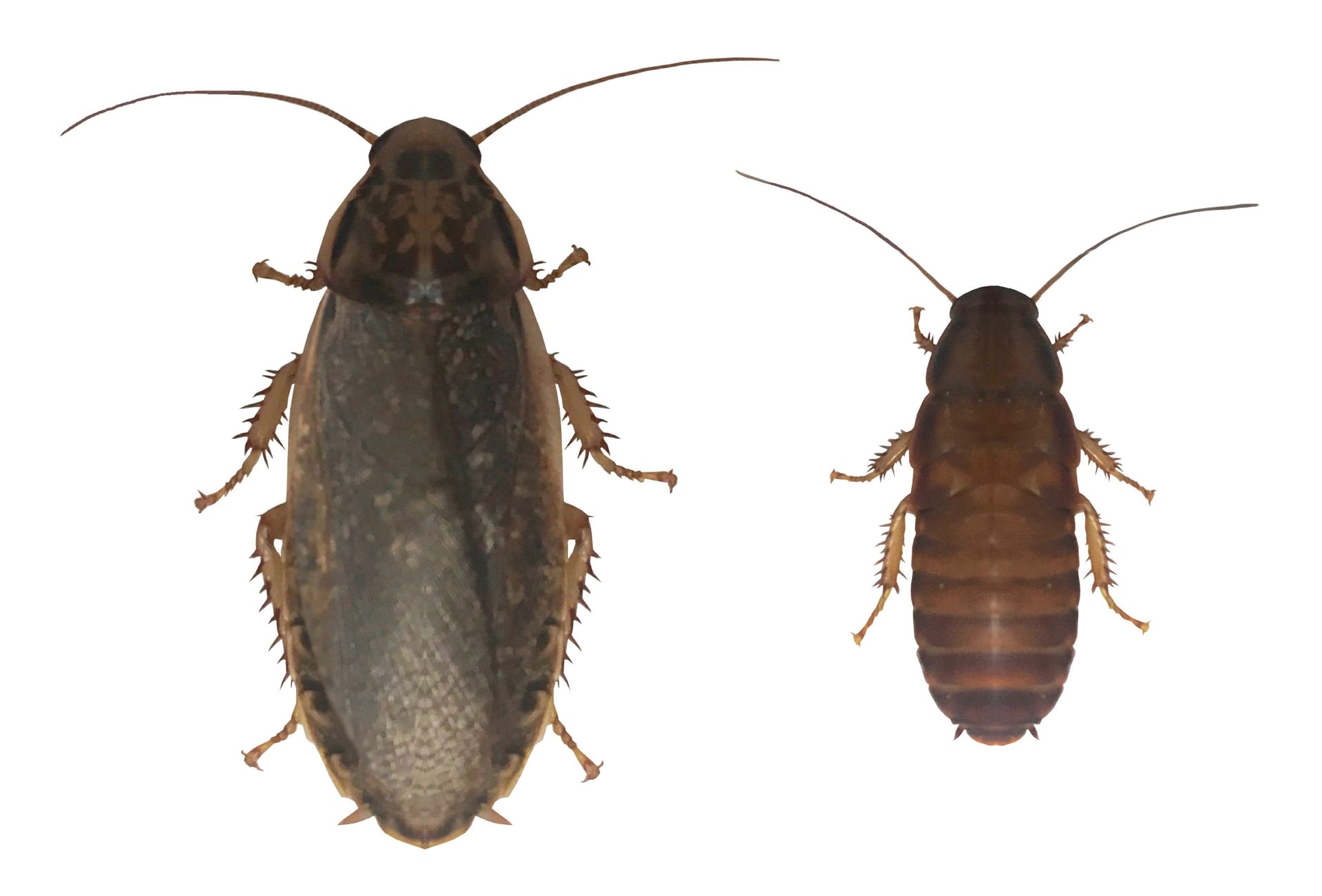
Source: Wikimedia Commons
Lobster Cockroach
BeginnerNauphoeta cinerea
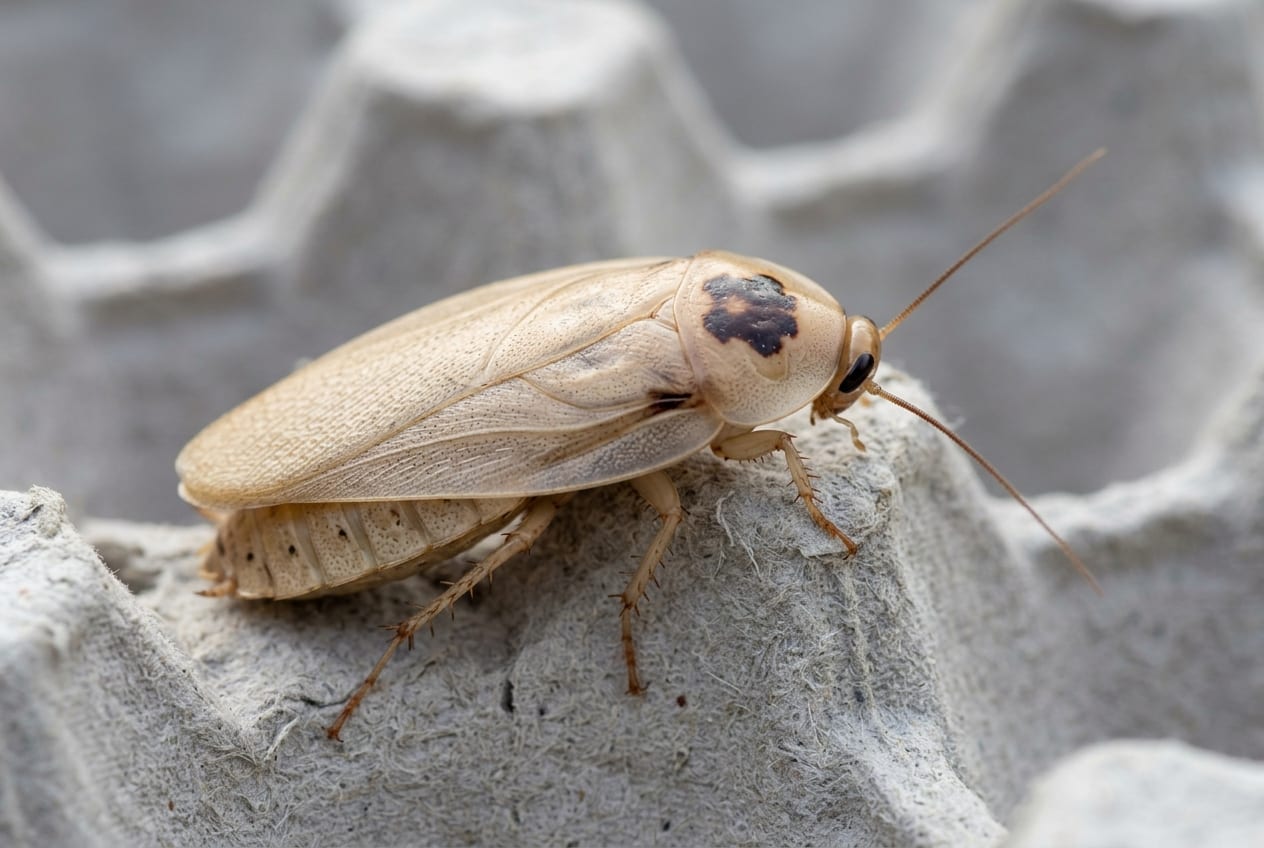
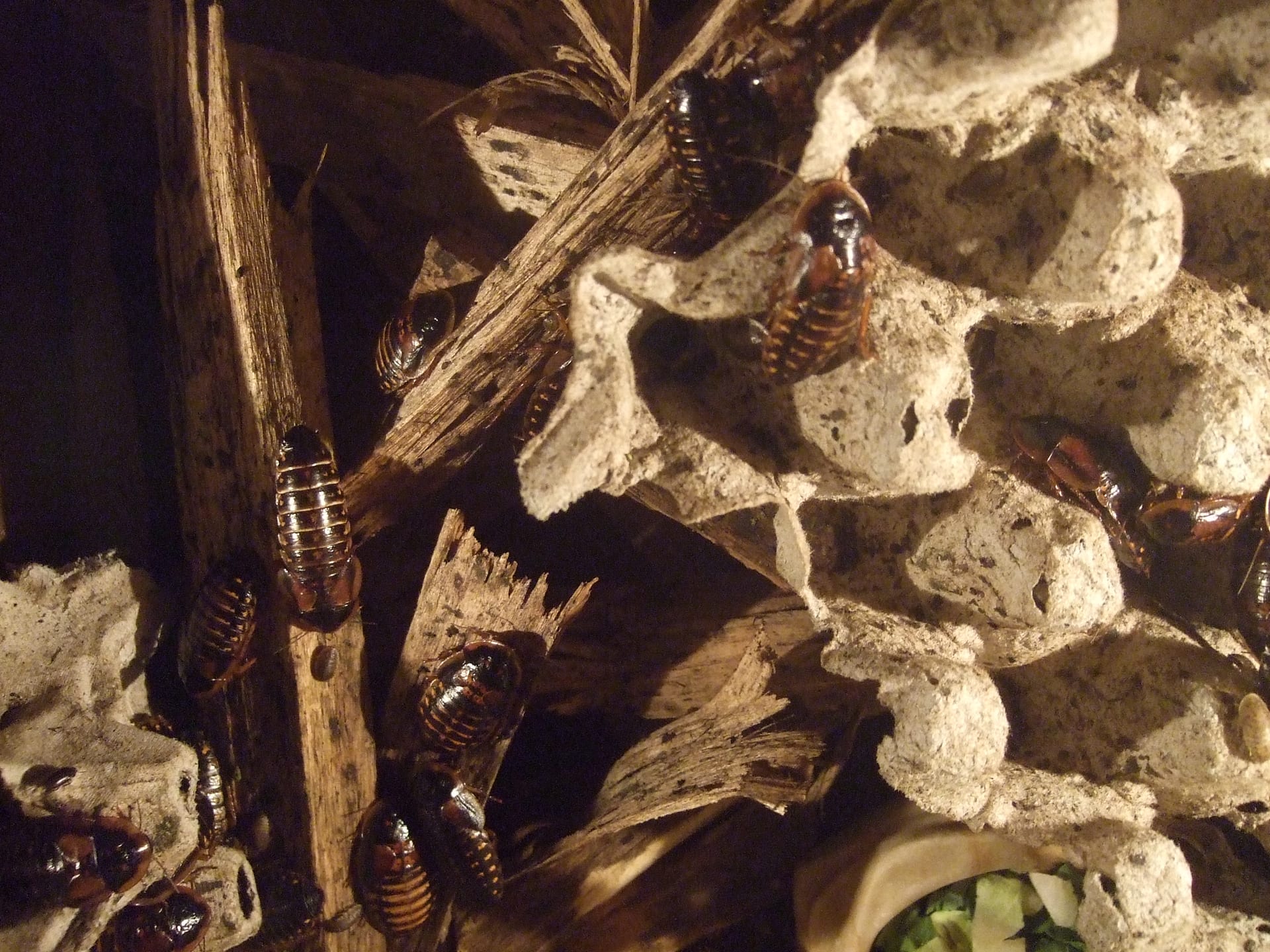
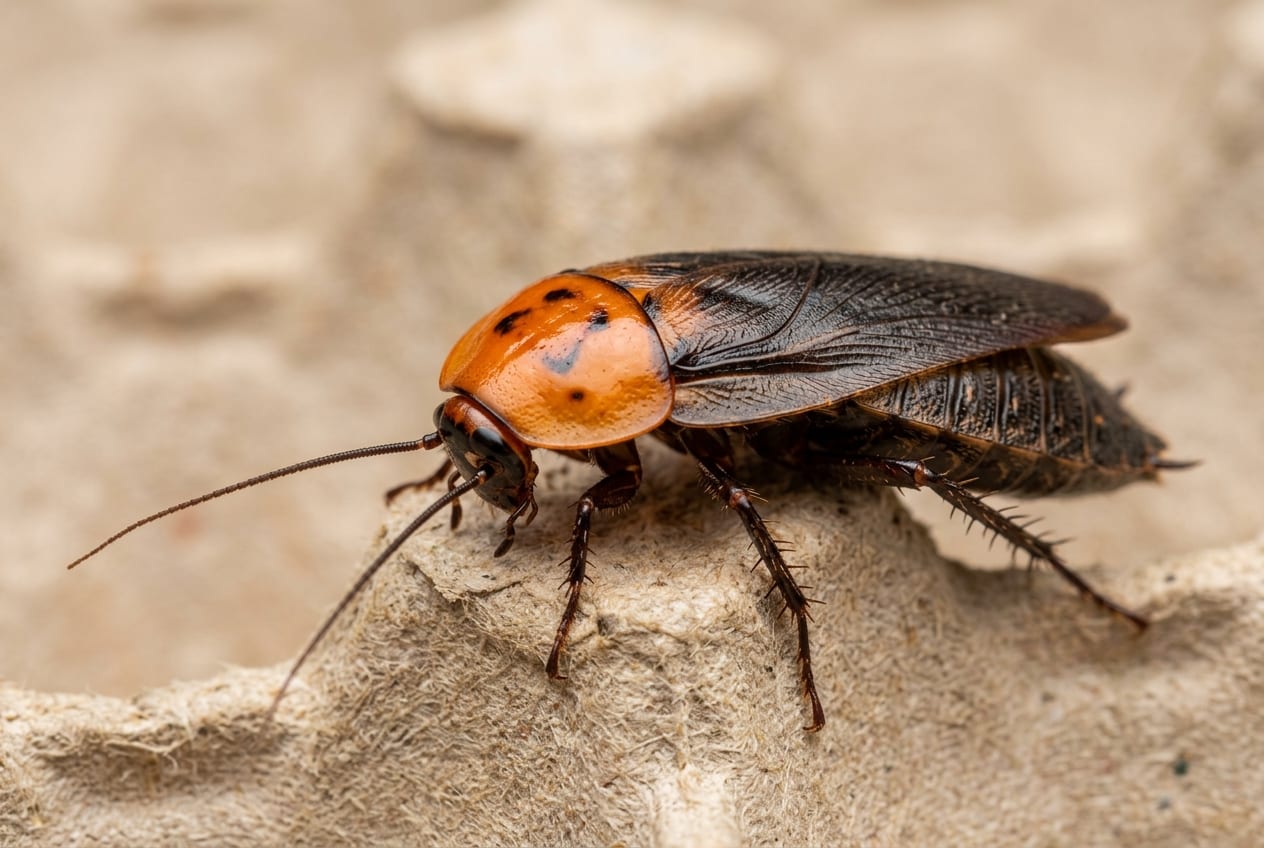
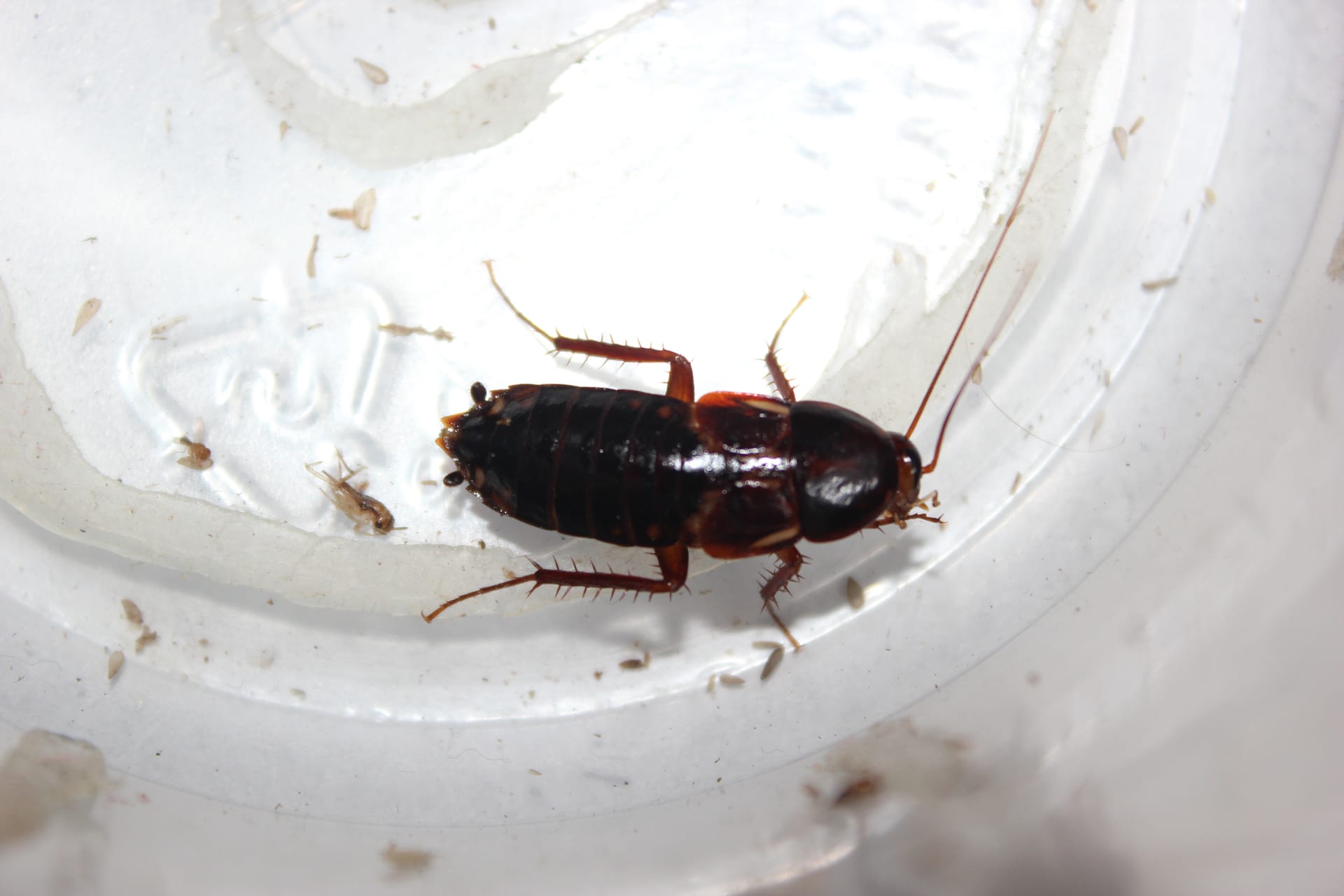
A medium-sized cockroach mottled in greyish brown. It breeds very fast and is one of the most widely cultured feeder species. Adults are winged but flightless and climb poorly, so a slick barrier alone keeps them in.
Difficulty
Beginner
Temperature
20〜29℃
Lifespan
About one year: 365 days in males and 344 days in females
Size
Up to 30mm; about 28mm in males and 30mm in females
Diet
Omnivorous: vegetables, fruit, dry prepared feeds
About
Nauphoeta cinerea is the sole species of its genus, described in 1789 as Blatta cinerea and placed in Nauphoeta by Burmeister in 1838. It is native to north-eastern Africa - Egypt, Eritrea, Libya and Sudan - but its habit of stowing away on ships has given it a circumtropical introduced range that includes Madagascar, Thailand, the Philippines, Indonesia, Australia, Hawaii, Mexico, Cuba, the Galapagos and Brazil. Adults are mottled brown, winged at maturity but flightless, and reach 30 mm. The ootheca is held in the brood sac for about 36 days and contains an average of 33 eggs; a female produces around six broods in her life. Males mature in some 72 days over seven moults and females in about 85 days over eight. Females isolated from males can switch to parthenogenesis, though both the number and the viability of the offspring fall sharply. Both sexes stridulate at around 60 decibels by rubbing the pronotum against the forewings.
Source: Wikipedia (CC BY-SA 4.0)
Lifespan of the Lobster Cockroach
The Lobster Cockroach lives About one year: 365 days in males and 344 days in females.
Size of the Lobster Cockroach
The Lobster Cockroach grows to Up to 30mm; about 28mm in males and 30mm in females.
Temperature & humidity for the Lobster Cockroach
The ideal temperature for the Lobster Cockroach is 20〜29℃.
Basic Info
Origin
Native to north-eastern Africa (Egypt, Eritrea, Libya, Sudan); introduced across the tropics
Care Specifications
PeacefulGroupBreeding: Easy
Sources: Roach Crossing: Lobster Roach / Wikipedia / GBIF
References & Sources
Edited & verified by: BreederDirect editorial team
The taxonomic, regulatory, and husbandry data on this page are compiled and verified against the authoritative primary sources below.
Taxonomy & Authority
Accepted name: Nauphoeta cinerea (Olivier, 1789)
Synonyms: Blatta cinerea Olivier, 1789, Blatta gallica Fabricius, 1793, Nauphoeta bivittata Burmeister, 1838, Nauphoeta grisea Burmeister, 1838
Authority databases: GBIF
Nomenclature follows global taxonomic authority databases.
Regulations & Conservation Status
Not CITES-listed
Sources: CITES Appendices (species not listed)
Regulations may change. Always verify the latest information with the relevant authorities.
Lobster Cockroach Listings
Loading latest listingsFind listings for this species