Source: Wikimedia Commons
Emu
AdvancedDromaius novaehollandiae
A flightless bird endemic to Australia that stands close to 2 m tall, second only to the ostrich in height, and can sprint at 48 km/h. In Japan it moves through licensed animal dealers and farms. The male alone incubates and raises the chicks.
Difficulty
Advanced
Temperature
15〜30℃
Lifespan
Over 10 years in the wild, up to 20 in captivity
Size
1.6-2.0m tall (40-60kg)
Humidity
40〜60%
Diet
Ratite pellets, grass and vegetables; in the wild plant seeds, fruit and insects
About
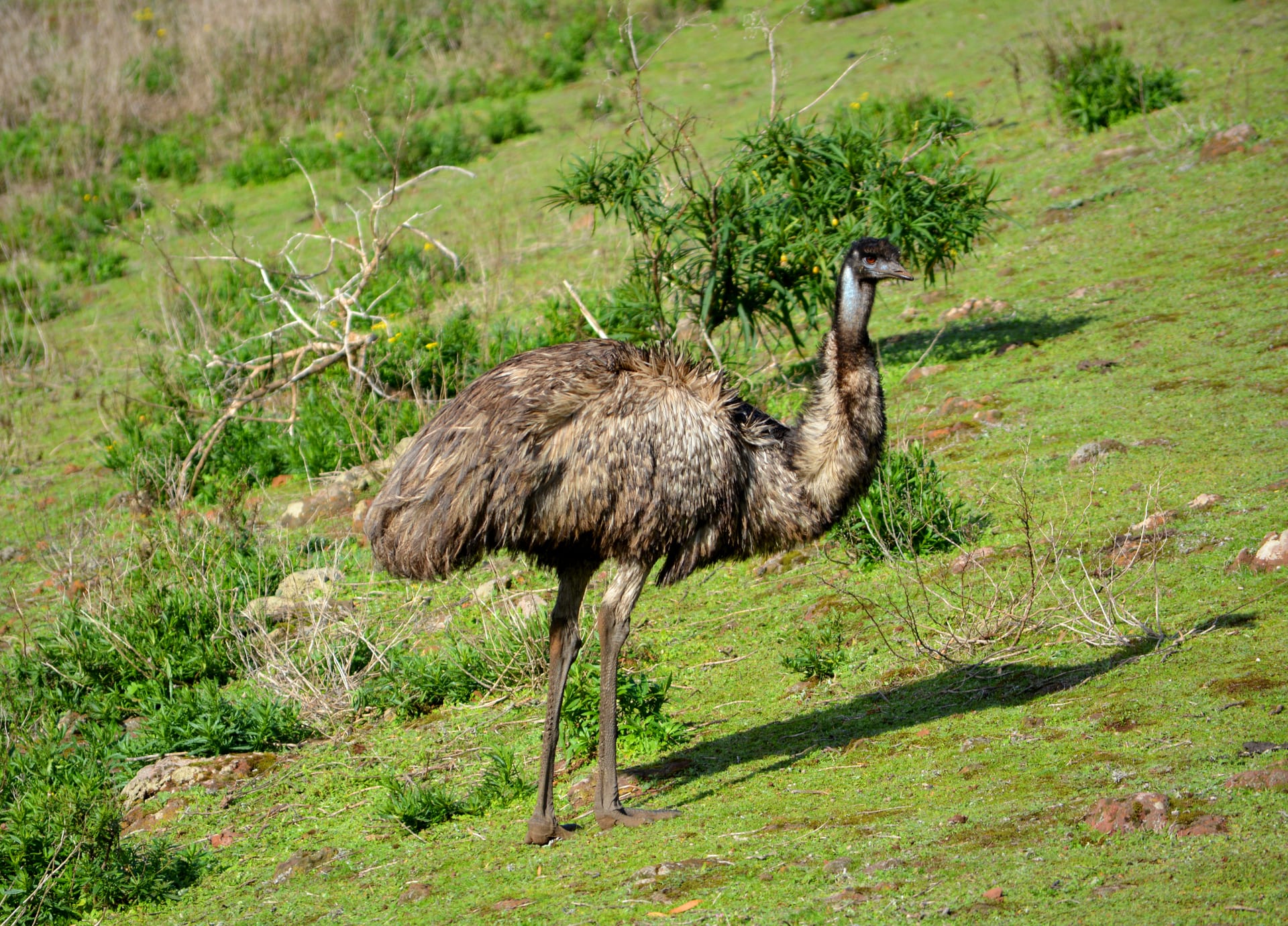
The emu (Dromaius novaehollandiae) is a large flightless bird endemic to mainland Australia and the only living member of its genus. It has soft brown plumage, a long neck and long legs, and can sprint at 48 km/h. The wings are reduced to about 20 cm and are hidden in the plumage. It is omnivorous, taking a wide range of plants and insects, and can go for weeks without eating. Breeding falls in May and June, with females competing for mates; the male incubates, barely eating or drinking and losing much weight. A cultural icon that appears on the Australian coat of arms, the emu has been farmed commercially since about 1970, when the industry began in Western Australia, and is now raised in North America, China and elsewhere.
Source: Wikipedia (CC BY-SA 4.0)
Lifespan of the Emu
The Emu lives Over 10 years in the wild, up to 20 in captivity.
Size of the Emu
The Emu grows to 1.6-2.0m tall (40-60kg).
Standing 1.6-2.0 m tall and weighing 40-60 kg, it is Australia's tallest native bird and the third tallest in the world after the ostriches. The dark green eggs weigh 550-600 g and hatch after about eight weeks, and the male raises the chicks, which reach full size in around six months.
Basic Info
Origin
Mainland Australia; the Tasmanian, Kangaroo Island and King Island subspecies are extinct
Lifespan
Over 10 years in the wild, up to 20 in captivity
Size
Care Specifications
Semi-aggressive
Sources: Wikipedia - Emu / Wikipedia - Emu, Japanese edition (morphology, taxonomy)
References & Sources
Edited & verified by: BreederDirect editorial team
The taxonomic, regulatory, and husbandry data on this page are compiled and verified against the authoritative primary sources below.
Primary sources
- Wikipedia
- CITES Appendices (species not listed)
- IUCN Red List
- Cabinet Order under the Act on Welfare and Management of Animals, appended table (designated dangerous animals)
- Ministry of the Environment, review material for the designated dangerous animal list (scope of Casuariidae)
- Wikipedia - Emu, Japanese edition (morphology, taxonomy)
- GBIF
Taxonomy & Authority
Accepted name: Dromaius novaehollandiae (Latham, 1790)
Synonyms: Dromiceius novaehollandiae
Authority databases: GBIF
Nomenclature follows global taxonomic authority databases.
Regulations & Conservation Status
Not CITES-listedIUCN LC · Least Concern
Dromaius novaehollandiae. Not listed in the CITES Appendices. Japan's schedule of designated dangerous animals covers all Casuariidae among birds, but the Ministry of the Environment's review material for that list treats the family as containing only the genus Casuarius, so the emu (genus Dromaius) is not a designated dangerous animal.
Sources: CITES Appendices (species not listed) / IUCN Red List / Cabinet Order under the Act on Welfare and Management of Animals, appended table (designated dangerous animals) / Ministry of the Environment, review material for the designated dangerous animal list (scope of Casuariidae)
Regulations may change. Always verify the latest information with the relevant authorities.
Emu Listings
Loading latest listingsFind listings for this species