Comparing Veiled Chameleons and Panther Chameleons | Beginner's Selection Guide
A comprehensive comparison of "Veiled Chameleon vs Panther Chameleon" for beginners. We explain temperament, price, humidity management, color diversity, and availability in comparison tables. Complete support for first-time chameleon selection, from setting up the right habitat to checking breeder credentials before purchase.
Key Takeaways
A comprehensive comparison of "Veiled Chameleon vs Panther Chameleon" for beginners. We explain temperament, price, humidity management, color diversity, and availability in comparison tables. Complete support for first-time chameleon selection, from setting up the right habitat to checking breeder credentials before purchase.
Related Species
Which is Better for Beginners: Veiled Chameleon or Panther Chameleon?
Beginners interested in keeping chameleons inevitably face the choice: "Should I get a Veiled Chameleon or a Panther Chameleon?" Both species are relatively easy to obtain in the domestic market and have a wealth of long-term captive care data, but they differ significantly in temperament, price, care difficulty, and coloration. This guide provides a thorough comparison of both species to help you make the right choice for your situation.
Characteristics of the Veiled Chameleon (Chamaeleo calyptratus)
Basic Specifications
- Origin: Yemen and southern Saudi Arabia (arid mountainous terrain)
- Length: Males: 50–70 cm; Females: 25–35 cm
- Lifespan: Males: 5–8 years; Females: 3–5 years (females tend to be shorter-lived due to egg-laying stress)
- Color variation: Green to yellow, orange, and turquoise striping (changes with excitement, health, and temperature)
- Price range: ¥10,000–30,000 (domestically bred captive-bred individuals)
Temperament and Ease of Care
Veiled Chameleons are relatively hardy with strong adaptability to their environment. They are recommended for beginners because:
- Tolerance for dryness: Originating from an arid region, they tolerate loose humidity management
- Affordable: More readily available than Panther Chameleons
- Readily bred domestically: Many domestic breeders produce well-socialized individuals
However, they have some drawbacks:
- Strong territorial instinct: Cannot be housed with other species or same-species individuals
- High breeding burden on females: Females lay eggs even if unfertilized, and repeated egg-laying causes exhaustion and increases mortality risk
- Stress from handling: Like all chameleons, non-acclimated individuals experience significant stress from handling
Characteristics of the Panther Chameleon (Furcifer pardalis)
Basic Specifications
- Origin: Northern Madagascar (relatively warm and humid environment)
- Length: Males: 45–55 cm; Females: 25–30 cm
- Lifespan: Males: 5–7 years; Females: 3–5 years
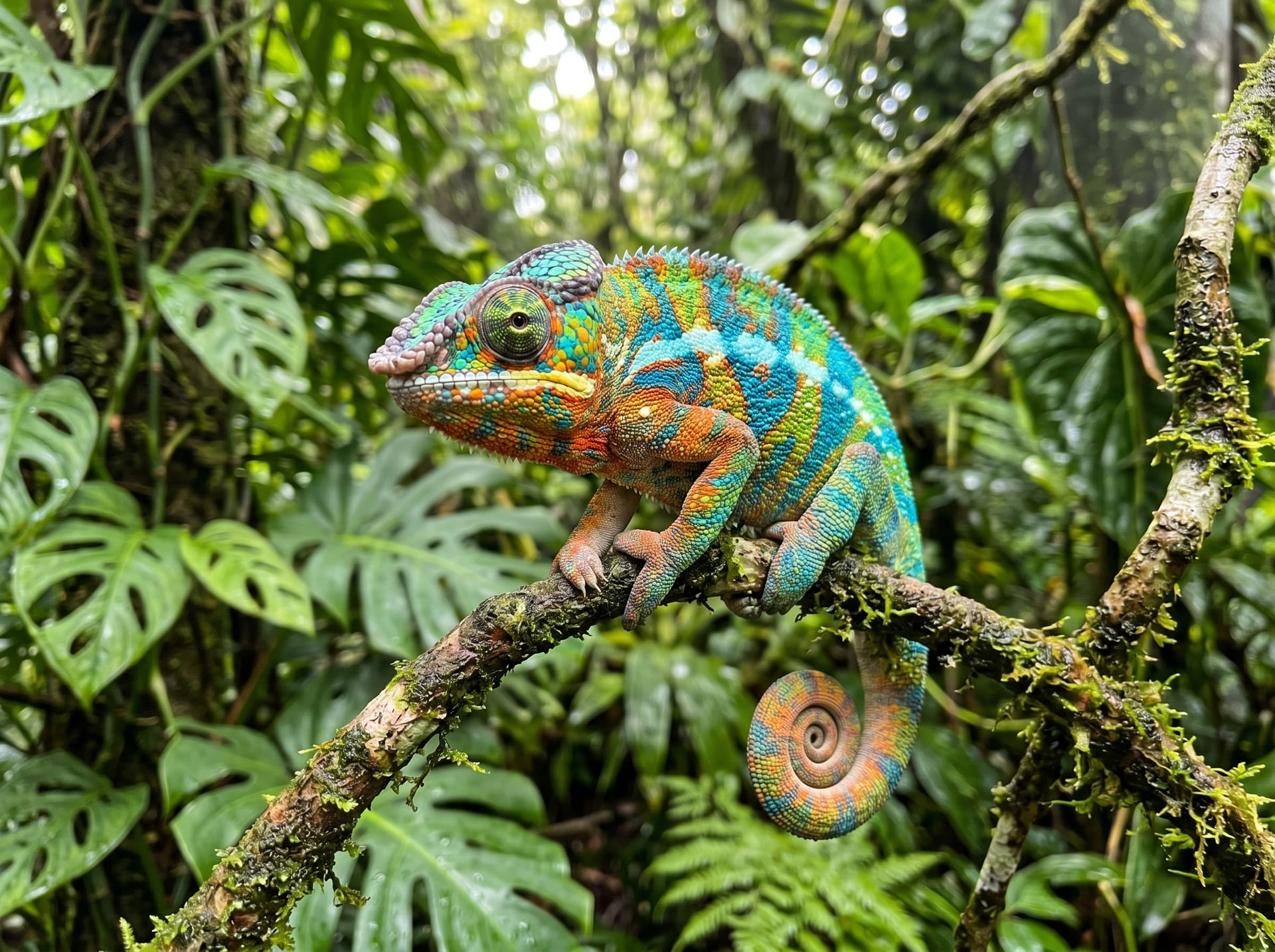
- Color variation: Highly diverse depending on locality (vibrant reds, blues, greens, oranges, etc.)
- Price range: ¥30,000–150,000+ (varies significantly by locality)
Temperament and Ease of Care
Panther Chameleons show individual variation, but generally tend to accept handling more readily.
Panther Chameleon Strengths:
- Color diversity: Different localities offer distinct colors—Nosy Be (blue), Ambilobe (red), Ambilobe (orange)—providing endless color variety
- Calm temperament: Generally more docile than Veiled Chameleons (individual variation applies)
- Humidity tolerance: Originating from Madagascar, they handle humid conditions well
Panther Chameleon Drawbacks:
- Higher price: Rare localities can exceed ¥100,000
- Humidity management required: More sensitive to dry conditions than Veiled Chameleons; humidity control is essential
- Import restrictions: Listed in CITES Appendix II. Choosing domestically bred individuals is even more important
Husbandry Comparison
| Aspect | Veiled Chameleon | Panther Chameleon |
|---|---|---|
| Minimum enclosure size | 60×60×90 cm | 60×60×90 cm |
| Daytime temperature | 24–32°C (basking spot 36°C) | 24–29°C (basking spot 32°C) |
| Nighttime temperature | 18–22°C | 18–22°C |
| Humidity | 40–60% (relatively low acceptable) | 50–70% (higher required) |
| UVB lighting | Essential (UVB 5.0–10.0) | Essential (UVB 5.0–10.0) |
| Misting frequency | 2–3 times daily | 2–4 times daily (more frequent) |
Common Husbandry Essentials
Both species require these critical elements:
- Mesh enclosure with excellent ventilation (glass tanks are unsuitable; air circulation is essential)
- UVB lamp (critical for calcium metabolism and preventing metabolic bone disease)
- Basking spot (for thermoregulation)
- Misting for hydration (chameleons drink water droplets from leaves; most don't drink from dishes)
- Live plant placement (non-toxic plants like Pothos and Dracaena for coverage)
Which Should You Choose?
Choose Veiled Chameleon if:
- You want to minimize initial costs
- This is your first chameleon and you want to gain experience
- Your indoor environment is relatively dry (low-humidity regions like Hokkaido and Tohoku)
- You prioritize ease of care over color diversity
Choose Panther Chameleon if:
- You're drawn to color beauty and want to enjoy a specific locality
- You have a budget for a premium individual
- You want a calmer temperament for a long-term relationship
- You're interested in breeding (captive-bred individuals command higher value)
Essential Pre-Purchase Checklist
Regardless of which species you choose, always verify the following when purchasing from a breeder:
- The individual is captive-bred (CB), not wild-caught (WC)
- Age in months and current weight and health status
- Feeding condition (eating crickets; any history of refusing food)
- Photos and health status of parents
- Post-purchase support and consultation availability
Chameleons are among the most delicate pet reptiles, but with proper setup and care, their stunning color changes and unique behavior offer an unmatched appeal. Whichever species you choose, ensure your setup is fully complete before bringing your new chameleon home.