What is the Veiled Chameleon?—A Popular Reptile with a Distinctive Casque (Helmet)
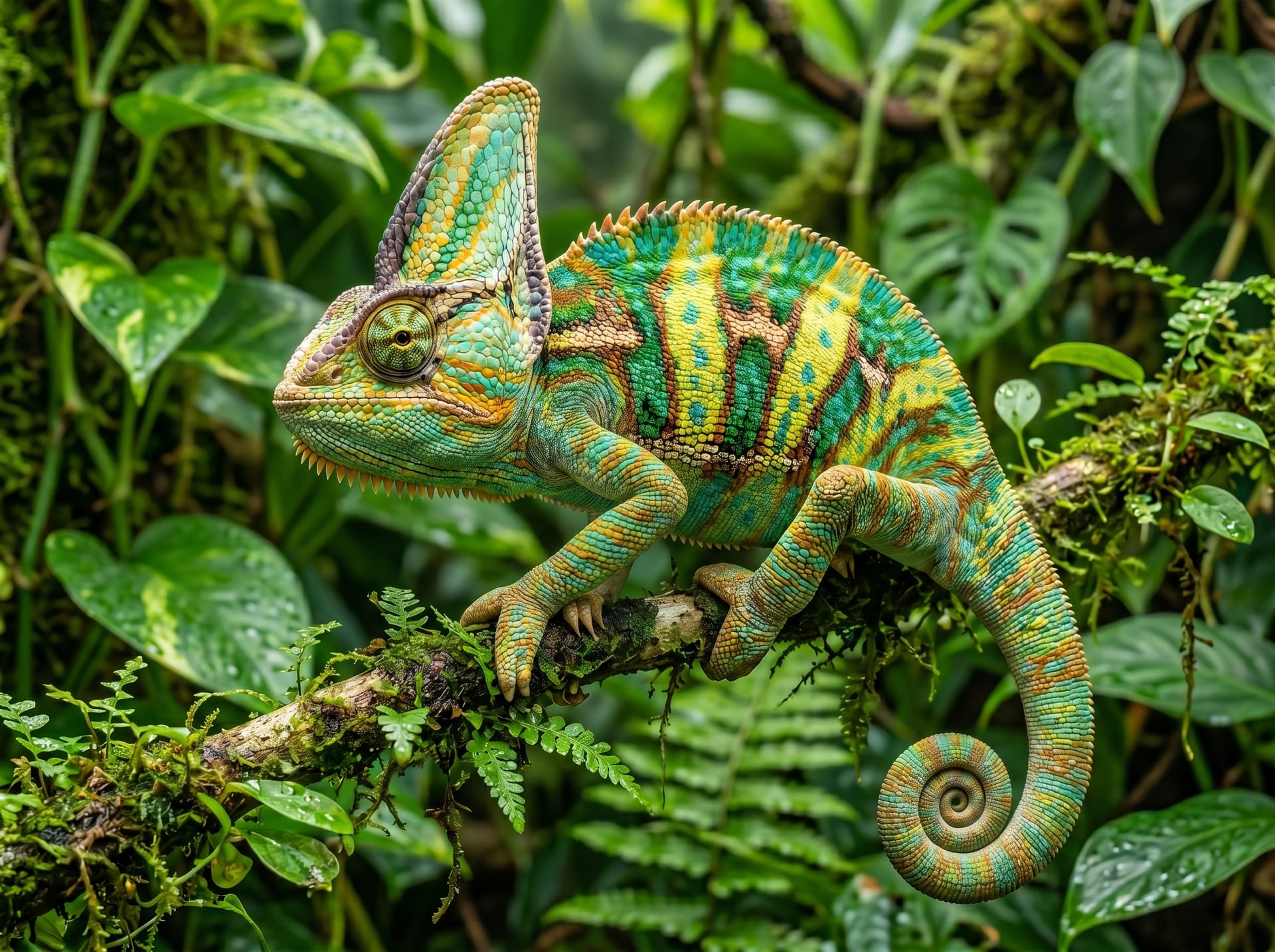
The Veiled Chameleon (Chamaeleo calyptratus) is a member of the Chamaeleonidae family native to the Arabian Peninsula (Yemen and Saudi Arabia). The name derives from the high, prominent "casque (helmet)" on the crown of the head, and the casque of adult males—reaching 15–20 cm—is their most distinctive feature.
Adult males reach 50–60 cm in total length, while females are approximately 35–40 cm; their body color varies across vibrant greens, yellows, blues, and oranges (color changes primarily serve thermoregulation, communication, and emotion expression). Among chameleons, they are considered relatively hardy and easy to care for, making them popular worldwide as an introductory reptile species. However, "relatively hardy" is a comparison to other chameleon species, and neglecting basic care will result in a short lifespan.
Basic Specifications
| Item | Value |
|---|
| Adult Size | Males 50–60 cm, Females 35–40 cm |
| Lifespan | Males 5–8 years, Females 3–5 years |
| Daytime Temperature | 24–29°C (Basking 33–35°C) |
| Nighttime Temperature | 16–22°C |
| Humidity | 50–70% (temporarily 80%+ acceptable) |
| UVB Lamp | UVI 2.0–4.0 (Desert-type) |
| Temperament | Shy, solitary |
| Difficulty | ★★★☆☆ (Intermediate to Advanced) |
Essential: Mesh Vertical Enclosure
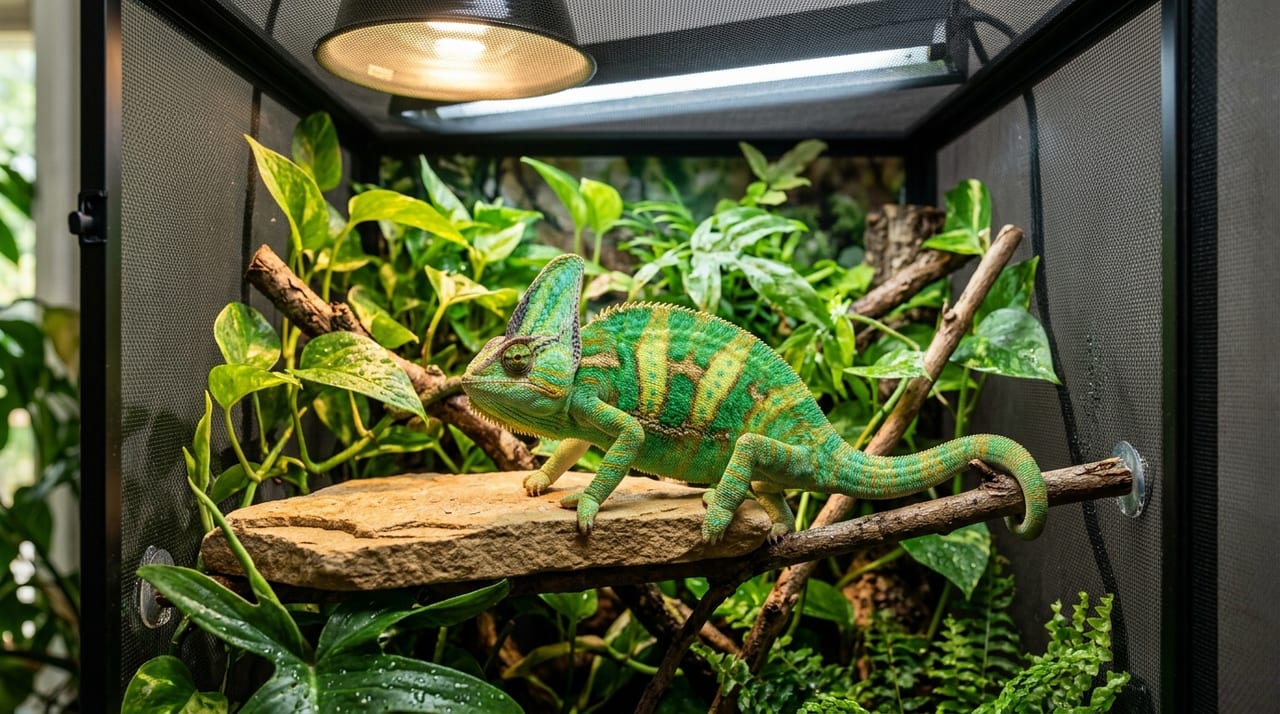
The most critical equipment for Veiled Chameleon care is a mesh (wire) vertical enclosure.
Why a Mesh Enclosure is Necessary
- Ventilation: Chameleons are highly susceptible to respiratory infections (RI) in the closed environment of glass tanks. Mesh ensures airflow from all sides.
- Three-Dimensional Movement: Accommodates the chameleon's natural behavior of climbing and walking on all four walls.
- UVB Penetration: Ultraviolet light reaches the entire enclosure through the mesh.
- Humidity Drainage: Excess moisture after misting drains easily, suppressing mold and bacterial growth.
Recommended Enclosure Sizes
| Individual Size | Minimum Recommended Size |
|---|
| Juvenile (~20 cm) | W45×D45×H60 cm |
| Subadult (20–35 cm) | W60×D60×H90 cm |
| Adult | W60×D60×H120 cm or larger |
Height is critical, as chameleons prefer elevated positions; place climbing branches and live plants (such as pothos) in the upper portion of the enclosure.
Hydration: Automated Misting Systems Are Ideal
Veiled Chameleons drink from flowing or dripping water and most individuals avoid drinking directly from water bowls.
Misting Methods
Manual Misting (Minimum Method):
- Mist 2–3 times daily for 5–10 minutes each
- Spray the entire enclosure and foliage so water droplets remain
- Observe whether the animal licks the walls and leaves with its tongue immediately after misting
Automatic Misting System (Recommended):
- Install a timer-controlled automatic misting system
- Set basic schedules for 6–10 minutes in the morning and 5–8 minutes in the evening
- Programmable systems are easy to adjust for breeding or water changes
Drip System Use:
- A device where water slowly drips from a small container
- Effective as a supplemental water source outside of misting times
Recognizing Signs of Dehydration
- Sunken eyes (the most clear sign of dehydration)
- Lack of skin elasticity; slow return when pinched
- Urate (uric acid) that is not white but yellowing or orange
UVB Lamp: Desert-Type (High Output) Required
The Arabian Peninsula, homeland of the Veiled Chameleon, receives intense solar radiation. In captivity, desert-type (Desert) UVB lamps are necessary.
UVI (Ultraviolet Index) Guidelines
| Zone | Recommended UVI |
|---|
| Directly Under Basking Zone | 3.0–4.0 |
| Middle Zone | 1.5–2.5 |
| Refuge (Low UV Zone) | 0–0.5 |
It is essential to provide a low-UV zone (refuge). Constant exposure to strong UV light can lead to excessive UV exposure.
Recommended Lamps
- Arcadia Dragon Pro 6% T5 HO UVB (mesh-compatible)
- Zoo Med PowerSun Mercury Vapor (spotlight type)
- Exo Terra Solar Glo (compact type)
UVB transmission through mesh can be reduced by up to 50%, so place the lamp slightly closer (30–40 cm) than manufacturer recommendations or choose a higher-output lamp.
Temperature Management: Basking Zone Design
Chameleons freely move between high-temperature (basking) and low-temperature zones for thermoregulation.
Temperature Gradient in Enclosure (Daytime):
- Basking Zone (Top): 33–35°C
- Middle Zone: 26–29°C
- Bottom (Lowest Area): 22–24°C
Nighttime: May be lowered to 16–22°C. Seasonal day-night temperature differences are beneficial for hormone regulation and breeding.
Basking Lamp: Incandescent bulb (60–100 W) or dedicated basking spotlight. Mount outside the top of the enclosure and position at a distance the animal can control.
Feeding and Nutrition: Gut-Loading is Key
The most critical aspect of Veiled Chameleon nutrition is gut-loading. Maximizing the nutritional value of feeder insects (primarily crickets) directly impacts long-term chameleon health.
Primary and Supplemental Foods
| Feeder | Frequency | Notes |
|---|
| Two-Spotted Cricket / European House Cricket | Every 2–3 days | Primary food. Adults eat 5–8 per feeding |
| Dubia Roach | Once per week | Excellent: high protein, low fat |
| Honey Worm | Once per week or less | High fat; avoid overfeeding |
| Vegetables & Fruits (for the chameleon itself) | Several times per week | Females especially prefer vegetables |
Gut-Loading Method
Provide nutrition to feeder insects 24 hours before feeding:
- High-nutrition vegetables (kale, mustard greens, sprouts)
- β-carotene-rich foods (carrots, pumpkin)
- Commercial gut-loading diets (RepasHy, etc.)
Calcium Dusting (Essential)
To prevent metabolic bone disease (MBD) in reptiles, dust feeder insects with calcium powder before feeding.
| Supplement | Frequency |
|---|
| Calcium (without D3) | Every 2–3 feedings |
| Calcium (with D3) | 2–3 times per month |
| Multivitamin (Repashy, etc.) | 2–4 times per month |
Overuse of D3-containing calcium can cause hypercalcemia (excess), so caution is needed.
Reading Color Change (Coloration)
Veiled Chameleon color changes are important indicators of health, emotion, and environment.
| Body Color | Meaning |
|---|
| Bright Green | Relaxed, Healthy |
| Bright Yellow/Yellow-Green (Males) | Excited, Territorial, Courting |
| Dark Brown to Black | Stressed, Unhealthy, Unwell |
| Female: Dark Brown + Yellow-Green Spots | Rejection of Pregnancy (nesting imminent) |
| Female: Bright Blue + Black Spots | Receptivity to Breeding (accepts pregnancy) |
An individual that is constantly dark (blackish-brown) signals environmental stress, disease, or improper temperature. Review conditions immediately.
Female Management: Egg-Laying Preparation is Critical
Female Veiled Chameleons may lay infertile eggs even without mating, and repeated laying depletes their energy, shortening their lifespan.
Nesting Box Installation (Essential for Female Care):
- Use a container at least 30 cm tall with deep, clean sand (at least 30 cm depth is necessary for laying)
- Shortly before laying, females become restless and start wandering the enclosure
- Without a nesting box, egg-binding can occur, which is life-threatening
Summary
The Veiled Chameleon is relatively hardy among reptiles, but long-term health depends on maintaining proper environment (mesh vertical enclosure, automated misting, desert-type UVB, adequate temperature gradient) and nutrition (gut-loading, calcium dusting). When acquiring Veiled Chameleons through BreederDirect, selecting CBF (captive-bred) individuals provides superior environmental adaptation and significantly reduces early-mortality risk. We encourage you to experience the joy of reading and interpreting their color-change signals.