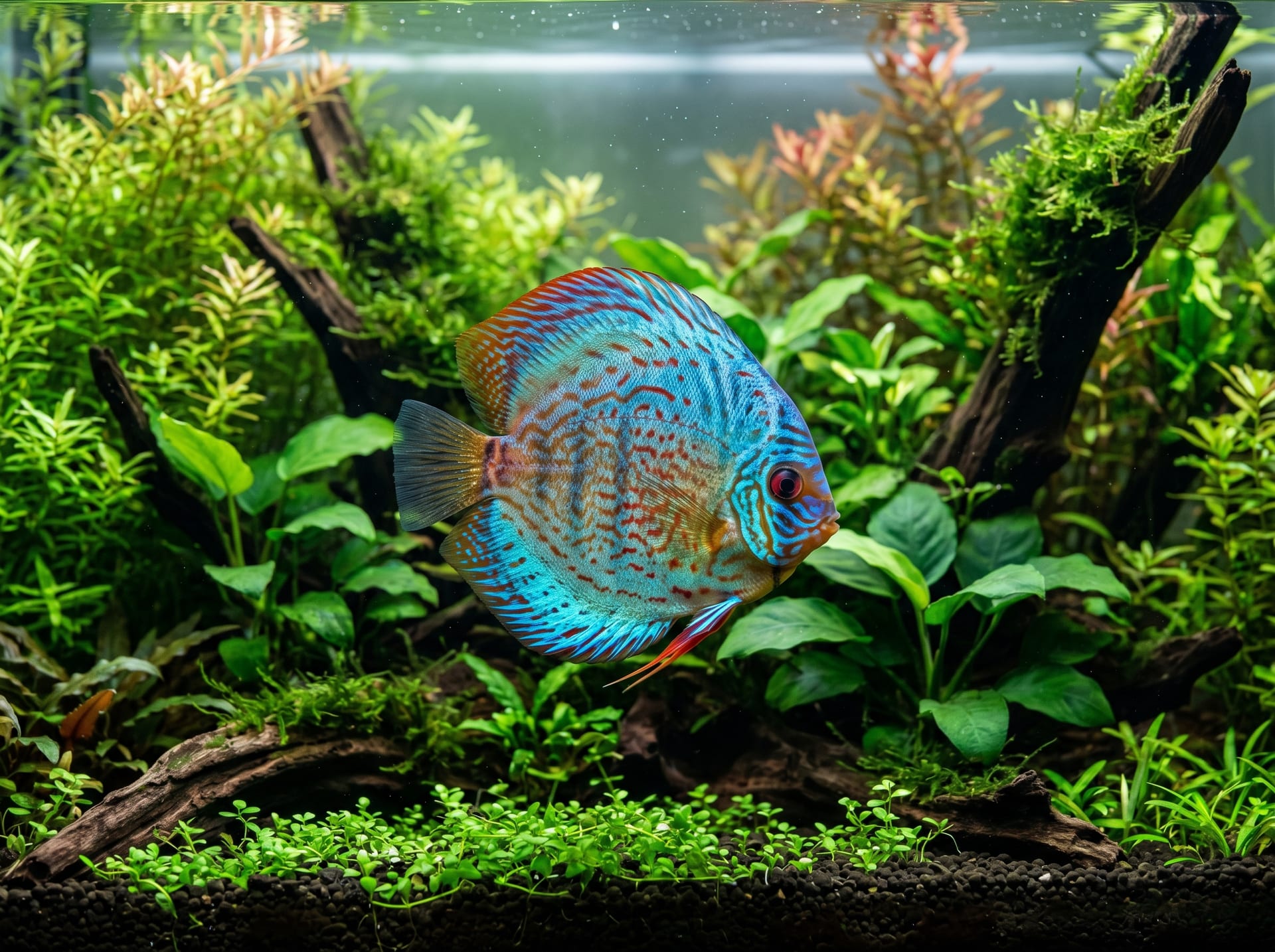
Advanced Discus Care Guide | Mastering Water Quality, Maturation, and Breeding
A comprehensive guide for advanced keepers on maintaining healthy Discus long-term and achieving successful breeding. Covers maintaining extremely soft water, promoting maturation, and detailed instructions from spawning to fry rearing.
Key Takeaways
A comprehensive guide for advanced keepers on maintaining healthy Discus long-term and achieving successful breeding. Covers maintaining extremely soft water, promoting maturation, and detailed instructions from spawning to fry rearing.
Related Species
Discus — Mastering Advanced Care for the King of Tropical Fish
Discus are large cichlids native to the Amazon River basin, earning the title "King of Tropical Fish" for their distinctive disc-shaped body, diverse varieties, and intelligent behavior. While they require advanced husbandry, proper management enables long-term care (10+ years) and the rewarding experience of successful breeding.
This article is designed for intermediate to advanced keepers who have already established basic care parameters, providing practical guidance for long-term maintenance and breeding success.
Maintaining Extremely Soft Water — The Key to Discus Aquariums
Water in the upper Amazon basin, where Discus originate, is extremely soft (GH 1–3°dH) and slightly acidic (pH 5.5–6.8). Tap water varies by region, but most domestic supplies are moderately hard to hard, making RO (reverse osmosis) water essentially mandatory for breeding tanks.
Approaches to Water Softening: 1. RO Filter: Create pure water and add minimal mineral supplements to achieve desired hardness 2. Peat Moss Filtration: Natural tannins and humic acids lower pH and tint water naturally 3. Amazonia Substrate: Releases organic acids, effectively lowering pH and hardness
For breeding purposes, aim for GH 1–3°dH / pH 5.8–6.5 / TDS 50–100 ppm. For routine care, slightly higher values (GH 6–8) are acceptable, but adjust toward soft, acidic conditions before and during spawning.
Advanced Maintenance: Water Changes and Feeding Routines
Discus have low tolerance for nitrate buildup; when water becomes polluted, their coloration darkens and appetite declines. High-density and fry tanks often require 1–2 daily water changes of 30–50%, a practice common among professional breeders.
Advanced Feeding Guidelines: - Hamburger-style Pellets (homemade or commercial): Highly nutritious blends of beef heart, shrimp, and spirulina - Frozen Bloodworms: Extremely palatable; effective for stimulating appetite during acclimation - Pellets: Convenient for long-term storage and supplementary feeding - Ideal feeding: 3–5 times daily, amounts consumed within 5–10 minutes