African Cichlid Care Guide | The World of Tanganyika and Malawi Lake Fish
Explains care methods for African cichlids native to Lakes Tanganyika and Malawi. Covers how to create alkaline hard water, dealing with territorial behavior, and breeding techniques for mouthbrooding reproduction.
Key Takeaways
Explains care methods for African cichlids native to Lakes Tanganyika and Malawi. Covers how to create alkaline hard water, dealing with territorial behavior, and breeding techniques for mouthbrooding reproduction.
Related Species
The Diversity of African Cichlids — Jewels Born from Evolution's Laboratory
The great Rift Valley lakes of Africa — Lakes Tanganyika and Malawi — are known as "evolution's laboratories," where hundreds to over a thousand cichlid species have undergone independent evolution. Lake Tanganyika is the world's second-deepest lake (maximum depth approximately 1470m) and geologically extremely ancient. Here, species with vastly different ecologies and body forms coexist, such as Frontosa (Cyphotilapia frontosa), various Lamprologus species, Altolamprologus, and shell dwellers (Lamprologus ocellatus and related species).
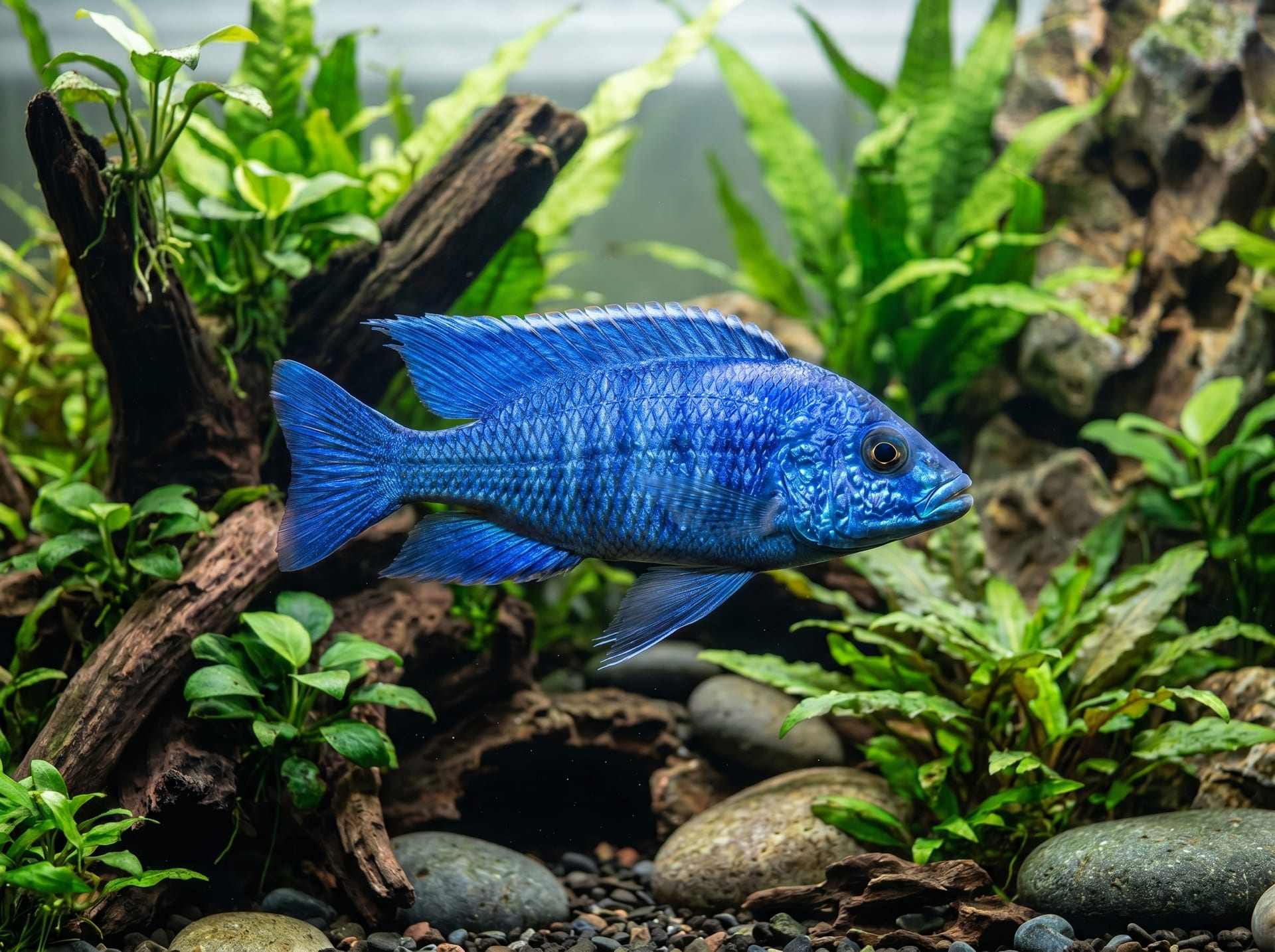
Lake Malawi, meanwhile, has one of the world's highest levels of cichlid species diversity, with mbunas inhabiting rocky reefs (small to medium-sized species), peacocks related to Oreochromis, and hemichromines all mixed together. Representative mbunas such as Metriclima zebra and Labidochromis caeruleus (yellow lab) are relatively easy to obtain at tropical fish shops in Japan.
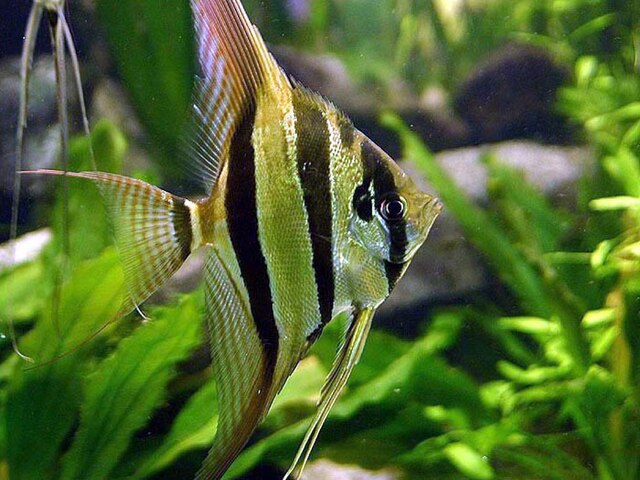
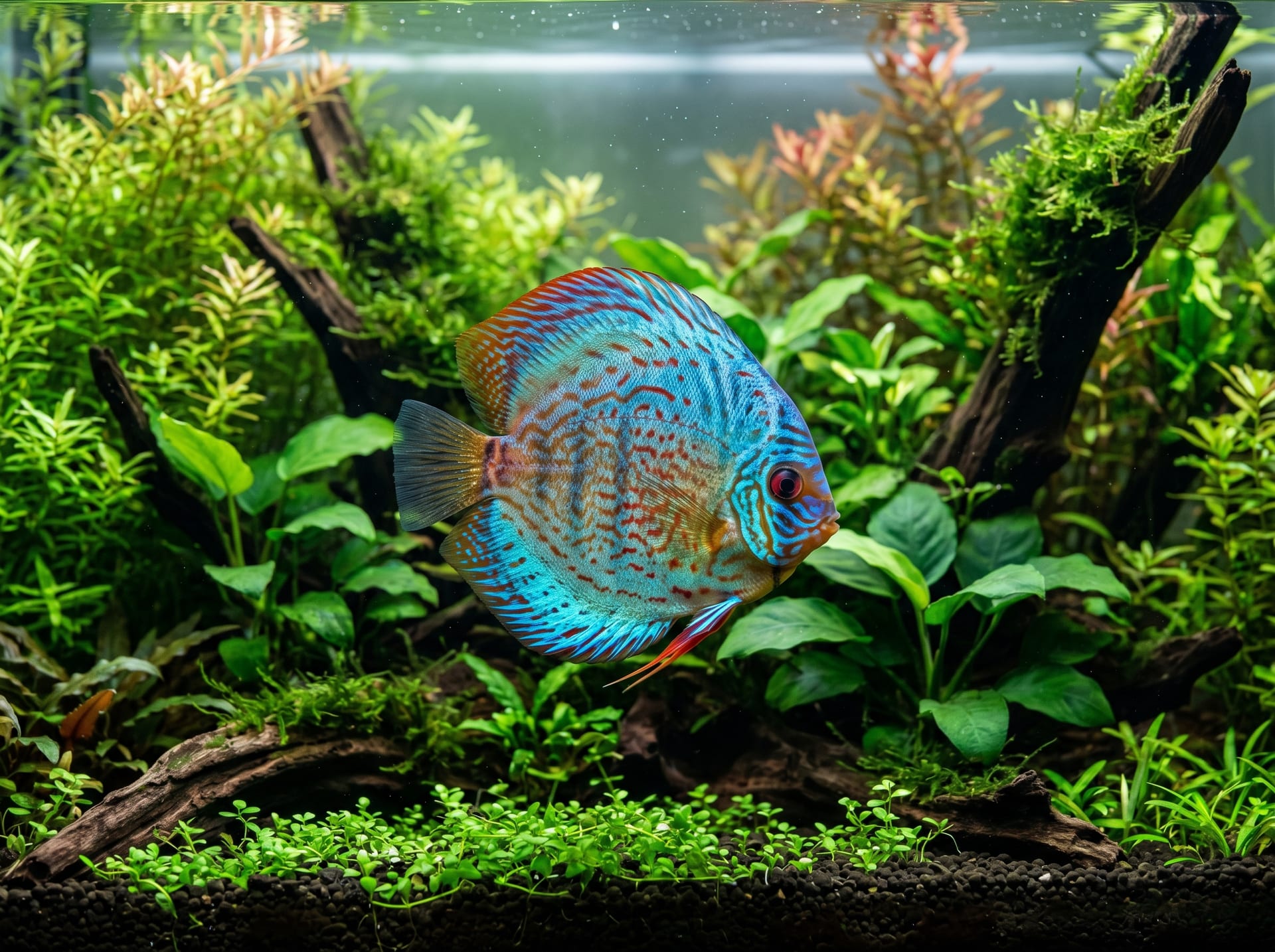
In contrast to Amazonian cichlids (discus fish, angelfish, etc.) which prefer soft, slightly acidic water, African cichlids require hard, alkaline water conditions. This difference in water quality is both the first hurdle in African cichlid keeping and its most defining characteristic.
Water Chemistry Setup — How to Create Hard, Alkaline Water
Target water chemistry for Lakes Tanganyika and Malawi:
- pH: 7.8–8.5
- GH (General Hardness): 10–20°dH
- KH (Carbonate Hardness): 8–15°dH
- Water Temperature: 24–27°C
Japanese tap water, particularly in the soft water regions of the Kanto to western Japan, does not naturally reach these parameters, so artificial adjustment is necessary.
Main methods for hardening water:
- Coral sand (coarse to fine grades) used as substrate or filter media — the simplest method to naturally raise and maintain KH and pH gradually
- Direct addition of sodium bicarbonate (baking soda) or calcium carbonate — quick-acting but requires careful dosing
- Use of African cichlid-specific mineral salts (such as Seachem Rift Lake Salts) — comprehensively supplements calcium, magnesium, and bicarbonate
- Adding mineral supplements to RO water — allows the most precise control regardless of local water chemistry
Since rapid pH fluctuations cause major stress to fish, it is important to add pre-adjusted water gradually during water changes. Always keep a pH meter and KH/GH test kits on hand.
Powerful filtration is essential. Large external or canister filters are recommended. While African cichlids have slightly higher nitrate tolerance than South American cichlids, overconfidence is unwise. Perform regular 10–20% water changes weekly without fail.
Tank Layout and Equipment Selection
In African cichlid keeping, tank size and layout greatly influence the fish's health.
Tank size guidelines:
- Mbunas and small Tanganyikan species (5–10 cm body length): 90 cm minimum recommended
- Medium-sized species (Frontosa, peacocks, etc., 10–20 cm): 120 cm minimum
- Frontosa groups: 180 cm or larger ideally
The basic principle of layout is "stack many rocks and create multiple territorial zones." Use lava rock (which does not affect pH) or limestone. Limestone slightly raises pH and helps maintain alkaline conditions. Applying 2–3 cm of coral sand as substrate provides natural KH elevation.
If keeping shell dwellers (Tanganyikan species that use shells), place multiple shells on the substrate. They claim shells as "homes" and breed within them.
Territorial Behavior and Mixing Tank Tips
African cichlids, especially mbunas, have strong territorial instincts, and simply mixing multiple species can cause weaker individuals to be cornered. Keys to successful community tanks are as follows:
- Use overstocking strategically: Paradoxically, a higher fish density disperses territories and reduces attacks on specific individuals. Approximately 10–15 mbunas per 120-liter tank is a good guideline.
- Avoid similar colors and patterns: Species with similar coloring or body shape tend to recognize each other as the same species and fight intensely. Combine species with different colors.
- Provide plenty of hiding places with rock structures: Establishing several refuges where cornered fish can escape minimizes damage.
- Pay attention to male-to-female ratio: Mbunas with a roughly 1 male to 3–4 female ratio experience reduced male-to-male conflicts.
- Early detection of weaker individuals: Observe daily, and promptly isolate any fish with torn fins or being chased.
Many Tanganyikan species are relatively peaceful (shell dwellers, Frontosa, etc.), sometimes making community tanks easier than with Malawian mbunas. However, Frontosa prey on fish small enough to fit in their mouths, so pay attention to size differences among tank mates.
Mouthbrooding (Mouthbrooder) Reproduction
Many Malawian and some Tanganyikan species are "mouthbrooders" — they employ a cichlid-specific breeding strategy where eggs and fry are incubated in the mouth. This behavior is unforgettable once observed.
Breeding sequence:
- The male vibrates his body and displays the "egg spots" on his belly to court the female
- The female spawns, and immediately receives the male's sperm (oral fertilization)
- The female holds the eggs in her mouth and incubates and tends the fry there for about 1–3 weeks
- Once the fry can swim freely, they exit the female's mouth
The incubating female eats almost nothing and becomes exhausted. Either isolate her in a breeding net or separate tank away from other fish, or provide rock-based hiding places for protection. Fry are extremely small, so initial food should be baby brine shrimp or finely crushed pellets (200 microns or smaller). After 1–2 months when they reach about half the parent's size, gradually switch to adult food.
Feeding and Daily Care Tips
Most African cichlids are herbivorous to omnivorous, favoring plant material. Mbunas especially feed primarily on algae (Aufwuchs) on rocks in nature. Overfeeding high-protein carnivorous pellets risks bloat, abdominal distension, so caution is needed.
Recommended foods:
- Spirulina-based cichlid-specific flakes or pellets
- Vegetables (small amounts of blanched spinach or broccoli)
- Brine shrimp (as a weekly treat, once or twice)
Poor water quality, stress, and rapid temperature fluctuations easily trigger bloat, so stable daily management is the best prevention.
African cichlids are unmatched in the diversity of their coloration, behavior, and reproduction. With proper water chemistry management, you can enjoy the dynamic territorial conflicts and mouthbrooding behavior up close. Try recreating the great African lakes in your home aquarium.