Seasonal Transition Pet Care Tips — Managing Spring & Autumn Temperature Changes
Pet care during seasonal transitions: protecting animals from sudden temperature changes in spring and autumn.
Key Takeaways
Pet care during seasonal transitions: protecting animals from sudden temperature changes in spring and autumn.
The transitions between spring and summer and between autumn and winter are dangerous periods when live animals are most vulnerable to health problems. Day-to-night temperature swings can exceed 10°C, and these dramatic fluctuations impose significant stress on animals. This article explains the key care considerations during seasonal transitions from both spring and autumn perspectives.
Why Seasonal Transitions Are Dangerous
Many kept animals are ectotherms (cold-blooded), unable to regulate their own body temperature. Environmental temperature changes directly impact their health.
Immune suppression: Rapid temperature changes lower an animal's immune defenses. Normally harmless resident bacteria can become active and cause disease. White spot disease in fish and respiratory infections in reptiles frequently occur during these periods.
Digestive impact: As temperatures drop, digestive enzymes become less effective. Normal food quantities may not be fully digested, causing digestive problems.
Stress response: Temperature fluctuation itself becomes a stressor, manifesting as decreased appetite, reduced activity, and abnormal behaviors (such as glass surfing in fish).
Spring (March-May) Measures
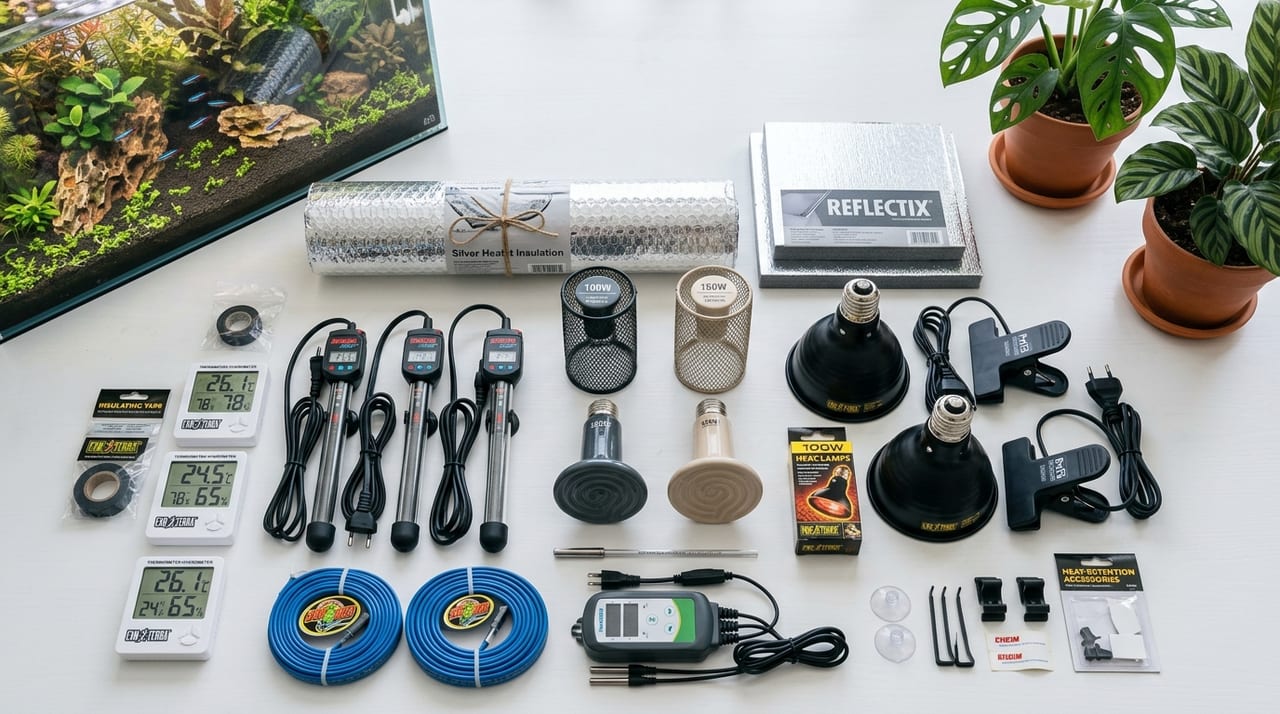
Heater Management
Spring is all about timing the heater removal correctly. While days may be warm, mornings and evenings can still be cold -- removing heaters too early risks sudden temperature drops.
Guideline: Keep the heater installed until the minimum temperature consistently exceeds the species' preferred range. Check 7-day forecasts for minimum temperatures and err on the side of caution.
Gradual temperature changes: When removing a heater, lower the set temperature by 1-2 degrees over several days. Avoiding sudden temperature changes minimizes stress on animals.
Feeding Adjustments
Spring brings rising temperatures and increasing animal activity. Animals that lost appetite in winter gradually begin eating more. However, do not suddenly increase portions -- digestive organs may not be fully operational yet. Increase amounts gradually.