Safe Packing and Shipping Manual for Live Animals
A complete guide to packing and shipping techniques for safely delivering live animals, covering temperature management, oxygen supply, and cushioning material selection.
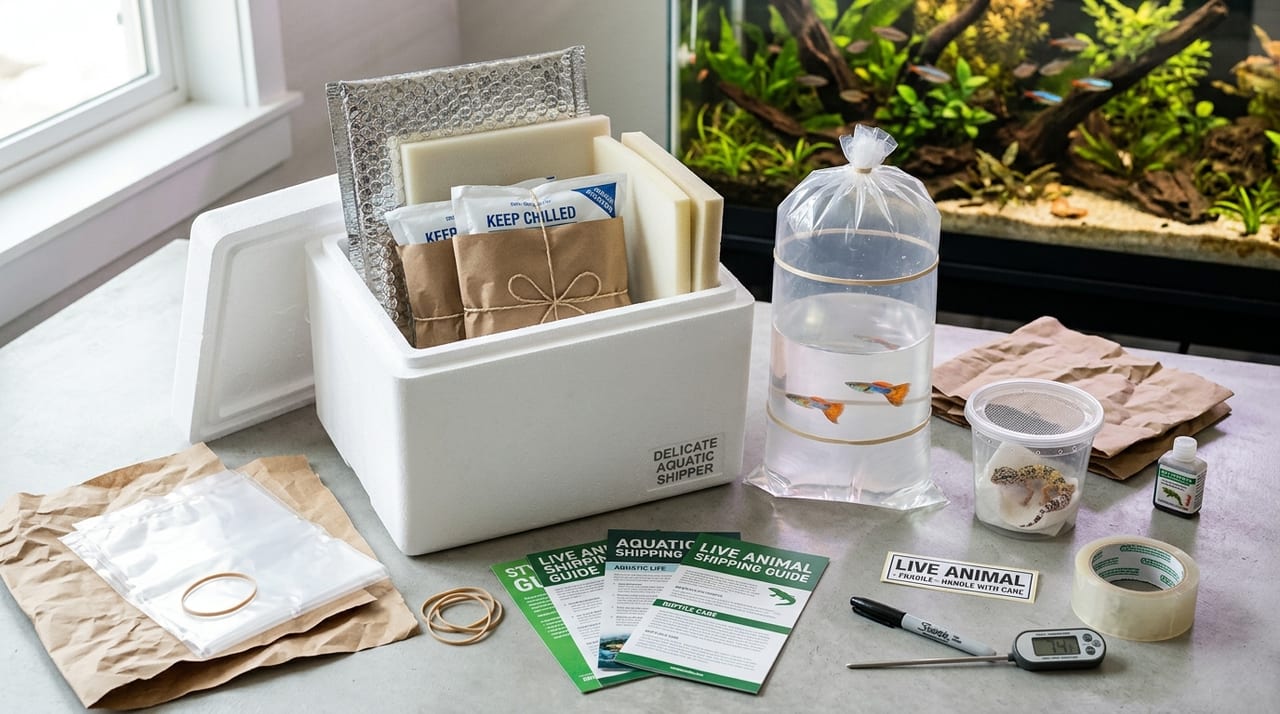
Key Takeaways
A complete guide to packing and shipping techniques for safely delivering live animals, covering temperature management, oxygen supply, and cushioning material selection.
Shipping live animals is far more than simply "transporting cargo." It is a responsible task of caring for small lives and ensuring they arrive safely. Even the finest individual specimens will weaken before reaching the buyer if there are mistakes in packing and shipping. Conversely, meticulous packing and proper shipping become a mark of trust as a breeder, leading to high ratings and future transactions. This manual walks through best practices for packing and shipping by animal type, so that even first-time shippers can proceed with confidence.
The 5 Basic Principles of Packing
Regardless of animal type, all shipments share fundamental principles. Let's grasp these first.
- Immobile securing — Use cushioning materials to firmly secure the container so it doesn't shift or roll inside the box during transport. The ideal state is for it not to move even under impact.
- Temperature stability — Sudden temperature changes cause significant stress to live animals. Use foam boxes or insulating sheets to minimize exposure to outside temperatures.
- Oxygen supply — Water-dwelling animals require sealed bags filled with oxygen; reptiles and small animals need breathing holes. Create an appropriate respiratory environment for each species.
- Double or triple safety measures — To reduce risks of water leaks, escapes, and damage, always use two or more layers of bags or containers. Complacency ("it should be fine") leads to accidents.
- Clear labeling of "Live Animals Inside" and "This Side Up" — Mark the outer box clearly with stickers or by hand so shipping carriers handle it carefully.
Packing Procedures for Aquatic Animals (Fish and Coral)
For aquatic animals, oxygen management and water temperature control are particularly critical. Planning for arrival time and providing a generous environment increases survival rates.
Required Materials
- Vinyl bags (thick, double-layered, or specialized fish bags)
- Pure oxygen cylinder or air pump
- Rubber bands or specialized sealer
- Newspaper and cushioning materials
- Foam box (thicker grades recommended)
- Cool packs (summer) or heat packs (winter)
Procedure
- Fill the bag with aquarium water — Water should comprise about one-third of the bag's total volume. Too much makes the bag heavy and prone to tears; too little leaves water temperature unstable.
- Gently transfer the animal — Scoop the animal with a net and place it in the bag. Work quickly to minimize stress.
- Fill with oxygen — Fill the remaining space with pure oxygen and seal the bag tightly. Pure oxygen (rather than air, which contains only ~21% oxygen) supports longer shipping times.
- Double-bag — As a precaution against leaks, always place the bag inside a second bag.
- Wrap in newspaper and place in foam box — Wrap the bag in newspaper for impact absorption and insulation, then place it in the center of the foam box.
Coral Packing Notes
Secure coral fragments on plugs in small containers like deli cups before bagging, then wrap each specimen individually so corals don't touch each other. Species with toxins or stinging cells must be completely separated from other corals and fish. Polyp damage from contact, though not always visible, can lead to weakening after arrival. In BreederDirect's coral and marine fish categories, highly-rated sellers tend to exhibit this level of packing quality.
Packing Procedures for Reptiles and Small Animals
Reptiles and small animals don't require sealed oxygen filling, but temperature control and escape prevention are top priorities.
Required Materials
- Cloth bag (for snakes) or deli cups/plastic containers (for lizards, geckos)
- Paper towels or newspaper
- Cardboard box with ventilation holes
- Heat packs (winter) or cool packs (summer)
Procedure
- Use appropriate containers — Snakes go in cloth bags; lizards, geckos, frogs, etc. fit well in deli cups or small plastic containers. Container size should be snug enough to minimize movement and reduce stress.
- Line the bottom with paper towels — This absorbs waste and provides cushioning.
- Secure with no movement — Surround the container with crumpled newspaper or cushioning so it doesn't rattle inside the box.
- Include temperature control — Place heat packs wrapped in newspaper on the side; direct contact risks burns. Wrap cool packs in towels or newspaper before including them.
- Drill ventilation holes — Drill several small holes (5–8 mm diameter) in the sides of the cardboard box to ensure airflow.
Temperature Management by Season
Outside temperature is the single largest variable determining shipping success. Always implement season-appropriate measures.
Summer (June–September)
High temperatures pose the greatest risk of oxygen depletion and heat stress. Wrap cool packs in towels, place them at the top of the box, and let the cool air fall naturally. On days when temperatures exceed 35°C, even the best precautions have limits. Delaying shipment to the next day or later is part of your responsibility as a breeder. In summer, always specify morning delivery as your time window.
Winter (November–March)
Low temperatures risk freezing and reduced movement. Use 40-hour heat packs and ensure insulation with a foam box. A cardboard box alone provides insufficient insulation. For shipments to extremely cold regions or remote islands, consult with the buyer in advance and choose a date when the minimum temperature is higher.
Spring and Autumn (April–May and October–November)
These are relatively stable seasons, but daytime and nighttime temperatures differ significantly. Including modest insulation materials is wise. Don't assume "warm weather means all is fine"—check the forecast before shipping. 2026 shows large spring temperature fluctuations, so extra caution is warranted.
Best Practices for Shipping
Perfect packing means nothing if your timing or procedures are wrong. Make these habits:
- Ship on weekday mornings — Weekend and holiday processing is often delayed, sometimes preventing next-day arrival. Shipping on a weekday morning significantly increases the odds of morning arrival the next day.
- Always share the tracking number — Immediately after shipping, send the tracking number to the buyer via BreederDirect's messaging feature. This helps buyers stay home and use time windows.
- Communicate the expected arrival time — Say something like "It should arrive tomorrow morning," giving the buyer time to prepare.
- Always check the weather — Avoid shipping during typhoons, heavy snow, or extreme heat. Shipping delays can be fatal to live animals.
- Ship immediately after packing — Avoid long delays after bagging or boxing. Pick up or deliver to a shipping window right away.
Conclusion
Safe packing and shipping are among the most important responsibilities of a breeder. No matter how appealing a specimen is, if it arrives weakened from shipping problems, you lose the buyer's trust. Conversely, meticulous packing and attentive communication create an experience that says, "I'm glad I bought from this breeder."
BreederDirect's system provides buyer-to-breeder ratings after each transaction. Consistent safe shipping builds a track record of ratings that benefits future sales. If problems do occur, BreederDirect's support team mediates and helps resolve them. As you improve your breeder skills by refining your product descriptions and photography, take care with packing and shipping too. If you're nervous about your first animal shipment, use this manual as a guide and proceed carefully, step by step.