Teddy Bear Hamster vs Syrian Hamster Care Comparison Guide
A comprehensive comparison of Teddy Bear Hamsters and Syrian Hamsters, covering differences and similarities. This complete guide covers coat length, grooming requirements, cage setup, temperament traits, and health risks to help you choose the right hamster.
Key Takeaways
A comprehensive comparison of Teddy Bear Hamsters and Syrian Hamsters, covering differences and similarities. This complete guide covers coat length, grooming requirements, cage setup, temperament traits, and health risks to help you choose the right hamster.
Related Species
Both "Teddy Bear Hamsters" and "Syrian Hamsters" are popular, but these two are actually closely related. This article explains their differences and similarities, along with important care considerations. We've compiled information to help those unsure about which hamster to choose or those considering getting one.
The Relationship Between Teddy Bear Hamsters and Syrian Hamsters
Are They Actually the Same Species?
First, as an important fact: Teddy Bear Hamsters are a long-haired variety (selectively bred variety) of Syrian Hamsters (Golden Hamsters). Biologically, they are the same species (Mesocricetus auratus), with only the variety differing.
| Comparison Item | Teddy Bear Hamster | Syrian Hamster (Short-haired) |
|---|---|---|
| Official Name | Long-haired Syrian Hamster | Syrian/Golden Hamster |
| Coat Length | 3–7cm (longer in males) | 1–2cm |
| Size | 13–18cm, 90–150g | 13–18cm, 90–150g |
| Temperament | Calm, easy to handle | Highly variable by individual |
| Lifespan | 2–3 years | 2–3 years |
| Grooming | Required 2–3 times per week | Self-grooming is sufficient |
Body size, lifespan, and basic temperament are the same. The biggest difference is coat length and grooming requirements.
Appearance and Body Shape Comparison
Teddy Bear Hamster
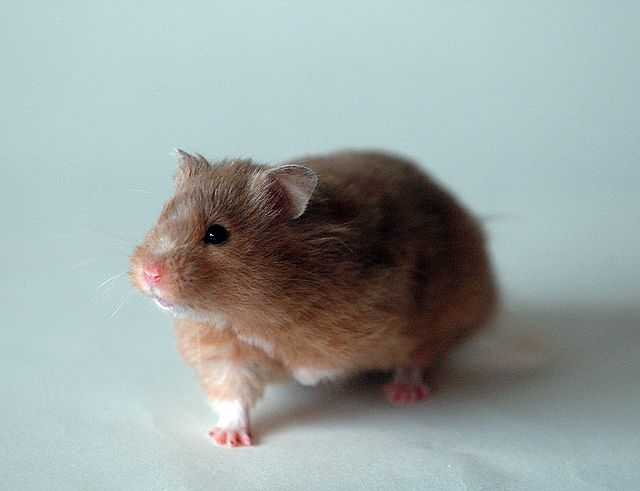
Named after their fluffy, teddy bear-like appearance. Their coat covers the entire body, and males especially have skirt-like long hair around the tail and lower back. Coat colors include gold, white, brown, gray, cream, and many others.
However, long coats require careful handling. Hair can easily get tangled in bedding and exercise wheels, making proper environment setup and grooming essential.
Syrian Hamster (Short-haired)
Characterized by smooth, glossy short hair. Coat color variations are as diverse as Teddy Bears, including Golden (wild-type) and many selectively bred colors.
They have excellent self-grooming abilities, making matting almost non-existent. Short-haired Syrian Hamsters may actually be easier for beginners to care for.
Temperament and Personality Comparison
Common Personality Traits
All Syrian Hamsters (including Teddy Bears) share these traits:
- Solitary nature: Once adults, they cannot coexist with other hamsters (extremely strong territorial instinct). Single housing is always the rule
- Nocturnal: Active from evening through night. Mostly asleep during the day
- Territorial awareness: Cage layout changes cause significant stress
- Memory: Recognize their keeper's scent and voice. Once tamed, they may climb into your hand
Teddy Bear-Specific Tendencies
Teddy Bear Hamsters are generally calmer and more easily hand-tamed than other varieties. However, this is less a breed trait and more dependent on individual personality and how they're socialized.
Tips for Taming
Both varieties take time to get used to their owner.
- First week: Let them adjust to the cage environment. Don't handle them
- Build scent familiarity: Place your hand near the cage so they become accustomed to your scent
- Build trust with treats: Offer treats directly from your hand
- Start with short sessions: Begin with 5–10 minute hand-taming sessions. Longer periods cause stress
Cage and Environment Comparison
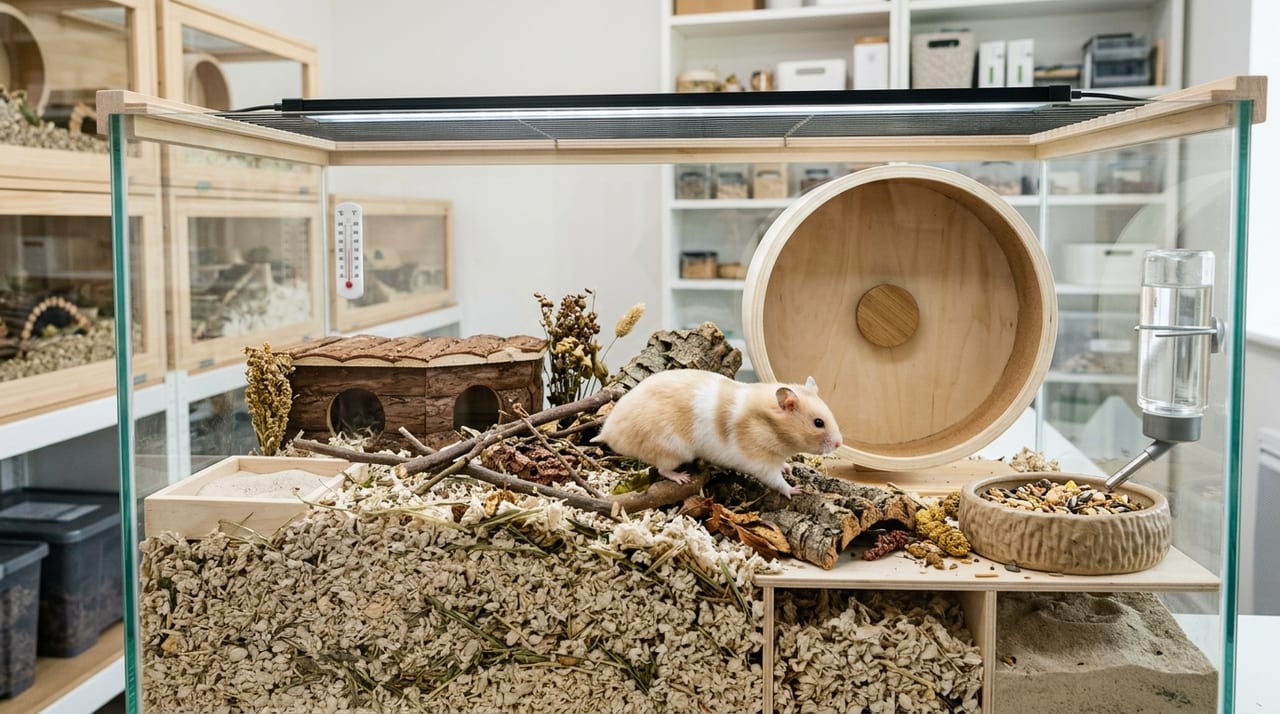
Choosing a Cage
Both varieties require appropriately sized cages.
- Minimum size: Floor area of at least 60×40cm (width of 60cm or more recommended)
- Height: 30cm or more (for deep bedding)
- Type: Plastic or glass aquarium-style tanks work best
Teddy Bear-Specific Considerations:
- If cage bar spacing is too wide, hair can get caught. Choose bars spaced 0.8cm or less apart, or use an aquarium tank
- Exercise wheel must be solid type (no mesh) to prevent hair entanglement accidents
Bedding Selection
- Paper-based bedding: Best for both varieties. Highly absorbent with minimal skin irritation
- Wood shavings (hardwood): Suitable for Syrian Hamsters. Teddy Bears require caution about hair tangling
- Avoid: Cotton batting (intestinal blockage risk), pine and cedar shavings (irritating)
Bedding should be 7–10cm or deeper to encourage natural burrowing behavior.
Exercise Wheel
- Diameter: 28cm or larger (large enough that their back doesn't curve)
- Type: Solid, silent-running wheel (especially important for Teddy Bears)
Hamsters can run several kilometers per night, so a wheel is essential for health maintenance.
Grooming Differences
Grooming Teddy Bear Hamsters
Teddy Bear Hamsters require brushing 2–3 times per week.
- Tools: Fine-toothed comb, small slicker brush
- Method: Gently comb in the direction of hair growth. Never pull forcefully
- Areas to check: Rear end and feet (feces and urine easily get tangled), behind ears (matting is common)
Matted areas should be carefully cut with fine rounded-blade scissors. Protect the skin with your fingers while cutting to avoid injury.
Syrian (Short-haired) Care
Self-grooming is usually sufficient, but a weekly check-brushing also lets you monitor their health.
Diet and Nutrition Management
Both varieties have identical dietary requirements.
- Base pellet diet: About 10% of body weight daily (10g for a 100g hamster)
- Timothy hay and dried vegetables: Small amounts (mixed with pellets or in separate dish)
- Fresh vegetables: Broccoli, carrots, kale in small amounts, 3–4 times per week
- Avoid: Onions, garlic, chocolate, avocado, spicy foods
Teddy Bear consideration: During feeding, their coat may contact food, and feces or moisture may soil their hair. Use a stable, shallow dish and keep the bedding thin around the feeding area to prevent coat soiling.
Health Management and Common Health Concerns
Common Health Risks
- Wet tail (proliferative ileitis): Diarrhea and soiled tail area. A high-priority emergency condition common in young hamsters
- Cheek pouch prolapse: The cheek pouch turns inside-out and protrudes from the mouth. Often caused by sticky foods
- Tumors: More likely after 2 years of age. Regularly check for lumps on the body surface
Teddy Bear-Specific Risks
- Skin inflammation: Caused by moisture from long-hair matting or irritation from tangles
- Hair entanglement: Hair tangled around feet and genital area can restrict blood flow (emergency situation)
Which Should You Choose?
| If You're This Type | Recommended Variety |
|---|---|
| Hamster beginner | Syrian (short-haired) |
| Enjoy grooming | Teddy Bear |
| Want to handle and hand-tame | Either (depends on individual) |
| Want minimal care | Syrian (short-haired) |
| Prioritize cuteness | Teddy Bear |
Summary
Teddy Bear Hamsters and Syrian Hamsters are biologically the same species, differing only in coat length. Lifespan, basic temperament, diet, and cage requirements are identical. Teddy Bears are attractive for their beautiful coats but require weekly grooming and a long-hair-appropriate environment. The biggest deciding factor between the two is whether you enjoy the grooming routine. Either way, acquiring a healthy hamster from a reputable breeder is the first step toward a long and enjoyable hamster-keeping experience.