Beginner's Guide to Keeping Giant Water Bugs and Diving Beetles | Aquatic Insect Care Environment, Feeding, and Breeding Methods
A beginner-friendly guide to keeping giant water bugs and diving beetles. We've compiled easy-to-understand fundamental knowledge on aquatic insect husbandry, from tank setup and water quality management to feeding, overwintering, and breeding.
Key Takeaways
A beginner-friendly guide to keeping giant water bugs and diving beetles. We've compiled easy-to-understand fundamental knowledge on aquatic insect husbandry, from tank setup and water quality management to feeding, overwintering, and breeding.
Related Species
Giant water bugs and diving beetles were once common sights in rice paddies and ponds, but their populations have drastically declined due to pesticide use and agricultural development. Today they are known as rare insects. Due to their unique ecology and striking appearance, more insect enthusiasts are keeping them. However, the giant water bug (since February 2020) and the diving beetle (since January 2023) are designated as Specified Category II Domestic Rare Species under Japan's Act on Conservation of Endangered Species of Wild Fauna and Flora, so capturing or transferring them for sale or distribution (buying and selling) is prohibited, including captive-bred individuals. This article explains the basic care methods for Giant water bugs and diving beetles in a way that beginners can easily understand.
Giant Water Bugs and Diving Beetles: Basic Information
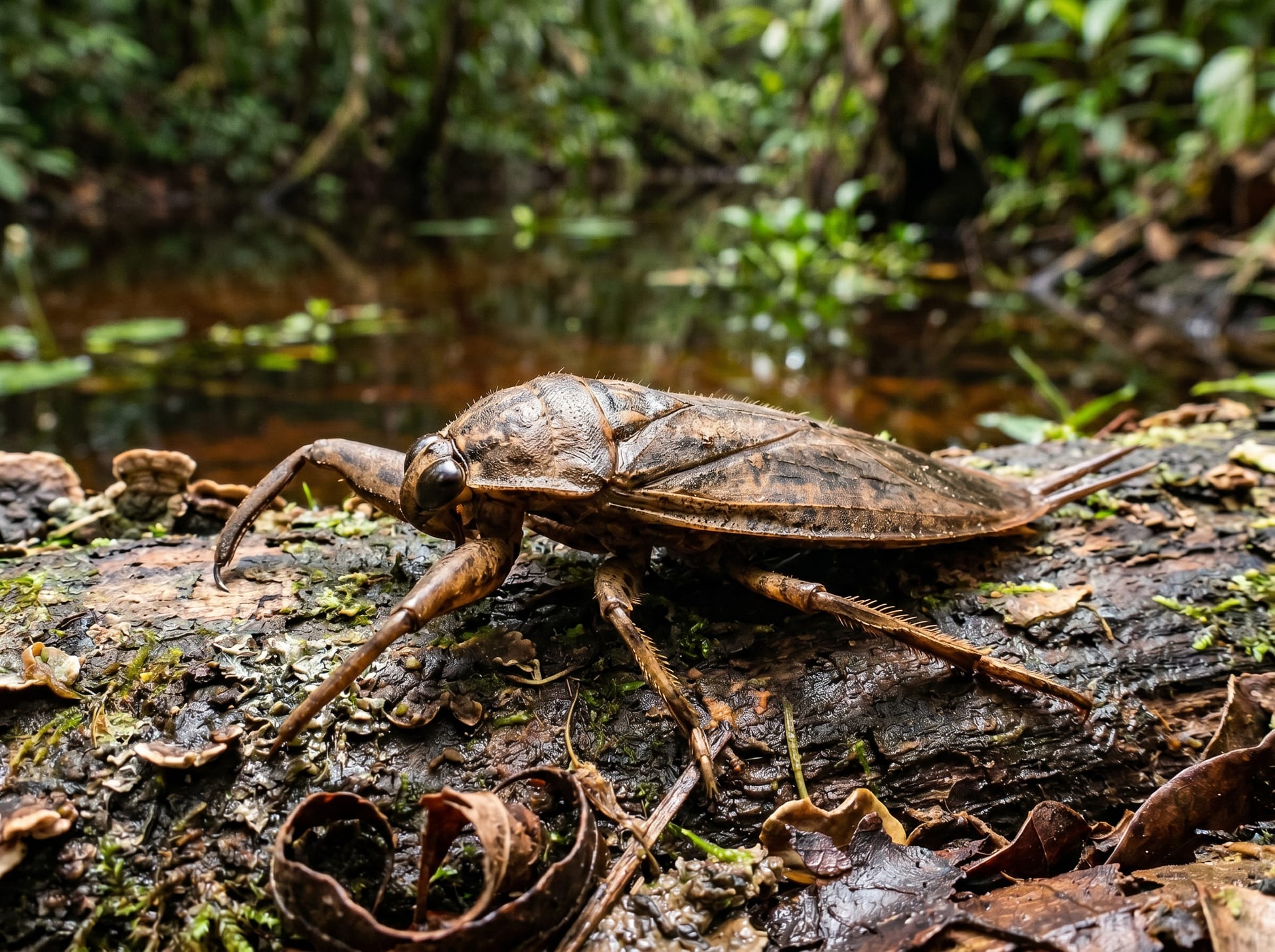
Giant Water Bug (Lethocerus deyrollei)
The Giant water bug is Japan's largest aquatic insect, with adult body length around 5–6.5 cm. It belongs to the true bug family (order Hemiptera, family Belostomatidae) and feeds by piercing prey with its pointed rostrum to extract body fluids.
| Item | Details |
|---|---|
| Body length | Adults: 5–6.5 cm |
| Lifespan | Adults: approximately 1–2 years |
| Diet | Carnivorous (fish, tadpoles, frogs, insects) |
| Flight ability | Present (may fly at night) |
| Special note | Listed on the Japanese Ministry of the Environment Red List (Vulnerable, VU); designated a Specified Category II Domestic Rare Species under the Act on Conservation of Endangered Species (since February 2020) |
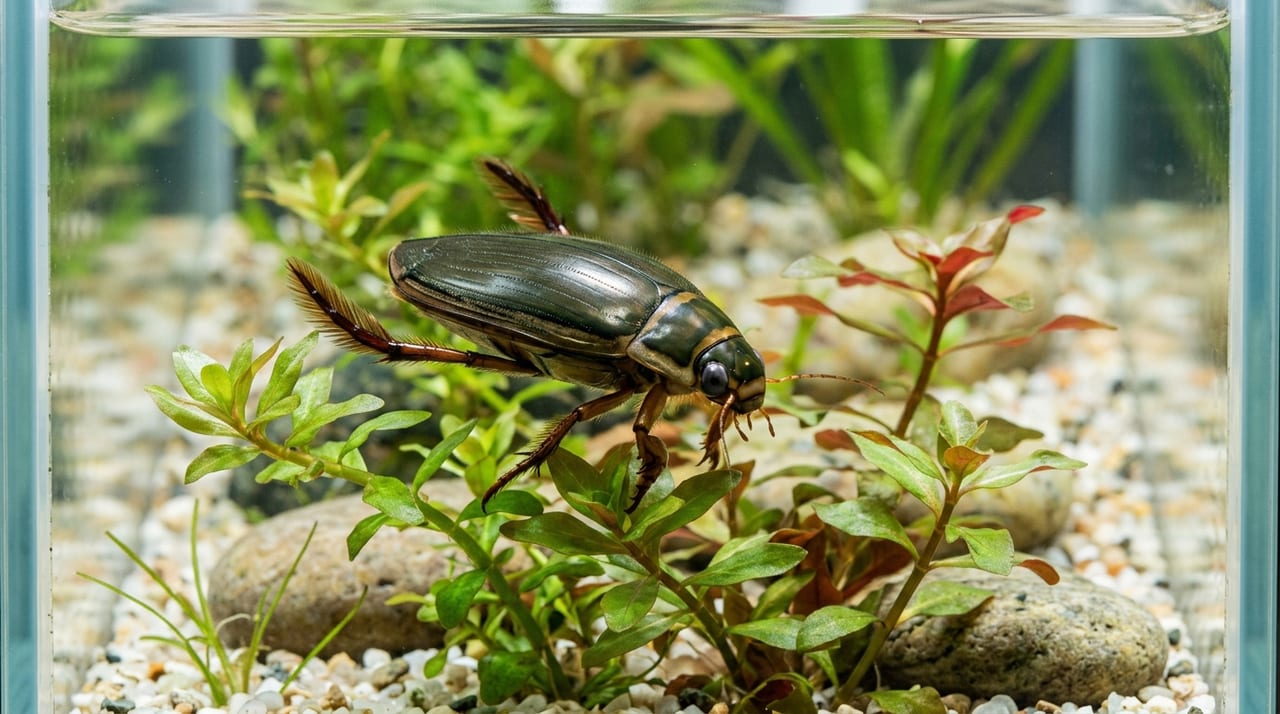
Diving Beetle (Cybister japonicus)
The diving beetle belongs to the order Coleoptera, family Dytiscidae, and is characterized by its rounded, dark greenish streamlined body. Both nymphs and adults are carnivorous, with nymphs being particularly aggressive predators.
| Item | Details |
|---|---|
| Body length | Adults: approximately 3.5–4 cm (for the common diving beetle species) |
| Lifespan | Adults: approximately 1–3 years |
| Diet | Carnivorous (similar in both nymph and adult stages) |
| Flight ability | Present (may fly at night) |
| Special note | Listed on multiple prefectural red lists; designated a Specified Category II Domestic Rare Species under the Act on Conservation of Endangered Species (since January 2023) |
Both are Specified Category II Domestic Rare Species under the Act on Conservation of Endangered Species, so they cannot be purchased from breeders or specialty shops, including captive-bred individuals. Collecting them to keep as personal pets is outside the scope of that Act, but some local governments prohibit capture by ordinance. The Ministry of the Environment asks people not to collect them indiscriminately and to keep any individuals they raise for life rather than releasing them into the wild.
Tank Setup and Water Environment
Tank Size and Material
For Giant water bugs, a minimum tank size of 30 cm or larger is recommended per individual. Multiple specimens carry a risk of cannibalism, so solitary housing is the general principle. Diving beetles may coexist in a 45 cm tank with 2–3 individuals, but you should continue observing and adjusting as needed.
Water Quality and Depth
- Water depth: 10–20 cm is standard. If too deep, the insect will need to surface more frequently, leading to physical exhaustion.
- Water temperature: 15–28°C is ideal. Above 30°C they weaken, so cooling fans or air conditioning are necessary during summer.
- Water quality: Use dechlorinated tap water. Change 1/3 of the water 1–2 times per week.
- Filter: Use a sponge filter or undergravel filter. Strong water flow is not necessary.
Substrate and Aquatic Plants
Substrate is optional but creates a more natural environment. While Giant water bugs rarely burrow in sand, it provides a stable hiding place. Aquatic plants (Java moss, cabomba, etc.) help stabilize water quality and provide hiding spots.
Escape Prevention
Both Giant water bugs and diving beetles have flight ability, so a cover is essential. There is a particular risk of them flying out at night or during weather changes. Use a lid with no gaps or fine mesh netting to ensure they cannot escape.
Types of Food and Feeding Methods
Giant Water Bug Diet
Giant water bugs react strongly to moving prey and feed by extracting body fluids. The main food options are as follows:
- Small goldfish or medaka: The most commonly used standard food. Feed 1–2 individuals 1–2 times per week.
- Crickets (live food): Feed by dropping near the surface; they will prey on them. Easy to obtain.
- Mealworms: Touch the water surface with tweezers; they may eat them.
- Frozen bloodworms (thawed): Since Giant water bugs prefer moving food, they may not feed well on static prey.
When feeding, observe carefully to prevent uneaten food from accumulating. Remove any uneaten food promptly to prevent water quality deterioration.
Diving Beetle Diet
Adult diving beetles prefer live moving prey, but they may also respond to prepared foods once acclimated.
- Frozen bloodworms: Thaw and float on the water surface.
- Small fish meat: Offer small portions with tweezers.
- Prepared food (food pellets for carp or goldfish): Some individuals will eat these.
- Crickets and mealworms: Can be offered as live food.
Nymphs are more aggressive predators than adults and readily capture tadpoles and medaka. Nymphs and adults must always be housed in separate containers.
Overwintering Management
Giant water bugs and diving beetles are ectothermic, so their metabolism slows and activity decreases in winter.
- Water temperature below 10°C: They eat very little. Force-feeding causes digestive problems and water quality deterioration.
- Near 0°C: They enter hibernation. Japanese native species can overwinter at 0–5°C.
- Indoor housing: Placing them in a stable environment of 10–15°C allows slow, sustained activity.
During winter, reduce water change frequency (once every 1–2 months) and feed about once every 2 weeks.
Breeding Basics
Giant Water Bug Breeding
Giant water bugs breed from spring through summer (May–August). Males exhibit a unique behavior of guarding eggs laid on aquatic plants or wood extending above the water surface.
- House males and females together for 1–2 weeks for pairing (though there is a cannibalism risk, so observation is essential).
- Females lay 200–300 eggs in a batch.
- Males supply moisture to the eggs to aid hatching.
- Newly hatched nymphs require live food, so they must be managed in separate containers.
Diving Beetle Breeding
Diving beetles also breed in spring and summer. They lay eggs on aquatic plant stems, so provide aquatic plants like Java moss for egg-laying.
- Larvae molt twice to reach the third (final) instar, then pupate.
- Final instar nymphs emerge from water and pupate on land, so you will need to establish a soil area (leaf mold) in the tank from which water has been drained.
- Development to adulthood takes approximately 2–3 months.
Conclusion: Enjoy Keeping These Rare Aquatic Insects
Giant water bugs and diving beetles have a moderately high difficulty level for husbandry, but observing their rarity and powerful ecology offers genuine satisfaction. Because the Act on Conservation of Endangered Species prohibits capturing or transferring them for sale or distribution (buying and selling), they cannot be purchased. Do not collect them indiscriminately, and keep any individuals you raise for life rather than releasing them into the wild. For general information on insect husbandry, see also Legal Guide to Insect Keeping and Import Regulations.
BreederDirect has created an environment where you can safely obtain captive-bred individuals from domestic breeders (excluding species whose sale is prohibited, such as giant water bugs and diving beetles). Why not take on the challenge of keeping aquatic insects for the first time while receiving advice directly from experienced breeders?