Introduction to Keeping Giant Water Bugs and Diving Beetles | Basic Guide to Aquatic Insect Care
A comprehensive guide explaining how to care for the rare aquatic insects Lethocerus deyrolli and diving beetles. Covers essential equipment, water quality management, feeding methods, and breeding—all the fundamental knowledge needed for successful aquatic insect care.
Key Takeaways
A comprehensive guide explaining how to care for the rare aquatic insects Lethocerus deyrolli and diving beetles. Covers essential equipment, water quality management, feeding methods, and breeding—all the fundamental knowledge needed for successful aquatic insect care.
Related Species
The Appeal of Aquatic Insects and an Overview of Their Care
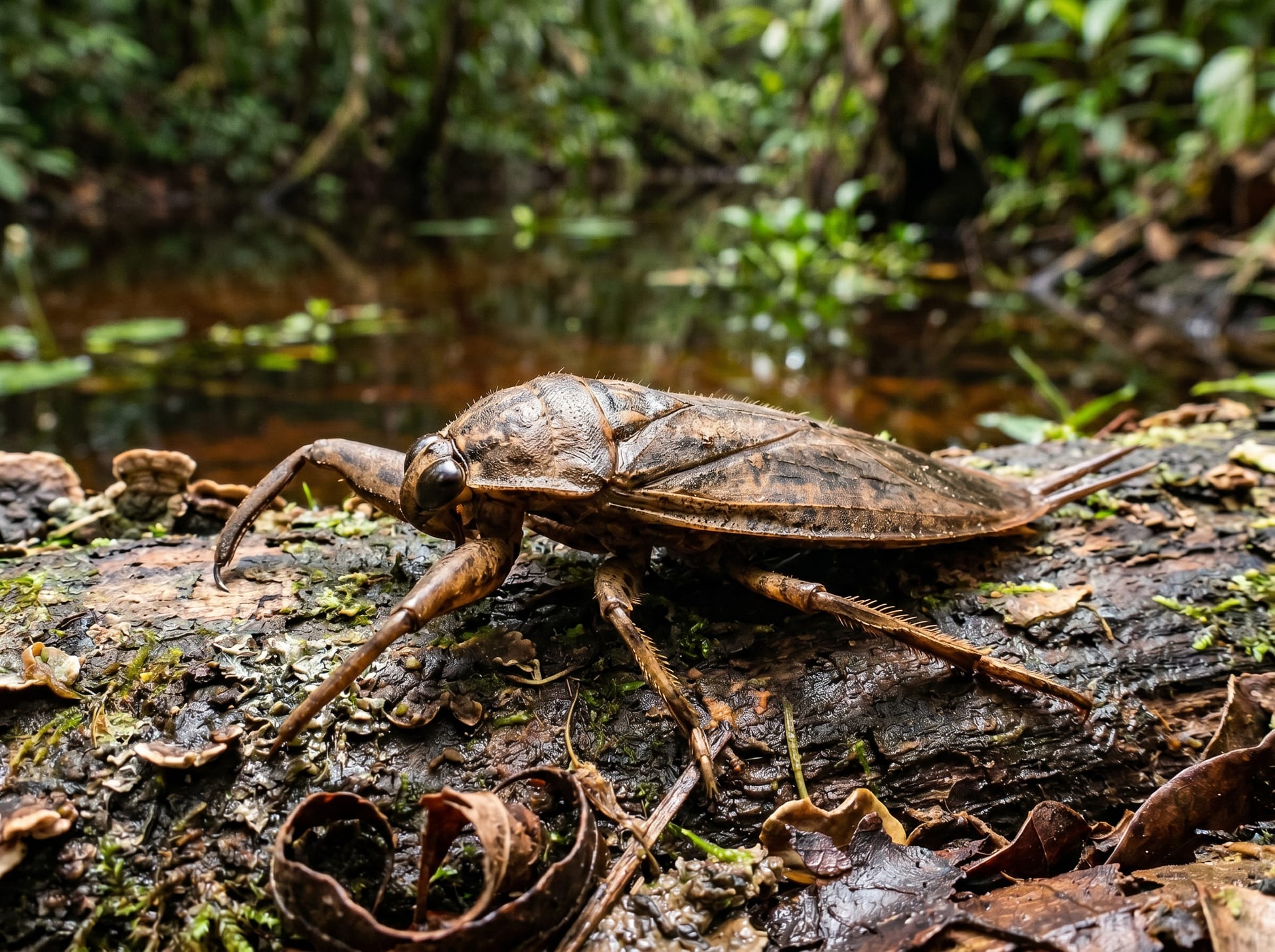
Lethocerus deyrolli (giant water bugs) and Cybister japonicus (diving beetles) are aquatic insects that once inhabited paddies and wetlands throughout Japan. Due to widespread pesticide use, rice paddy field reorganization, and wetland loss, their populations have declined drastically. Currently, Lethocerus deyrolli is listed as Endangered (Category II) on Japan's Red List, while the common diving beetle (Cybister japonicus) is listed as Critically Endangered (Category I).
While capturing wild individuals is not prohibited, collection should be kept to a minimum for population protection. Captive-bred individuals can be obtained from breeders and reptile/insect specialty shops. While aquatic insects are more challenging to care for compared to other insects, their unique ecology and movements are fascinating to observe, and keeping them offers a deeply rewarding hobby experience.
Required Equipment
For Giant Water Bugs (Lethocerus deyrolli)
Lethocerus deyrolli are large aquatic insects (body length 5–6 cm) that are carnivorous, preying on frogs and small fish. They should be kept individually, as housing them together carries a risk of cannibalism.
- Tank: 30–45 cm (at least 30 cm per individual)
- Water depth: 10–15 cm (too deep increases drowning risk)
- Land area: Cork or driftwood must be provided for them to rest above the water surface
- Filter: Air lift filter (strong water flow is not recommended) or internal power filter
- Lid: Essential, as they are capable fliers and will escape
- Lighting: Fluorescent lights or dim LED (avoid direct sunlight as it causes water temperature to rise)
For Diving Beetles (Cybister japonicus)
Diving beetles are 3–4 cm in body length, excellent swimmers, and very active. Like giant water bugs, they are carnivorous, but multiple individuals can be housed together (though cannibalism may occur if food is insufficient).
- Tank: 30–60 cm (larger tanks for multiple individuals)
- Water depth: 20–30 cm (adequate water volume is essential for water stability)
- Substrate: Fine soil or sand (serves as spawning substrate)
- Filter: Sponge filter or hang-on filter (gentle flow)
- Lid: Essential (diving beetles are also capable fliers)
- Aquatic plants: Riccia or similar (provide hiding places and help purify water quality)
Water Quality and Temperature Management
In the wild, giant water bugs and diving beetles inhabit still or slow-flowing water. Strong currents deplete their energy, so filter flow should be set to its gentlest setting.
Optimal Water Parameters
- Temperature: 18–28°C (optimal: 20–25°C)
- pH: 6.5–7.5 (neutral is safest)
- Chlorine: Use dechlorinated tap water
In summer, if water temperature exceeds 30°C, they become prone to illness. Avoid direct sunlight and use a cooling fan or aquarium chiller to maintain proper temperature if needed. In winter, use a heater to prevent temperature from dropping below 15°C. Alternatively, you can allow them to overwinter naturally at lower temperatures (10–15°C), though their appetite decreases and activity becomes sluggish.
Perform water changes 1–2 times per week, replacing 20–30% of the water volume. Daily remove uneaten food and feces with a siphon to prevent water quality deterioration.
Feeding
Since both giant water bugs and diving beetles are carnivorous, live foods or frozen foods are essential.
Giant Water Bug Food
- Goldfish and killifish (1/2 to 2/3 of their body length is easiest to capture)
- Frogs (in captivity, goldfish are the most readily available primary food)
- Frozen pink mice (nutritious and easy to store)
- Feeding frequency: 2–3 times per week (they often don't eat for several days after a meal)
Giant water bugs are ambush predators. Their behavior of hiding in aquatic plants or under shelters and stalking prey is fascinating to observe. Watch them hunt when you feed them—it's one of the joys of keeping them.
Diving Beetle Food
- Frozen bloodworms (most convenient and readily accepted)
- Frozen brine shrimp (effective for larvae)
- Leptomin (axolotl food) moistened and sunk in water
- Small live fish and live shrimp
- Feeding frequency: 1–2 times per day (uneaten food must be removed)
Diving beetle larvae are even more voracious carnivores than adults. If raising larvae, they must be housed individually with abundant food supply.
Attempting Breeding
Once you're comfortable with their care, you can attempt breeding. Both species can reproduce in captivity, though diving beetles tend to have higher success rates.
Giant Water Bug Breeding
- Breeding season: May–August (optimal temperature: 24–27°C)
- Males create egg-laying sites on driftwood or dead wood at the water surface where females lay eggs
- After egg-laying, isolate the female (risk of cannibalism)
- Males guard the eggs and spray them with water until they hatch (paternal care)
- After hatching, nymphs are independent foragers from their first instar and must be housed individually
Diving Beetle Breeding
- Breeding season: April–July
- Females insert their ovipositor into aquatic plant stems or substrate to lay eggs
- Eggs hatch in 2–3 weeks
- Larvae go through 3 instars before pupating on land (10–20 days)
- A terrestrial environment (moist soil) must be provided until the newly emerged adults return to water
Disease and Troubleshooting
Aquatic insects cannot be treated with standard fish medications. Here are the main troubles and how to address them.
Escape: The most common problem. Always use a lid that completely seals all gaps. Escaped individuals are sensitive to drying out; if found on the floor, return them to the tank immediately.
Poor feeding: Often caused by temperature drop, recent molting, or post-breeding. Try offering smaller live prey.
Drowning (Giant Water Bugs): Occurs when insufficient dry resting areas prevent them from surfacing. Always provide cork or driftwood.
Infection: If white fungal growth appears on the body, isolate immediately and change to clean water. Some keepers dilute commercially available insect-safe antimicrobial spray, but use sparingly to minimize stress on the insect.
Keeping aquatic insects is a profound hobby that brings Japan's rare ecosystems closer to us. Through their care, we gain appreciation for the importance of environmental conservation. Please cherish these remarkable creatures in your care.