Complete Ball Python Care Guide — Temperature, Feeding & Morph Selection for Beginners | ブリちょく
Reptiles| ✍️ BreederDirect Editorial
Complete Ball Python Care Guide — Temperature, Feeding & Morph Selection for Beginners
Complete care guide for ball pythons: temperature and humidity setup, feeding frequency, dealing with refusal, and how to choose from the wide variety of morphs available.
Key Takeaways
Complete care guide for ball pythons: temperature and humidity setup, feeding frequency, dealing with refusal, and how to choose from the wide variety of morphs available.
Related Species
Complete Ball Python Care Guide: Temperature, Feeding, and Morph Selection for Beginners
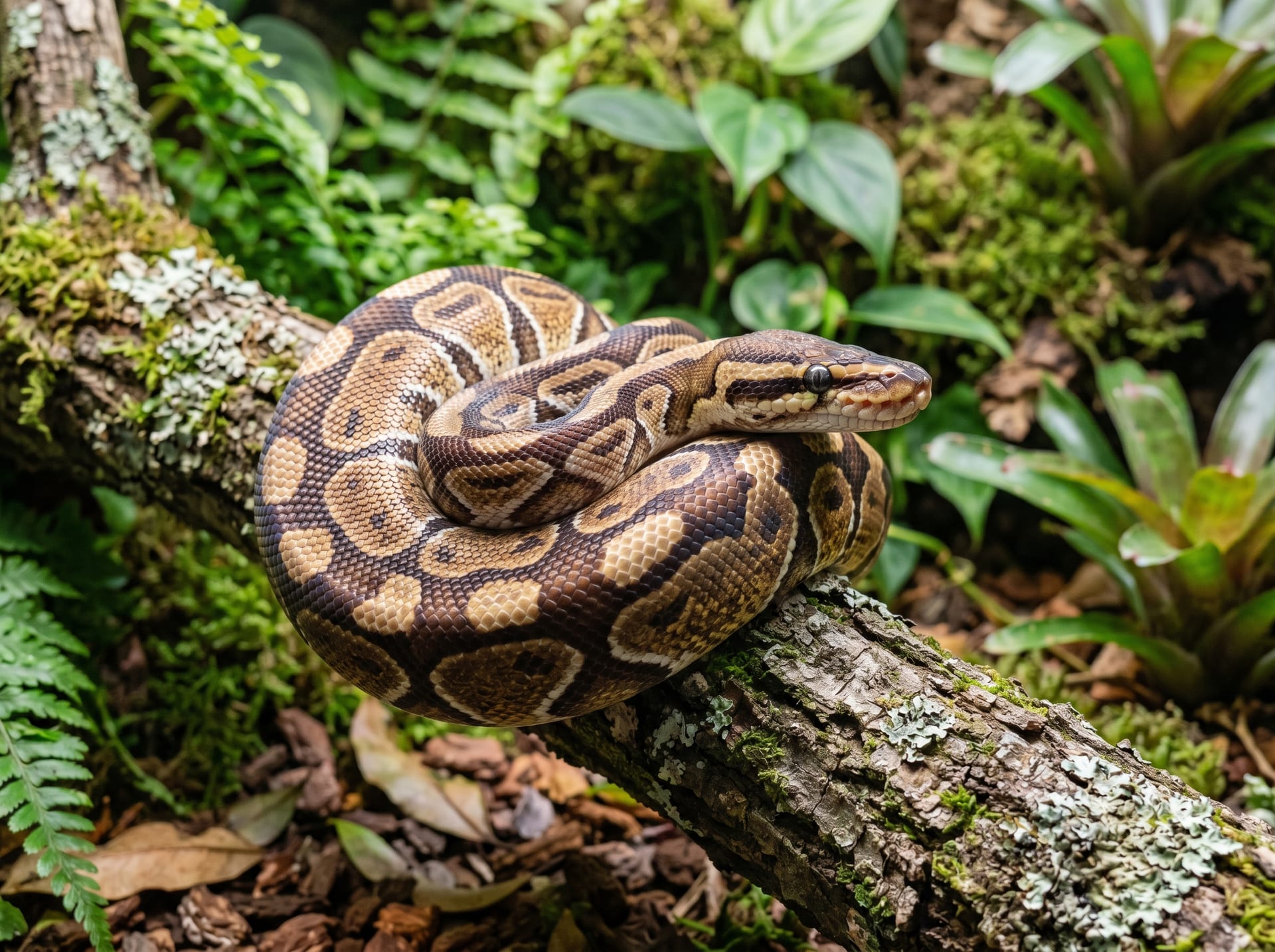
Ball pythons (Python regius) are widely popular with both beginners and advanced keepers due to their gentle temperament, compact size, and abundant color variations (morphs). With proper care, they can live over 30 years, making them lifelong companions. This article covers everything from basic care to temperature management, feeding, and morph selection.
Ball Python Basic Information
Item
Details
Scientific Name
Python regius
Native Range
West Africa (Ghana, Togo, Benin, Nigeria, etc.)
Adult Size
90–150 cm (females larger)
Lifespan
20–30 years in captivity
Activity Period
Crepuscular/nocturnal
Diet
Carnivorous (mainly mice and rats)
Venom
Non-venomous
Temperament
✍️
BreederDirect Editorial
The BreederDirect editorial team specializes in care information for animals, covering veterinary care and breeding to deliver beginner-friendly guides.
Find Reptiles on BreederDirect
Buy directly from verified breeders
Browse Related Listings
Find Reptiles listings related to this article on BreederDirect. Buy directly from verified breeders.
Important Note: Ball pythons become stressed without hiding spots. Oversized enclosures can be counterproductive; aim for enclosure length approximately 1–1.5 times the snake's length.
Enclosure Layout
Hides (Shelters): Essential. Place two shelters (one on the warm side, one on the cool side) so the snake can choose its temperature while feeling secure.
Substrate Options:
- Coconut husk (Coco chips): High moisture retention aids shedding. Most commonly used.
- Paper towels/Pet sheets: Easy to clean. Convenient for hatchlings and sick individuals.
- Soil (Leaf litter-based): Most natural but harder to maintain.
Temperature Management: Critical Factor
As ectothermic animals, ball pythons require a temperature gradient (hot spot to cool side) in their enclosure.
Required Temperature Ranges
Area
Temperature
Hot Spot (Basking Area)
33–36℃
Warm Side
28–32℃
Cool Side
24–27℃
Nighttime (Overall)
22–25℃
Equipment for Temperature Control:
- Under-tank heater: Cover 1/3 to 1/2 of enclosure floor
- Infrared or ceramic heat emitter: Warms air
- Thermostat: Essential. Automatically cuts power at set temperature
Humidity Management
Ideal humidity: 60–80%
Maintain 70–80% before shedding (prevents shedding issues)
Use a humidity gauge
Maintain with high-moisture substrate (coco chips) + water bowl
Feeding
Ball python staple diet consists of frozen mice or rats. Live prey is discouraged for animal welfare and injury prevention.
Feeding Schedule
Age
Food Size
Frequency
Hatchling (up to 6 months)
Fuzzy to Adult mouse M
Once weekly
Juvenile (6 months–1 year)
Mouse L to Rat S
Every 10–14 days
Adult (1+ years)
Rat M to L
Every 2–3 weeks
Size guideline: Choose prey about the same diameter as the thickest part of the snake's body.
Feeding Procedure
Thaw frozen mice/rats at room temperature or lukewarm water (never microwave due to uneven heating)
After thawing, warm to body temperature (35–40℃) (snakes sense heat with infrared receptors)
Use tweezers to move the prey naturally
Avoid handling for 24–48 hours after feeding (prevents regurgitation)
Feeding Refusal
Ball pythons may refuse food before shedding, during breeding season, or after environmental changes.
Causes and Solutions:
- Pre-shedding: Eyes become cloudy and refuse food → feed again after shedding
- Environmental change: Wait 1–2 weeks for adjustment
- Insufficient heat: Check hot spot temperature
- Wrong prey size: Try different size
- Stress: Stop handling temporarily, keep in shelter
Consult a reptile vet if refusing food for over a month or showing weight loss.
Morphs: The World of Color Variations
One of the greatest attractions of ball pythons is the incredible diversity—hundreds of color morphs. Genetic mutations create individuals completely different from the wild type (normal).
Main Basic Morphs
Morph
Characteristics
Price Range
Normal
Wild type. Brown patterned
¥5,000–15,000
Albino
White to yellow + red eyes
¥20,000–50,000
Pied
White patches mixed with normal
¥30,000–100,000
Banana/Coral Glow
Bright yellow/orange
¥30,000–80,000
Crown
Strong contrast unique pattern
¥20,000–80,000
Spider
Fine web-like pattern
¥15,000–50,000 ※
GHI (Ghost Pied Batik)
Dark, heavy pattern
¥50,000–200,000
※Spider morphs often exhibit neurological symptoms (wobbling) and raise breeding ethics concerns.
Combo Morphs
Combining multiple morphs produces rarer and more beautiful individuals. Example: Pied × Albino → "Snowball (Albino Pied)". Higher-priced morphs typically combine multiple morphs.
Health Management and Common Diseases
Respiratory Infection (RI)
- Symptoms: Mouth breathing, wheezing, nasal discharge, drool
- Cause: Low temperature, high humidity
- Treatment: Maintain proper temperature/humidity; consult vet if symptoms appear
Mite Infestation
- Symptoms: Black dots (mites) between scales, excessive rubbing
- Cause: Contaminated substrate or other animals
- Treatment: Clean and disinfect all enclosure items. Use reptile mite spray.
Shedding Issues
- Symptoms: Old skin remaining on eyes (eye caps) or tail tip
- Cause: Insufficient humidity
- Treatment: Soak affected areas in warm water to help removal. Improve humidity management.
Conclusion
Ball pythons are among the easiest snakes to keep and become very tame. By maintaining proper temperature and feeding every 2–3 weeks, you'll have a healthy, long-lived pet.
The diversity of morphs is unmatched among reptiles, offering endless enjoyment for collectors and breeders. Whether as an introduction to reptile keeping or as a long-term companion animal, the ball python is highly recommended.