Ball Python Complete Care Guide | Temperature · Humidity · Feeding · Handling
Complete guide to ball python care for beginners. Covers cage setup, temperature gradient, feeding methods, and food refusal solutions.
Key Takeaways
Complete guide to ball python care for beginners. Covers cage setup, temperature gradient, feeding methods, and food refusal solutions.
Related Species
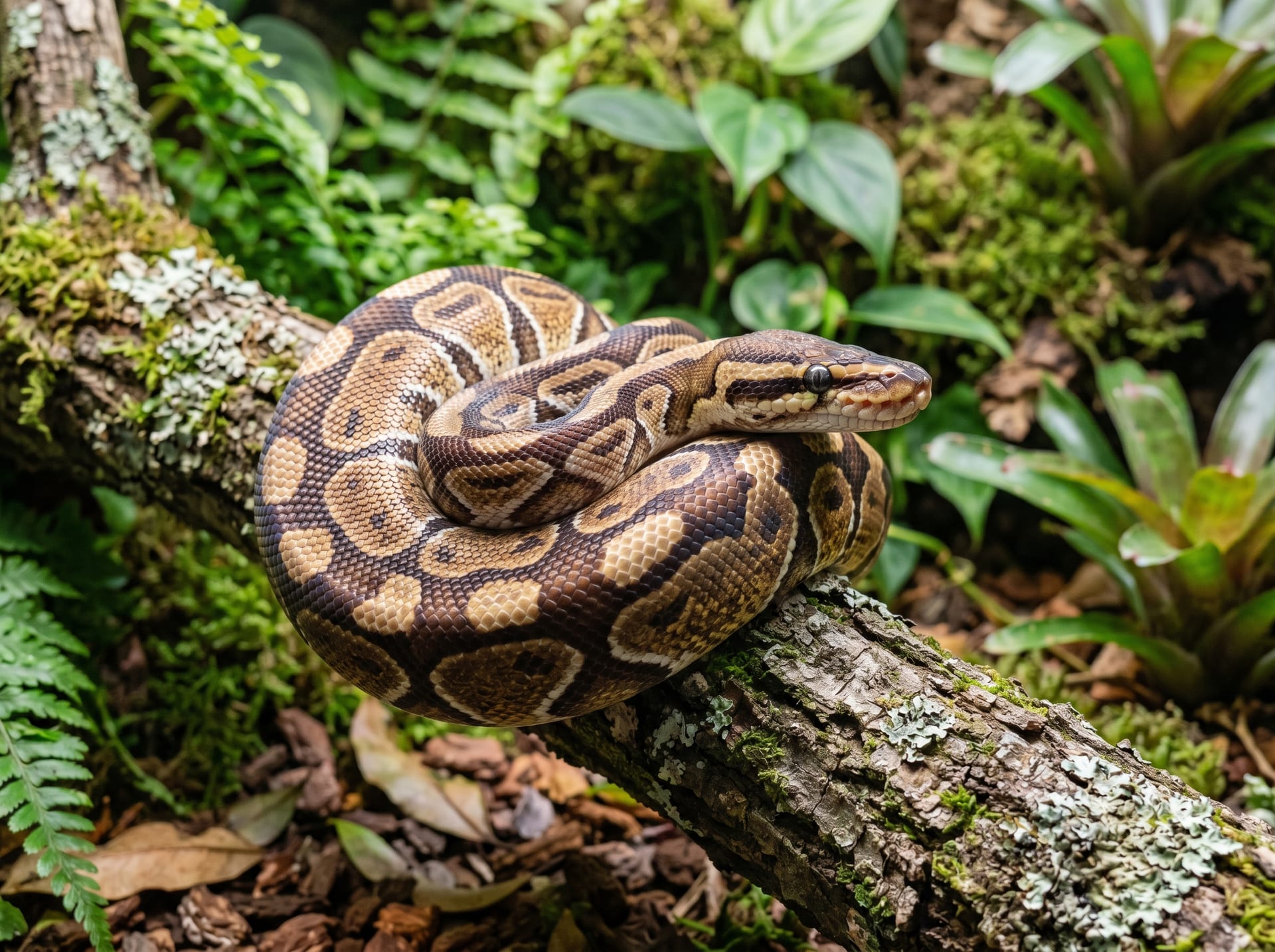
The Ball Python (also called the Ball Boa) is a medium-sized snake species inhabiting grasslands and sparse forests in West Africa. It gets its name from its defensive habit of curling into a ball, and has become one of the most popular pet snakes in the world thanks to its calm temperament, ease of handling, and remarkably diverse morphs (color variations). In captivity, they live 20–30 years, and with proper environmental setup, they are a reptile you can live with for a long time. This article explains the basics of ball python care in detail, covering temperature, humidity, feeding, handling, and other key topics—useful for both complete beginners and intermediate keepers.
Ball Python Basic Data and Characteristics
Item
Details
Adult size
90–150 cm (females slightly larger)
Body weight
Approximately 1–2 kg
Lifespan
20–30 years (record individuals over 40 years)
Origin
West Africa (Ghana, Togo, Benin, etc.)
Temperament
Calm and defensive but low aggression
Activity period
Nocturnal to crepuscular
The greatest appeal of ball pythons is their calm, easy-to-handle temperament. When startled or frightened, they curl their bodies into a "ball," but this is a defensive behavior, not a sign of aggression. As they become accustomed to handling, they curl up less frequently, and you can begin to enjoy interacting with them.
✍️
BreederDirect Editorial
The BreederDirect editorial team specializes in care information for animals, covering veterinary care and breeding to deliver beginner-friendly guides.
Find Reptiles on BreederDirect
Buy directly from verified breeders
Browse Related Listings
Find Reptiles listings related to this article on BreederDirect. Buy directly from verified breeders.
Related Tools
Related Articles
Browse by Category
🪸Coral
🐠Marine Fish
🐟Tropical Fish
🐡Goldfish
🐟Medaka
🦎Reptiles
Share
The diversity of morphs is also a major appeal. Starting with Normal (wild type), there are over 700 morphs including Albino, Pied, Spider, Enchi, and Crown. Combo morphs combining multiple morphs are even more varied, and the high collectibility is another reason for their popularity.
Cage Setup and Environment
Choosing the Right Cage Size
For ball pythons, the recommended floor area is approximately 3–4 times the diameter of the snake when coiled.
Hatchling (up to 60 cm): Plastic containers or small enclosures of approximately 30 × 20 cm
Juvenile (60–100 cm): Enclosures of approximately 45 × 30 cm
Adult (over 100 cm): Glass or acrylic enclosures of 60 × 45 cm or larger
Snakes tend to feel stressed in spaces that are too large. Especially during the hatchling stage, providing a smaller enclosure is important for comfort. Always install two shelters in the enclosure. By placing one on the warm side (hot spot) and one on the cool side, you create an environment where the snake can hide while choosing its preferred temperature.
Temperature Management
Because ball pythons are ectothermic, creating a temperature gradient within the enclosure is extremely important.
Hot spot: 30–32°C (heated with an under-tank heater or far-infrared heater)
Cool side: 25–27°C
Nighttime: It's fine if temperatures drop to 22–24°C
By heating only one side of the enclosure and keeping the other side near room temperature, the snake can move around and select its preferred temperature. Place thermometers on both the warm and cool sides and check them regularly. During winter when room temperature drops, it's recommended to use a thermostat in addition to an under-tank heater for better control.
Humidity Management
Ball pythons' native habitat in West Africa is warm and humid.
Normal humidity level: 50–60%
Before and after shedding: Raise to 70–80%
Measurement: Use a digital hygrometer (more accurate than analog)
Low humidity makes improper shedding more likely. Improper shedding occurs when skin doesn't shed completely, which can lead to tissue damage if left untreated. Effective ways to increase humidity include installing a humid hide (a shelter that can hold water), placing sphagnum moss in one area, and using coconut husk bedding, which retains moisture well.
Feeding Basics and Precautions
Food Type and Size
Ball pythons' primary diet is frozen mice or frozen rats.
Size guideline: Same thickness as the snake's widest body part, or slightly thinner
Hatchlings: Pinky mice (newborn frozen mice)
Juveniles to adults: Progress gradually from fuzzy to hopper to adult mouse to rat
Feeding live prey is strongly discouraged. Live mice and rats can bite and injure the snake. Properly thawing frozen prey before feeding is safer and more hygienic.
Feeding Frequency and Thawing Method
Hatchlings: Once every 5–7 days
Juveniles: Once every 7–10 days
Adults: Once every 10–14 days
The typical thawing method is to soak frozen prey in warm water (40–45°C) for 20–30 minutes. Avoid using a microwave, as it heats unevenly. When feeding, use tongs to slowly bring the prey toward the snake's head and wait for it to strike. Never feed by hand, as this can result in accidental bites—always use tongs.
Food Refusal: Causes and Solutions
Ball pythons are known for being prone to food refusal, which is often the most bewildering issue for beginners. There are several causes of food refusal, and each requires a different approach.
Common Causes of Food Refusal
Seasonal refusal (winter): An instinctive response timed to breeding season in the wild. If the snake is not losing weight, fasting for a few months is not a problem
Environmental stress: Caused by recent relocation, excessive handling, or insufficient hides
Improper temperature or humidity: If the hot spot is too cool, the snake cannot digest food properly and will lose appetite
Incorrect prey size: Prey that is too large may frighten the snake, while prey that is too small may not trigger interest
Steps for Addressing Food Refusal
Leave the snake undisturbed and observe quietly for 1–2 weeks
Check the temperature and maintain the hot spot at 30–32°C
Try warming the prey to enhance its scent before offering
Try reducing the prey size by one category
Add a humid hide to provide more hiding spots
If food refusal persists for over 2 months with weight loss, consult a reptile veterinarian
Handling Tips and Precautions
While ball pythons are among the easiest snakes to handle, using correct technique ensures the safety of both the snake and the handler.
Handling Pointers
Acclimation period: Avoid handling for the first 1–2 weeks after bringing the snake home
After feeding: Avoid handling while the snake is digesting (for about 48 hours)
Frequency: 2–3 times per week, 15–30 minutes per session as a guideline
Holding technique: Support the body firmly and avoid suddenly grabbing the head
When a ball python hisses or assumes an S-shaped striking posture, it is showing a warning sign. Don't force handling—wait and try again later. Conversely, when the snake is stretched out and relaxed, it is in a calm state and a good time for handling.
Choosing a Morph (Color Variety)
Over 700 ball python morphs are currently registered, with prices ranging from a few thousand yen to hundreds of thousands. Here are key points for beginners selecting their first snake.
Recommended Morphs with Low Care Difficulty
Normal (wild type)
The most readily available and stably priced (5,000–15,000 yen). Healthy individuals are common, making them ideal for learning the basics of ball python care.
Pastel
A simple single-gene morph with enhanced yellow tones. Popular for its bright coloration and available for approximately 10,000–30,000 yen.
Spider
A beautiful morph, but many individuals carry wobble (balance disorder). Not recommended for beginners due to the difficulty in handling.
Banana / Coral Glow
Distinctive pink to orange coloration makes these popular morphs. Priced at 30,000–80,000 yen, somewhat higher, but with calm temperament.
Pied
Pristine, whitish appearance. As a single recessive gene, pricing is stable at 20,000–50,000 yen.
An important note on morph selection: expensive morphs are not necessarily easier to keep. High-priced morphs resulting from multiple genes can have health concerns. Beginners are wise to start with a single-gene morph or Normal, then expand their collection once they are comfortable with care.
BreederDirect's Safety and Reliability Measures
When acquiring a ball python, selecting a healthy individual from a trustworthy source is extremely important. On BreederDirect, specialized breeders list animals directly, and you can purchase individuals with detailed information including morph genetics, hatch date, feeding history, and shedding records.
You can also verify detailed condition information such as "healthy individual with no history of food refusal" and "already handled and accustomed to people." Even first-time ball python owners can confidently make their purchase decision. Additionally, because you can ask breeders directly before purchasing, you can discuss husbandry setup and learn about the individual's characteristics beforehand.
Because this animal will be your long-term companion, take care with your first choice. Find your perfect ball python on BreederDirect.