How to Create a Pico Reef Tank (10L or Less) | Equipment, Livestock Selection, Water Quality Management and Setup Steps
What is a Pico Reef Tank "Pico reef" generally refers to a style of rearing coral in ultra-small tanks of 10 liters or less .
Key Takeaways
What is a Pico Reef Tank "Pico reef" generally refers to a style of rearing coral in ultra-small tanks of 10 liters or less .
What is a Pico Reef Tank
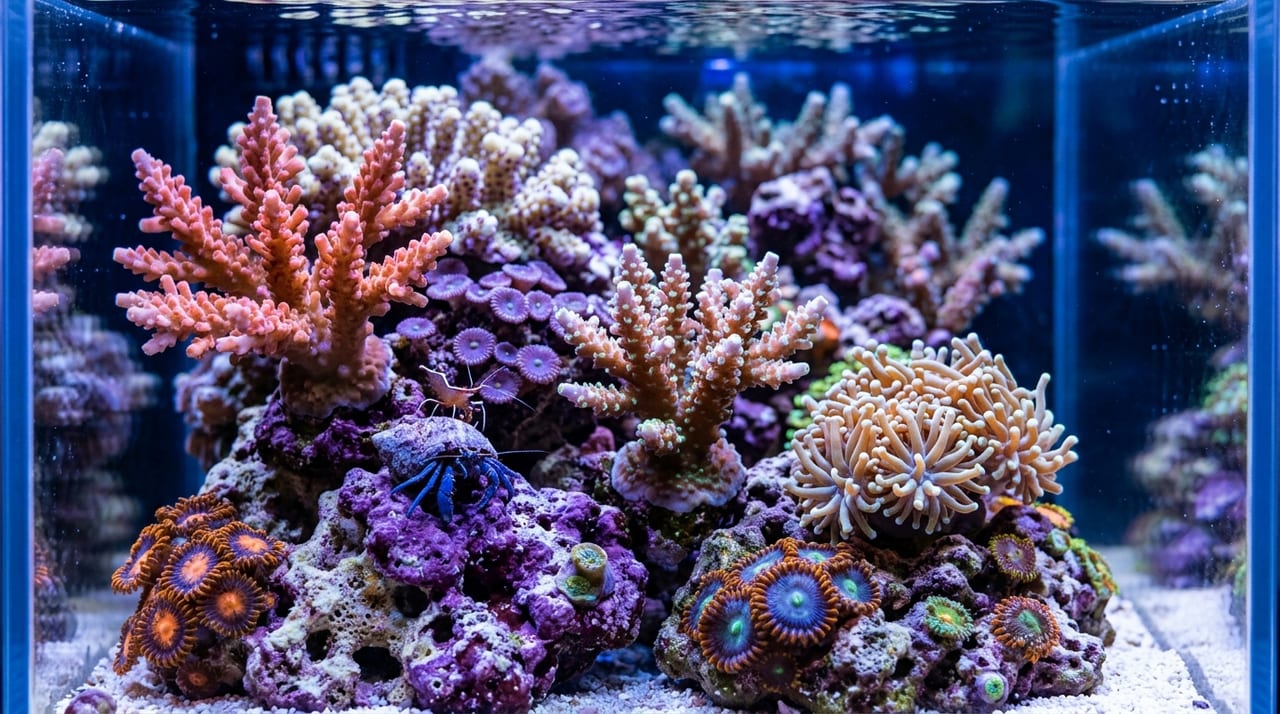
"Pico reef" generally refers to a style of rearing coral in ultra-small tanks of 10 liters or less. Smaller than nano reefs (30–45 cm tanks), its greatest appeal is the freedom to place it anywhere—on a desk, shelf, or windowsill. It's gaining popularity as a jewelry-box-like reef tank that can fit in a corner of a desk or shelf, especially among those with space constraints or who travel frequently.
✍️
BreederDirect Editorial
The BreederDirect editorial team specializes in care information for animals, covering veterinary care and breeding to deliver beginner-friendly guides.
Find Coral on BreederDirect
Buy directly from verified breeders
Browse Related Listings
Find Coral listings related to this article on BreederDirect. Buy directly from verified breeders.
Related Tools
Related Articles
Browse by Category
🪸Coral
🐠Marine Fish
🐟Tropical Fish
🐡Goldfish
🐟Medaka
🦎Reptiles
Share
However, pico reefs have rapid water parameter changes due to the small water volume, and without proper equipment and management, they risk collapsing quickly. While they appear simple, they are suited for intermediate hobbyists and above who have reef tank knowledge.
Tank Selection and Equipment
Tank
5–10 liter all-in-one cube tanks (Pico Aquarium, Waterbox Cube, Mr. Aqua, etc.) are commonly used. Models with built-in filtration space in the back have a clean appearance and allow pumps and sumps to fit compactly.
Lighting
Lighting is the most critical factor in pico reefs. You need an LED that produces sufficient PAR (photosynthetically active radiation) despite its small size. Popular models include:
AI Prime 16 HD (compact, high PAR, adjustable spectrum)
Kessil A80 Tuna Blue (compact, high color rendering)
Innovative Marine SKKYE (some all-in-one tank versions available)
For SPS corals (Acropora, Montipora), aim for PAR 150 or higher. Soft corals and LPS-focused tanks can work with PAR 80–150.
Water Flow
Large pumps aren't necessary for ultra-small tanks, but stagnant water weakens corals. Install a small propeller-type nano pump (Tunze 6001, Aqua Gadget Micro Wavemaker, etc.) to create gentle turbulence.
Filtration and Skimmers
Installing a protein skimmer in pico reefs is often difficult, so alternatives include a refugium method with macroalgae (Caulerpa, etc.) in a back chamber or chemical filtration using small amounts of activated carbon or biopellets. Weekly water changes of 10–20% (1–2L, once or twice weekly) are essential for maintaining water quality.
Selecting Livestock
Since pico reefs have limited water volume, the principle is quality over quantity—fewer, well-chosen specimens.
Recommended Corals
Zoanthids (Button Polyps): Hardy and rewarding to watch grow
Ricordea (Disk Coral): Easy to maintain even under lower light
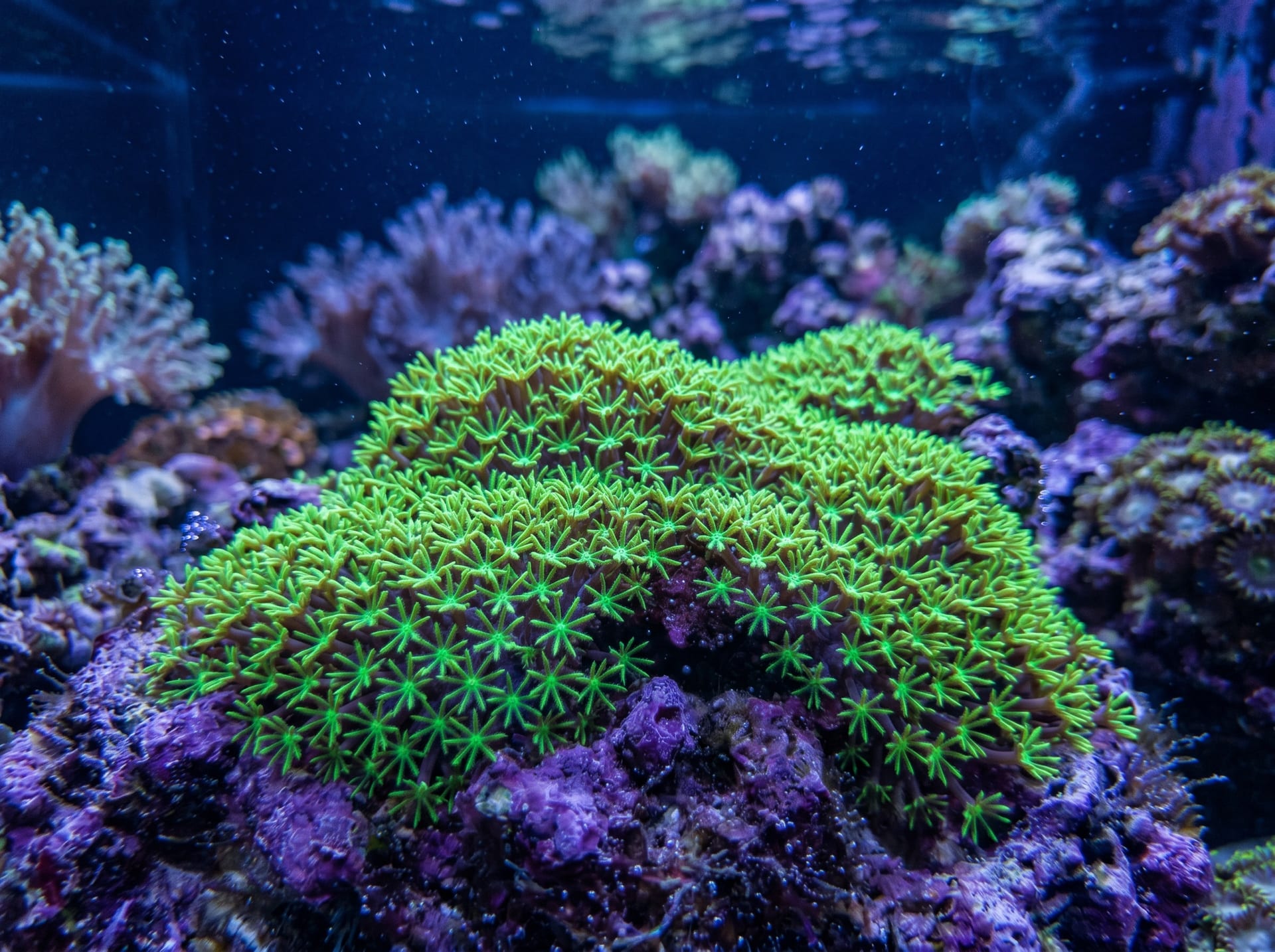
Star Polyps (Pachyclavularia): Enjoyable to watch propagate
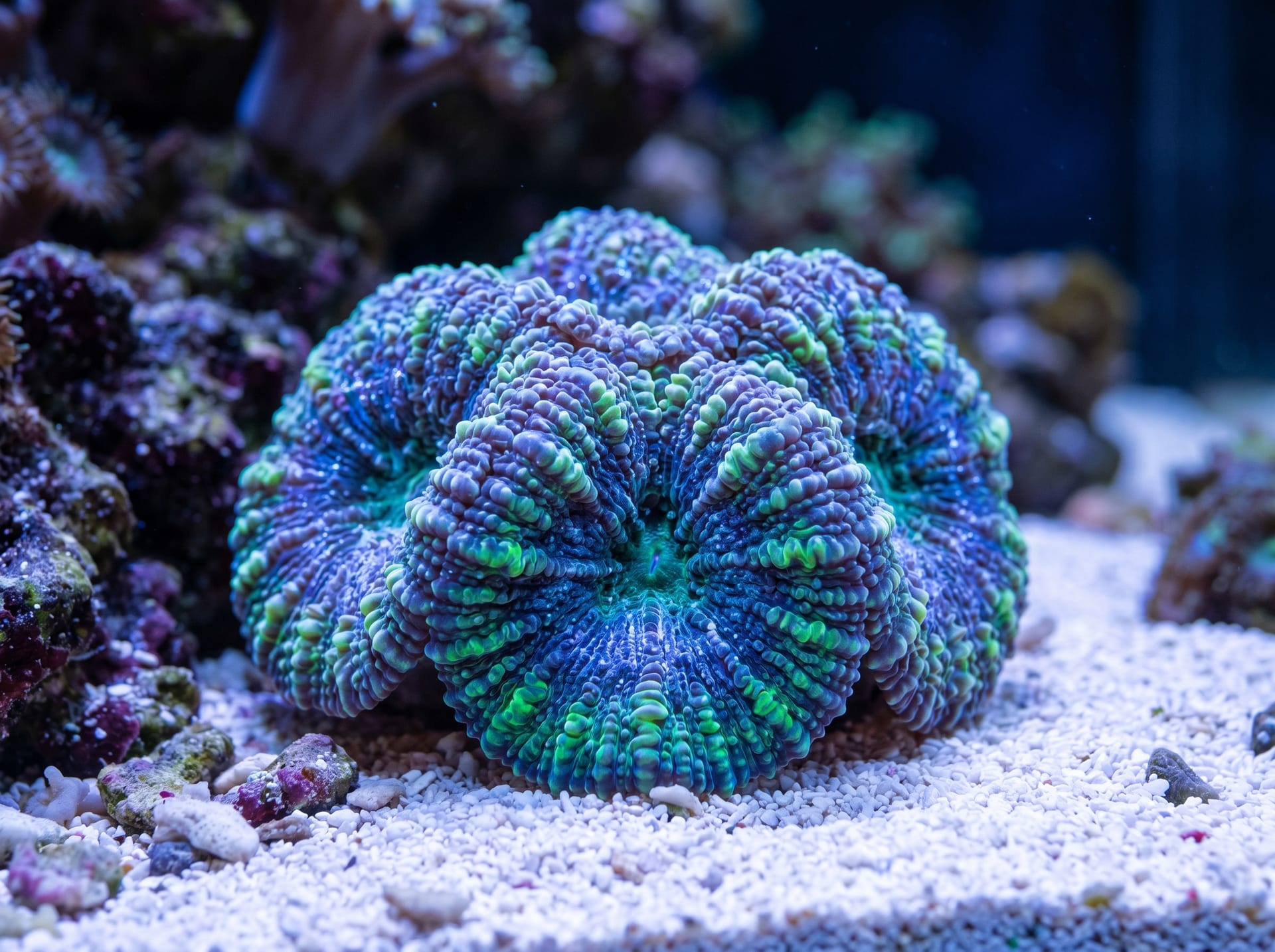
For LPS, small specimens of Candy Cane or Brain Corals (small frags)
Should You Add Fish?
Adding fish to tanks of 10L or less is not recommended. Even one clownfish creates a significant bioload, making maintenance difficult in tanks under 10L. Invertebrates (snapping shrimp, coral shrimp, etc.) are easier to manage.
Clean-up Crew
Use 1–2 small Nassarius hermit crabs and 2–3 small snails (such as Nassarius snails) to manage algae and leftover food.
Water Quality Management in Practice
Because pico reefs have limited water volume, water parameter fluctuations occur quickly and can become severe.
Testing Frequency
Test KH and specific gravity at least once weekly. KH can drop 0.5–1 dKH per week, requiring frequent supplementation.
Water Change Schedule
The baseline is weekly water changes of 10–20% (1–2L). Large water changes cause sudden water parameter shifts; frequent small changes are safer.
Dosing
KH, Ca, and Mg can be maintained with manual dosing (drip-feed type). Automated dosing pumps are often difficult to install.
Setup Steps
Tank setup (install filtration, lighting, and water flow)
Fill with artificial saltwater and adjust specific gravity
Add a small amount of live rock (small pore structure)
Add bacteria cultures and allow curing period (minimum 2–4 weeks)
Confirm ammonia and nitrite are stably at zero
Add corals slowly in small batches
Don't rush the curing process—this is the key to success. The less water volume, the longer curing takes; avoiding hastily adding livestock until parameters are stable is essential for long-term success.
Maintenance Routine
Pico reef tanks require frequent maintenance due to their small water volume. Use the following schedule as a guide for your routine.
Daily
Verify lighting on/off schedule
Confirm coral polyp extension status
Check water temperature (with digital thermometer)
Top off (add small amounts of RO water daily to counteract evaporation and specific gravity rise)
Weekly
Water change (10–20%, 1–2L)
Test KH and specific gravity
Clean glass algae (with small scraper or magnetic cleaner)
Siphon out leftover food and detritus from substrate
Monthly
Test Ca, Mg, nitrate, and phosphate
Clean lighting (remove lens debris)
Inspect and clean pump and filter chamber
Troubleshooting
Excessive Algae Growth
The main causes are excessive light, nitrate, and phosphate accumulation. Try reducing lighting duration by 1–2 hours and increasing water change frequency. Adding a few turbo snails or red-legged hermits can help.
Rapid KH Decline
KH is consumed by coral calcification and bacterial metabolism. Smaller water volume means more dramatic fluctuations. Maintain stability by dosing 2-part additives (calcium and alkalinity) in small amounts daily.
Coral Polyps Won't Open
Possible causes include lighting duration, intensity, water flow strength, or water quality. Change one variable at a time to identify the issue. Newly introduced corals may keep polyps closed for 1–2 weeks while acclimating.
Enjoying Pico Reefs
Pico reef keeping is the hobby of creating a small ocean on a desk. Watching several corals coexist in limited space is like having a miniature coral reef. Photography pairs well with pico reefs too—using macro lenses to capture detailed images of coral polyps, shrimp antennae, and hermit crab movements is rewarding.
Online communities dedicated to pico and palau reefs have formed on social media, making it easier to stay motivated by sharing information with fellow enthusiasts. Recording the tank's journey from initial setup to stability, documenting coral growth, and tracking changes in livestock composition are the long-term joys of pico reef keeping.