Quaker Parrot Care Guide | Charming Nest-Building Behavior and Gentle Temperament
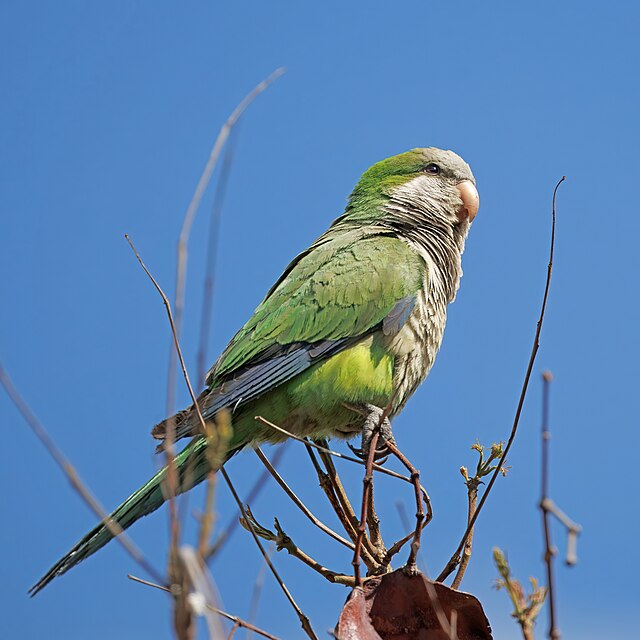
The Quaker Parrot (Monk Parakeet) is a medium-sized parrot native to South America. It has the rare habit of building large communal nests as a group. This guide covers personality, housing, diet, hand-training, common illnesses, and legal status in Japan.
Key Takeaways
The Quaker Parrot (Monk Parakeet) is a medium-sized parrot native to South America. It has the rare habit of building large communal nests as a group. This guide covers personality, housing, diet, hand-training, common illnesses, and legal status in Japan.
The Quaker Parrot (English: Monk Parakeet / Quaker Parrot, scientific name: Myiopsitta monachus) is a medium-sized parrot native to Argentina and Brazil in South America. In the wild, it has an exceptionally rare habit among parrots of building large communal nests as a group. It is popular for its high intelligence and ability to learn to talk, and is widely kept as a pet in Western countries.
✍️
BreederDirect Editorial
The BreederDirect editorial team specializes in care information for animals, covering veterinary care and breeding to deliver beginner-friendly guides.
Find Birds on BreederDirect
Buy directly from verified breeders
Browse Related Listings
Find Birds listings related to this article on BreederDirect. Buy directly from verified breeders.
High (lesser than macaws and cockatoos, but capable learners)
Personality and Characteristics
As the name "Quaker" suggests, the Quaker Parrot makes a distinctive sound called "quaker, quaker" when excited. It is social and active, with high dependence on its owner, and is sometimes described as "a parrot like a dog."
Personality Traits:
Forms strong bonds with its owner and tends to become particularly deeply attached to one person
Highly curious with high adaptability to toys and new environments
Has a well-developed territorial instinct and can become aggressive near certain areas (such as near its cage)
Has a strong ability to learn sounds and repeats words and phrases from its owner
Important Note: Quaker Parrots exhibit nest-building behavior in captive environments as well. They attempt to build roosting nests by collecting twigs and paper in corners of the cage and behind small objects, so care must be taken with potential nesting materials.
Legal Status in Japan
The Quaker Parrot is not designated as a specified invasive species (as of 2024). However, in some countries and regions, breeding and sale of Quaker Parrots are restricted due to concerns about agricultural damage. In Japan, breeding and sale are currently legal, but release into the wild is strictly prohibited.
Setting Up the Proper Living Environment
Cage Size
Due to their nest-building behavior, Quaker Parrots require cages that are somewhat larger than standard.
Ideal size: 90cm wide × 60cm deep × 90cm tall or larger
Metal cage: Since they have a strong bite force, avoid plastic and choose stainless steel without zinc coating
Install 2–3 types of perches with varying thicknesses to maintain foot muscle balance. Natural wood (such as cherry, willow, or apple wood) is ideal.
Temperature and Humidity
While they live in South American grasslands that are relatively resistant to temperature changes in the wild, avoid rapid temperature fluctuations in captive environments.
Appropriate temperature: 20–28°C
Appropriate humidity: 50–65%
Sunbathing: 2–3 times per week for about 30 minutes of sunlight or UV lamps are effective for maintaining bone health and immunity
Diet Management
Quaker Parrots eat seeds, fruits, and grains in the wild, but a seed-only diet in captivity leads to nutritional imbalance.
Recommended Diet Composition:
Food
Proportion
Pellets (Complete nutrition food)
60–70%
Vegetables (Komatsuna, broccoli, carrots)
20–30%
Fruits (apples, pears, berries)
5–10%
Seeds (sunflower, millet, foxtail millet)
10% or less
Foods to avoid: Avocado (toxic), chocolate, caffeine, alcohol, onions and related plants, high-salt foods
Daily feeding amount should be approximately 10–15% of body weight (around 10–15g). Always remove uneaten food daily to maintain cleanliness.
Hand-Training
If raised from chicks (2–3 months old), hand-training is relatively easy to learn. For adult birds or pre-owned birds (those with previous owners), a patient approach is necessary.
Basic Steps:
First, talk to it daily through the cage to accustom it to human voices and presence (1–2 weeks)
Open the cage and slowly insert the back of your hand, allowing it to perch
When the Quaker Parrot voluntarily steps onto your hand, immediately reward it (favorite food or praise)
Gradually increase out-of-cage flight and hand-perching time
Forcibly grabbing will damage the trust relationship. Avoiding fear is the top priority.
Common Illnesses
Lipoma: High seed diet promotes fat accumulation. A pellet-based diet and flight exercise reduce risk.
Psittacosis (Chlamydial infection): An infection caused by Chlamydophila psittaci. A zoonotic disease that can infect humans. A health check (fecal PCR test) immediately after purchase is recommended.
Polyomavirus infection: More common in chicks and young birds. Confirm vaccination history when acquiring from a breeder.
Nutritional deficiency: Vitamin A deficiency from excessive seed diet is common. Chronic eye discharge and nasal discharge are early signs.
Managing Nest-Building Behavior
Even in captive environments, Quaker Parrots may attempt to collect nesting materials. While this instinctive behavior cannot be completely suppressed, it can be managed.
Providing a dedicated "nesting corner" with a small box in the cage can help calm them
Since nest boxes can trigger breeding behavior, avoid installing them if you do not intend to breed
Promptly remove paper, tissues, and other nesting materials when collecting begins
Summary
The Quaker Parrot, with its high intelligence, affection toward its owner, and unique nest-building behavior, is one of the most distinctive types of parrots to keep. With a lifespan of 25–30 years, a long-term commitment is required, but a deep bond can be formed in return. With regular health checkups and proper diet management, enjoy a fulfilling long-term relationship with your Quaker Parrot.