Popular Medaka Bloodline Ranking 2026 | Features and Breeding Difficulty of 6 Strains from #1 Miyuki to Explanation
Explaining 6 popular medaka bloodline strains in 2026. From the #1 Miyuki (幹之) with body-light inheritance, #2 Yohkihi, and #3 Orochi characteristics to breeding difficulty, selection criteria, and noteworthy scale pattern varieties explained by experts.
Key Takeaways
Explaining 6 popular medaka bloodline strains in 2026. From the #1 Miyuki (幹之) with body-light inheritance, #2 Yohkihi, and #3 Orochi characteristics to breeding difficulty, selection criteria, and noteworthy scale pattern varieties explained by experts.
What is a "Bloodline" in Medaka Keeping
In medaka keeping, a "bloodline" refers to a strain that stably inherits specific genetic traits. Even if the variety name is the same, the genetic quality differs greatly depending on the breeder who created it and the strictness of selection. As of 2026, there are hundreds of named varieties domestically in Japan, but those recognized as "standard, popular bloodlines" are limited.
This article explains representative bloodlines in ranking format by strain type.
Popular Medaka Bloodline Ranking 2026 Quick Reference
Rank
Bloodline
Characteristics
Breeding Difficulty
1
Miyuki (幹之)
Body-light on back (white to pale blue)
★★☆
2
Yohkihi (楊貴妃)
Vermillion to orange body color
★☆☆
3
Orochi (オロチ)
Entire body jet black
★★☆
4
Koutei (紅帝)
✍️
BreederDirect Editorial
The BreederDirect editorial team specializes in care information for animals, covering veterinary care and breeding to deliver beginner-friendly guides.
Find Medaka on BreederDirect
Buy directly from verified breeders
Browse Related Listings
Find Medaka listings related to this article on BreederDirect. Buy directly from verified breeders.
Breeding Medaka?
You can list what you have raised on BreederDirect. Registration and listing are free — fees apply only when a deal closes.
Medaka does not require Class-1 Animal Handler registration.
The Foundation of the Most Popular Body-Light Variety
Item
Details
Creation
Created by Aichi Prefecture breeder "Miyuki"
Characteristics
White to pale blue light running down the back (body-light) is the signature feature
Body-Light Types
There are stages from weak light → strong light → super light → full body
Breeding Difficulty
★★☆ (Intermediate: Selection technique required for fixing and enhancing body-light)
Miyuki can be said to be the starting point of the modern medaka boom. The body-light gene includes dominant genetic elements making it relatively easy to fix, but reaching "super light" and "full body" stages with increased light intensity requires rigorous selection.
Breeding Tips: Cross individuals with strong body-light together and observe light expression early in the fry stage for selection. Exposing to sunlight promotes body-light expression.
Rank 2: Yohkihi (楊貴妃) Strain
The Spark that Elevated Medaka to Luxury Status
Item
Details
Creation
Created around 2004 by an Ehime Prefecture breeder
Characteristics
Vibrant orange to vermillion body color
Color Stages
Individual variation from vermillion to orange to deep crimson
Breeding Difficulty
★☆☆ (Beginner to Intermediate)
Yohkihi is a historic variety that proved "medaka can sell expensively." Maintaining and enhancing the richness of vermillion is effective with color-enhancing feed (with astaxanthin) and appropriate exposure to sunlight. Color can fade in low-light environments.
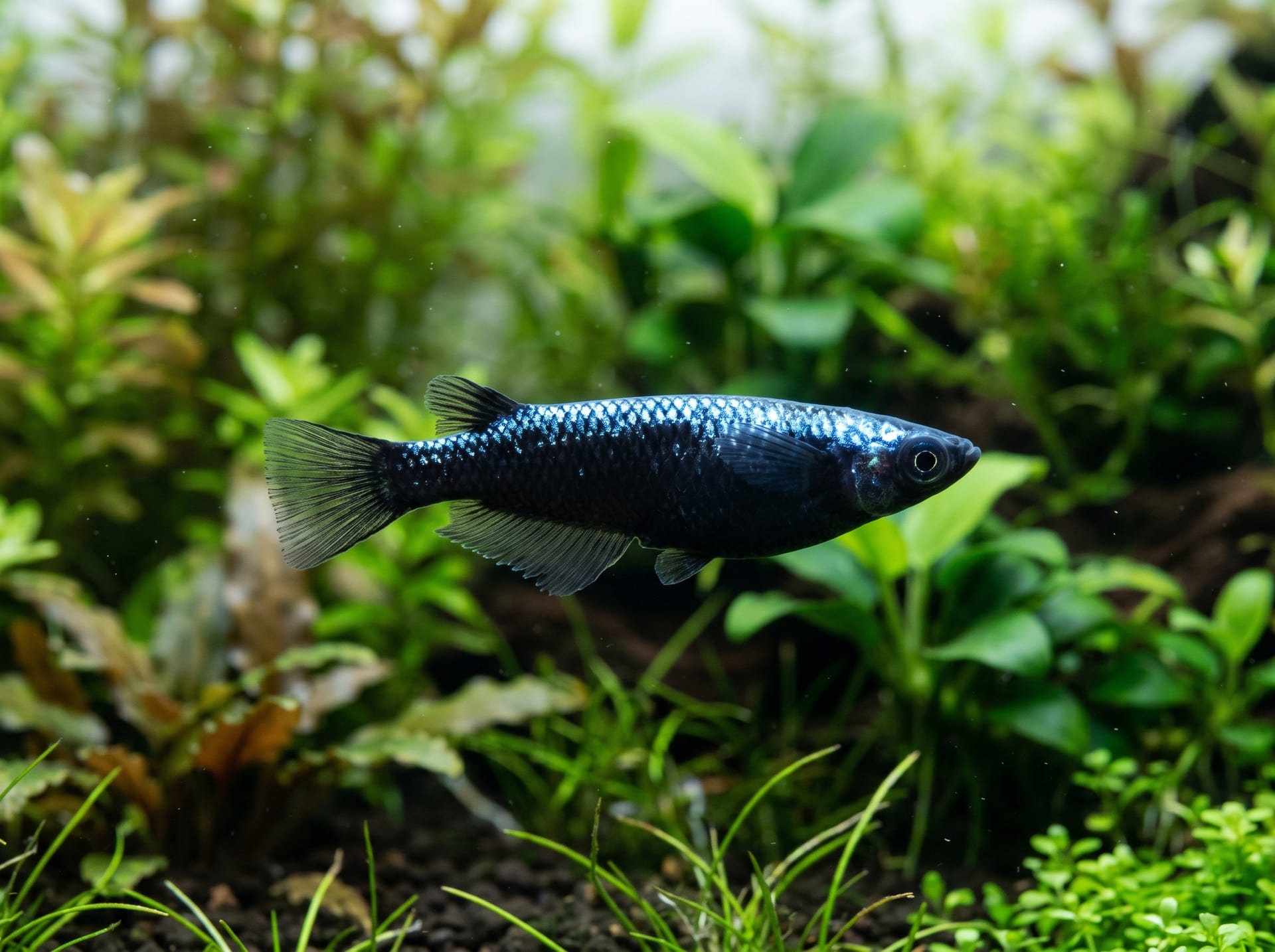
Rank 3: Orochi (オロチ) Strain
The Ultimate Black Medaka Pursuing the Aesthetics of Jet Black
Item
Details
Creation
Created in the 2010s by an Nara Prefecture breeder
Characteristics
Body color, fins, and even eyes are all jet black
Genetics
Extremely high density of melanophores through polygenic inheritance
Breeding Difficulty
★★☆ (Intermediate: Selection required for fixing jet black)
The black of Orochi is different from "just a blackish medaka." It features true jet black with melanophores distributed across the entire body and minimized reflected light. However, the appearance changes greatly depending on the rearing environment (substrate color), so rearing with black bottom sand and black container backgrounds brings out the true beauty.
Orochi Application: The Orochi gene is frequently used in crosses with other varieties and forms the foundation for many complex varieties like "sumio eyes" and "black scale Miyuki."
Rank 4: Koutei (紅帝) Strain
Pursuing Depths of Crimson Beyond Yohkihi
Item
Details
Characteristics
Even deeper crimson and scarlet body color than Yohkihi
Origin
Fixed from particularly red individuals selected from Yohkihi
Breeding Difficulty
★★☆ (Intermediate: Continued selection required to maintain color depth)
Koutei is recognized as the "upgraded version" of Yohkihi. Its color depth is a step above Yohkihi, with particularly deep red on the body sides showing coloration close to scarlet, highly valued individuals.
Important Note: Continuously using light-colored individuals as parents causes rapid color regression, so it's crucial to continuously select the darkest-colored individuals as breeding stock.
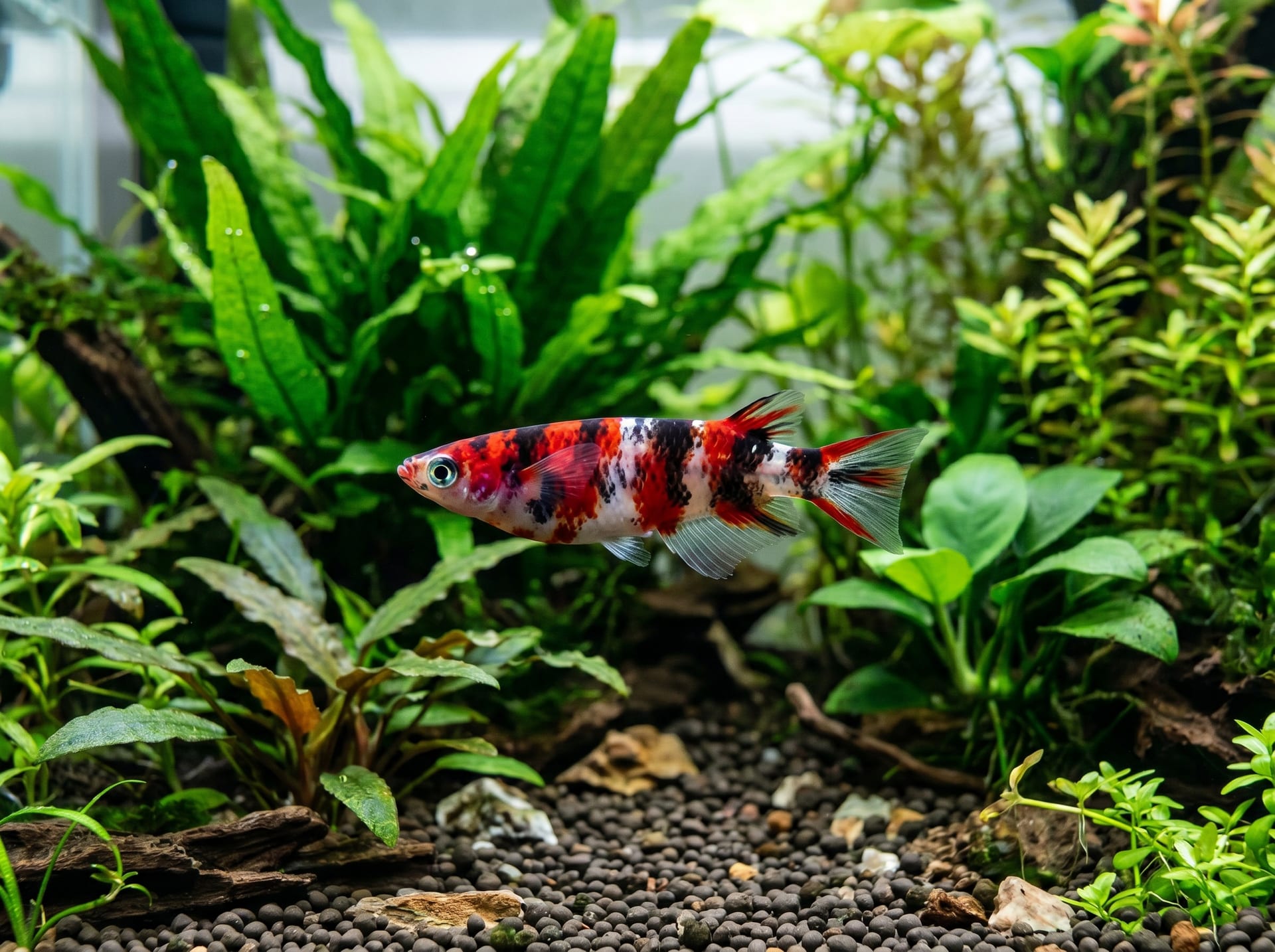
Rank 5: Sanshoku (三色) Strain
Artistic Mosaic Pattern of White, Black, and Red
The sanshoku medaka is created by a combination of transparent scale genes and uneven distribution of pigments. Even fry from the same parents all have different patterns, making "no two individuals identical" the greatest appeal.
In breeding, fixing transparent scales is necessary, and requires highly refined aesthetic judgment to select for the ideal sanshoku pattern balance (proportions and placement of black, red, and white).
Notable Emerging Bloodlines (2026)
Yozakura (夜桜) Strain
A strain group that has rapidly gained popularity in the 2020s. Combining transparent scales × scale pattern × body-light traits, the name "Yozakura" comes from appearing to shimmer even in dark environments.
Tennyo no Mai (天女の舞) Strain
A variety that maximizes the characteristic of long fins. The dorsal fin spreads fan-like, and the swimming appearance resembles the graceful dance of a celestial maiden.
Understanding Bloodline "Fixation Rate"
An important concept when purchasing and breeding medaka is "fixation rate."
100% Fixation Rate (Homozygous): Parental traits are almost certainly inherited by offspring
50% Fixation Rate (F1 Generation): The first generation from crossing shows large trait variation
Unknown Fixation Rate: Common in new varieties or experimental cross varieties
When purchasing from a breeder, it's recommended to confirm the fixation rate of the variety and the selection methods for maintaining fixation.
Summary
The popular medaka bloodlines of 2026 maintain their foundation with long-established standards (Miyuki, Yohkihi, Orochi, Koutei, Sanshoku) while emerging bloodlines like Yozakura and Tennyo no Mai continue to solidify their position in the market.
By understanding bloodlines in medaka keeping and breeding, the enjoyment evolves from simply "keeping" to "creating." Direct communication with breeders and selecting individuals while learning the background of bloodlines is where the true joy of medaka breeding lies.