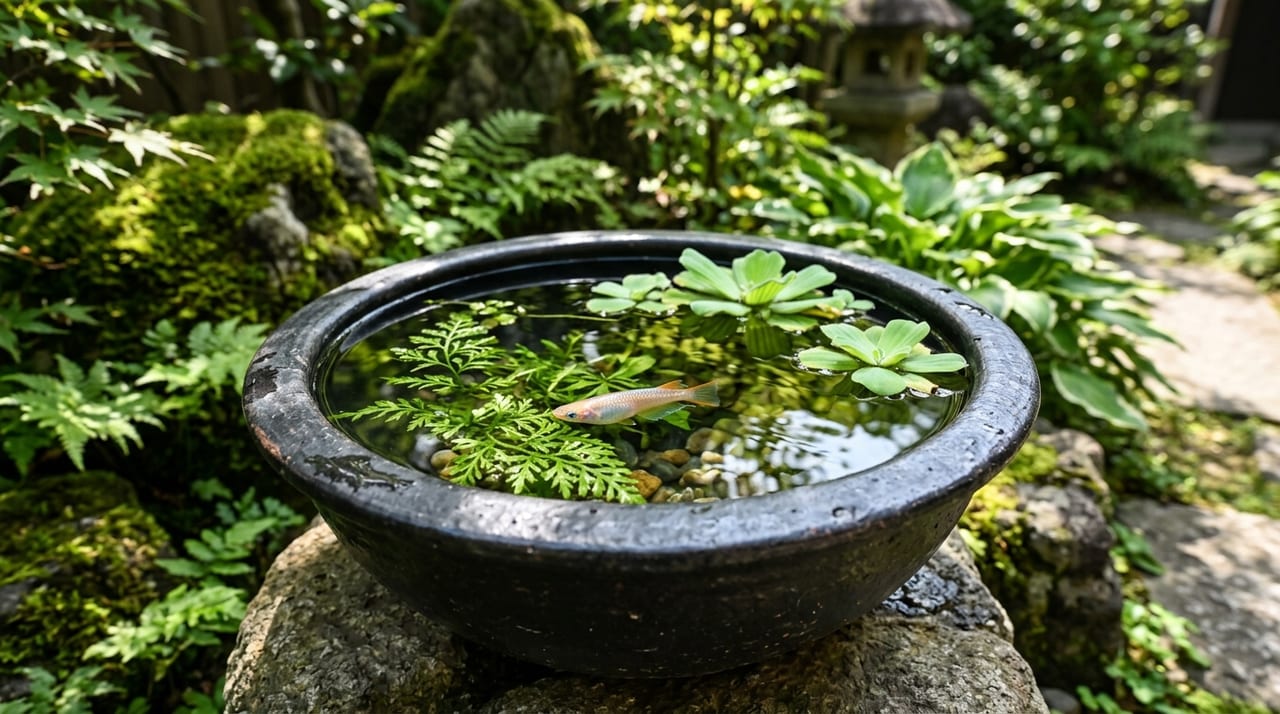
What is Medaka Outdoor Overwintering | How to Spend Winter in a Natural Environment
Mediaka are native Japanese fish that, in nature, stop their activity as water temperature drops in winter and wait for spring in a nearly motionless state. This dormancy is called "hibernation," and outdoor cultivation allows you to draw out medaka's inherent vitality by letting nature take its course without artificial heating.
The benefits of outdoor overwintering are that the internal clock resets toward the spring spawning season, increasing reproductive capacity. Additionally, water quality stability is higher than indoor cultivation, and proper management reduces disease risk. However, risks like freezing and oxygen depletion exist, making advance preparation and proper knowledge essential.
This article explains, from a practical perspective, everything from necessary preparations for medaka outdoor overwintering to winter management methods and spring startup.
Pre-Overwintering Preparations | What to Do Before Winter Arrives
Container and Water Depth Requirements
The most critical step is preparing a container with water depth of at least 30cm. Even if the water surface freezes, an unfrozen layer remains at the bottom where medaka can survive winter. Water lily pots, plastic containers, and styrofoam boxes work well; styrofoam is especially recommended for beginners due to its excellent insulation.
Line the container bottom with red clay balls or substrate about 3-5cm thick to create hiding places for medaka. Adding appropriate amounts of aquatic plants like watersprite or anacharis provides both oxygen supply and shelter.
Feeding to Build Strength
Autumn (September-November) is the last feeding period before overwintering. While water temperature stays above 15℃, feed high-quality high-protein food once or twice daily to build medaka reserves. Breeding adults especially need thorough nutrition replenishment as they've depleted energy.
Stop feeding when water temperature drops below 10℃. At low temperatures, digestion slows, and uneaten food decays, degrading water quality.
Water Changes and Tank Bottom Cleaning
Since water change frequency drops significantly in winter, reset water quality before overwintering. Remove accumulated waste and dead leaves from the bottom, replacing about 1/3 to 1/2 of the water. Avoid full water changes—retain some established bacterial water.
Winter Management | Frost Prevention and Observation Tips
Preventing Freezing
Complete freezing kills medaka, so frost prevention is essential. Most effective: place styrofoam or plastic corrugated panels over the container top to create insulation. Don't seal completely—leave gaps for air circulation to prevent oxygen depletion.
Floating fallen leaves or straw delays surface freezing. If ice forms, don't break it forcefully—vibration stresses medaka. Instead pour warm water to melt it or wait for natural thaw.
Oxygen Depletion Prevention
In winter, aquatic plants stop photosynthesis and oxygen supply drops. When ice forms, surface oxygen intake is blocked, so aeration is recommended. Use weak settings—strong flow exhausts medaka.
Keeping adequate aquatic plants (like watersprite) provides continuous minimal oxygen. Also reduce stocking density to lower oxygen demand.
Stop Feeding and Observation
Stop all feeding below 10℃; medaka rest motionless at the bottom. Observation should only confirm survival—avoid excess handling. Healthy medaka stay still near the bottom, breathing slowly, occasionally moving.
Fish floating or lying on their sides may be weakening. Isolate and monitor early.
Spring Preparation | Timing for Temperature Rise and Activity Resumption
Resume Feeding Around 15℃ Water Temperature
In March-April as water temperature exceeds 15℃, medaka gradually resume activity. Feed starting small to acclimate digestion. First week: once daily, tiny portions; return to normal feeding once temperature stabilizes.
Rapid feeding causes digestive problems and swim bladder disease risk—avoid sudden increases.
Water Quality Check and Water Changes
In spring, do one light water change to remove accumulated organics. Change about 1/3 using water with minimal temperature difference. Avoid large changes since spring temperatures are still unstable.
Remove dead plant parts and encourage new growth to restore spawning bed function.
Preparation for Spawning Season
Once water temperature stably exceeds 18℃, medaka begin spawning. Overwintered medaka show increased fertility; spring spawning yields superior quality and quantity. Prepare spawning media (water sprite, palm leaves) and fry rearing setup.
Post-overwintering adults need robust nutrition—feed high-protein food to prepare for the next generation.
Common Problems and Solutions
Risk Factors for Total Loss
Most common outdoor overwintering problems: complete freezing and oxygen depletion. These occur in shallow containers or without insulation; often fatal by the time discovered. Prevention depends on advance prep and regular winter observation.
Sudden winter temperature swings also pose risk. Before cold snaps, reinforce insulation with styrofoam.
Disease Signs
Overwintering medaka have lowered immunity; white spot and fin rot diseases can emerge in spring. Disease becomes visible as warming begins—observe daily post-reactivation and isolate/treat abnormalities early.
Summary | Raising Healthy Medaka with Natural Rhythms
Outdoor overwintering draws out medaka's natural vitality and produces highly reproductive healthy individuals. With proper water depth, frost and oxygen prevention, and careful spring startup, even beginners can overwinter safely.
During winter, medaka barely move, but silently store energy for the next breeding season. The vibrant activity they display when spring warmth returns is a joy only outdoor cultivators experience.
With proper knowledge and preparation, establish a cultivation style that lets you enjoy all seasons alongside medaka.