How to Create an Outdoor Medaka Biotope
Step-by-step guide to creating an outdoor medaka biotope: container selection, substrate and plant arrangement, water preparation, fish introduction, and seasonal maintenance.
Key Takeaways
Step-by-step guide to creating an outdoor medaka biotope: container selection, substrate and plant arrangement, water preparation, fish introduction, and seasonal maintenance.
Outdoor medaka biotopes are a fascinating way to raise medaka in an environment close to nature. The sight of aquatic plants swaying in sunlight and schools of medaka swimming together provides a special sense of calm that indoor aquariums cannot offer. A properly constructed biotope becomes a balanced "small nature" ecosystem and provides a healthy breeding environment for medaka.
This article explains how to create an outdoor medaka biotope from start to finish, in a way that even beginners can practice.
Choosing a Biotope Container
Select your biotope container based on your aesthetic preferences and available space.
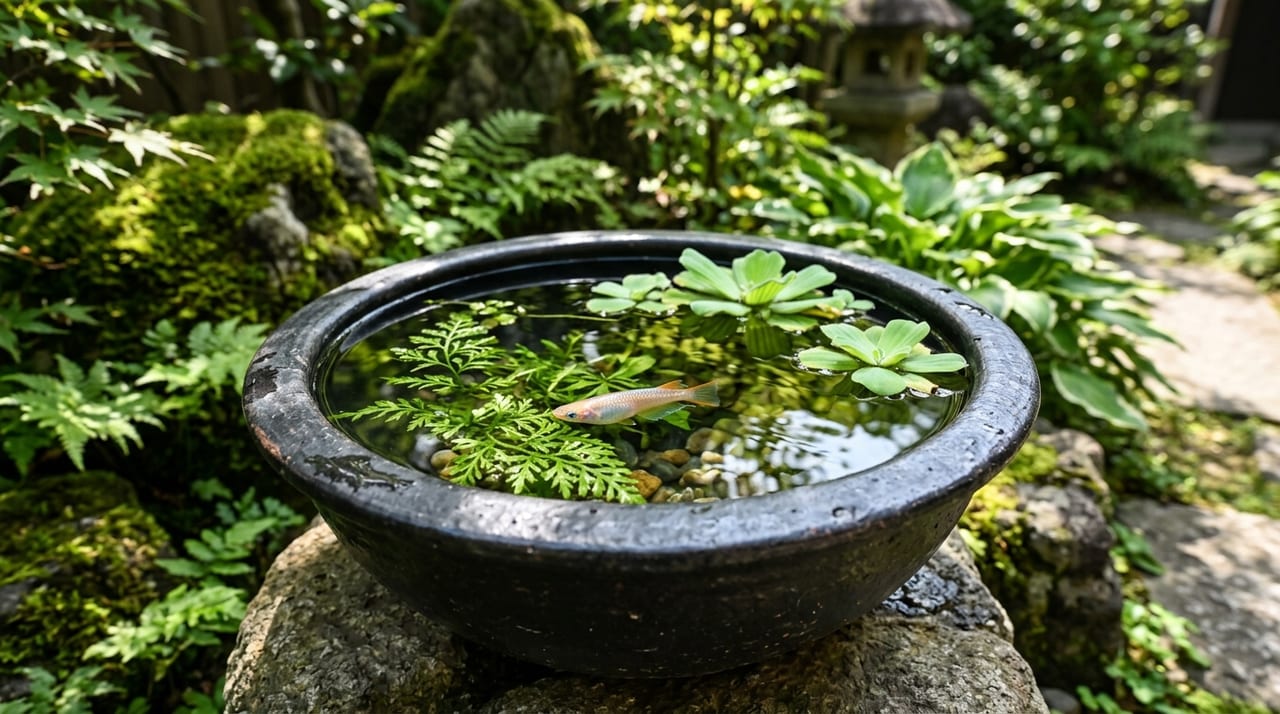
Lily Ponds: These have a Japanese aesthetic and blend well with landscapes when placed at entrances or on balconies. Ceramic ones are heavy and stable, but risk cracking from winter freezing, which is why plastic lily pond-style containers are also popular.
Plastic Trough (Toro-fune): Originally used for mixing concrete, this is one of the most popular containers for medaka breeding. Sizes of 20-80L are easy to handle and affordable. Their shallow, wide shape allows sunlight to reach the entire area and is ideal for medaka raising.
Large Planters (with drainage holes sealed): Large gardening planters are easy to obtain and can be used as biotopes by sealing the drainage holes with waterproof plugs or silicone.
Styrofoam Boxes: These offer good insulation and help reduce water temperature drop during winter. Though somewhat plain in appearance, many enthusiasts use them as breeding biotopes.
A minimum container capacity of 10L is recommended, though 30L or more makes water quality more stable and easier to manage.
Preparing the Substrate
The substrate is the foundation of a biotope and plays an important role in stabilizing water quality and establishing beneficial bacteria.
Red Soil: The most popular substrate for medaka biotopes. It creates slightly acidic to neutral water conditions, and its porous structure serves as a habitat for bacteria. Hard-grade red soil resists crumbling and lasts longer. Small to medium grain sizes are easiest to work with.