Matamata Care Guide | Environment, Diet, and Water Quality Management for this Strange Amazon Turtle
A detailed guide to keeping Matamata (Chelus fimbriata): how to create a blackwater environment, managing its piscivorous diet, health care, and legal regulations.
Key Takeaways
A detailed guide to keeping Matamata (Chelus fimbriata): how to create a blackwater environment, managing its piscivorous diet, health care, and legal regulations.
Related Species
What is a Matamata?
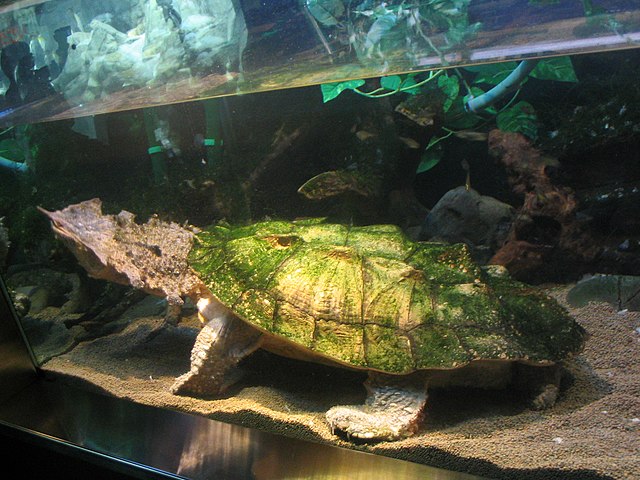
The Matamata (Chelus fimbriata) is one of the world's most peculiar-looking turtles, inhabiting the Amazon and Orinoco river basins in South America. Its flat, wavy carapace, elongated neck, and head lined with leaf-like protrusions make it look like part of a river bottom covered with fallen leaves. Using this camouflage, it approaches prey and employs a unique hunting technique called "suction feeding," where it sucks in fish along with water through its widely gaping mouth.
Adults reach a carapace length of 40–45 cm, and with proper care, their lifespan can exceed 20–30 years. Captive specimens in Japan remain rare, and their scarcity and unique ecology are strongly appreciated by herpetology enthusiasts.
It is an "ambush predator" that typically stays motionless on the river bottom, blending in with fallen leaves and driftwood as it waits patiently for prey to approach. It is not a turtle that actively swims around to chase prey, so it does not require much exercise. As a result, consistent daily water quality management becomes essential for maintaining its health.
Aquarium Setup and Environment
Tank Size and Land Area
The Matamata is a fully aquatic turtle and requires minimal dry land. However, it does need shallow areas or slopes where it can reach the water's surface to breathe with its nose above water.
- Tank size: A minimum width of 120 cm is ideal (juveniles can start in a 60–90 cm tank)
- Water depth: Slightly deeper than the height of the carapace (approximately 40–60 cm)
- Dry land: Not essential, but it is beneficial to provide slopes in the tank (stone or brick-shaped ramps)
- Substrate: Fine Amazon sand or dark-colored soil (adding a few fallen leaves creates a more natural appearance)
Water Quality and Temperature Management
The Matamata prefers the typical blackwater environment found in the Amazon River.
- Temperature: 26–30°C (ideal around 28°C; relatively tolerant of high temperatures)
- pH: 5.0–6.5 (weakly acidic to acidic)
- Water quality: Soft water with low TDS. Maintain slightly acidic conditions using peat moss or tannins from driftwood.
- Filtration: Use an external or undergravel filter to maintain water quality. Keep water flow gentle.
Lighting should be dim; it prefers a darkened environment. UVB lighting is not required. Always use a heater to ensure the temperature does not drop below 26°C.
Water Changes and Filter Maintenance
Because the Matamata is piscivorous, uneaten food and waste can easily foul the water. To maintain stable water quality, regular partial water changes to dilute ammonia and nitrite are essential. If you wash all the sponge and filter media at once, you risk removing beneficial bacteria that maintain water quality; instead, clean the filter in stages and rinse gently with tank water. It is recommended that you keep a thermometer and pH test kit or meter on hand and develop the habit of checking regularly for sudden changes in these values.
Feeding and Nutrition Management
The Matamata is a purely piscivorous (carnivorous) turtle that feeds mainly on live or frozen fish.
Recommended foods
- Small live fish (killifish, goldfish, small carp species): most stimulate feeding response
- Frozen pinky mice and frozen shrimp: as nutritional supplements
- Frozen smelts (capelin): good fat content and balanced nutrition
Prepared foods
While Matamatas are reluctant to accept prepared foods, juveniles may be acclimated to pellet-based or reptile diets by gradually mixing them with live food. However, live food should remain your primary feeding approach.
Adults should be fed 2–3 times per week. Remove any uneaten food within 30 minutes to prevent water quality deterioration. When offering live fish, select healthy specimens to avoid introducing parasites or disease. Rotating different food types instead of relying on a single variety helps prevent nutritional imbalances. Juveniles are in a growth phase and typically require slightly more frequent feeding than adults. Feeding amounts vary by individual; adjust based on body condition and leftover food.
Multiple Specimens and Tank Mates
Because of its ambush predator ecology and piscivorous diet, a Matamata will regard almost all fish and small aquatic organisms small enough to fit in its mouth as prey. Housing other fish for aesthetic purposes is generally not advisable. Keeping multiple Matamatas in the same tank also carries risks of feeding competition and accidental biting; solitary housing is generally safest. If you must attempt multiple specimens, provide ample space and stagger feeding times to minimize excessive contact between individuals.
Handling and Health Care
The Matamata is extremely delicate and shy. Minimize handling and avoid touching it routinely. Observe through the tank walls; minimizing stress is key to long-term care.
Health management tips
- Sudden changes in water quality (pH, temperature) can cause shell rot and loss of appetite
- Abnormal shell signs (deformation, softening, cloudiness) indicate water quality issues or nutritional deficiency
- Check daily that it reaches the water's surface to breathe with its nose above water
- Sudden loss of appetite or decreased activity is a sign of illness
It is wise to quarantine newly acquired specimens in a separate container for a period before introducing them to the main tank. Transport stress may cause temporary loss of appetite, but most individuals will gradually recover their appetite once temperature and water quality are stabilized and the environment is kept quiet. Prompt consultation with a reptile-specialized veterinarian is essential if illness occurs. General veterinarians often cannot treat Matamatas; identify a specialist in advance.
Legal Regulations and Acquisition
The Matamata is listed in Appendix II of CITES (Convention on International Trade in Endangered Species), and international trade requires an export permit from the country of origin. Within your country, no registration or permit procedures are required for the sale of legally imported CITES Appendix II specimens. It is reassuring to confirm the source (domestic breeding or imported) with the seller.
Be sure to verify the following when purchasing:
- Presentation of the CITES Appendix II permit (import certificate)
- Health status of the specimen (eye clarity, appetite, shell condition)
- Breeder's breeding history
Acquiring from reptile expos or directly from breeders provides clearer health records and peace of mind. When possible, choose CB (captive-bred) specimens over wild-caught to reduce transport stress and parasitic risks. Confirming the breeder's rearing conditions and feeding history with the breeder will help ensure smooth care after acquisition.
Summary: The Appeal and Philosophy of Keeping Matamatas
The Matamata is one of the most unique-looking turtles on Earth. Watching it wait quietly in a tank recreating the Amazon river bottom and instantly suck in fish provides an experience unlike any other pet. Although care difficulty is intermediate to advanced, diligent management of temperature, pH, and diet will sustain its health over the long term. Why not embark on a life with this mystical turtle, prepared to spend 20–30 years together as a lifelong companion?