Complete Guide to Setting Up a Saltwater Fish Aquarium | Foolproof Steps from Preparation to Fish Introduction
A comprehensive explanation of the foolproof process for setting up a saltwater fish aquarium, from tank selection, filters, artificial seawater, live rock, and cycling to your first fish introduction.
Key Takeaways
A comprehensive explanation of the foolproof process for setting up a saltwater fish aquarium, from tank selection, filters, artificial seawater, live rock, and cycling to your first fish introduction.
Related Species
Why Saltwater Aquarium Setup Is Considered Difficult
Saltwater fish keeping is said to be more difficult than freshwater, but the core reason lies in "the complexity of water quality management" and "the length of the setup period." Saltwater requires managing more parameters than freshwater—specific gravity, salinity, and mineral balance—and establishing nitrifying bacteria (completing the nitrogen cycle) takes several weeks.
Furthermore, most saltwater fish are wild-caught individuals with high sensitivity to water quality fluctuations. Introducing them to an aquarium before cycling is complete causes immediate stress and disease. This is the reality behind the reputation that "saltwater is difficult."
However, with the correct procedures and appropriate equipment, beginners can absolutely create a stable saltwater aquarium. Taking time and following each step carefully is the key to success.
Equipment Needed and How to Choose
Tank Size A 60–90 cm aquarium is the most manageable size. Tanks smaller than 30–45 cm have low water volume and experience rapid water quality swings, so a 60 cm tank or larger is strongly recommended for beginners. Greater water volume creates greater stability.
Filtration System Choose one of the following for your saltwater aquarium:
- Overflow Aquarium: A sump allows for plenty of filter media and protein skimmer placement, making this the most stable configuration. It costs more but requires less stress during long-term maintenance.
- All-in-One (Sumpless): Simple setup and space-saving. Limited water capacity means you must keep fewer fish.
- External Filter + Protein Skimmer: An option if you want to repurpose an existing external filter. Can even be adapted from freshwater equipment.
Protein Skimmer A protein skimmer is a filtration device unique to saltwater aquariums that removes organic waste by drawing it to the surface via microbubbles. Unlike freshwater, it is essentially mandatory in saltwater. Its effect on long-term water quality stability is enormous, and it should be one of your first priority investments in equipment.
Specific Gravity Meter A refractometer offers the highest accuracy and is recommended. Analog swing-needle hydrometers are prone to drift over time and should be avoided. A digital refractometer (around 4,000–6,000 yen) will last for years.
Water Source: Securing RO/DI Water Tap water contains chlorine, heavy metals, and phosphates, which cause algae blooms if used directly. The ideal approach is to use a reverse osmosis (RO) filter to produce nearly pure water before adding artificial seawater salt. If purchasing equipment is difficult, you can buy RO water from hardware stores or aquarium shops as an alternative.
Setup Procedure: Step-by-Step Guide
STEP 1: Equipment Installation (Day 1) Install the tank, filter, protein skimmer, lighting, and water flow pump. Check all wiring and plumbing before adding water. For peace of mind, perform leak checks with fresh water first.
STEP 2: Creating and Adding Seawater Dissolve artificial seawater salt in RO/DI water and adjust to a specific gravity of 1.025–1.026. Set the water temperature to 24–26°C. Allow it to circulate completely before measuring specific gravity again.
STEP 3: Placing Live Rock Add live rock colonized with bacteria and microorganisms. Use about 10–15% of your tank volume (for a 60-liter tank, around 6–9 kg). Prioritize water flow through the rocks over appearance, and avoid stacking live rock too densely.
STEP 4: Cycling (2–8 weeks) Ammonia released by live rock serves as a nutrient source for bacteria to colonize. Wait for the nitrogen cycle to complete, converting ammonia to nitrite to nitrate.
Signs that cycling is complete:
- Ammonia: 0 ppm
- Nitrite: 0 ppm
- Nitrate: Low and stable (below 10 ppm)
Test every 3–4 days with a test kit. Using bacterial additives like Dr. Tim's or Fritz Turbo Start can shorten this to 2–3 weeks.
STEP 5: Introducing Your First Fish After cycling completes, introduce your first one or two fish. Follow temperature acclimation (30 minutes) then water acclimation (via drip method for over an hour).
Water Parameter Management Table
| Parameter | Target | Frequency |
|---|---|---|
| Specific Gravity (Sg) | 1.025–1.026 | Once or twice per week |
| pH | 8.1–8.3 | Once per week |
| Temperature | 24–26°C | Daily |
| Ammonia | 0 ppm | Daily during cycling |
| Nitrite | 0 ppm | Daily during cycling |
| Nitrate | Below 10 ppm | Once per week |
| KH (Alkalinity) | 8–12 dKH | Once per week |
If keeping corals, add management of Calcium (400–450 ppm) and Magnesium (1,250–1,350 ppm).
Recommended First Fish for Beginners
After cycling is complete, your first fish should always be a "hardy species resistant to water quality changes."
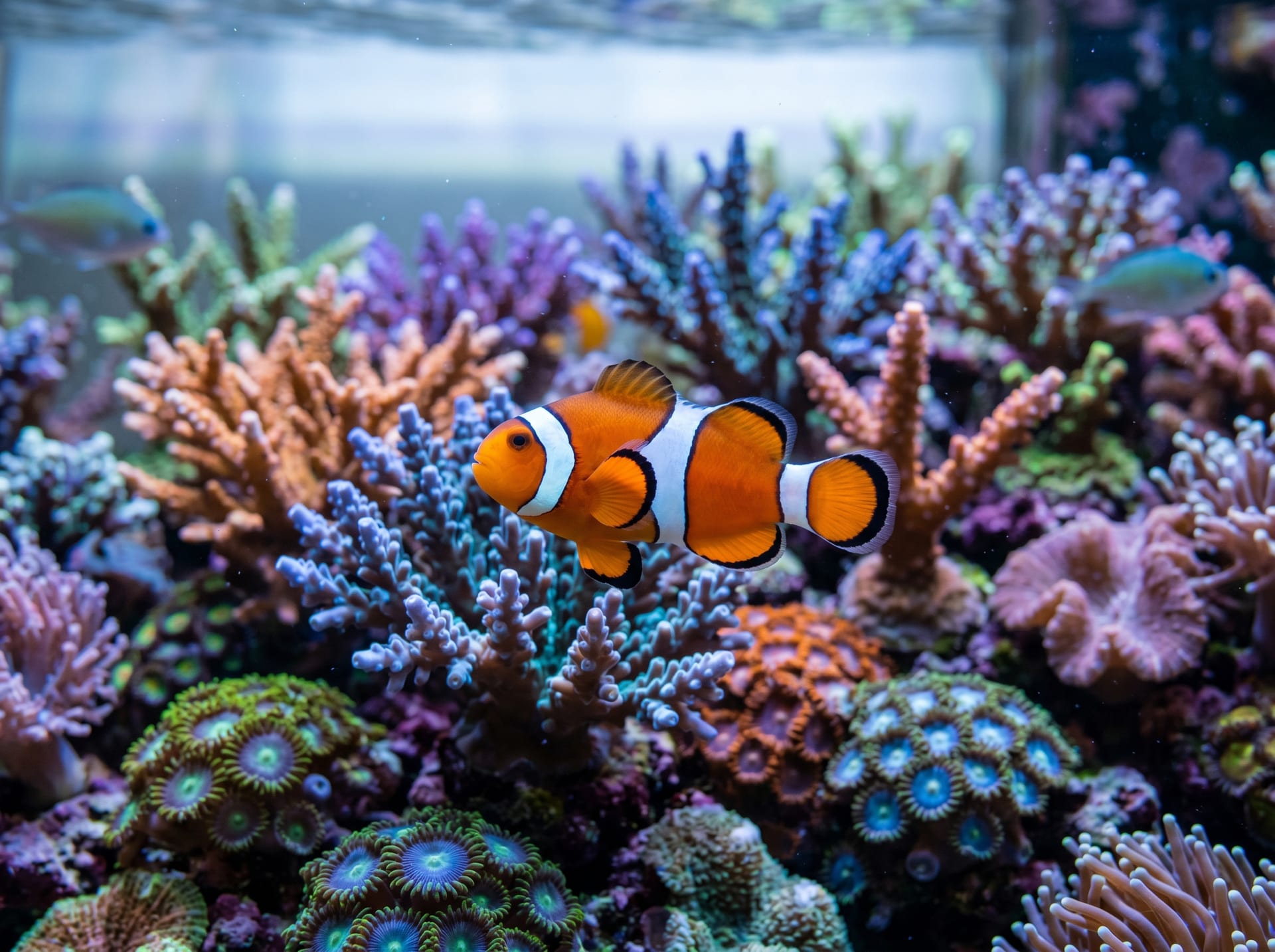
Ocellaris Clownfish (Percula/Ocellaris) The quintessential beginner saltwater fish. They can be kept without anemones and adapt quickly to prepared foods. Captive-bred (CB) individuals in particular show exceptional adaptability and are ideal as your first fish.
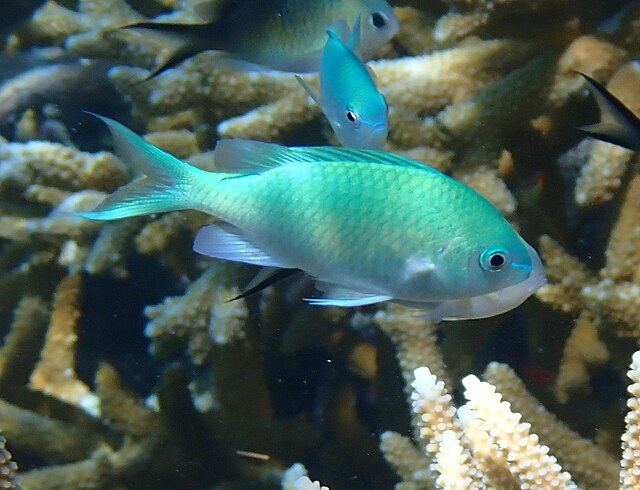
Sergeant Major Beautiful when schooling and hardy for beginners. However, they become territorial as they grow, so research mixing compatibility in advance.
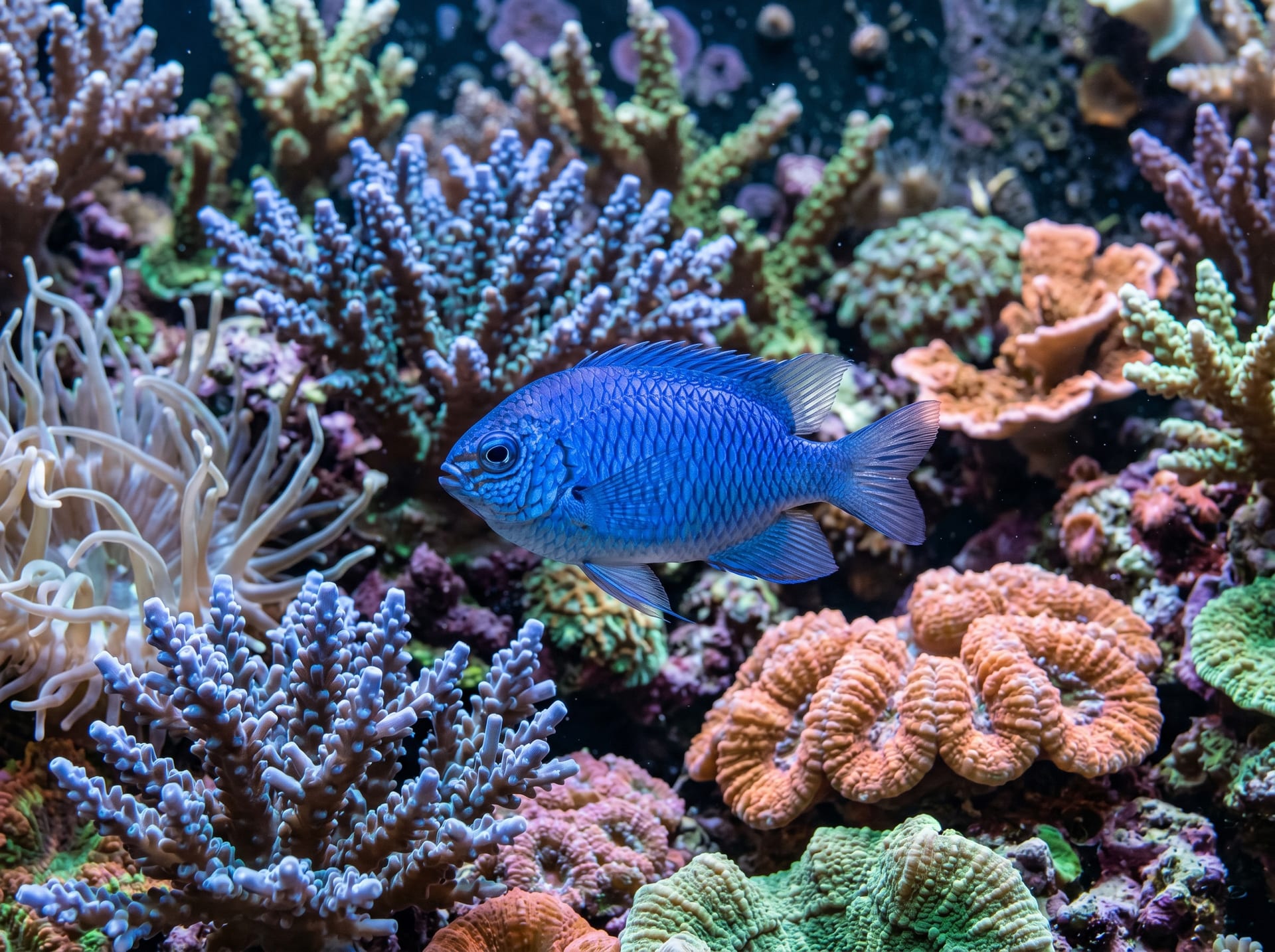
Cobalt Blue Damselfish Vibrant blue coloring with high ornamental value and hardy. Best kept singly or in small groups of the same species.
In any case, start with just one or two fish, and add more gradually as the aquarium's nitrification capacity stabilizes. Adding too many fish at once causes rapid water quality swings and increases the risk of total loss.
Finding Your First Saltwater Fish on BreederDirect
On BreederDirect, you can directly purchase captive-bred (CB) saltwater fish raised by domestic breeders. CB individuals experience less transport stress and adapt quickly to prepared foods, making them an excellent choice for your first fish in a newly established aquarium.
You can also contact breeders directly with specific questions like "I'm looking for an Ocellaris clownfish suited to a 60 cm tank" or "What other fish can I keep with it?" Health status is easier to assess compared to wild-caught imports, and transactions are conducted with confidence.
Take your first step into your newly established aquarium with BreederDirect.