Complete Guide to Marine Fish Larval Rearing | Larval Stage Management, Feeding, and Metamorphosis
Complete rearing manual for the "larval stage," the most challenging aspect of marine fish breeding. From hatchling to metamorphosis and settlement, this expert guide thoroughly explains water quality management, green water technique, feeding transitions, density management, and photoperiod settings.
Key Takeaways
Complete rearing manual for the "larval stage," the most challenging aspect of marine fish breeding. From hatchling to metamorphosis and settlement, this expert guide thoroughly explains water quality management, green water technique, feeding transitions, density management, and photoperiod settings.
Related Species
Larval Rearing: The Biggest Challenge in Marine Fish Breeding
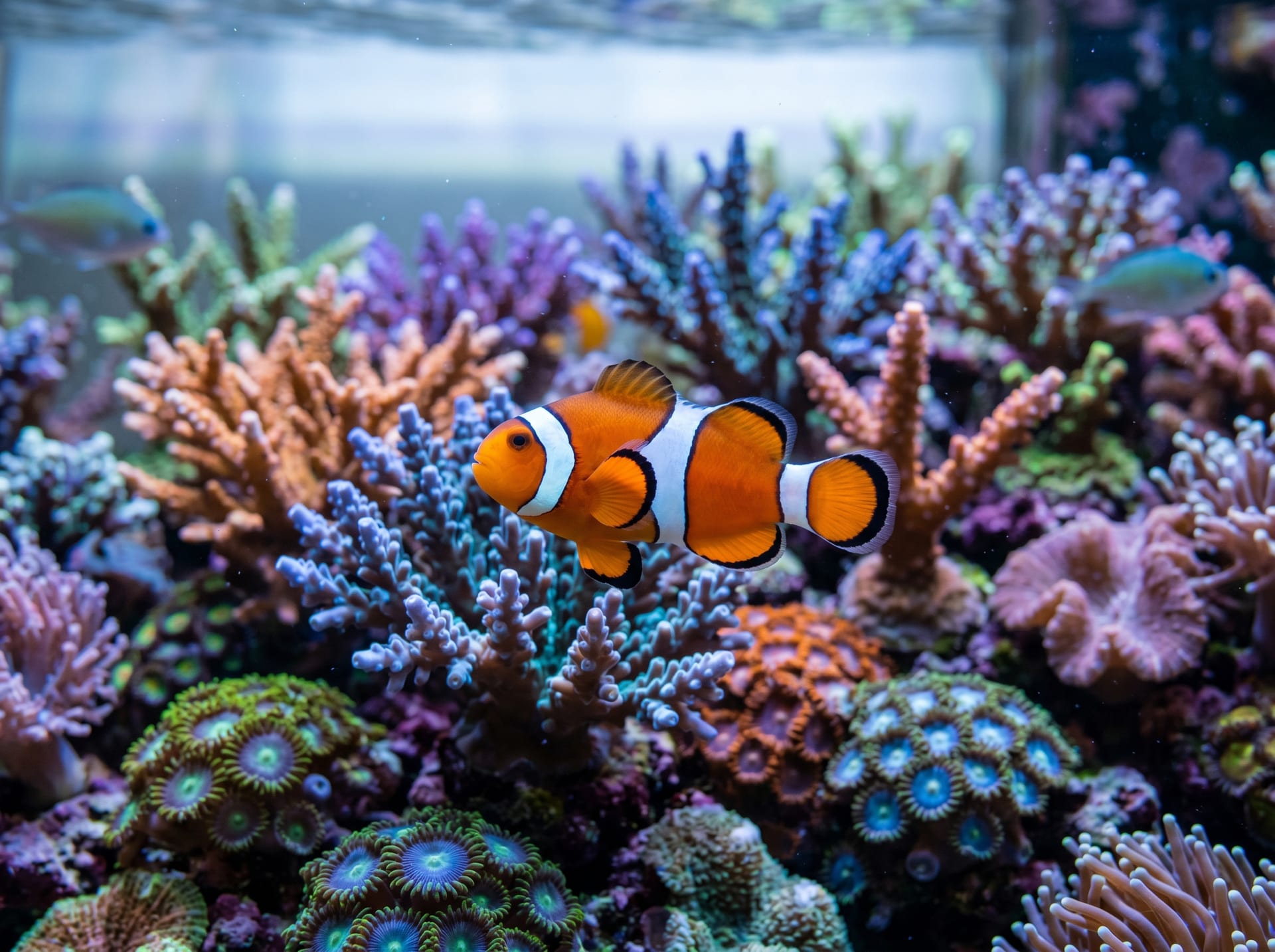
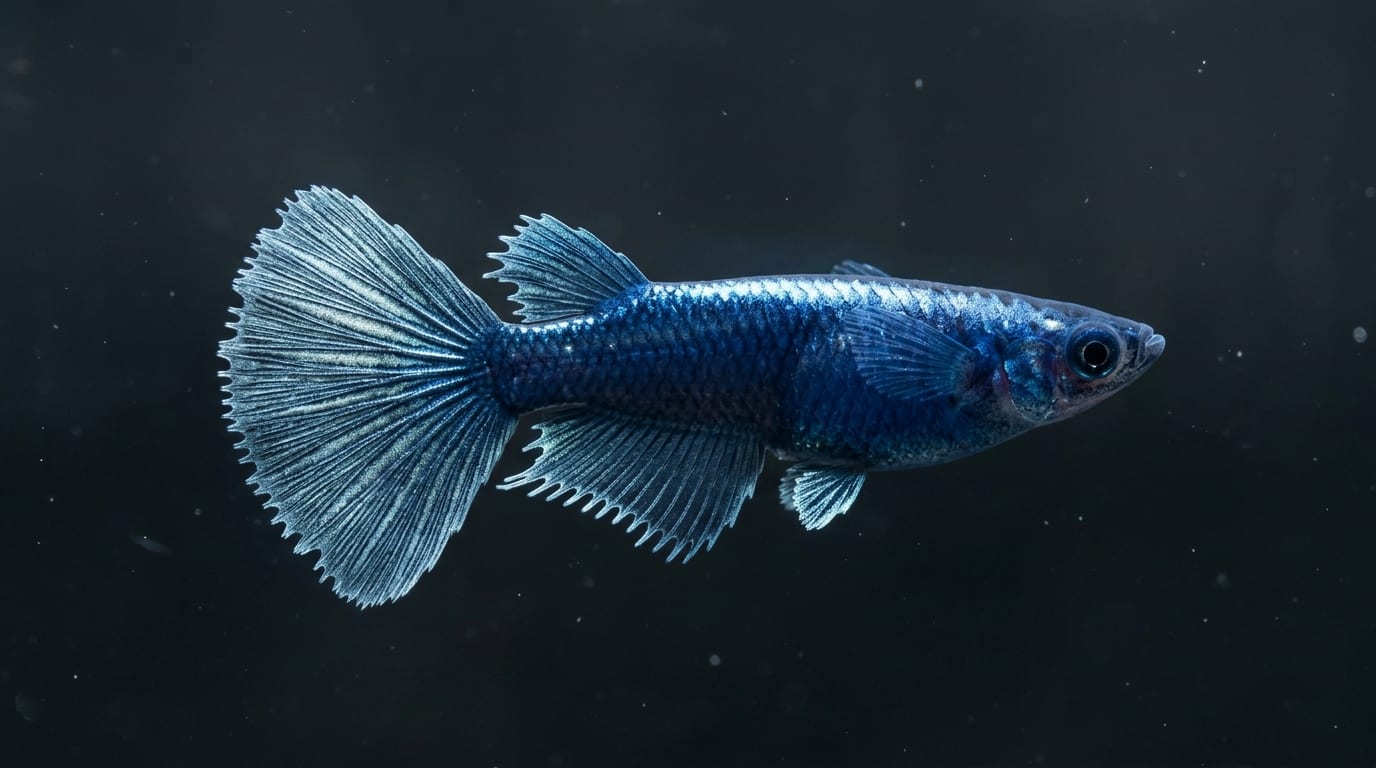
Even after successfully spawning clownfish or bangai cardinal fish, breeders face the greatest hurdle: managing the "larval stage." Unlike freshwater fry, marine fish larvae live a planktonic free-floating life immediately after hatching, with extremely minute and transparent bodies. Without proper management, total mortality occurs within days.
Approximately 80% of larval mortality results from "starvation" and "water quality deterioration." Conversely, controlling these two factors dramatically increases the probability of successful metamorphosis. This guide covers the entire process from hatching through metamorphosis and settlement in stage-by-stage detail.
What Is the Larval Stage?
Developmental Stages of Marine Fish Larvae
Most marine fish (whether demersal or pelagic spawners) undergo the following stages after hatching:
| Stage | Characteristics |
|---|---|
| Early larvae (pre-larval) | Retains yolk sac. 1–3 days post-hatch. External feeding unnecessary |
| Post-larval stage | Yolk sac depleted. Active external feeding required |
| Metamorphic stage | Body form and coloration approach adult state. Settlement behavior appears |
| Juvenile | Metamorphosis complete. Can be maintained like adults |
Clownfish metamorphose and settle 8–12 days post-hatch. Bangai cardinal fish are exceptions, as they exit parental care already in the juvenile stage, eliminating the need for larval management.
Why Is Marine Fish Larval Rearing So Difficult?
- Extremely small mouth opening (gape 0.1–0.3 mm)—even rotifers are initially too large for some species
- Underdeveloped digestive system—low nutrient absorption efficiency; requires frequent, high-density feeding
- Positive phototaxis—larvae aggregate toward light, and light management directly affects feeding efficiency
- No tolerance for water currents—strong flows and aeration cause exhaustion and drowning
- Extreme sensitivity to water quality changes—even 0.1 ppm ammonia is lethal
Larval Tank Design
Basic Larval Tank Specifications
Maintaining a dedicated larval tank is essential for success. Rearing larvae in parent or adult tanks is not recommended due to predation, water currents, and difficulty managing water quality.
Recommended Specifications
| Item | Recommendation |
|---|---|
| Capacity | 10–30 L (for small to medium species) |
| Shape | Cylindrical (prevents accumulation in corners) or rectangular |
| Bottom | Bare bottom (no substrate) or glass bottom |
| Lighting | Side-mounted low-intensity LED spotlights—use phototaxis to concentrate food |
| Aeration | Single fine-bubble sponge air stone (producing micro-bubbles 5 cm below surface) |
| Water temperature | Match parent tank (typically 26–28°C) ±0.5°C |
| Salinity | Specific gravity 1.023–1.025 |
Corner Nets and Drainage System
Attach a corner net (150–200 μm mesh) to the drain outlet to prevent larvae from being flushed out. Remove waste and uneaten food 1–2 times daily via bottom siphon, always attaching netting to the intake to prevent larval loss.
Green Water Technique (GWT)
What Is GWT?
The Green Water Technique (GWT) involves continuously adding phytoplankton (such as Nannochloropsis) to the larval tank, maintaining a light green water color. Established by researchers like Scott Michael at the University of Hawaii, it is now the global standard for larval rearing.
Three Benefits of GWT
- Improved food visibility—transparent larvae can more easily spot food (rotifers) against a green background
- Even light distribution—scattered light reduces larval accumulation caused by phototaxis
- DHA/EPA supplementation—phytoplankton itself serves as a nutritional source for larvae
Implementation
Add Nannochloropsis culture fluid (or commercial concentrate) to the tank, aiming for a Secchi depth of 10–15 cm. Add small amounts once or twice daily, being careful to avoid oxygen depletion from over-addition.
Recommended dosage (for 10 L tank): Culture fluid (1×10⁷ cells/mL) = 10–30 mL/day
Feeding Protocol
Stage-by-Stage Feeding Schedule
Larval rearing success depends on precise control of food size and feeding density.
Standard Protocol Using Clownfish as Example
| Days Post-Hatch | Primary Food | Feeding Density | Supplementary |
|---|---|---|---|
| Day 1–2 (early larvae) | No feeding | — | Maintain GWT |
| Day 3–7 | S-size rotifers (50–100 μm) | 5–10 individuals/mL | GWT |
| Day 8–12 | S-size rotifers + copepod nauplii | 5–8 individuals/mL | Continue GWT |
| Day 13–pre-metamorphosis | Copepods + Artemia nauplii | 3–5 individuals/mL | GWT may cease |
| Post-metamorphosis | Brine shrimp nauplii + fine artificial feed | 2–3 individuals/mL | — |
Rotifer Enrichment
Commercially available rotifers lack sufficient fatty acids. Enrich rotifers with DHA-containing enrichment products (Super Selco, RotiGrow, etc.) 30–60 minutes before feeding. Survival rates show clear improvement with enrichment.
Transition to Artemia (Brine Shrimp)
As metamorphosis approaches, growing larvae can transition to larger Artemia nauplii. However, avoid abrupt switching; mix both foods for several days to prevent feeding refusal.
Water Quality Management and Water Changes
Controlling Ammonia and Nitrite
Using filters in larval tanks is problematic due to water currents, and biological filtration is incomplete. Therefore, "partial water changes" are the primary means of maintaining water quality.
Recommended Water Change Protocol
- Day 1–5: 10–15% water change once daily
- Day 6–metamorphosis: 15–20% water change twice daily
- Always use freshly prepared seawater matched to temperature, salinity, and pH (8.1–8.3)
- If ammonia exceeds 0.1 ppm, perform an immediate 50% water change
Dissolved Oxygen Management
Weak aeration makes dissolved oxygen depletion a risk. Keep density below 1 larva/liter to prevent overcrowding. Culling excess larvae to match tank capacity is an option to consider.
Photoperiod and Lighting Management
Photoperiod Setting
Larvae exhibit positive phototaxis, making light management crucial for feeding efficiency.
Recommended Photoperiod: 16–18 hours light / 6–8 hours dark
Excessive light duration exhausts larvae. Since feeding stops during darkness, using moonlight LEDs during the dark period helps prevent excessive light-seeking behavior.
Side-Lighting Technique
Directing low-intensity spotlights from the tank's side concentrates larvae and food (rotifers) in well-lit areas, significantly improving feeding efficiency. However, avoid excessive illumination (>500 lux), which stresses larvae.
Supporting Metamorphosis and Settlement
Signs of Metamorphosis
As metamorphosis approaches, larvae exhibit:
- Color change from transparent to pigmented (orange appears in clownfish)
- Body shape approaches adult form; fins differentiate
- Transition from free-floating to bottom/wall contact behavior (settlement exploration)
Settlement Substrate
Metamorphosing larvae require a settlement substrate analogous to anemones or rock crevices used by adults.
- Clownfish: Small plastic tubing or folded plastic netting
- Gobies: Sand bed (approximately 5 cm depth)
- Dottybacks: PVC pipe arranged to mimic rock crevices
Without appropriate settlement substrate, larvae may fail to complete metamorphosis and die.
Common Failures and Solutions
| Symptom | Cause | Solution |
|---|---|---|
| Total mortality within 3 days of hatch | Temperature/salinity mismatch / gas supersaturation | Precisely match water parameters with parent tank |
| Larvae refuse food | Food too large / phototaxis not utilized | Switch to smaller rotifers / install side lights |
| Sudden death before metamorphosis | Ammonia accumulation | Increase water change frequency / reduce density |
| Metamorphosis failure or deformities | Nutritional deficiency (DHA/EPA insufficiency) | Strengthen rotifer enrichment / increase copepod rations |
| No settlement behavior | Lack of appropriate substrate | Add suitable settlement substrate |
Establishing Breeding Operations
Stabilizing larval rearing requires a reliable food supply system (simultaneous culture of rotifers, copepods, and Nannochloropsis) and parallel operation of multiple rearing tanks.
Begin with successful metamorphosis of just 1–2 individuals. Continuous protocol refinement based on failures ultimately leads to mass production of dozens to hundreds of juveniles. Marine fish larval rearing represents the most scientifically demanding aspect of marine fish breeding and, simultaneously, the most rewarding challenge.