Introduction to Frag Tanks: How to Manage Coral Frags and Build a Propagation System
A guide to designing and operating a frag tank system for managing and propagating coral cuttings (frags).
Key Takeaways
A guide to designing and operating a frag tank system for managing and propagating coral cuttings (frags).
Related Species
What is a Frag Tank?
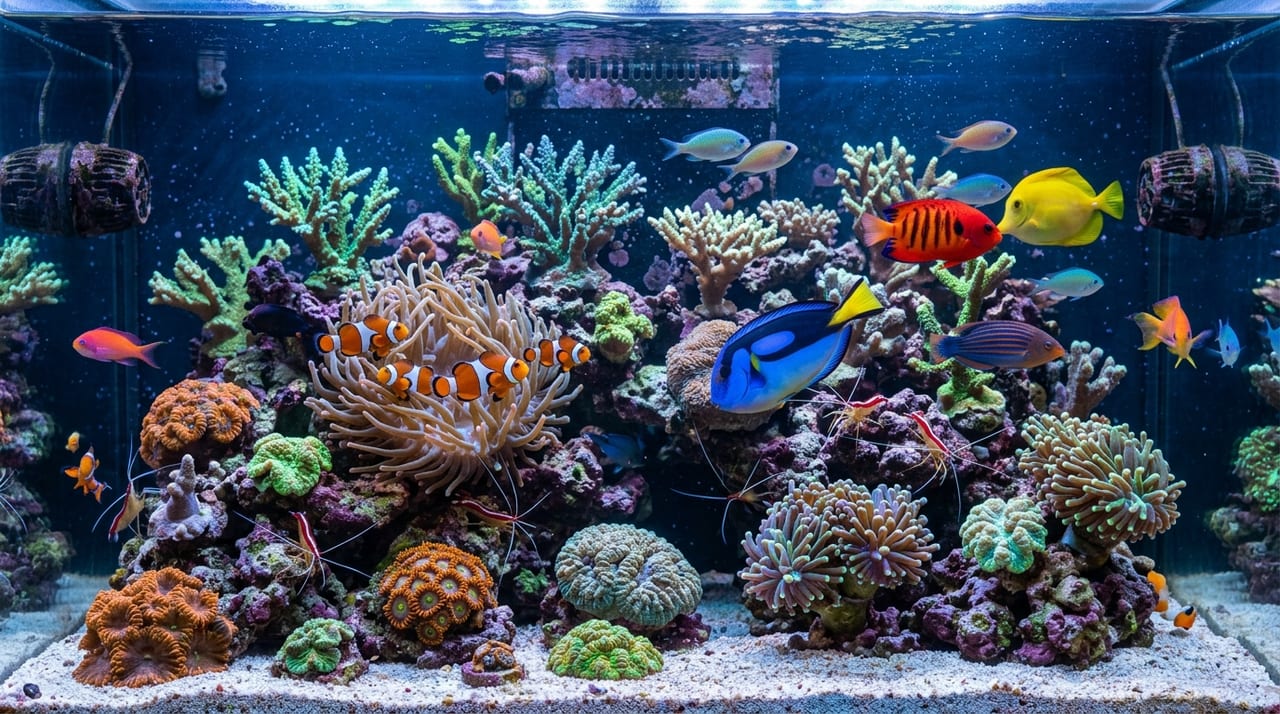
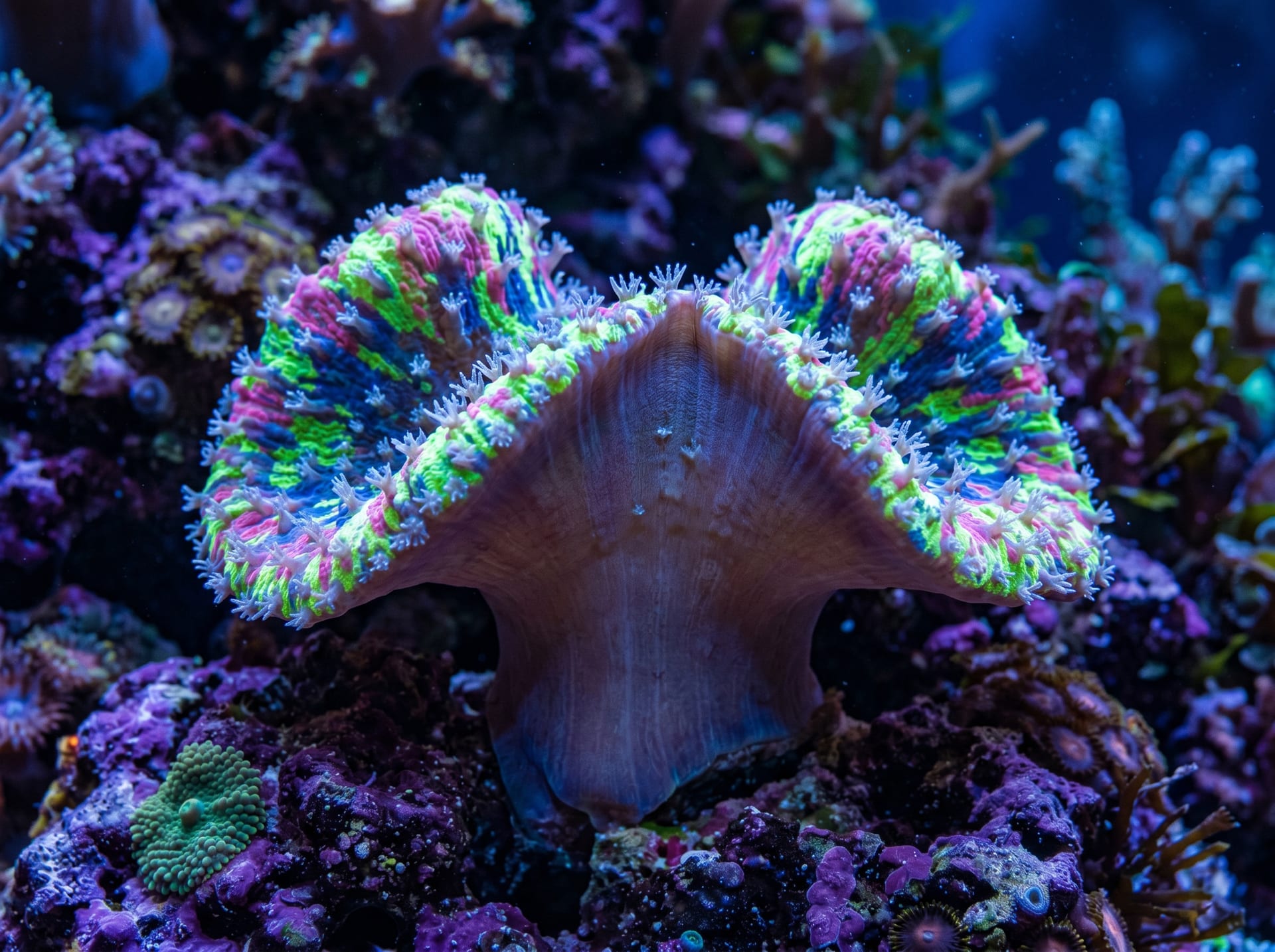
Among marine aquarists, a "frag tank" is essential equipment for coral breeding and distribution. Frag is short for "fragment," referring to coral cuttings. A frag tank is a dedicated aquarium designed to allow cut coral to heal and grow, requiring a design that balances production efficiency with ease of management.
The main purposes are as follows:
- Promoting healing and growth of cut coral
- Centralized management of multiple coral species
- Conditioning coral before sale or distribution
- Quarantine and recovery of diseased or stressed coral
For breeders and coral vendors, frag tanks are a source of revenue, and for hobbyists, they serve as a base for expanding collections and facilitating trades.
System Design Fundamentals
Tank Size and Configuration
Frag tanks prioritize ease of operation, and shallow tanks are the standard. A water depth of 20-30cm and width of 60-120cm allows uniform light distribution and makes work with tweezers and scissors easier. Install circulation pumps with a flow rate of 20-30 times the tank volume per hour, positioning multiple powerheads at different angles to avoid creating dead spots (stagnant areas).
Overflow systems are most advantageous for maintaining stable water quality. By concentrating a protein skimmer and reactor in the sump tank, you keep the main display tank clean while ensuring high processing capacity. Small setups can use hang-on skimmers, but as the number of frags to manage increases, the benefits of converting to an overflow system become more apparent.
Lighting Selection and Placement
High-performance LED lighting is essential for frag tanks. When primarily working with SPS (Acropora species), a PAR (photosynthetically active radiation) of approximately 450-600 μmol/m²/s is recommended; for soft corals and LPS, 100-300 μmol/m²/s is often sufficient. When managing multiple species, utilize dimming functions and vary light intensity across the tank so placement can accommodate different light requirements. Hang lights at a height where light falls uniformly on the central frag rack, minimizing light loss at the edges.
Choosing Frag Racks and Plugs
Eggcrate (grid-patterned plastic sheets) and acrylic frag racks are widely used for arranging frags. Install them 10-15cm above the tank floor to achieve uniform light distribution while maintaining water flow to the bottom.
Frag plugs are white ceramic or plastic bases that secure coral. Magnetic plugs can be affixed with magnets attached to the tank wall, making them convenient for displaying and managing coral on vertical surfaces. Match plug sizes to coral size: small plugs around 2cm in diameter for small soft corals, and large plugs of 2.5-4cm for SPS and LPS.
Cutting Techniques and How to Make Frags
Cutting Procedures by Type
Soft corals (such as Sarcophyton, Sinularia, etc.) are divided with clean scissors or cutters. Before work, rinse tools with seawater, wipe with 70% ethanol, and dry them to reduce infection risk.
LPS (such as Trumpet, Bubble, Brain corals, etc.) are cut by individual polyp. When cutting the calcium carbonate skeleton, use diamond-coated band saws or Dremels. Lightly disinfect the exposed skeleton surface with iodine solution beforehand to promote healing.
SPS (such as Acropora species) are cut to a length of at least 5cm from the branch tip. Immediately after cutting, an iodine-based saltwater dip (approximately 2 minutes) or UV sterilization reduces infection risk. For attaching to frag plugs, use coral-specific adhesive (cyanoacrylate-based) or epoxy putty, and promptly return the frag to the tank after bonding.
Healing Timeline Estimates
| Type | Healing Timeline |
|---|---|
| Soft Corals | A few days to 1 week |
| LPS | 1-2 weeks |
| SPS | 3-4 weeks |
During the healing period, reduce water flow and keep lighting at about 70% of normal to minimize stress—this is key.
Water Quality Management
Frag tanks have many corals in close proximity, increasing water quality contamination risk compared to standard tanks. To prevent the accumulation of nitrate and phosphate, maintain adequate skimmer capacity, and carbon dosing (such as vodka dosing or NoPox) is also effective at promoting denitrification. Weekly water changes (10-15% of total volume) are fundamental to maintaining stability.
The calcium-alkalinity-magnesium triangle is particularly important. Since many corals are growing skeleton, consumption rates are high, so calcium reactors or two-part dosing systems are strongly recommended. Target values are as follows:
- Calcium: 420-450 mg/L
- Alkalinity: 8-10 dKH
- Magnesium: 1300-1400 mg/L
Measure 1-2 times per week as a routine and adjust frequently before values drift too far. Using accurate test kits from companies like Salifert or Hanna makes management significantly easier.
Frag Tank Operation and Record Management
Essential tracking systems are needed to identify which frags are which species, when they were cut, and how much they've grown. Using spreadsheets or dedicated apps (such as CoralVue) makes managing mixed species easier.
Mark frag plugs with color coding or numbered tags to link them with records. When selling as a breeder, provenance information such as the original collector's name and acquisition source directly affects product value. Frags from rare species or renowned collectors tend to command higher prices the clearer the provenance.
Periodically photograph frags and record size changes—useful for comparing growth rates and analyzing correlations with water quality changes. By operating a frag tank systematically, you can envision transitioning from a hobby into serious coral propagation.