A Guide to Feeding Marine Fish | Proper Feeding Methods by Species | ブリちょく
Marine Fish| ✍️ BreederDirect Editorial
A Guide to Feeding Marine Fish | Proper Feeding Methods by Species
Explains the types and feeding methods for marine fish. Covers the proper use of artificial feed, frozen food, and live food; differences among herbivorous, omnivorous, and carnivorous species; and tips on acclimation feeding and feeding frequency.
Key Takeaways
Explains the types and feeding methods for marine fish. Covers the proper use of artificial feed, frozen food, and live food; differences among herbivorous, omnivorous, and carnivorous species; and tips on acclimation feeding and feeding frequency.
A Guide to Feeding Marine Fish | Proper Feeding Methods by Species
In marine fish keeping, feeding is one of the most important daily tasks that directly affects the health, coloration, and lifespan of your fish. By correctly understanding "what to feed, how much, and how to feed," your fish will remain stress-free and maintain their beautiful appearance. Conversely, feeding food unsuitable for their diet or overfeeding can cause indigestion, water quality deterioration, and disease. This article provides a comprehensive guide covering everything from food types to species-specific feeding tips and acclimation techniques.
✍️
BreederDirect Editorial
The BreederDirect editorial team specializes in care information for animals, covering veterinary care and breeding to deliver beginner-friendly guides.
Find Marine Fish on BreederDirect
Buy directly from verified breeders
Browse Related Listings
Find Marine Fish listings related to this article on BreederDirect. Buy directly from verified breeders.
Marine fish feed falls into three main categories: "artificial feed," "frozen food," and "live food." Each has advantages and disadvantages, so it's ideal to choose based on the fish species and your goals.
Artificial Feed (Dry Food)
The easiest to handle and most suitable for beginners.
Flake Type: Floats easily and is simple to digest. Since it dissolves readily in water, monitor for uneaten food
Pellet Type: Well-balanced nutrition with options to match different feeding zones (surface, mid-water, bottom) based on sinking speed and pellet size
Algae-Based Formula: Specialized feed containing nori (seaweed) and marine algae, ideal for herbivorous fish such as surgeonfish and rabbitfish
The main advantage is ease of storage and consistent nutritional balance. However, palatability is lower than frozen or live food, so newly acquired fish may refuse to eat artificial feed alone during quarantine.
Frozen Food
Characterized by composition close to natural prey and high palatability.
Artemia (Brine Shrimp): Ideal for small fish and fry. Enriched varieties are even more effective for nutritional enhancement
Krill (Copepods): A standard favorite among most marine fish, rich in vitamins and minerals
Copepods: Tiny planktonic organisms useful for small-mouthed fish and coral feeding
Frozen Mysis & Frozen Squid: Suitable for large predatory fish and effective as a primary food source
Always thaw with running water before feeding. Thaw liquid contains excess fats and bacteria, so rinsing in a cup before feeding promotes cleanliness.
Live Food
Extremely effective as a "starter" for fish with reduced appetite.
Live Brine Shrimp: Movement stimulates fish predatory instincts. Particularly effective for difficult-to-acclimate fry
Amphipods and Mysid Shrimp: Natural crustaceans with very high palatability. Used for acclimating difficult-to-feed species
Live Copepods: Essential for fish with extremely small mouths, such as dragonets and jawfish
Note that live food requires significant maintenance effort and carries the risk of introducing pathogens and parasites from external sources.
---
Feeding Tips by Diet Type
Marine fish diets are categorized into "herbivorous," "omnivorous," "carnivorous," and "planktivorous." Prolonged feeding of inappropriate food can cause malnutrition or digestive disease.
Herbivorous Fish (Surgeonfish, Rabbitfish, Spinefoot Fish, etc.)
These fish naturally feed continuously in small amounts. Feeding 2–3 times daily is ideal, and attaching unsalted dried nori to the tank wall with a clip is also effective. Extended hunger causes them to consume algae from live rock and coral polyps, making adequate feeding opportunities essential.
Omnivorous Fish (Clownfish, Damselfish, Butterflyfishes, etc.)
These fish eat a wide variety of foods in a balanced manner. Supplement artificial feed as the primary diet with frozen artemia or krill 2–3 times weekly for proper nutrition. A good feeding amount is "what they can consume within 2–3 minutes."
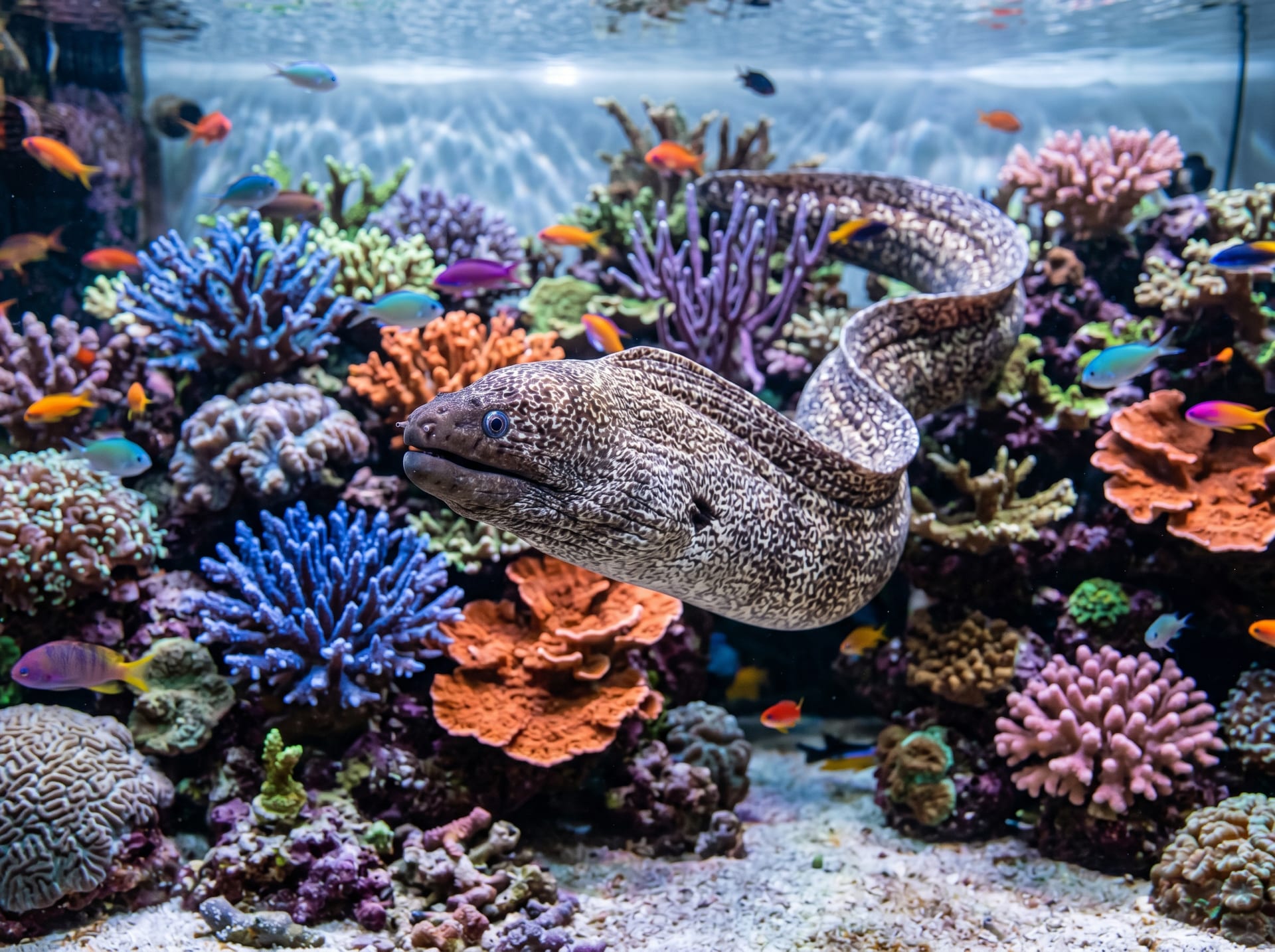
Carnivorous Fish (Groupers, Snappers, Moray Eels, etc.)
Digestion takes longer, so feeding every 2–3 days is appropriate. Krill, frozen squid, and fish flesh serve as primary foods, with artificial feed acclimation taking time. Overfeeding rapidly deteriorates water quality, so restraint is essential.
Planktivorous Fish (Dragonets, Mandarinfish, etc.)
Species that feed exclusively on live plankton in the wild may resist artificial feed. Establishing a large copepod breeding "refugium" or providing continuous live brine shrimp is key to long-term success.
---
Acclimation and Feeding Tips
Newly acquired fish often refuse food for several days due to stress from environmental change. Proceed patiently with these steps:
Start with highly palatable live or frozen food — Begin with live or frozen feed to establish "eating habits" rather than artificial feed from the start
Transition gradually through mixed feeding — Start at 70% frozen food + 30% artificial feed, increasing the artificial feed ratio over 1–2 weeks
Feed at the same time and place — Fish learn feeding patterns, so establishing a consistent rhythm encourages them to gather voluntarily
Remove uneaten food immediately — Dissolved organic matter becomes an ammonia source and rapidly degrades water quality
Use fasting as a tool — When fish stubbornly refuse artificial feed, fasting for 1–2 days before offering small portions of artificial feed often improves acceptance
---
Feeding Frequency and Quantity Guidelines
Fish Size/Type
Feeding Frequency
Amount per Feeding
Small fish (5 cm or less)
1–2 times daily
Amount consumed in 1–2 minutes
Medium fish (5–15 cm)
Once daily
Amount consumed in 2–3 minutes
Large predatory fish (15 cm or more)
Once every 2–3 days
Belly slightly distended
"Slightly underfed daily" is the most ideal approach for maintaining water quality and fish health. Adjust based on your tank's skimmer and filtration capacity.
---
Conclusion | Welcome Your Ideal Marine Fish with Br-Choku
Marine fish feeding follows a simple principle: "understand the fish's diet → select appropriate feed → feed in small portions at regular times → remove leftover food." While it may seem daunting at first, establishing a feeding routine while observing each fish's personality is one of the pleasures of marine fish keeping.
Br-Choku allows you to purchase marine fish raised with care by individual breeders directly. Most sellers offer fish already acclimated to artificial feed and are happy to provide detailed information about "what feed they received" and "feeding frequency." Being able to understand the rearing environment and feeding history before purchase ensures smooth acclimation after bringing your fish home—this is Br-Choku's strength. When you find a fish that interests you, try reaching out to the breeder directly through our messaging system.