Complete Guide to Enhancing Marine Fish Colors | Maximizing Color Expression Through Food, Lighting, and Water Quality
A comprehensive guide to maintaining and enhancing the beautiful colors of marine fish. Explains how to select carotenoid-based foods, set up blue-wavelength lighting, reduce nitrate levels, and species-specific color enhancement techniques for angelfish, anthias, wrasse, and mandarin fish.
Key Takeaways
A comprehensive guide to maintaining and enhancing the beautiful colors of marine fish. Explains how to select carotenoid-based foods, set up blue-wavelength lighting, reduce nitrate levels, and species-specific color enhancement techniques for angelfish, anthias, wrasse, and mandarin fish.
Related Species
Why Do Marine Fish Colors Fade?
Marine fish's beautiful body colors are created by pigments contained in pigment cells (chromatophores) and the reflection and refraction of light by scales and skin. When rearing conditions deteriorate, the pigment fades and colors become dull or darkened.
The foundation of color enhancement is "removing stress sources and providing the nutrition and lighting environment necessary for pigment formation." While effective approaches vary by species, this guide focuses on techniques common to colorful marine fish (angelfish, anthias, wrasse, mandarin fish, and others).
1. Color Enhancement Through Food (Most Immediate Results)
Supplying Carotenoid Pigments
Red, orange, and yellow coloration depends on carotenoid pigments (astaxanthin, cantaxanthin, and β-carotene). Since fish cannot synthesize carotenoids internally, supplementation through food is essential.
Foods Rich in Carotenoids
- Frozen brine shrimp (especially gut-loaded)
- Frozen copepods
- Algae-containing pellets (Ocean Nutrition, New Life Spectrum, etc.)
- Color-enhancement specialty foods (Cobalt Aquatics "Blue" and "Red" series, etc.)
New Life Spectrum (NLS) is particularly highly rated by hobbyists with extensive color-enhancement experience, and often produces visible improvements in red and orange coloration within 1-2 months.
Plant-Based Materials and Digestive Health
Digestive health directly affects pigment absorption rates. Foods containing plant-based materials such as spirulina and chlorella promote healthy gut flora and aid carotenoid absorption.
Feeding Frequency and Quantity
Feeding 2-3 times daily in small amounts is the standard approach. Rather than large single feedings, providing small frequent meals that fish can fully digest results in better nutrient utilization and prevents water quality deterioration.
2. Color Enhancement Through Lighting
The Importance of Blue to Violet Wavelengths (420-470nm)
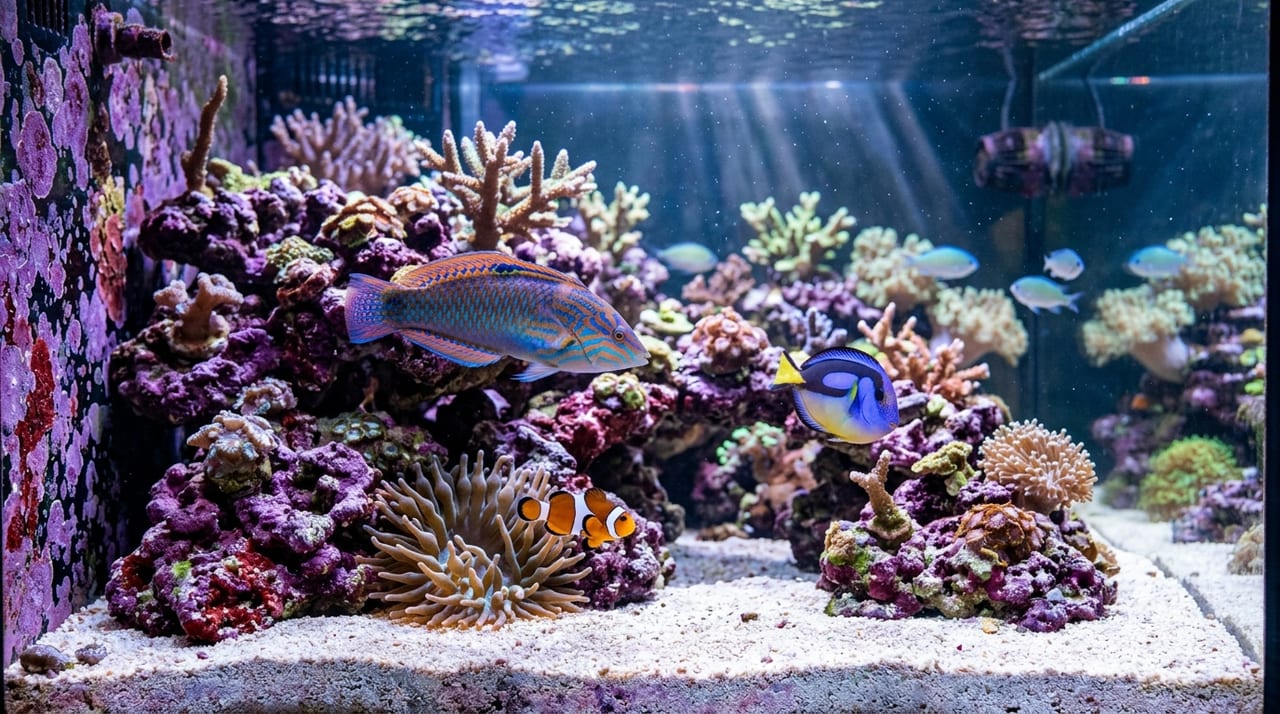
Blue to violet wavelengths are essential for maximizing fluorescent colors in marine fish (green, orange, and pink fluorescent patterns). With primarily white lighting, fluorescent colors are less pronounced; increasing the proportion of blue light dramatically enhances color expression.
Recommended LED Lighting Settings
- Blue channel: 40-60%
- White channel: 20-30%
- Violet (420nm): 10-20%
Photoperiod and Light-Dark Cycle
Settings that mimic natural reef rhythms (10-12 hours of daylight) produce the most stable color expression. Sudden changes in photoperiod disrupt pigment cell adaptation, so any adjustments should be made gradually over a week.
Excessive Lighting Can Be Counterproductive
Excessive light intensity causes color fading and stress behaviors (hiding at the bottom, loss of appetite). Especially for low-light-preferring species such as mandarin fish and dottybacks, low to moderate lighting is necessary to maintain proper coloration.
3. Color Enhancement Through Water Quality Management
Reducing Nitrate
When nitrate accumulates above 20 ppm, many marine fish exhibit stress coloration (darkening and dull body color). Regular water changes (10-15% weekly) combined with efficient protein skimming maintains nitrate below 5-10 ppm.
Proper Specific Gravity and Temperature
- Specific gravity: 1.025-1.026 (close to natural seawater)
- Water temperature: 24-26°C (varies by species, but this range optimizes metabolic balance)
If specific gravity is too low (1.020 or below), osmotic regulation becomes costly, causing stress-induced color fading.
Mineral Balance
Maintaining proper levels of minerals such as calcium, magnesium, and potassium supports healthy skin and scales. Regular water changes with synthetic seawater naturally replenish minerals.
4. Species-Specific Color Enhancement Tips
Angelfish
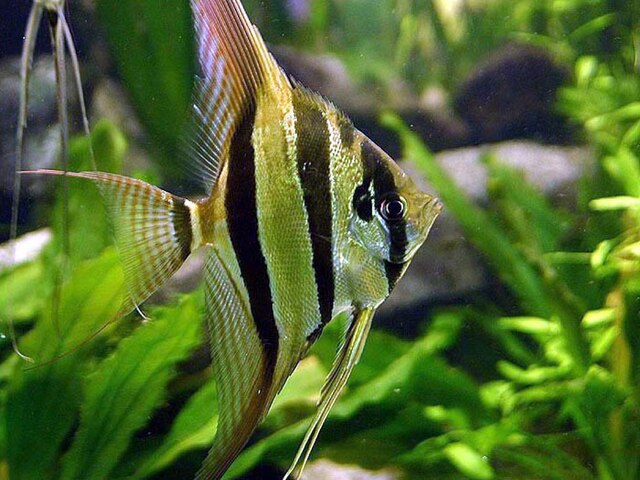
Adult coloration improves primarily through continued feeding of carotenoid-based foods. To maintain the vibrant multicolor patterns of coral beauties and flame angelfish, combining NLS pellets with frozen brine shrimp is effective. The color change from juvenile to adult is genetically determined, and environmental conditions have limited ability to accelerate or delay this transition.
Anthias
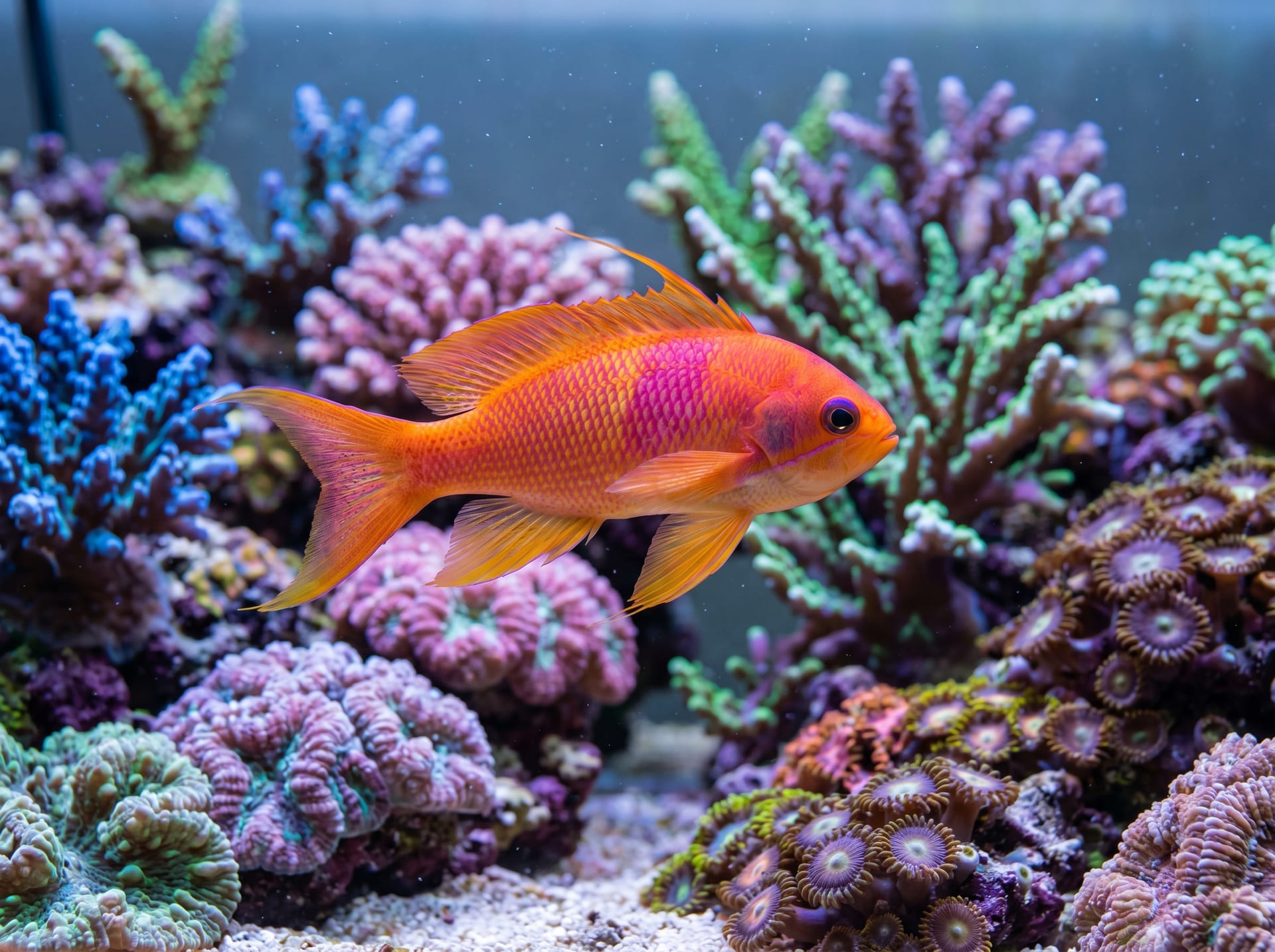
Orange, pink, and yellow coloration depends on astaxanthin supplementation. Larger groups encourage males to compete in color expression (social coloration), making groups of 6 or more highly effective for maintaining coloration.
Wrasse
Breeding coloration (vibrant male coloration) is maintained as a social signal. Harem systems with multiple females and a single male produce the most beautiful coloration.
Mandarin Fish
The blue-green coloration, considered among the world's most beautiful, is maintained by feeding primarily on copepods. Individuals fed only on artificial food gradually fade in color. Continuous supplementation of live rock and live copepods directly contributes to color enhancement.
5. Eliminating Stress Factors That Hinder Color Enhancement
Regardless of how well you optimize food, lighting, and water quality, the following stress factors can significantly reduce color enhancement results.
- Tank mate conflicts: Same-species and closely related species territorial disputes are the greatest stress source. Aggressive individuals should be isolated.
- Overcrowding: Excessive fish density leads to nitrate accumulation and increased stress.
- Excessive viewing and external stimulation: Frequently tapping on the tank, suddenly turning lights on and off, etc.
- Overlooking disease: Even early stages of diseases such as ich and velvet disease cause color dulling.
Conclusion
Color enhancement in marine fish requires all four elements—food (carotenoid supplementation), lighting (enhanced blue wavelengths), water quality (reduced nitrate and proper specific gravity), and stress elimination—working together for maximum effect. Improving just one element will have limited results. Begin by reviewing your feeding program (introducing color-enhancement foods) and testing nitrate levels, then observe changes carefully over 1-2 month periods. The key to color enhancement success is patience and consistency.