Complete Guide to Keeping Dorcus rectus Beetles | Adult Management, Breeding, and Larval Rearing of Japan's Beginner Beetle Species
Comprehensive explanation of breeding, reproduction, and larval rearing of Dorcus rectus beetles. From setting up spawning beds to timing for splitting eggs, comparison of mat versus fungal bottle rearing, and overwintering management—a complete guide to successfully raising Japan's beginner beetle species.
Key Takeaways
Comprehensive explanation of breeding, reproduction, and larval rearing of Dorcus rectus beetles. From setting up spawning beds to timing for splitting eggs, comparison of mat versus fungal bottle rearing, and overwintering management—a complete guide to successfully raising Japan's beginner beetle species.
Related Species

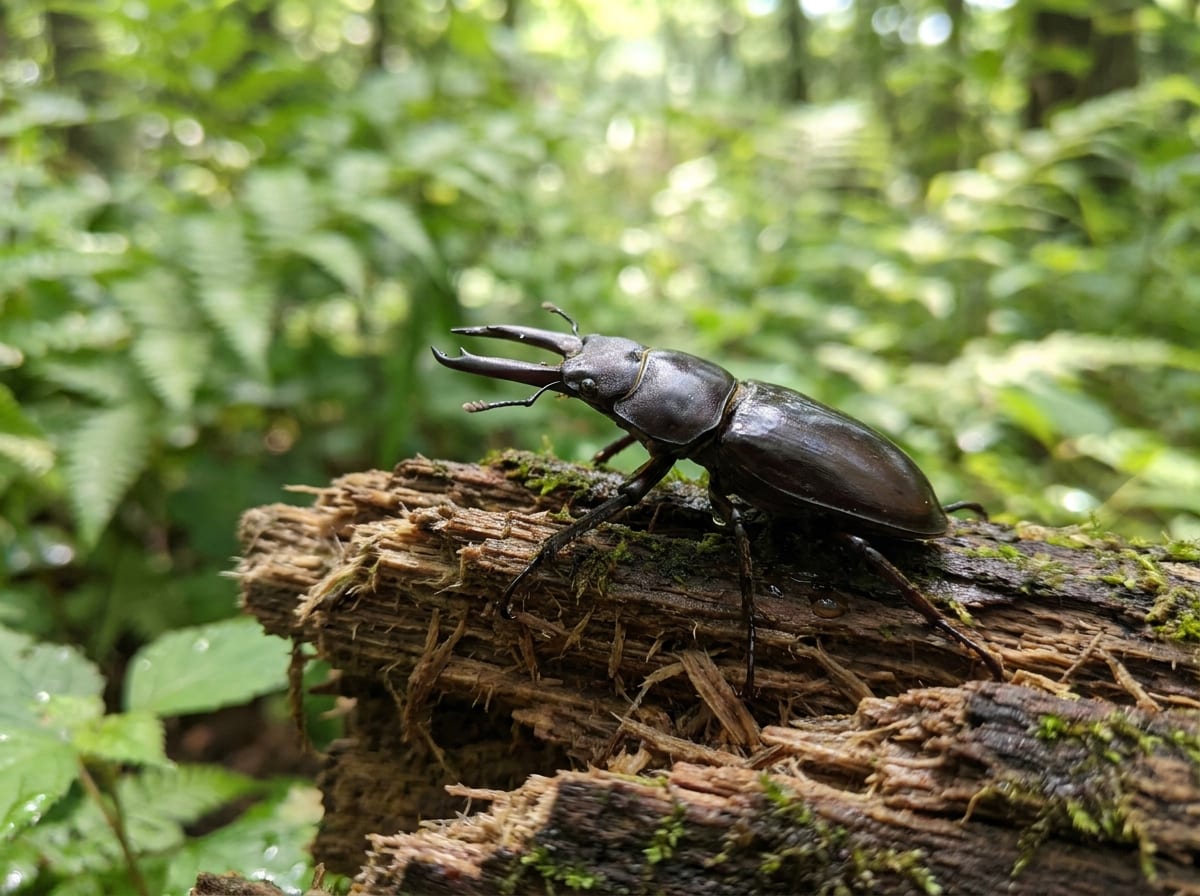
Dorcus rectus is the most common native Japanese stag beetle distributed throughout Japan. Males measure 25–55 mm in length and females 20–35 mm, making them relatively small. However, they are characterized by their hardiness and ability to adapt flexibly to temperature changes, as well as their docile nature that even beginners can easily handle. They can be obtained through wild collection and their breeding is relatively straightforward, so they have long been popular as a beginner's species for stag beetle keeping. This article provides a detailed explanation of everything from caring for Dorcus rectus to breeding and larval rearing.
Characteristics and Appeal of Dorcus rectus
Basic Information
| Item | Details |
|---|---|
| Scientific Name | Dorcus rectus |
| Body Length (Male) | 25–55 mm (wild-collected specimens over 40 mm are considered large) |
| Body Length (Female) | 20–35 mm |
| Lifespan | Adult approximately 2–3 years (longer-lived when hibernation is included) |
| Distribution | Hokkaido to Kyushu and Tsushima. Found in Konara and Kunugi oak forests |
| Activity Period | June–October (peak activity July–August) |
Differences from the Japanese Giant Stag Beetle
Dorcus rectus belongs to the same genus (Dorcus) as the Japanese giant stag beetle and has a similar body shape, but can be distinguished by the following points:
- Inner teeth of the mandibles: In Dorcus rectus, the inner teeth at the base of the mandibles are small and located near the tip. In the Japanese giant stag beetle, there is a large inner tooth near the center of the mandibles
- Body shine: Dorcus rectus has a dull luster, while the Japanese giant stag beetle has a stronger shine
- Body size: The maximum size of Dorcus rectus is approximately 55 mm. The Japanese giant stag beetle can reach 70 mm or larger
Why It Excels as a Beginner Species
- High temperature tolerance: Can be bred in the range of 20–26℃
- Relatively easy breeding: Reliably lays eggs in spawning wood
- Simple larval management: No need for fungal bottles; mat rearing is also possible
- Easy to obtain: Can be purchased from breeders as well as wild-collected
- Long-lived: Adults have a long lifespan and can be kept for 2–3 years
Adult Rearing Environment
Case Size
| Case Size | Use |
|---|---|
| Small (220–500 cc) | Solo rearing (especially females) |
| Medium (860–1100 cc) | Solo rearing (males) |
| Large (1800 cc+) | Pair cohabitation, pre-breeding preparation |
Male Dorcus rectus are generally docile, but if multiple males are placed in the same case, they will fight. Solo keeping or a combination of one male and one to two females is recommended.
Mat and Environmental Setup
- Mat: Spread a 5–10 cm layer of insect mat (fermented mat)
- Anti-tipping materials: Place several pieces of bark or cork material (prevents weakening if the beetle gets stuck on its back)
- Food dish: Set up a commercial jelly cup holder with insect jelly
- Temperature: 20–26℃ (around 25℃ is ideal)
- Humidity: Slightly moist mat (should hold together if squeezed, but not so wet that water drips)
Selecting Insect Jelly
Dorcus rectus prefer high-protein jelly. Using "high-protein jelly" containing protein and amino acids as their main food will build up their strength before breeding and increase the number of eggs laid.
- Main food: High-protein jelly (15% or higher protein content)
- Supplementary: Fruit jelly and brown sugar jelly to increase palatability
Change the jelly roughly once every 2–3 days.
Overwintering Management
Dorcus rectus enters hibernation when the temperature drops to 15℃ or below.
Overwintering method:
- Spread mat thicker than usual (10–15 cm) to create an environment where the beetle can burrow
- Pay attention to dryness; mist with a spray bottle if the mat dries out
- Place in an area exposed to outside air, such as an entryway or storage shed, so the temperature does not fall below 5–10℃
- Feeding and water changes are not necessary during hibernation (check condition only 1–2 times per month)
Feeding resumes around April–May after hibernation. Dorcus rectus that have gone through hibernation often become more motivated to lay eggs.
Breeding Method
Pairing (Mating)
Perform pairing before placing into the spawning set.
Hand-pairing procedure:
- Place the male and female in the same container and observe closely without taking your eyes off them
- The male mounts the female and assumes the mating posture (5–30 minutes)
- Once mating is confirmed, promptly remove the male (as there is a risk of the male injuring the female)
If mating cannot be confirmed, try again the next day. Cohabitation pairing (keeping them together for about a week) is another method, but be aware of the risk of the male attacking the female.
Setting Up the Spawning Set
Dorcus rectus prefer spawning wood (firm to somewhat soft).
Spawning set materials:
- Case (medium size or larger)
- Spawning wood (Konara or Kunugi oak. Firmness should be "firm" to "somewhat soft")
- Fermented mat (fine-grained variety)
Spawning set assembly procedure:
- Soak the spawning wood in water for 1–2 hours and then dry it in a shaded area for several hours to achieve the appropriate moisture level
- Spread 5 cm of fermented mat on the bottom of the case and pack it down
- Place the spawning wood so it is half-buried in the mat
- Lightly cover the area around and on top of the spawning wood with fermented mat
- Place the female in, cover with the lid, and put the case in a dark place
A temperature of 25–28℃ is optimal for egg-laying.
Timing for Egg-Out (Splitting)
Perform egg-out approximately 1.5–2 months after placing into the spawning set. If done too early, you may damage unhatched eggs; if done too late, the larvae will have eaten almost all of the spawning wood.
Egg-out procedure:
- Spread the mat in a wide container and search for larvae and eggs
- Split the spawning wood by hand (carefully disassemble with a screwdriver) and extract the larvae and eggs inside
- Transfer each larva immediately to a separate container
How to Rear Larvae
Larval Stages
Dorcus rectus larvae grow up to the third instar.
| Stage | Duration | Body Length Guide |
|---|---|---|
| 1st Instar | 2–3 weeks | 3–10 mm |
| 2nd Instar | 1–2 months | 15–25 mm |
| 3rd Instar | 3–6 months | 30–40 mm |
Comparison of Mat Rearing and Fungal Bottle Rearing
| Method | Advantages | Disadvantages |
|---|---|---|
| Mat rearing | Inexpensive, easy to manage, low cost | Difficult to achieve large size |
| Fungal bottle rearing | Can expect large specimens | High cost, requires changing bottles |
Dorcus rectus grow sufficiently well with mat rearing, but fungal bottles (Basic type to Metallic type) are effective if aiming for larger specimens.
Mat rearing management:
- Fill an 800–1100 cc clear bottle or pudding cup with fermented mat
- Temperature should be 22–26℃ (around 25℃ is optimal)
- If the mat dries out, lightly mist with a spray bottle to add moisture
- Change the mat once every 3–4 months
Pupation to Emergence
Third-instar larvae will create a pupal cell (an elliptical chamber) at the edge of the mat. If you find a pupal cell, do not touch it and manage it as is. The pupal period lasts approximately 3–4 weeks.
After emergence, it takes 1–2 months for post-feeding (when the beetle begins to eat) to occur. Once post-feeding is confirmed, transition to normal adult rearing.
Conclusion
Dorcus rectus is the most beginner-friendly native Japanese stag beetle species, allowing everyone to enjoy collection, keeping, and breeding with relative ease. Spawning wood, appropriate fermented mat, and proper temperature management are essential for successful breeding. Larval rearing also achieves excellent results with mat rearing, making it easy to set up the necessary equipment. By obtaining specimens from breeders that have been captive-bred for multiple generations, you can enjoy breeding with a focus on specific sizes and traits. Through keeping Dorcus rectus, learn the fundamentals of stag beetle breeding and aim to advance to larger species.