Stick Insect Care Guide | Species, Housing, Diet, and Breeding Explained
This guide explains the basic care methods for stick insects. It covers the characteristics of domestic species such as the Japanese stick insect and Eda stick insect, proper enclosures and food plants, substitute feeds and winter management when food runs out, molt management, breeding through parthenogenesis, and egg collection and hatching, all explained in an easy-to-understand way for beginners.
Key Takeaways
This guide explains the basic care methods for stick insects. It covers the characteristics of domestic species such as the Japanese stick insect and Eda stick insect, proper enclosures and food plants, substitute feeds and winter management when food runs out, molt management, breeding through parthenogenesis, and egg collection and hatching, all explained in an easy-to-understand way for beginners.
Stick insects, with their distinctive camouflage mimicking branches and leaves, captivate many insect enthusiasts. Unlike beetles or rhinoceros beetles, the quiet presence of these "insect-like insects" and their remarkably sophisticated mimicry can become addictive once you start keeping them. They have relatively low care difficulty and don't require much space, making them increasingly popular as beginner insects.
This article provides thorough, practical information on stick insect care, from basics to breeding.
What Kind of Insect Is a Stick Insect?
Stick insects are insects belonging to the order Phasmatodea, and over 3,000 species are known worldwide. Among Japan's native species, the Japanese stick insect, Eda stick insect, and Tobi stick insect are famous, while overseas species include the Indian stick insect (Carausius morosus) and Yaeyama stick insect, among many others that are kept in captivity.
Characteristics of Stick Insects
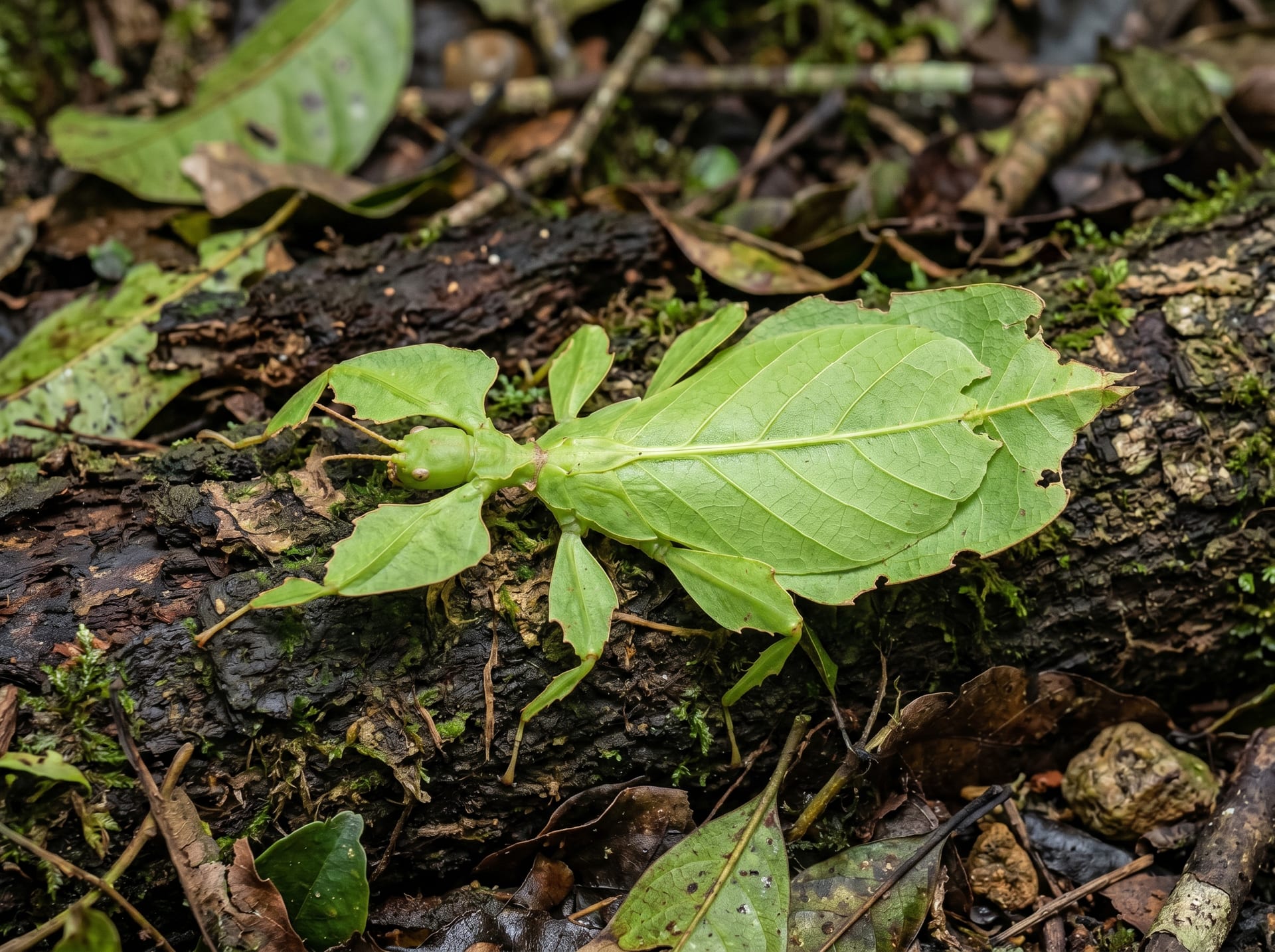
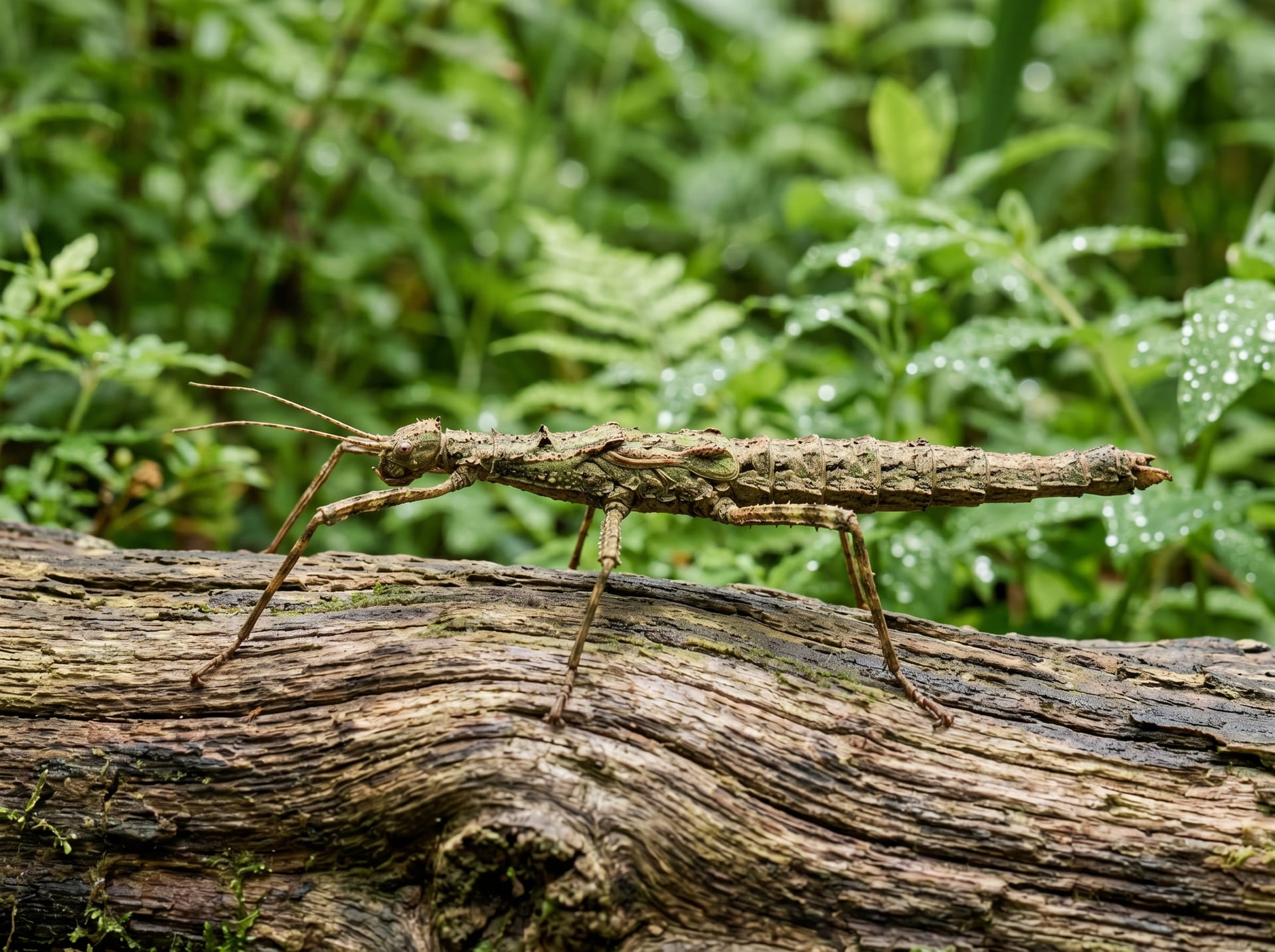
Body Shape: The elongated, branch-like body is the defining feature. Some species mimic the shape of leaves (leaf insects) depending on the species
Size: Varies greatly by species, with small species measuring 5–8 cm and large species reaching over 30 cm
Parthenogenesis: Many species can reproduce through parthenogenesis (asexual reproduction) with females alone. Eggs can be laid and hatch even without males
Regeneration: Can regenerate legs lost during molting
Lifespan: Most species live around one year from hatching to death. Domestic species hatch in spring, become adults in summer to fall, and reach the end of their lives in late autumn, with one-year cycle. Some tropical species have longer lifespans
Common Stick Insect Species Kept in Japan
Japanese Stick Insect (Ramulus mikado)
A native species widely distributed throughout Japan. With a body length of 8–11 cm, it's easy to handle and readily available. Feeds on Quercus mongolica, konara oak, and plants in the Rosaceae family. Parthenogenesis is possible and males are extremely rare.
✍️
BreederDirect Editorial
The BreederDirect editorial team specializes in care information for animals, covering veterinary care and breeding to deliver beginner-friendly guides.
Find Insects on BreederDirect
Buy directly from verified breeders
Browse Related Listings
Find Insects listings related to this article on BreederDirect. Buy directly from verified breeders.
Slightly slimmer than the Japanese stick insect and lacks wings; prefers Japanese cherry (Somei Yoshino) and Rosaceae species in general. A common species often seen in urban areas.
Indian Stick Insect (Carausius morosus)
Though a foreign species, it has a long history of captive breeding in Japan with abundant care information, making it an ideal beginner species. Feeds on ivy (English ivy) and hawthorn, and can breed easily through parthenogenesis.
Leaf Insect (Phyllium genus)
Highly popular for its unique leaf-shaped body. Requires warm, humid conditions and is suited for intermediate to advanced keepers. Feeds on guava and raspberry.
Choosing an Enclosure and Setting It Up
Enclosure Types and Size
Stick insects have elongated bodies and hang upside down during molting, so an enclosure with sufficient height is necessary.
Recommended Enclosure: A plastic breeding container with a height of 30 cm or more, or a tall insect cage. A standard "large plastic container" may be wide enough but lacks adequate height; tall containers like "Coba Shutter Tall" or "Reptile Box" are better suited.
Guidelines: Provide height at least 2–3 times the adult body length. For example, a 10 cm stick insect requires a minimum enclosure height of 25–30 cm.
Ensuring Ventilation
Stick insects face high mortality risk in poorly ventilated environments where they can become damp. Use a container with mesh vents on the lid or sides, or drill holes in the lid and attach gauze or non-woven fabric to ensure airflow.
Interior Setup
Branches and Sticks: Place several branches (ideally branches of the actual food plant) as perches for molting
Substrate: Lay a thin layer of kitchen paper or coconut husk mat. Egg-laying species prefer to lay eggs in the substrate
Water Intake: Mist the inside walls of the enclosure to create water droplets that the insects will drink
Choosing and Managing Food Plants
Ensuring a stable supply of food plants is the most critical aspect of stick insect care. Different species eat different plants, so you must verify this in advance.
Main Food Plants and Compatible Species
Species
Food Plants
Japanese Stick Insect, Eda Stick Insect
Cherry, plum, rose, oak, konara oak
Indian Stick Insect
Ivy (English ivy), hawthorn, rose, raspberry species
Tobi Stick Insect
Oak, konara oak, oak species
Leaf Insect
Guava, raspberry, smilax
Storing Food Plants
Cut branches can be kept fresh for several days to a week if placed in a vase of water. However, cover the vase opening with tissue or aluminum foil to prevent stick insects from falling into the water and drowning.
Growing food plants in your garden or in planters ensures steady supply. For Indian stick insects, ivy is extremely easy to grow and can provide food year-round.
Temperature and Humidity Management
Temperature
Domestic species (Japanese stick insect, Eda stick insect) can be reared at normal room temperature in Japan. Generally maintain conditions around 18–28°C.
Note that domestic species naturally have adults that reach the end of their lives in late autumn, and overwinter in the egg stage. If the room is warm, adults may live through the end of the year, but keeping adults through winter is not the natural lifecycle (see winter management below).
Tropical species like the Indian stick insect prefer 20–28°C; below 15°C, activity becomes sluggish and health can suffer.
Humidity
Complete dryness is problematic, but excessive moisture can also cause death from dampness. Mist the inside walls of the enclosure 1–2 times daily to create water droplets for hydration and maintain adequate humidity. After misting, ensure airflow to let excess moisture escape.
Molt Management
Stick insects undergo several molts before reaching adulthood. Molting occurs while hanging upside down, so the enclosure must have sufficient height and provide branches or walls to hang from.
Tips to Prevent Molt Failure
Ensure the enclosure has sufficient height (most critical)
Never touch or move the insect during molting
Low humidity can cause molt failure, so maintain adequate humidity with misting
If a leg becomes caught during failed molting, gently assist with a water-dampened cotton swab
Shortly after molting, the body is soft and easily damaged, so avoid handling until it has completely hardened.
Breeding and Egg Management
How Parthenogenesis Works
Many species like the Japanese stick insect and Indian stick insect can reproduce asexually (through parthenogenesis) with females alone. Even without males, they produce fertile eggs that hatch normally. This is one of the greatest attractions of stick insect keeping, allowing easy maintenance of breeding cycles.
Egg Laying
Once a female adult matures through successive molts, she begins laying 1–several eggs daily. Some species drop eggs to the ground; others lay them in soil or substrate. Eggs resemble sesame seeds or plant seeds, measuring only 1–several mm.
Hatching Management
Eggs laid should be moved to a small container filled with moistened vermiculite or coconut husk mat.
Humidity: Keep the vermiculite adequately moist to prevent drying (excess moisture causes mold)
Temperature: Varies by species, but around 20–26°C suits most species
Incubation Period: Varies greatly by species, taking anywhere from weeks to several months
Freshly hatched nymphs are extremely small and fragile. Provide the same food plants as adults, chopped into small pieces, and care for them carefully to prevent drying.
Common Problems and Solutions
Insect Won't Eat
The food plant species may be wrong. Verify the correct food plant for your species
Appetite decreases before molting. Wait a few days
Excessively low enclosure temperature can also reduce appetite
Molt Failure
Insufficient enclosure height is the primary cause. Move to a taller container
Insufficient humidity is also a factor. Increase misting frequency
If legs are caught, gently assist with a water-dampened cotton swab
Cannibalism
Stick insects generally do not cannibalize, but can be injured or trampled when other individuals step on them after molting when their bodies are still soft
Avoid overcrowding and isolate individuals close to molting
When Food Runs Out or Food Plants Become Unavailable Seasonally
One of the most common challenges in stick insect keeping is maintaining a steady supply of food plants. Whether you can continue caring for them often depends on how you handle the situation when food becomes scarce rather than the type of plant itself.
Winter food scarcity means different things for different species
Native Japanese species like the Japanese stick insect and Eda stick insect naturally follow a one-generation-per-year cycle: they hatch in spring, become adults from summer to fall, and reach the end of their lives in late autumn. What overwinters is not the adult but the egg. In other words, as long as you're keeping native species, you won't face the situation of searching for food to give adults when cherry and oak trees lose their leaves in midwinter. In winter, your management focus shifts to eggs.
If you want to enjoy adults year-round, you should choose tropical species that can be sustained with evergreen food plants. The combination of Indian stick insects and ivy (English ivy) is standard precisely because ivy survives indoors and is available for year-round cultivation. If you're planning for year-round care, factor this in when deciding which species to keep.
Substituting Food When It Runs Out
The basic approach is to substitute within the same food plant group. For Japanese stick insects and Eda stick insects, within the Rosaceae family, if cherry is unavailable, you can substitute plum, rose, or raspberry species. Species that eat oak can sometimes get by with other oak varieties.
However, do not switch food plants abruptly. The insects may reject new leaves and stop eating. When switching, provide both old and new branches simultaneously for several days and wait for them to transition on their own.
Don't Use Nursery Plants or Street Trees as-Is
This is the most commonly overlooked caution. Plants sold at garden centers or home improvement stores often have systemic insecticides applied. These types of chemicals are absorbed into the leaves and cannot be removed by rinsing with water. Using such plants unknowingly can result in total colony death within a short period.
If using plants for feeding, select those confirmed to be pesticide-free or use plants you've grown yourself from seed or cuttings. Street trees and park trees also have the risk of pesticide spraying in addition to the legal question of whether collection is permitted. Growing food plants in your own garden or planters is ultimately the safest and most economical approach.
Offer Young Leaves to Nymphs
Newly hatched nymphs have small mouths and cannot properly eat hardened, mature leaves. Even from the same plant, select young leaves like new growth at branch tips or freshly opened foliage. Cases where "the food plant is correct but the nymphs aren't growing" often result from the leaves being too tough.
Egg Collection and Incubation in Practice
After egg-laying begins, how you handle the eggs is the most frequently asked question for continuing the breeding cycle to the next generation.
How to Collect Eggs
Most species simply drop their eggs, which end up on the kitchen paper or coconut husk mat at the enclosure bottom. By keeping the substrate thin and flat, sesame-like eggs become easier to spot. You don't need to collect them daily; gathering them once a week is sufficient. Move collected eggs to a small container filled with moistened vermiculite.
Balancing Mold and Drying
Egg management failures result almost entirely from either excess moisture causing mold or, conversely, drying out. Keep the vermiculite at a level where no water seeps out even when squeezed, and leave the container unsealed to ensure airflow. If you spot moldy eggs, remove them before the mold spreads.
How Long to Wait If Eggs Don't Hatch
Many people ask "eggs haven't hatched after several weeks," but in most cases this is not abnormal. Particularly for domestic species' eggs, those laid in autumn hatch the following spring as part of their natural cycle. If eggs obtained in fall don't hatch by year-end, this is a normal response, so just refrain from drying them out and wait until spring.
Tropical species are not bound by seasons, yet still take several months to hatch. Not all eggs from parthenogenesis will hatch, and hatching rates vary by individual and storage conditions. There's no practical way to determine by appearance whether an egg will hatch, so the realistic approach is to remove moldy eggs and cull by time frame.
Find Rare Stick Insects at BreederDirect
Overseas stick insects difficult to collect domestically and rare native species are best purchased from specialist breeders. On BreederDirect, breeding-experienced breeders offer individuals for sale, and you can ask breeders directly before purchase about questions like "what food plant do I need?" or "how do I handle hatched nymphs?" If you're interested in trying stick insect keeping, explore BreederDirect to find your favorite species.