Complete Care Guide for Hercules Beetles | Larva Management, Pupation, Adult Care, and Full Breeding Guide | ブリちょく
Insects| ✍️ BreederDirect Editorial
Complete Care Guide for Hercules Beetles | Larva Management, Pupation, Adult Care, and Full Breeding Guide
A complete care guide for the Hercules beetle (Dynastes hercules), the world's largest rhinoceros beetle, native to Central and South America. This guide covers the entire process from long-term larval rearing (fermented substrate selection, temperature management, moisture control) through pupation, artificial pupation chambers, adult care, and breeding.
Key Takeaways
A complete care guide for the Hercules beetle (Dynastes hercules), the world's largest rhinoceros beetle, native to Central and South America. This guide covers the entire process from long-term larval rearing (fermented substrate selection, temperature management, moisture control) through pupation, artificial pupation chambers, adult care, and breeding.
What is the Hercules Beetle?
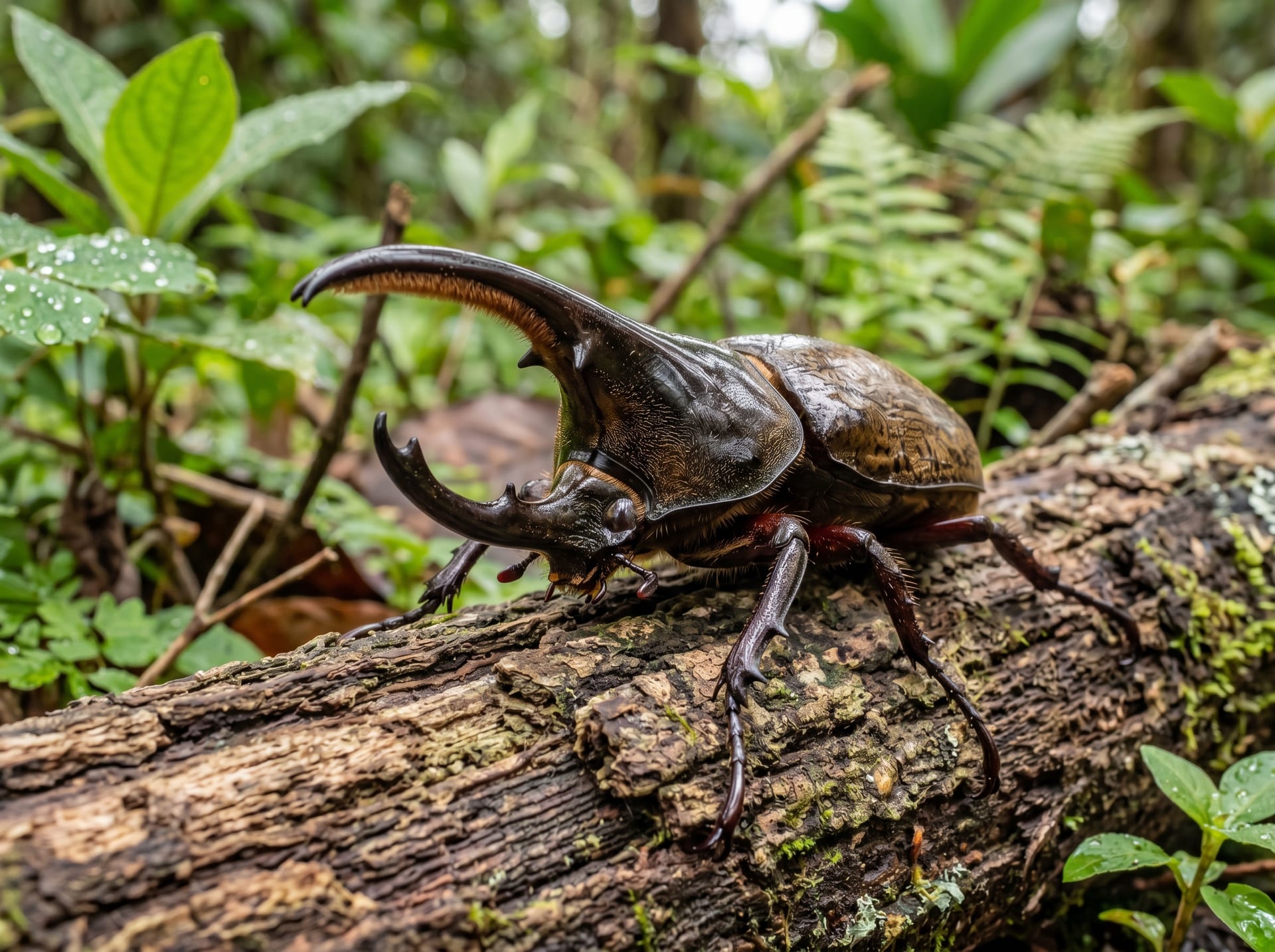
The Hercules beetle (Dynastes hercules) is widely known as the world's largest rhinoceros beetle, native to Central and South America. Adults can exceed 180mm in length, and males are characterized by their long thoracic and cephalic horns. Subspecies vary in body coloration, horn shape, and habitat; thirteen subspecies have been identified, including Rickyblue, Moricao, Occidentalis, and Granti.
✍️
BreederDirect Editorial
The BreederDirect editorial team specializes in care information for animals, covering veterinary care and breeding to deliver beginner-friendly guides.
Find Insects on BreederDirect
Buy directly from verified breeders
Browse Related Listings
Find Insects listings related to this article on BreederDirect. Buy directly from verified breeders.
Related Tools
Related Articles
Browse by Category
🪸Coral
🐠Marine Fish
🐟Tropical Fish
🐡Goldfish
🐟Medaka
🦎Reptiles
Share
In Japan, because Hercules beetles are listed in Appendix II of the Washington Convention (CITES), only legally imported CBE (captive-bred) specimens are available in the market. They can be purchased through online retailers and specialty insect shops, with prices varying widely depending on specimen size, subspecies, and quality.
Larval Care Methods
The larval stage of Hercules beetles is a long-term project lasting up to 18-24 months. Adult size is largely dependent on larval management, making careful attention during this stage critical.
Rearing Containers
Instar
Recommended Container Size
1st to early 2nd instar
860ml–1.5L pudding cups
Late 2nd to early 3rd instar
3–5L fruit fly containers
Late 3rd instar
10L–20L+ large containers
During the final stage (late 3rd instar, aiming for over 80g), using the largest possible containers is key to raising large specimens.
Substrate Selection
Hercules beetles are primarily reared on fermented substrates (leaf mold-based).
Primary fermented substrate: Fast consumption, requires more frequent changes, but affordable
Self-fermented substrate: For experienced keepers (risk of larval death if fermentation is incomplete)
Commercially available products sold as "Hercules-specific substrate" are easy to use. Substrate should be changed approximately once every 2-3 months. Handle carefully when changing substrate to avoid injuring the larvae.
Temperature Management
The ideal temperature for larval rearing is 22-26°C. At this temperature range, larvae feed well and grow steadily. Temperatures above 30°C reduce activity and increase mortality risk, while below 18°C growth slows dramatically.
Summer: Air conditioning or refrigerated storage is essential for temperature control
Winter: Use heating mats or panel heaters to maintain minimum temperatures
Note that Hercules beetles are relatively cold-tolerant but sensitive to high temperatures
Moisture Control
Substrate moisture should be at a level where it holds together when squeezed but no water drips out (approximately 60-65% moisture). Excessive dryness causes molting problems in larvae, while excess moisture promotes mold growth and can lead to oxygen deprivation.
Supporting Pupation and Emergence
During late 3rd instar, larvae begin constructing pupation chambers in firm substrate areas (bottom or sides). At this time, it is absolutely critical to avoid moving containers and not disturb the substrate.
Creating Artificial Pupation Chambers
If a naturally constructed pupation chamber collapses or you cannot confirm chamber construction in the substrate, create an artificial pupation chamber.
Create a mold using oasis (flower arrangement sponge) or a toilet paper tube core
Ensure the space is slightly larger than the beetle's size
Carefully transfer the pupa without injury and position it vertically
Maintain high humidity (70-80%) while waiting for emergence
After emergence, it is critical not to handle the adult for 2-4 weeks while the body hardens. Handling while still soft can cause deformation or damage.
Adult Care and Lifespan
After emergence, 2-4 weeks pass before the adult begins feeding (post-emergence feeding period). Before this feeding period begins, do not force-feed jelly; instead allow the beetle to rest in a container with broad-leaf tree substrate.
Basic Adult Management
Food: High-protein insect jelly (such as Pro-Jelly) is the standard
Supplementary food: Bananas and sugarcane are also favorites (monitor for spoilage)
Temperature: 22-28°C is optimal
Container: A wide container 40cm+ in width is ideal (less likely to damage large horns)
Individual housing: Avoid housing males together as horns can break or be damaged
Adult lifespan is approximately 6-18 months (varies by subspecies and individual). Lifespan decreases after the feeding period begins, so even if not breeding, care for the beetle throughout its life.
Breeding Methods
Pairing
Pairing occurs 1-2 months after the feeding period begins (after sexual maturity). Place males and females in the same container; separate promptly after confirming mating. It is important to observe as males can injure females during copulation.
Females lay approximately 20-50 eggs per brood. Eggs are laid near the boundary between wood and substrate. After 1-2 months, excavate to recover eggs and 1st instar larvae.
Purchase Considerations and Price Guide
Hercules beetle prices vary significantly by subspecies, size, and specimen quality.
Larvae (3rd instar): Approximately ¥3,000–¥15,000
Adults (male): ¥10,000–¥50,000+ (depending on size and subspecies)
Breeding pair: Approximately ¥15,000–¥60,000
When purchasing from breeders, confirm management temperatures, parental information, hatching dates, and instars. Healthy larvae are active and have plump, rounded bodies. Avoid specimens that appear shriveled or darkened.
Hercules beetles require time and effort, but the reward of raising large specimens through proper management is exceptional. Enjoy the long-term rearing process while caring for them responsibly.