Goldfish Tank Aquatic Plant Layout and Tank Mate Compatibility Guide | How to Choose Plants That Coexist with Goldfish
Learn about selecting compatible aquatic plants for goldfish tanks, placement tips, plant types resistant to goldfish feeding, and how to use Anacharis and Cabomba. This guide introduces how to create beautiful layouts where goldfish and plants coexist.
Key Takeaways
Learn about selecting compatible aquatic plants for goldfish tanks, placement tips, plant types resistant to goldfish feeding, and how to use Anacharis and Cabomba. This guide introduces how to create beautiful layouts where goldfish and plants coexist.
Related Species

What You Need to Know Before Adding Aquatic Plants to a Goldfish Tank
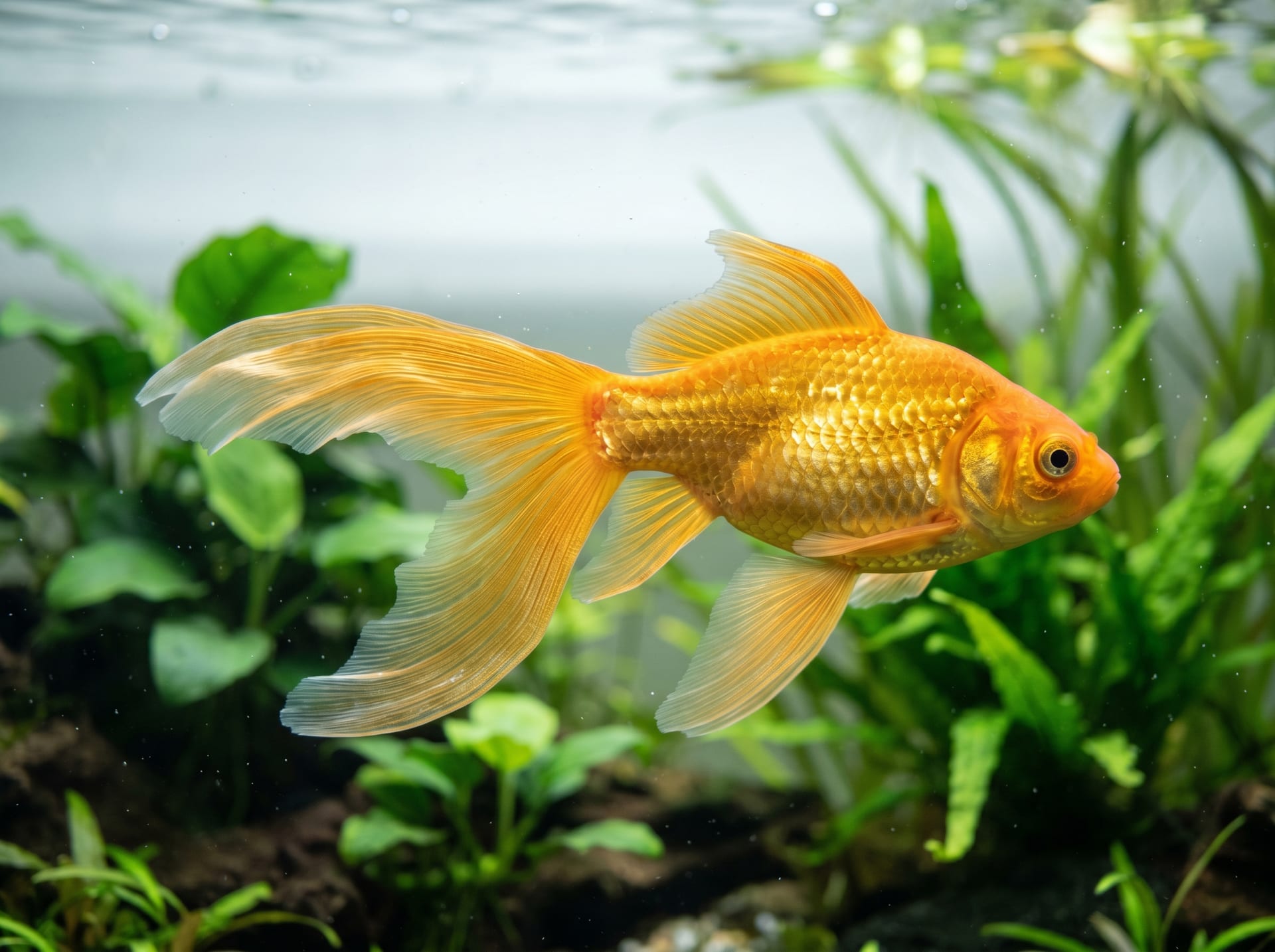
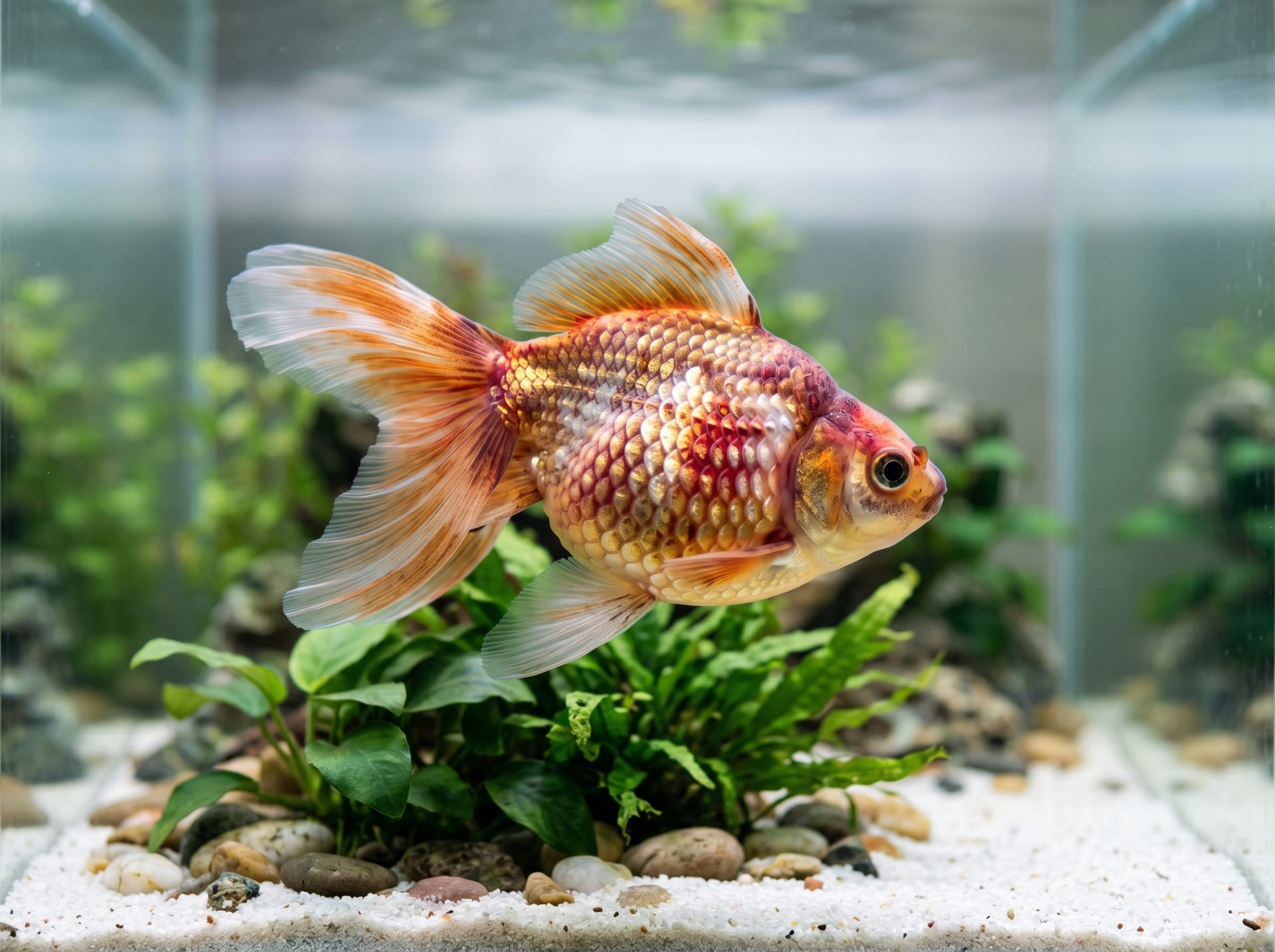
While combining goldfish and aquatic plants may seem like an ideal aquarium at first glance, in reality, goldfish are highly omnivorous with herbivorous tendencies, causing them to devour many plants. Soft-leaved plants like Anacharis and Cabomba become perfect food for goldfish, and it is not uncommon for them to be reduced to bare stems in just a few days.
However, you don't need to abandon aquatic plant layouts. By understanding goldfish behavior, selecting appropriate plants, and placing them correctly, you can create a beautiful and functional tank. There are three main conditions for plants that can coexist with goldfish:
- "Hard leaves"
- "Fast growth"
- "Taste or texture that goldfish dislike"
Let's select plants that are compatible with goldfish based on these conditions.
How to Select Aquatic Plants Compatible with Goldfish
| Plant | Characteristics |
|---|---|
| Anubias Nana | A standard for goldfish tanks. It has thick, hard leaves that resist damage even when nibbled by goldfish. By attaching the roots to driftwood or stones rather than burying them in the substrate, you eliminate the risk of goldfish uprooting it. While growth is slow, its durability in low light is a major appeal. |
| Microsorum | A representative of hard-leaf plants. Because it contains components with a slightly bitter taste characteristic of ferns, goldfish rarely eat it. It excels at attaching to driftwood and stones, adding natural green volume to the mid-ground to background of layouts. |
| Willow Moss | The most readily available among mosses. When attached to driftwood and stone surfaces, it creates a natural, moss-covered appearance. Even when nibbled by goldfish, its regenerative power is high and it rarely disappears completely. However, if algae grows excessively, it can obstruct water flow, so regular trimming is necessary. |
| Giant Vallisneria | An aquatic plant with ribbon-like long leaves, characterized by extremely fast growth. Even when eaten by goldfish, new leaves quickly emerge, making it strong in attrition warfare. When planted in the background, it brings movement to the entire tank and showcases the swimming goldfish. |
On the other hand, soft-leaf plants like Cabomba, Anacharis, and Hornwort are goldfish favorites and are quickly consumed after introduction. While these can be useful as "goldfish grass" to feed as vegetables, maintaining them as part of a layout is difficult.
Basic Layout Structure and Placement Tips
Goldfish tank layouts are fundamentally based on a three-layer structure of foreground, midground, and background.
- Foreground uses short plants or substrate materials. Since foreground plants are easily eaten in goldfish tanks, one approach is simply to lay fine gravel or aquatic soil. If you really want to add green, you can arrange Willow Moss attached to rocks or small Anubias along with placement rocks.
- Midground places Anubias Nana or Microsorum attached to driftwood. Driftwood creates natural shadows in the tank and serves as hiding spots for goldfish. When multiple pieces of driftwood are combined into a tunnel shape, you can observe goldfish swimming through it, which is enjoyable.
- Background is suited for tall plants like Giant Vallisneria and Amazon Sword. Amazon Sword has slightly harder leaves and is resistant to goldfish feeding, making it a prominent accent in large goldfish tanks. However, since it has strong root development, the substrate must be at least 5 cm deep.
When using rhizome-attaching plants, secure them to driftwood or stones with cotton thread or fishing line, then remove the thread after roots attach. If using adhesive, choose aquatic plant instant adhesive (cyanoacrylate-based).
Light Intensity and CO₂ Management Needed for Plant Growth
Goldfish tanks generally do not require lighting as strong as dedicated plant tanks. Anubias and Microsorum grow even in low light, and intense light like direct sunlight actually promotes algae growth. For LED lighting, here are the guidelines:
| Tank Size | LED Lighting Guide |
|---|---|
| 30cm Tank | Approximately 10-15W |
| 60cm Tank | Approximately 20-30W |
Standard lighting duration is 8-10 hours per day. Using a timer to maintain a consistent light cycle promotes plant growth.
Regarding CO₂ addition, Anubias and Willow Moss grow without it, but Microsorum and Vallisneria grow better with small amounts of CO₂. Since goldfish themselves release CO₂ through respiration, dissolved CO₂ may naturally increase in densely stocked tanks. If adding CO₂, fermentation-type CO₂ generators are sufficient; avoid forced addition as it risks oxygen depletion.
Solid fertilizers buried in the substrate are safest. Liquid fertilizers easily promote algae growth and require special care in goldfish tanks.
Goldfish Breed and Plant Compatibility Check
Plant compatibility also varies by goldfish breed.
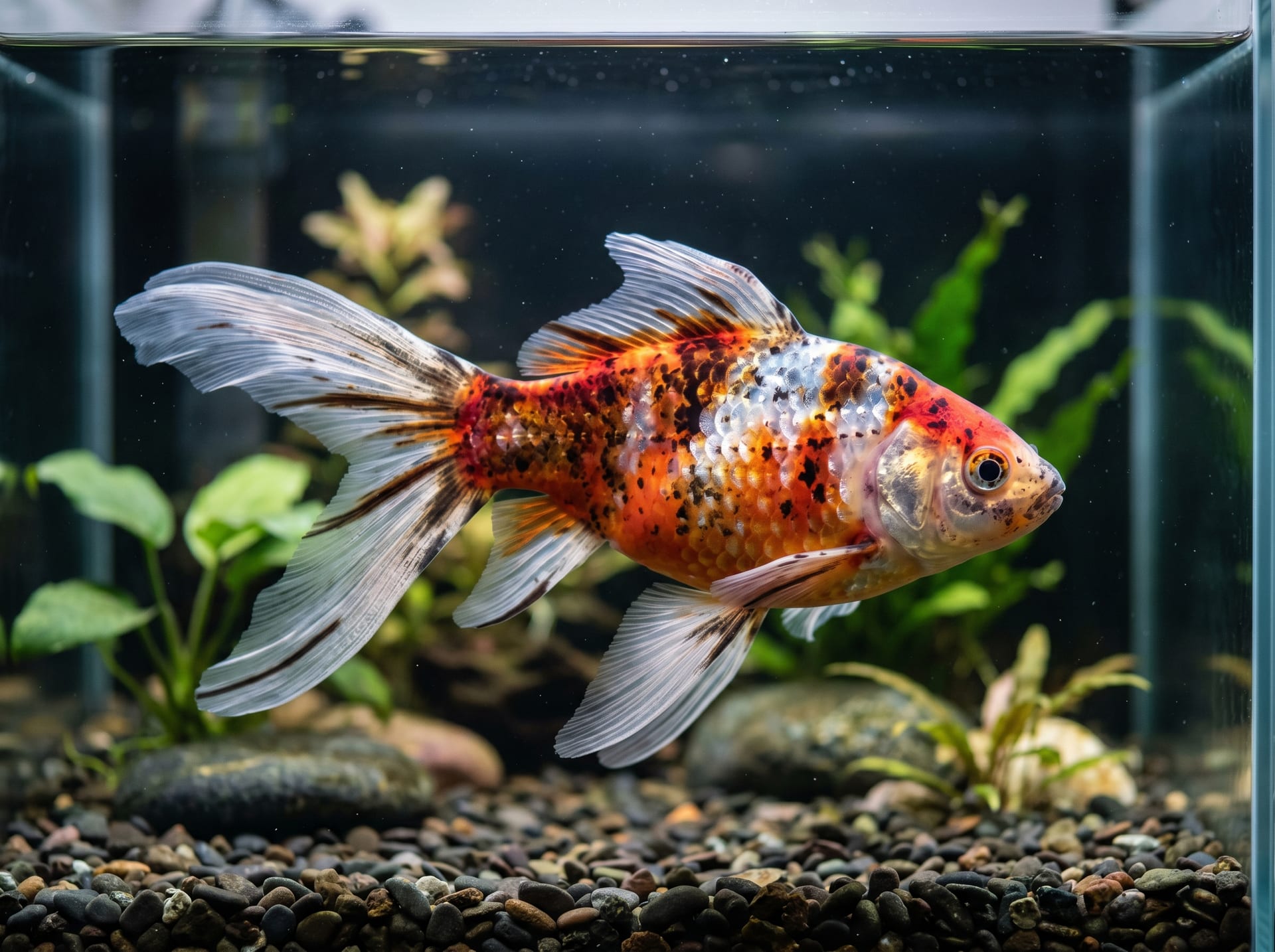
- Wakin, Comet, and Shubunkin and other streamlined breeds are excellent swimmers and very active. They have powerful jaws for nibbling and quickly uproot planted plants. A layout using rhizome-attaching plants, with a clean substrate, is most suitable.
- Ryukin, Telescope Eye, and Oranda and other round-bodied breeds swim more slowly and tend to cause less damage to plants than streamlined types. However, as they grow larger, their appetites increase, and the risk of plant damage remains. Placing Anubias in the midground with conscious spacing for goldfish appeal creates an attractive layout.
- Ping-pong Pearl and Celestial Eye and other extremely round breeds have poor swimming ability and are sensitive to water currents. Excessive plants reduce swimming space and cause stress. Keep layouts simple and limit plants to just a few species, maintaining plenty of open space.
Water Quality Management and the Relationship Between Plants and Goldfish
Through photosynthesis, aquatic plants absorb some ammonia and nitrate from the water as nutrients, contributing to water purification. However, goldfish are high-waste fish, making it unrealistic to maintain water quality with plants alone. Filtration is essential—use an external or top filter and establish a habit of changing about 1/3 of the water once per week.
Remove dead plant leaves promptly. Decaying leaves become a source of ammonia and degrade water quality. Anubias is prone to algae on older leaves, so regularly clean off algae with a toothbrush or trim old leaves.
The ideal temperature range for goldfish is 15-25°C. This range is also comfortable for Anubias and Microsorum, with no issues for coexistence. When summer temperatures exceed 30°C, use a cooling fan to simultaneously prevent heat damage to plants and oxygen depletion in goldfish.
The key to enjoying plants in a goldfish tank is a shift in thinking: "select plants with the expectation they will be eaten." By building a layout centered on hard-leaf species with rhizome attachment and creating a structure resistant to wear, you can maintain a tank for the long term where goldfish swimming and green plants coexist in harmony.