Starting Goldfish Keeping After a Carnival Scoop: Tank, Water, Food & Health Basics | ブリちょく
Goldfish| ✍️ BreederDirect Editorial
Starting Goldfish Keeping After a Carnival Scoop: Tank, Water, Food & Health Basics
A beginner's guide to keeping goldfish won at festivals, covering water acclimation, tank setup, filtration, feeding, and common diseases.
Key Takeaways
A beginner's guide to keeping goldfish won at festivals, covering water acclimation, tank setup, filtration, feeding, and common diseases.
Starting with "Water Acclimation"
When you bring home goldfish from a summer festival or purchase, don't put them directly into the tank while still in the bag. Sudden changes in water temperature and water quality cause significant shock to goldfish.
Water acclimation steps:
1. Float the unopened bag in the tank (15–30 minutes) → equalize water temperature
2. Open the bag and slowly pour tank water into it (1–2 teaspoons every 10 minutes)
3. After 30–60 minutes, when the water inside and outside the bag are similar, gently scoop the goldfish into the tank
4. Do not pour the bag water into the tank (may contain pathogens)
✍️
BreederDirect Editorial
The BreederDirect editorial team specializes in care information for animals, covering veterinary care and breeding to deliver beginner-friendly guides.
Find Goldfish on BreederDirect
Buy directly from verified breeders
Browse Related Listings
Find Goldfish listings related to this article on BreederDirect. Buy directly from verified breeders.
Related Tools
Related Articles
Browse by Category
🪸Coral
🐠Marine Fish
🐟Tropical Fish
🐡Goldfish
🐟Medaka
🦎Reptiles
Share
Choosing a Tank
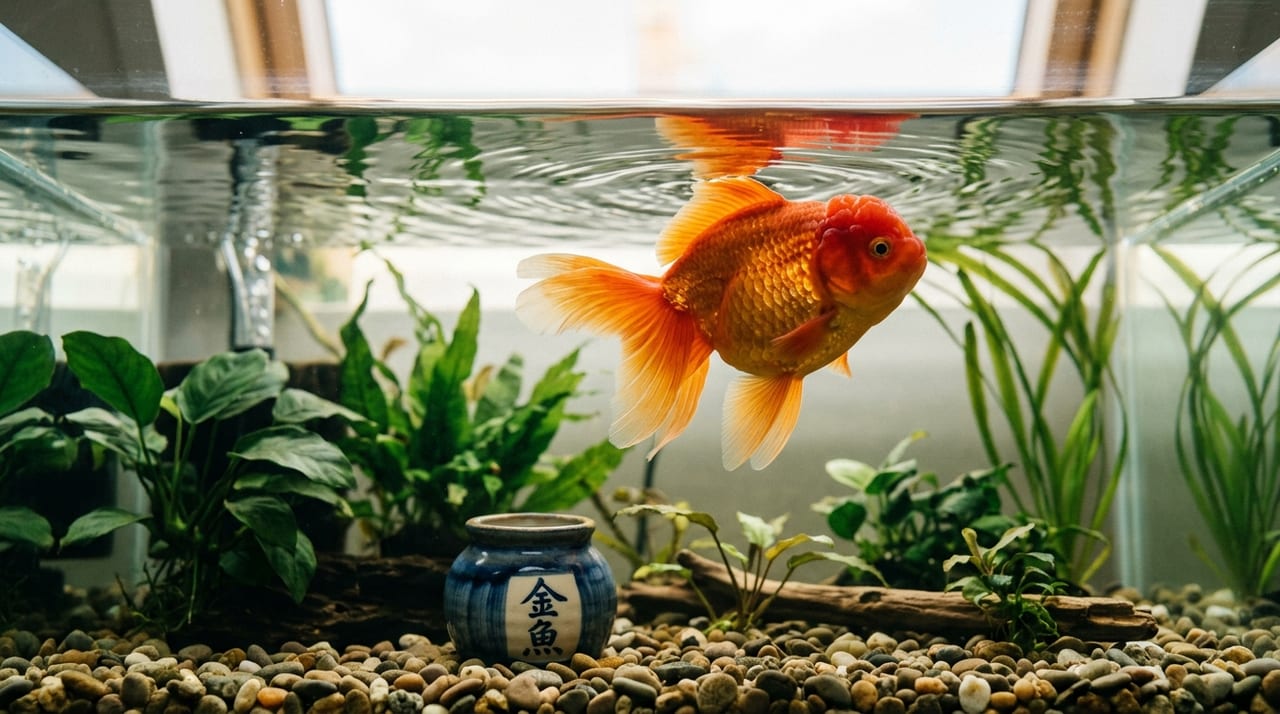
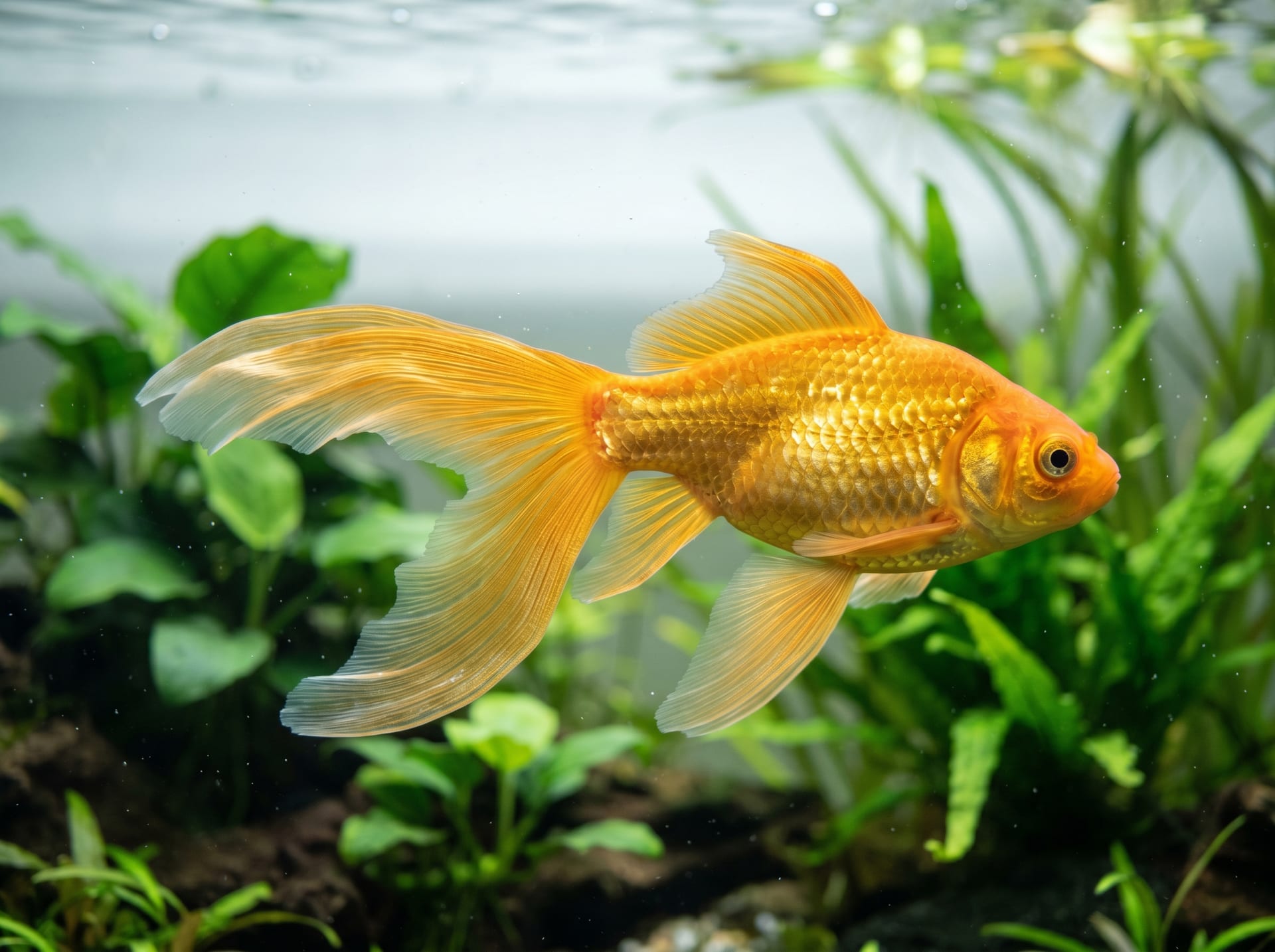
Goldfish grow larger than many expect. Wakin (Japanese goldfish), comets, and ryukin types from festival scooping reach 15–30 cm when fully grown, so prepare a spacious tank.
Guidelines:
- 1 goldfish: minimum 10L (preferably 20L or more)
- 2–3 fish: 40–60L tank
- 4 or more: 60–90L or larger
Small tanks become unstable easily and create harsh environments for goldfish. Choosing a larger size from the start is the key to long-term care.
Filters and Water Cycling
Why Filters Matter
Goldfish eat heavily and produce waste accordingly. Feces and leftover food break down into ammonia → nitrite → nitrate, which becomes toxic at high concentrations. A filter establishes beneficial nitrifying bacteria that break down ammonia through biological filtration.
Recommended filters:
- Hang-on filter: large filtration capacity, ideal for goldfish
- Canister filter: quiet operation and stable water quality (higher initial cost)
- Undergravel filter: compact and affordable, use as supplementary
Startup Considerations
New tanks lack beneficial bacteria, so water quality is unstable for the first 1–2 weeks.
Dechlorinate tap water with a water conditioner
Start with fewer fish and gradually increase numbers
Perform small daily water changes (10–20%) to stabilize conditions
Feeding Guidelines
Goldfish will swim eagerly as if begging for more food, but overfeeding is forbidden. Overeating and poor digestion cause swim bladder disease (fish floating or sinking abnormally).
Basic feeding:
- 1–2 times daily
- Only an amount they finish in 2–3 minutes
- Remove uneaten food immediately
- Reduce frequency and amount when temperature drops below 15°C
- At 5°C or below, fish enter dormancy; no feeding needed
Recommended foods:
- Floating goldfish flakes (easy to digest, easy to spot uneaten portions)
- Sinking pellets (for tanks with substrate)
- Frozen bloodworms occasionally (high palatability, good nutrition)
Common Diseases for Beginners
Ich (White Spot Disease)
White spots appear on the body. Caused by the parasite Ichthyophthirius.
Treatment: Raise temperature to 27–30°C + use commercial ich medication (methylene blue, etc.)
Tail Rot
Fins gradually dissolve. Bacterial disease caused by poor water quality.
Treatment: Improve water quality through water changes + apply antibacterial medication like Green F Gold
Swim Bladder Disease
Fish floats uncontrollably or cannot swim properly. Caused by poor digestion or swim bladder dysfunction.
Treatment: Fasting for 1–2 days + maintain water temperature at 26–28°C to aid digestion
Water Change Frequency and Method
Water changes are essential for goldfish health.
Basic water change guidelines:
- Weekly: replace 20–30% of tank water
- If filter is stable: can be done every 2 weeks
- If water is cloudy or smells of ammonia: change water immediately
When changing water, dechlorinate new water, match temperature (within ±2°C), and add it slowly.
Summary
To keep festival goldfish alive long-term, focus on these five essentials:
Perform water acclimation carefully
Provide a spacious tank appropriate to goldfish size
Establish stable biological filtration with a filter
Feed sparingly and remove uneaten food
Maintain water quality through regular water changes
With proper care, the small goldfish from the festival can become a cherished family member for 10, 15 years or more. Take the first step into goldfish keeping with joy.