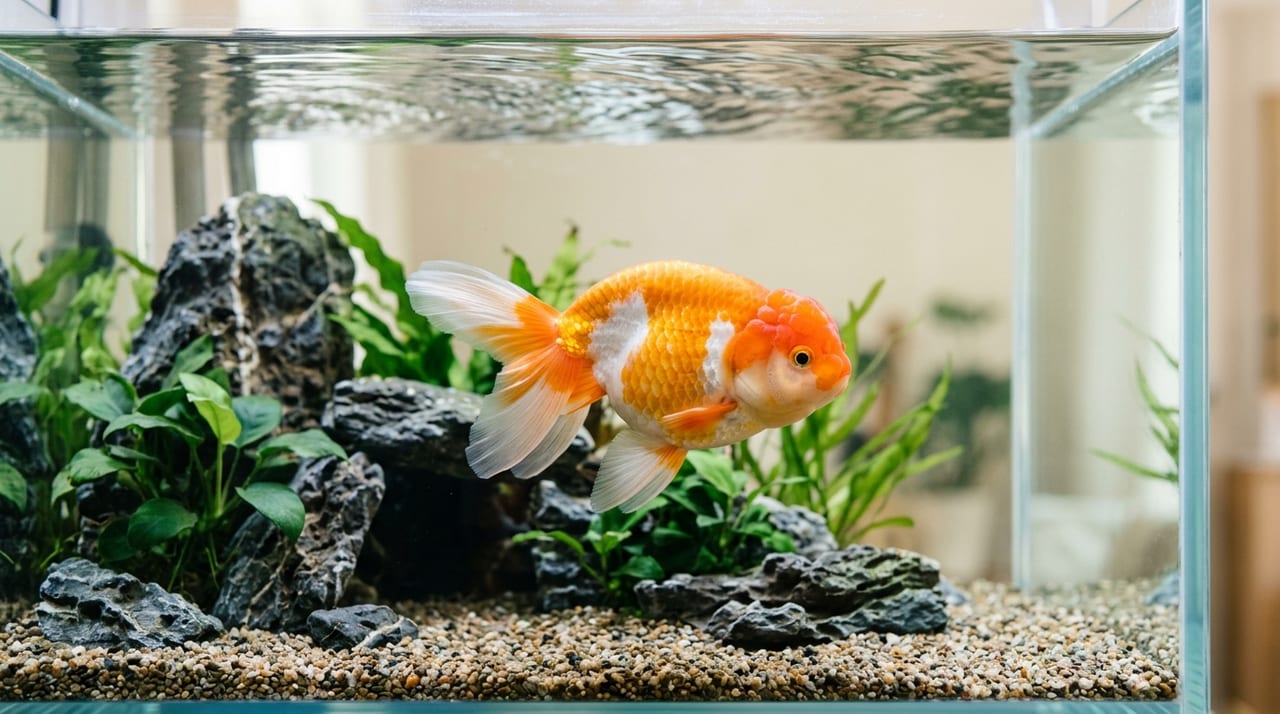
Benefits and Considerations of Indoor Goldfish Keeping
While goldfish can be kept in outdoor ponds or water lily bowls, indoor tank keeping offers significant advantages. Water temperature remains stable year-round, goldfish are protected from predators (birds and cats), and you can enjoy watching them swim up close. However, goldfish produce more waste than tropical fish and are prone to fouling water, so choosing the right filter and maintaining proper water quality are essential.
Choosing the Right Tank Size
Minimum Space Requirements for Goldfish
Many goldfish varieties grow to 10-30cm, and the guideline of "10L per goldfish" is often insufficient.
| Number of Fish | Recommended Tank Size | Capacity |
|---|
| 1-2 (small varieties) | 45cm tank | ~35L |
| 2-3 (standard varieties) | 60cm tank | ~57L |
| 4-6 (standard varieties) | 90cm tank | ~160L |
| Wakin/Ryukin | 60cm or larger recommended | |
Tank depth is also important: Active swimmers like Wakin are at higher risk of jumping out if the water is too shallow. Use tanks 45cm tall or higher, or always use a cover.
Recommended Tank for Beginners
A 60cm standard tank (W60 × D30 × H36cm) is the most balanced choice. Many commercial starter kits are available, and products bundled with filter, heater, and lighting are easy to set up.
Choosing a Filter
Goldfish require high biological filtration capacity. Here are three types to compare.
Top Filter (Most Recommended for Beginners)
Features:
- Open-type filter installed on top of the tank
- Balances mechanical, biological, and chemical filtration
- Easy maintenance (just rinse the wool pad with tank water)
Recommended products: GEX Grande 600, Suisaku Eight Bridge
Drawback: Occupies the top of the tank, requiring creative lighting setup
Canister Filter (Effective for Large Tanks)
Features:
- Sealed design with low oxygen consumption
- Large filter media capacity with high biological filtration
- Clean appearance
Recommended products: Eheim 2213/2217, Tetra VX-90
Drawback: Requires priming on first setup, which can be tricky. Periodic disassembly and cleaning needed.
Sponge Filter (Supplementary/Isolation)
Sponge filters like Suisaku Eight lack sufficient filtration capacity for goldfish on their own, but are useful for quarantine tanks for sick fish and fry tanks.
Choosing Substrate
Substrate is not required for goldfish keeping, but offers benefits for the following reasons:
- Provides space for nitrifying bacteria to establish
- Encourages natural behaviors like goldfish taking substrate in their mouths
- Natural appearance with less stress on fish
Types of Substrate and Considerations
| Material | Characteristics | Suitability for Goldfish |
|---|
| Ōiso sand | Durable, long-lasting, minimal pH rise | Appropriate grain size |
| Field sand | Fine, natural appearance | Encourages digging behavior |
| Ceramic | Porous, excellent bacterial colonization | Suitable |
| Gravel (general) | Inexpensive but can have sharp edges | Choose rounded edges |
| Coral sand | Significant pH rise | Use only for slightly alkaline target |
Avoid: Colored stones (dyes may leach), sharp-edged gravel (can damage mouths and gills)
Water Setup (Cycling Process)
Required Equipment and Products
- Dechlorinator (Tetra Aqua SafeStart, etc.)
- Bacterial starter cultures (PSB, Nitrosomonas, etc.)
- Water test kit (ammonia, nitrite, nitrate, pH)
Setup Steps
Day 1: Equipment Installation
Install the tank, add cleaned substrate, and fill with water. Add dechlorinator at the recommended dose per 10L of tap water. Start running the filter and heater.
Day 2-7: Begin Cycling
Add an ammonia source (a small amount of shrimp or aquatic plants) to encourage bacterial growth. Adding bacterial starter cultures speeds up cycling.
Day 7-14: Water Testing
| Test Parameter | Ideal Level |
|---|
| Ammonia | 0 mg/L |
| Nitrite | 0 mg/L |
| Nitrate | 20mg/L or below |
| pH | 7.0-8.0 |
| Temperature | 18-28°C |
When both ammonia and nitrite reach 0, the cycle is complete.
Day 14-21: Introduce Goldfish
Acclimate the fish by floating the bag in the tank for 30 minutes, then gradually mix tank water into the bag over 15-30 minutes before releasing them. Avoid overfeeding for the first week and check water quality daily.
Daily Maintenance After Setup
Water Change Guidelines
| Tank Status | Water Change Frequency | Volume Changed |
|---|
| Initial cycling | 2-3 times per week | 1/4-1/3 |
| Established | Once per week | 1/3 |
| Overstocked | Twice per week | 1/4 |
Always dechlorinate water changes and match the temperature before adding to the tank (a temperature difference of 5°C or more risks shocking the fish).
Filter Cleaning Timing
Filter cleaning should be done on a different day from water changes. Cleaning on the same day causes massive bacterial loss, triggering an ammonia spike.
Top filter: Rinse the wool pad once every two weeks in tank water (water from the tank in a bucket). Tap water kills bacteria with chlorine.
Common Problems and Solutions in Indoor Keeping
Cloudy Water (Ammonia Spike)
Common during initial cycling. Caused by overfeeding, overstocking, or immature filter. Increase water changes and stop feeding temporarily to stabilize the water.
Surface Film (Protein Oxidation)
A film of oil forms on the water surface. Caused by insufficient aeration or decomposing dead organisms. Use a surface film remover or add an air pump to increase surface agitation.
Green Water (Algae Bloom)
Occurs easily with direct sunlight on the tank. Move the tank or use a shade curtain. Green water is harmless to goldfish but looks bad and can cause sudden water quality changes.
Summary: Indoor Goldfish Tank Setup Checklist
- Prepare a tank 60cm or larger
- Install a top filter (for beginners)
- Choose rounded substrate
- Start cycling with dechlorinated water
- Wait for ammonia and nitrite to reach 0 (2-3 weeks)
- Introduce goldfish after acclimation
- Make weekly water changes and regular water testing a habit
Proper setup and patient cycling are your greatest investment in keeping goldfish healthy long-term.