Do Goldfish Need Heaters? Water Temperature Management Indoors and Outdoors, and the Benefits and Drawbacks of Heating
For those wondering whether heaters are necessary for goldfish care. We provide a detailed explanation of water temperature management methods for both outdoor and indoor rearing, the benefits and drawbacks of using heaters, appropriate heating temperatures, and a comparison with allowing goldfish to hibernate.
Key Takeaways
For those wondering whether heaters are necessary for goldfish care. We provide a detailed explanation of water temperature management methods for both outdoor and indoor rearing, the benefits and drawbacks of using heaters, appropriate heating temperatures, and a comparison with allowing goldfish to hibernate.
Related Species
Can Goldfish Be Kept Without a Heater?
Unlike tropical fish, goldfish are coldwater fish that can adapt to relatively low water temperatures (5-30°C). Because of this, the image has spread that "heaters are unnecessary." However, in reality, whether a heater is needed or not clearly depends on the rearing environment and purpose.
In this article, we organize the approach to water temperature management for goldfish in both indoor tanks and outdoor rearing.
Water Temperature Range Where Goldfish Can Survive
Goldfish have a wide survival temperature range and can live between 5°C and 30°C. However, the "optimal temperature" where they can be active and the "critical temperature" necessary for survival are different.
| Water Temperature | Goldfish Condition |
|---|---|
| 5°C or below | Barely moving, hibernation state (winter outdoor rearing) |
| 5-10°C | Sluggish movement, won't eat or can't digest if they do |
| 10-15°C | Swim slowly. Small amounts of food are digestible |
| 15-25°C | Most active and healthy optimal temperature range |
| 25-28°C | Active but dissolved oxygen decreases, aeration is essential |
| 30°C or above | Dangerous temperature. Immunity drops and disease risk increases sharply |
If you want to raise goldfish in the healthiest way, maintaining 15-25°C year-round is ideal.
When a Heater Is Needed for Indoor Rearing
Even with indoor rearing, consider installing a heater if any of the following conditions apply.
① Environments Where Room Temperature Falls Below 15°C in Winter
In rooms where heating isn't used much or north-facing rooms, room temperature can drop to around 10°C in winter. In such cases, water temperature also drops similarly, reducing goldfish immunity and making them susceptible to diseases such as ich and dropsy.
② When Keeping Premium or Weak Goldfish Varieties
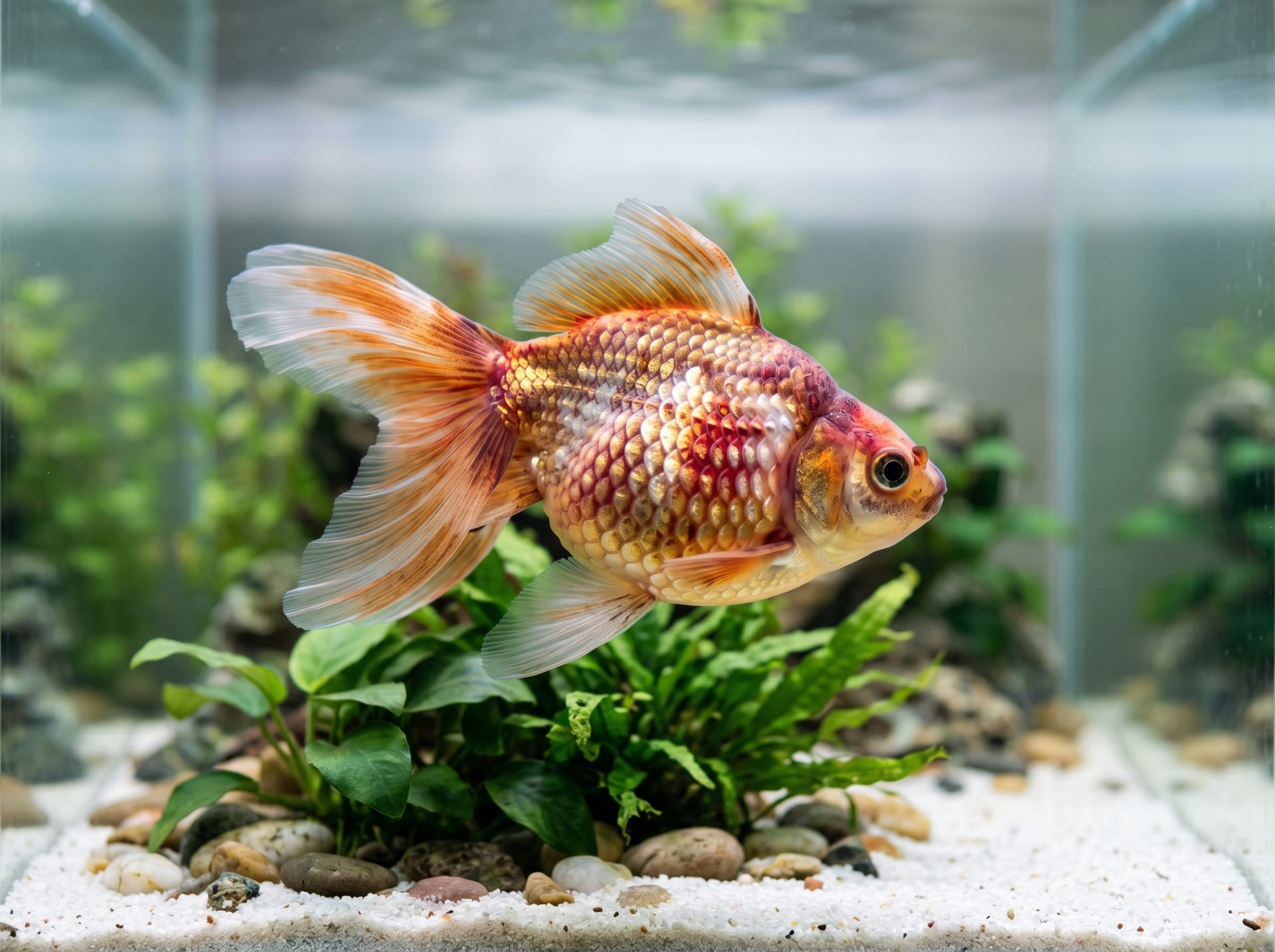
Fancy goldfish varieties (Ryukin, Ping Pong Pearl, Ranchu, etc.) tend to be prone to swim bladder disease when water temperature is low due to their body shape. For these varieties, maintaining a stable water temperature of 22-25°C is recommended.
③ During Disease Treatment or Recovery
When performing medicated baths or salt baths, maintaining water temperature at 25-28°C promotes beneficial bacterial growth (improving drug effectiveness) and enhances goldfish recovery.
Outdoor Rearing and Heaters
In outdoor rearing (plastic basins, water lily pots, garden ponds), heaters are generally not used. Instead, management that follows natural seasonal changes is the basic approach.
Seasonal Points for Outdoor Rearing
- Spring (March-May): Resume feeding when water temperature begins to rise. Watch for sudden cold snaps
- Summer (June-August): Manage with shade nets or water changes to prevent water temperature from exceeding 30°C
- Fall (September-November): Reduce feeding amount as water temperature drops
- Winter (December-February): When water temperature drops below 5°C, goldfish enter hibernation. Do not feed
Allowing goldfish to overwinter outdoors has the benefit of establishing a breeding cycle and promoting spawning behavior in spring. In Japan's temperate climate, both ponds and plastic basins can survive the winter outdoors if they have adequate depth (minimum 30 cm or more).
Exception Cases Where Heaters Are Needed Outdoors
- Metal containers (high thermal conductivity): When there is a risk of sudden freezing
- Extremely valuable varieties (such as Jikin or Tosapay): Cases where breeders heat the water to manage breeding schedules
Benefits and Drawbacks of Using Heaters
Benefits
- Stable water temperature reduces disease risk: Stable immune function and reduced incidence of ich and dropsy
- Active swimming year-round: Since they don't hibernate, you can enjoy watching goldfish all year
- Faster growth rate: Maintaining optimal temperature increases metabolism and promotes juvenile growth
Drawbacks
- Electricity costs: Using a heater around 60W all year adds approximately 500-1,500 yen per month in additional electricity
- Disrupts breeding cycle: Without seasonal temperature changes, goldfish may be reluctant to spawn
- Large temperature differences with summer highs: Requires managing water temperature fluctuations in spring and fall when turning the heater on/off
How to Choose a Heater and Set Temperature
Selection Points
- Wattage to match water volume: A guideline is "20-30W per 10L of water"
- Auto heater (fixed temperature type): Easy to use, no temperature adjustment needed (example: Tetra auto heater 26°C)
- With thermostat: Allows free temperature setting. Advantageous when aiming for breeding
Recommended Temperature Settings for Goldfish Rearing
| Purpose | Recommended Temperature |
|---|---|
| General viewing (health maintenance priority) | 20-23°C |
| Fancy goldfish (swim bladder disease prevention) | 22-25°C |
| Disease treatment/recovery | 25-28°C |
| Breeding promotion (pre-spawning preparation) | 15°C→20°C (gradually increase) |
Timing to Watch for Water Temperature Changes
What damages goldfish the most is "sudden temperature changes." A change of 5°C or more in a day can make them sick.
Situations Where Sudden Temperature Changes Occur
- Not matching temperature during water changes
- When moving from indoors to outdoors in fall (or vice versa)
- When the heater broke and water temperature dropped without notice
To prevent this, install a thermometer in your tank at all times and develop the habit of checking it daily.
Summary: Approach to Goldfish Heater Management
Heaters are not "always necessary" for goldfish; the correct approach is to judge based on your rearing purpose and environment.
- If health and viewing are your priority: A heater that maintains 15-25°C indoors is recommended
- If you aim for breeding or show entries: Management following seasonal changes (outdoor or seasonal heater control)
- If this is for children or beginners: An auto heater provides year-round stable management with fewer failures
For those interested in long-term goldfish care, also check out the Goldfish Seasonal Care Guide.