Complete Freshwater Shrimp Species Comparison Guide | Minami, Yamato, Red Cherry, Snowwhite, and Bee Shrimp Differences
A comprehensive comparison of 5 representative freshwater shrimp species (Minami Shrimp, Yamato Shrimp, Red Cherry Shrimp, Snowwhite Shrimp, and Bee Shrimp) across care difficulty, water quality requirements, price, and ease of breeding. The ultimate guide for those struggling to choose which species is right for them.
Key Takeaways
A comprehensive comparison of 5 representative freshwater shrimp species (Minami Shrimp, Yamato Shrimp, Red Cherry Shrimp, Snowwhite Shrimp, and Bee Shrimp) across care difficulty, water quality requirements, price, and ease of breeding. The ultimate guide for those struggling to choose which species is right for them.
Related Species
The Appeal of Freshwater Shrimp Keeping
Freshwater shrimp are beloved as the perfect supporting cast in aquariums, prized for their algae-eating abilities and charming appearance. Different species vary significantly in care difficulty, water quality requirements, and price—choosing the wrong species can result in a short lifespan. This guide provides a comprehensive comparison of 5 representative species.
Quick Reference Table
| Species | Difficulty | Water Quality | Price Range | Breeding | Algae-Eating Ability |
|---|---|---|---|---|---|
| Minami Shrimp | ★☆☆ | Soft to Slightly Hard | ¥50–200 | ◎ | △ |
| Yamato Shrimp | ★☆☆ | Neutral to Slightly Alkaline | ¥150–400 | △ (Difficult) | ◎ |
| Red Cherry Shrimp | ★★☆ | Slightly Acidic to Neutral | ¥100–500 | ◎ | △ |
| Snowwhite Shrimp | ★★☆ | Slightly Acidic to Neutral | ¥200–600 | ◎ | △ |
| Bee Shrimp | ★★★ | Slightly Acidic & Soft Water | ¥500–5,000+ | △ (Sensitive) | × |
Detailed Species Comparison
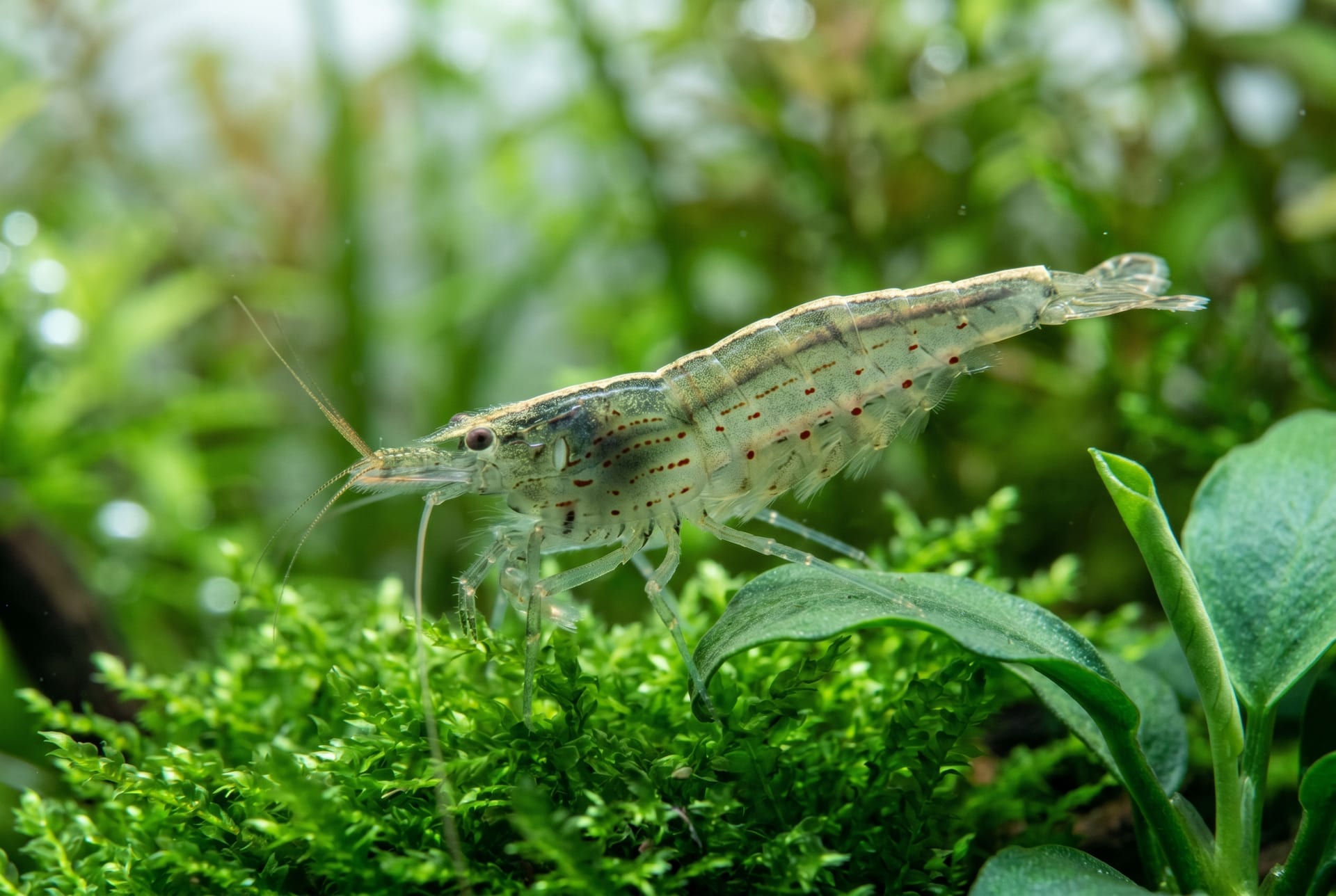
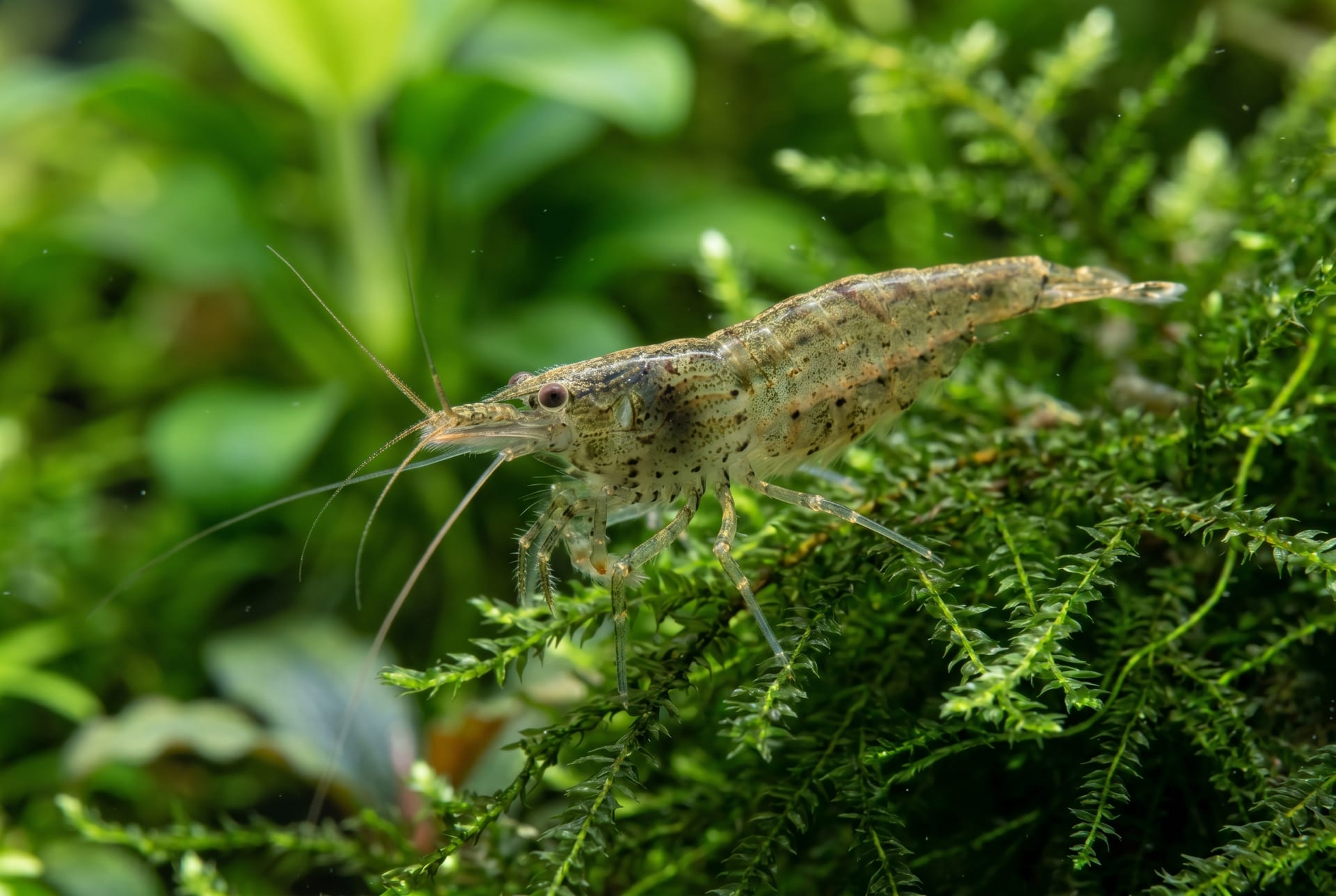
1. Minami Shrimp (Neocaridina denticulata)
The most familiar freshwater shrimp native to Japanese rivers. Inexpensive, hardy, and highly adaptable to water quality fluctuations—the ideal choice for beginners.
Characteristics:
- Size: 1.5–3cm (females larger)
- Color: Nearly transparent to pale green; body color varies with environment
- Breeding: Possible year-round; completes life cycle in freshwater
- Algae Control: Eats fine algae but lacks power against large algae
Water Management:
- Temperature: 18–28°C (ideal around 25°C)
- pH: 6.5–7.5
- Hardness: ~4–8°dH
- Ammonia/Nitrite: 0
Cautions: Sensitive to high temperatures (30°C+) and sudden water quality changes. Extremely sensitive to medications (especially copper-based herbicides and pesticides). Use aquatic plants without pesticides.
2. Yamato Shrimp (Caridina multidentata)
The ultimate algae eater in the aquarium world. Larger body (3–5cm) and algae-eating power unmatched by any other freshwater shrimp. However, breeding is extremely difficult, so maintaining population typically relies on restocking from shops.
Characteristics:
- Size: 3–5cm (females larger)
- Color: Semi-transparent with reddish-brown spots
- Breeding: Larvae require brackish water; generally cannot breed in standard tanks
- Algae Control: Particularly effective against filamentous algae and green algae
Water Management:
- Temperature: 20–27°C
- pH: 7.0–8.0
- Tank cover essential for escape prevention
Cautions: Voracious appetite; may eat tender new shoots of aquatic plants. Larger body size increases risk of oxygen depletion—aeration recommended.
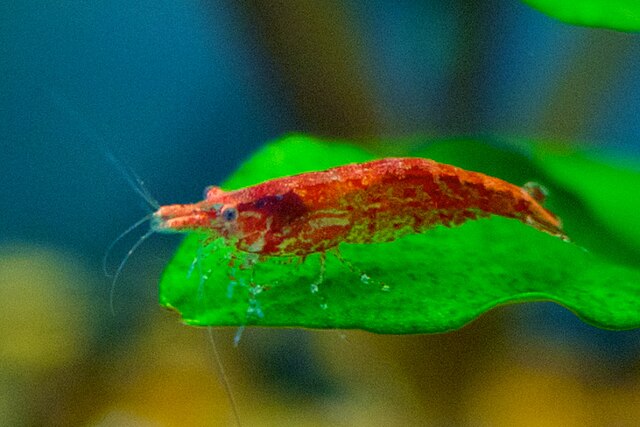
3. Red Cherry Shrimp (Neocaridina davidi var. red)
A color variant originating from Taiwan. Vibrant red color stands out in planted tanks and easy breeding allows for population growth as a hobby.
Characteristics:
- Size: 1.5–3cm
- Color: Red (quality grades include Cherry, Painted Fire Red, Sakura, etc.)
- Breeding: Easy (freshwater complete life cycle)
- Algae Control: Supplementary
Water Management:
- Temperature: 20–26°C
- pH: 6.5–7.5
- Softer water favors better coloration
Cautions: Prone to hybridizing with other color variants in the same genus. Keeping different color morphs together may fade coloration.
4. Snowwhite Shrimp (Neocaridina cf. zhangjiajiensis)
Pure white body gives a pristine appearance. Part of the Neocaridina family like Red Cherry Shrimp, so care difficulty is nearly identical. Popularity has increased in recent years.
Characteristics:
- Size: 1.5–3cm
- Color: White (called Frost White, Snowwhite, Pearl White, etc.—multiple names in use)
- Breeding: Easy
- Algae Control: Supplementary
Water Management:
- Nearly identical to Red Cherry Shrimp (pH 6.5–7.5, temperature 20–26°C)
Cautions: White body color makes water quality problems easier to spot. Avoid hybridization with other Neocaridina species.
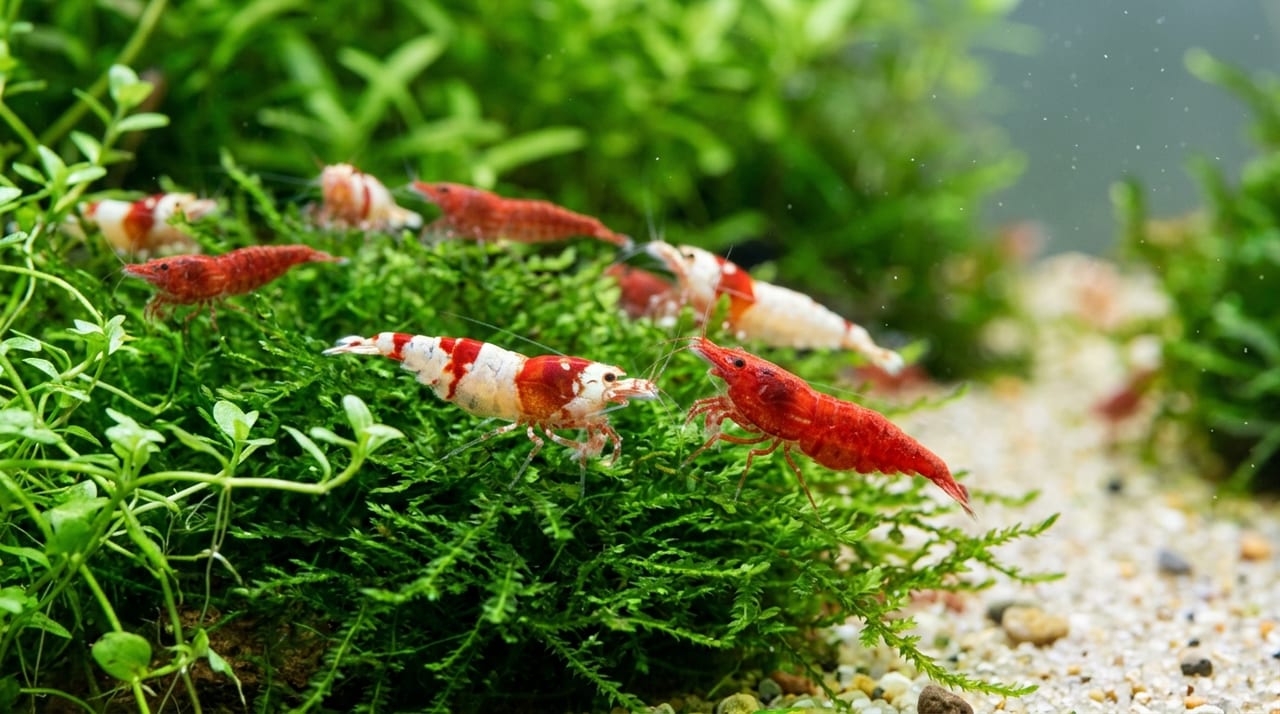
5. Bee Shrimp (Caridina cf. cantonensis)
The highest difficulty freshwater shrimp. Characterized by striking white and black (or wine-red and white) striped patterns. Grades (Shadow, Mosura, S-grade, etc.) can command prices from thousands to tens of thousands of yen.
Characteristics:
- Size: 2–3cm
- Color: Varied—white × black (Black Bee), red × white (Crystal Red), etc.
- Breeding: Possible but water quality management is critical
- Algae Control: Negligible
Water Management (Extremely Strict):
- Temperature: 20–24°C (risk of sudden death above 25°C)
- pH: 5.5–6.5 (slightly acidic)
- Hardness: 2–4°dH (soft water)
- TDS: 120–180ppm
- Aquatic plant soil mandatory
Cautions: Cannot cohabitate with Neocaridina species (water requirements are opposite). Risk of immediate death in hard, alkaline water. Not recommended for beginners.
Which Species Should You Choose?
Beginner & Algae Control Priority → Yamato Shrimp Strongest algae eater. Perfect if breeding is not your goal.
Beginner & Want to Breed → Minami Shrimp or Red Cherry Shrimp Inexpensive, easy to breed, and ideal for enjoying your first shrimp breeding experience.
Intermediate & Appearance-Focused → Snowwhite or High-Grade Red Cherry Color shrimp that stand out beautifully in planted tanks.
Advanced & High-Grade Specialty Breeds → Bee Shrimp Most demanding but most rewarding. Tests your water management skills.
Cohabitation Notes
- Neocaridina species together (Minami, Cherry, Snowwhite) can share tanks but beware of hybridization
- Neocaridina with Caridina (Bee Shrimp, Yamato) have conflicting water requirements—mixed housing is difficult
- Small fish (Bettas, Gouramis, etc.) may prey on shrimp
- Young shrimp are especially vulnerable; moss and hiding spots are essential
Summary
Understanding the characteristics of these 5 freshwater shrimp species and choosing the one that matches your aquarium conditions and goals is the key to long-term success. Beginners are encouraged to start with either Minami or Yamato Shrimp, then progress to color variants or Bee Shrimp as experience grows. Obtaining stable, healthy individuals from a breeder minimizes introduction risks and sets you up for success.