Foxface Rabbitfish Care Guide | Tank, Food, Tank Mates, and Venomous Spine Precautions
A comprehensive guide to caring for Foxface Rabbitfish (Siganus vulpinus). We cover the distinctive fox-like face, yellow and black coloration, handling venomous spines, the benefits of their algae and detritus consumption, impact on live rock, and how to select compatible tank mates.
Key Takeaways
A comprehensive guide to caring for Foxface Rabbitfish (Siganus vulpinus). We cover the distinctive fox-like face, yellow and black coloration, handling venomous spines, the benefits of their algae and detritus consumption, impact on live rock, and how to select compatible tank mates.
What Kind of Fish is Foxface Rabbitfish?
Foxface Rabbitfish (scientific name: Siganus vulpinus) is a marine fish of the Siganidae family widely distributed throughout the Indo-Pacific region. In Japan, it is known by names such as "Usuba Aigo" or "Ami Aigo," but among hobby aquarists, the common name "Foxface" has become established.
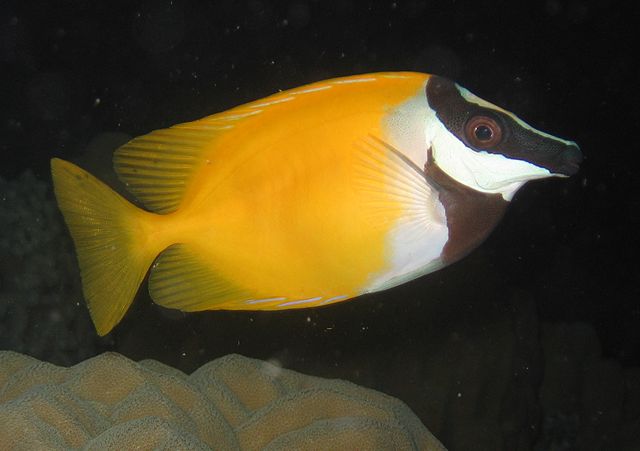
The most distinctive feature is the contrasting head coloration, with a bold black and white pattern on the head and a vibrant yellow body. The fox-like facial appearance is the origin of its name. It grows to a maximum length of 25–30 cm and has an oval, flattened body shape.
Notably for aquarists, it has strong herbivorous tendencies, actively consuming algae—particularly filamentous algae—and seaweed. With excellent algae-eating abilities, it serves well as a "tank janitor." However, it may peck at hard coral flesh and consume freshly molted crustaceans.
Handling Venomous Spines with Care
When keeping Foxface Rabbitfish, you must never forget that the spines on the dorsal, ventral, and anal fins are venomous. This venom contains neurotoxins and causes severe pain if you are stung. The fish does not use these spines to attack other fish but primarily as a defense mechanism against predators.
Handling Precautions
- Wear thick rubber gloves when performing tank maintenance
- When netting the fish, use a large, deep net to avoid catching the spines
- If stung, immerse the affected area in hot water (45–50°C) as much as possible to inactivate the venom proteins. If pain is severe or systemic symptoms (dizziness, nausea) develop, seek medical attention
- When visiting a hospital, mention "stung by a rabbitfish (Siganus)" to ensure proper treatment
Due to the presence of these venomous spines, extra caution is necessary in homes with children. Place the tank in a location out of reach or keep it covered securely with a lid.
Proper Tank Environment
Although Foxface Rabbitfish is relatively hardy, it requires adequate space as it can grow to 25–30 cm.
Recommended Tank Size: 120 cm or larger (200 L or more). A 90 cm tank can work temporarily, but will become cramped as the fish grows.
Water Parameters
- Temperature: 24–26°C
- Specific Gravity (Salinity): 1.020–1.025 (optimal: 1.023–1.025)
- pH: 8.1–8.3
- Ammonia & Nitrite: Zero
- Nitrate: 20 ppm or less (preferably 10 ppm or less)
Foxface Rabbitfish is sensitive to water quality changes; sudden shifts in temperature or salinity can cause panic and color changes (stress patterns: black-and-white splotches). Notably, stress patterns (irregular black-and-white markings) are not signs of poor health but rather normal responses when startled or during nighttime.
Keeping it in a reef tank with abundant live rock is ideal, but since it may consume soft corals and LPS (large polyp stony corals), careful observation is required if placing it in a coral tank. Generally, it causes little harm to SPS (small polyp stony corals), though individual variation exists.
Feeding and Diet
Foxface Rabbitfish has strong herbivorous tendencies and actively consumes seaweed and algae.
Primary Foods
- Seaweed (sea grapes, nori, green nori, etc.): Hold in place using clips or rabbit grass clips
- Dried seaweed (nori): Use unprocessed, unsalted varieties
- Algae-based flakes and pellets (herbivore food)
- Frozen seaweed, brine shrimp, and microfood
- Microscopic and filamentous algae on live rock surfaces
Once acclimated, it will also eat frozen krill (brine shrimp) and minced clam meat, but maintaining a primarily vegetable-based diet is key to good health. Even when using it for algae control, provide supplemental feedings.
Feed once or twice daily, offering only what it can consume in 2–3 minutes. Due to its strong herbivorous nature and robust appetite, it may nibble at mollusks or corals if food is insufficient. We recommend creating an environment where it has continuous access to seaweed via clips.
Tank Mate Compatibility
Foxface Rabbitfish is generally peaceful and can coexist with many marine fish. However, avoid keeping it with the same species or closely related species (other Siganidae) as territorial disputes easily occur, unless the tank is very large.
Compatible Fish Species: Clownfish, gobies, angelfishes (caution with large species), surgeonfish/tangs, damselfish, wrasses, and many other marine fish.
Combinations Requiring Caution: Multiple fish of the same or closely related species, large butterflyfishes (potential territorial conflicts).
Coral Compatibility: May peck at soft corals and LPS. SPS corals are relatively safe, but individual variation exists. Be cautious with thick-fleshed soft corals such as toadstool corals, green star polyps, and button polyps.
Acclimation and Introduction
The drip acclimation method is recommended after purchase. Gradually acclimate it to the tank water over at least one hour. Due to its venomous spines, avoid touching the fish with bare hands during acclimation.
After introduction, provide plenty of live rock for hiding and keep the environment as quiet as possible. It may not eat for the first 1–2 days, which is normal. If it hasn't eaten after 3–5 days, reassess the environment.
Common Health Issues
Ich (Oodinium and Cryptocaryon): A parasitic disease common in marine fish. White, point-like spots appear on the body surface. Copper-based medications are effective, but Foxface Rabbitfish has slightly low tolerance to copper treatments—use cautiously.
Lymphocystis: A viral disease causing cauliflower-like lesions on the body surface. In most cases, it heals naturally as the immune system recovers.
Persistent Stress Patterns: Temporary stress patterns (black-and-white splotches) are normal, but if stress patterns appear constantly, review the water quality, temperature, and tank mates.
Conclusion
Foxface Rabbitfish is a hardy, practical marine fish with strong herbivorous tendencies and excellent algae-eating abilities. While constant attention to its venomous spines is essential and glove use during handling is a must, it can be kept without difficulty under proper management. Its unique fox-like face and vibrant yellow coloration provide visual interest as a distinctive accent in the aquarium. With adequate space and a primarily seaweed-based diet, you can enjoy long-term care of this fascinating fish.