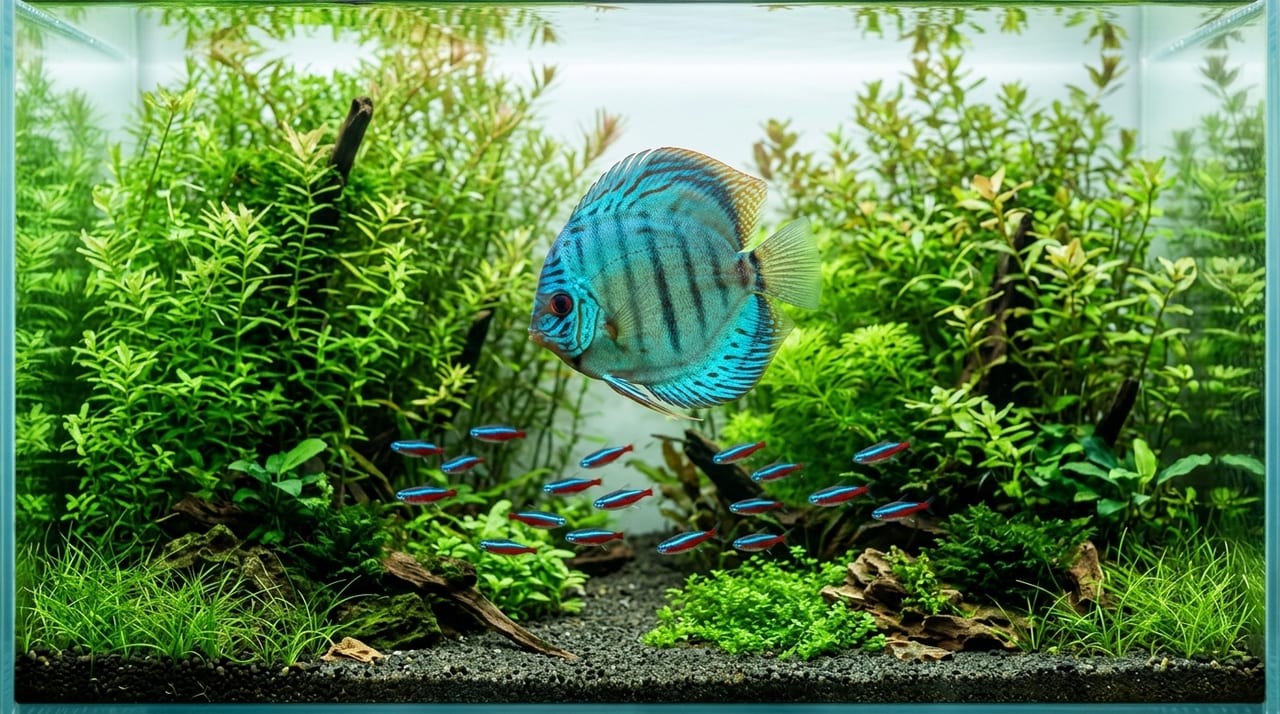
Female Betta Care and Sorority Tank Guide | Methods and Precautions for Multiple Housing | ブリちょく
Tropical Fish| ✍️ BreederDirect Editorial
Female Betta Care and Sorority Tank Guide | Methods and Precautions for Multiple Housing
Explaining female Betta characteristics and multiple-housing methods (sorority tanks). Also covers hierarchy formation, conflict management, appropriate tank sizing, and comparison with solo housing.
Key Takeaways
Explaining female Betta characteristics and multiple-housing methods (sorority tanks). Also covers hierarchy formation, conflict management, appropriate tank sizing, and comparison with solo housing.
Female Betta Care and Sorority Tank Guide | Methods and Precautions for Multiple Housing
Bettas (Fighting Fish) are known for the aggressive nature of males, but female Bettas are also beautiful and highly individualistic fish. In particular, "Sorority tanks (multiple female housing)" is a popular breeding style among Betta enthusiasts. This article explains female Betta characteristics, multiple-housing methods, and management tips.
✍️
BreederDirect Editorial
The BreederDirect editorial team specializes in care information for animals, covering veterinary care and breeding to deliver beginner-friendly guides.
Find Tropical Fish on BreederDirect
Buy directly from verified breeders
Browse Related Listings
Find Tropical Fish listings related to this article on BreederDirect. Buy directly from verified breeders.
Duller than males (exceptions through selective breeding)
Aggression
Very high (toward other males)
Relatively calm but individual variation exists
Fighting Instinct
Kill other males through aggression
Can often be housed in groups
Breeding Behavior
Creates bubble nests
Produces eggs
Appeal of Female Bettas
Diversity of personality: Some females also have beautiful fins and colors through selective breeding
Social behavior: Observable group behavior patterns (sorority)
Easy to obtain and affordable: Often more reasonably priced than males
Relatively capable of group housing: Tank liveliness increases
Sorority Tanks (Multiple Female Housing)
What is a Sorority?
"Sorority" originally refers to women's social clubs, but among Betta enthusiasts it refers to multiple female Betta housing. When done properly, a stable group forms with females coexisting.
Conditions for Sorority Success
1. Sufficient water volume and space:
A sorority requires a minimum of 60L or more (60cm cube tanks or 60×30 tanks).
Number of Bettas
Minimum Recommended Volume
5 individuals
60L or more
8–10 individuals
100L or more
More than that
Proportional increase
2. Number of individuals where hierarchy can be established:
If the number is too few (2–3), one individual will be concentrated upon for attacks. A minimum of 5 or more is recommended.
4. Introduce all individuals simultaneously:
Adding new individuals to an established hierarchy often causes severe attacks. Either introduce all at once from the beginning, or temporarily isolate everyone and reintroduce them together.
Sorority Risks and Management
Risk 1: Concentrated attacks on weaker individuals
- Regular observation to ensure no specific individual is being chased
- Isolate and treat any individual with torn fins or unable to eat
Risk 2: Injuries from hierarchy disputes
- During initial introduction (1–2 weeks), intense hierarchy disputes occur
- Observe multiple times daily during this period
- Immediately isolate and treat severely injured individuals
Risk 3: Re-hierarchy formation from environmental changes
- Tank cleaning or rearrangement resets hierarchy, causing renewed conflict
- Minimize large tank modifications
Sorority Observation Points
In a stable sorority, the following behaviors are observable:
Established hierarchy: 1–2 "boss" individuals with subordinate individuals in sequence
Feeding behavior: Feeding patterns following the established order
Resting spot distribution: Each individual maintains its own "territory"
Threat displays: Flaring (fin spreading) for hierarchy confirmation rather than aggressive attacks
Solo Housing for Female Bettas
Benefits of Solo Housing
Solo housing is ideal for environments or individuals where sorority is difficult.
Stress-free and longer lifespan
Easier health management
Beautiful fins are easier to maintain
Less impact from environmental changes
Recommended Tank Sizes (Solo Housing)
Body Length
Minimum Volume
Recommended Volume
Up to 6cm
10L
15–20L
6–10cm
20L
30L or more
Female Betta Feeding Management
Recommended Foods
Type
Frequency
Amount
Betta-specific pellets
Daily
2–3 pellets × 2 times per day
Frozen brine shrimp
2–3 times per week
1–2 servings
Frozen bloodworms
1–2 times per week
Small amount
Dried mealworms
Once per week
1–2 individuals
Caution against overfeeding: Bettas are prone to digestive disorders and constipation if overfed. Feed an amount that can be consumed within 3–5 minutes.
Weekly Fasting
A weekly fasting day promotes digestive organ recovery and is believed to benefit long-term health.
Female Betta Health Management
Ovipositor Verification
A small white dot (ovipositor) is visible at the tip of the abdomen in healthy females. This is a normal state, not a disease.
Egg Binding
"Egg binding" occurs when females cannot lay eggs.
Symptoms:
- Abnormal swelling of the abdomen
- Loss of appetite
- Lying at tank bottom
Management:
- Raise water temperature by 1–2°C (to induce spawning)
- Salt bath (0.3%) may provide relief
- Consult a veterinarian if not improved
Velvet Disease (Coccidium)
A parasitic infection common in Bettas. The body appears covered in a golden powder.
Treatment: Medicated bath with specialized medication (Copepara, Green F Gold, etc.)
Summary
Female Bettas, while not as famous as males, are highly individualistic fish with diverse strain varieties, and observing them in sorority tanks is a very rewarding experience. The key to sorority success is ensuring sufficient water volume, hiding spots, appropriate individual numbers, and the perseverance to survive initial hierarchy disputes.
Solo housing of female Bettas also has considerable appeal, allowing long-term observation of beautiful body shapes and active behavior. Source quality individuals from breeders and raise them in an appropriate environment.