Discus Breeding and Water Quality Management Guide | Soft Water, Weak Acid Management, Spawning, and Fry Rearing
A detailed guide on water quality management for breeding Discus, the king of tropical fish. This intermediate to advanced breeding guide covers creating soft water and slightly acidic environments using RO water and blackwater, large water change schedules, steps from pair formation through spawning, fry feeding on parental mucus secretions, transitioning to artificial feeds, and comprehensive fry tank management.
Key Takeaways
A detailed guide on water quality management for breeding Discus, the king of tropical fish. This intermediate to advanced breeding guide covers creating soft water and slightly acidic environments using RO water and blackwater, large water change schedules, steps from pair formation through spawning, fry feeding on parental mucus secretions, transitioning to artificial feeds, and comprehensive fry tank management.
Related Species
About Discus
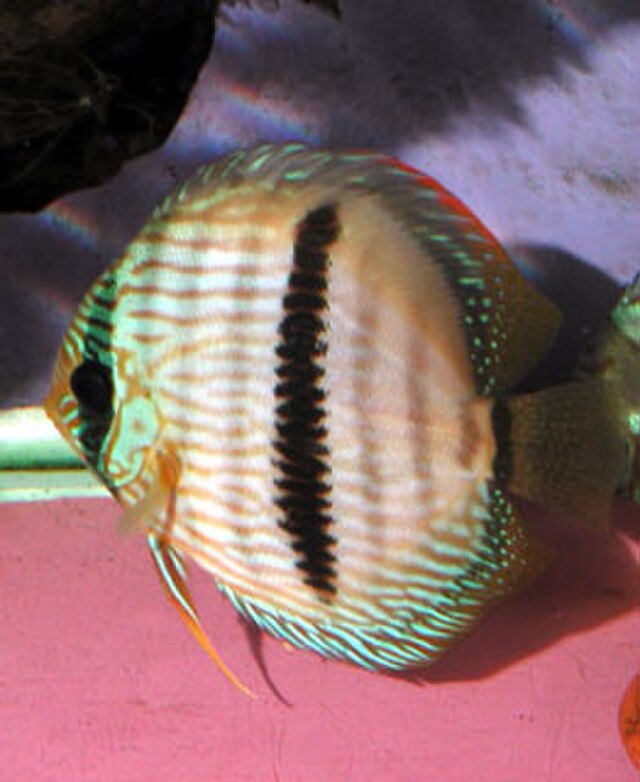
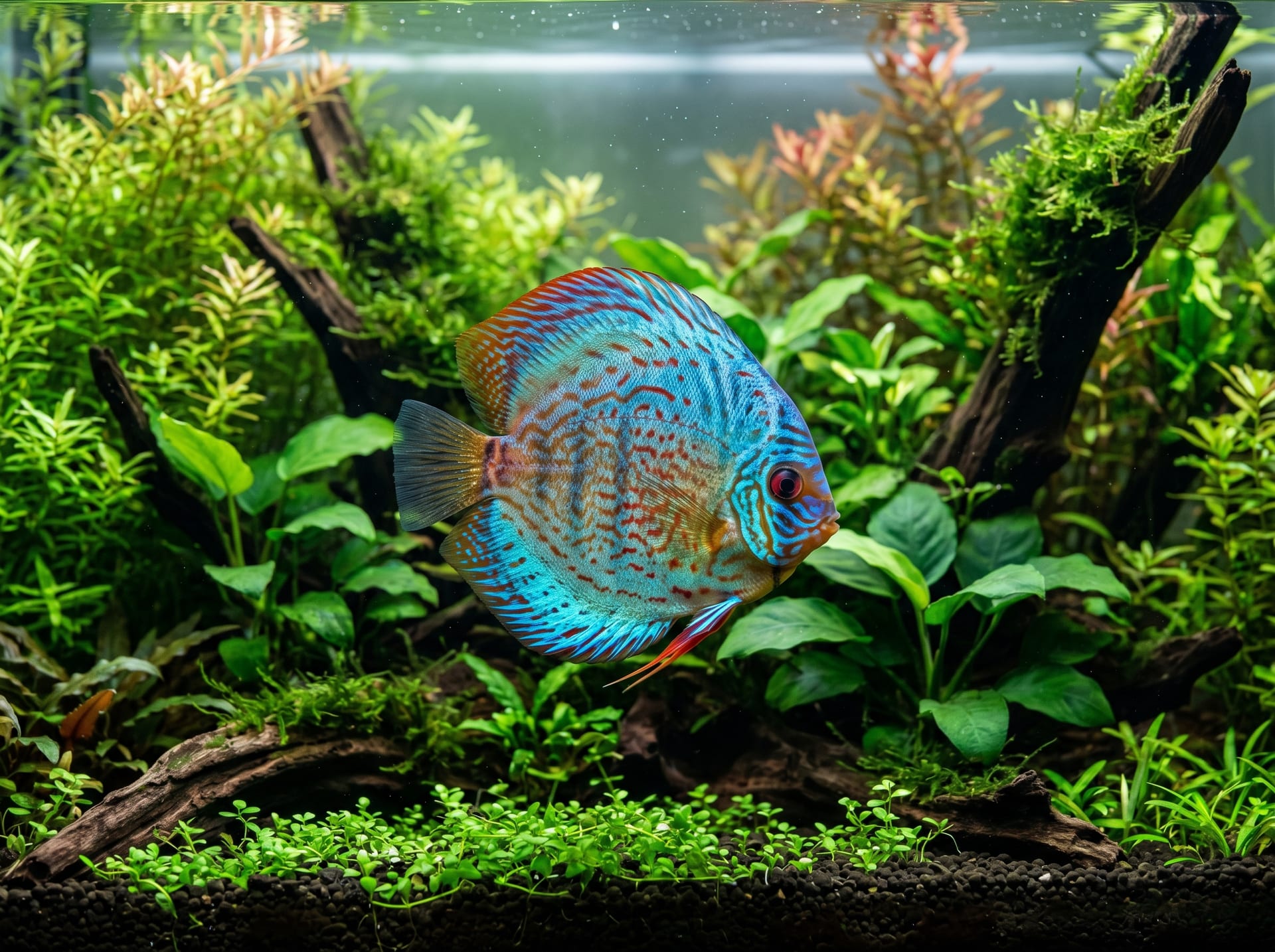
Discus (genus Symphysodon) are tropical fish from the Cichlidae family native to the Amazon basin, regarded as one of the finest ornamental fish and known as the "king of tropical fish." Their distinctive disc-shaped, flattened body, adorned with flowing striped patterns and colors in blue, red, green, and brown hues, continues to captivate enthusiasts.
Varieties and Types
Discus come in both wild-caught and selectively bred varieties.
Wild-Caught Species
| Species | Characteristics |
|---|---|
| Heckel Discus (S. discus) | Blue striped pattern, wild majesty |
| Axelrod's Discus (S. axelrodi) | Strong red coloration |
| Blue-Faced Discus (S. haraldi) | Blue face coloration |
Selectively Bred Varieties
- Snow White / Golden / Turquoise / Cobalt Blue / Pigeon Blood / Sky Blue and others
- Many varieties distributed from Japanese breeders as well as farms in Thailand and Malaysia
Discus Care Basics
Tank Size
Discus are large fish that grow to 20–25 cm in body height.
| Number of Fish | Recommended Tank Size |
|---|---|
| 1–3 | 90 cm (180 L+) |
| 4–6 | 120 cm (300 L+) |
| 7+ | 150–180 cm+ |
Substrate: For breeding purposes, a bare bottom (no substrate) is recommended from a cleanliness standpoint. This makes water changes easier and fry observation simpler.
Water Quality Importance
Discus are sensitive to water quality and require particularly soft water and slightly acidic conditions.
| Parameter | General Care | Breeding Tank |
|---|---|---|
| Temperature | 28–30°C | 29–31°C |
| pH | 6.0–7.0 | 5.5–6.5 |
| Hardness (GH) | 3–8 dGH | 1–4 dGH (ultra-soft water) |
| Nitrate | ≤10–20 mg/L | ≤5 mg/L |
Methods for Softening Water
- Blackwater (humic acid) additives: Lower pH and hardness using Magic Leaf, peat moss, or commercial humic additives
- Reverse osmosis (RO) water: Most reliable. Use after pH adjustment
- Ion exchange resin: Selectively reduces hardness
Large-Scale Water Changes (Discus-Specific Care)
Frequent, large-volume water changes are essential for maintaining discus health.
| Level | Change Frequency | Change Volume |
|---|---|---|
| General Care (Stable Tank) | 2–3 times/week | 30–40% |
| Breeding Tank | Daily | 50–80% |
Water Change Precautions
- Keep the temperature difference between new and existing water within 1°C
- Always use dechlorinator (sodium thiosulfate-based is standard)
- To prevent pH shock, measure the new water's pH before adding it
Water Quality Management for Breeding
Discus have a unique breeding style where pairs spawn voluntarily and parents raise the fry.
Pair Formation and Sex Differentiation
Male and female discus are extremely similar in appearance, making certain identification difficult, but there are guidelines.
| Feature | Male | Female |
|---|---|---|
| Body Shape | Slightly larger and rounder | Smaller and slimmer |
| Behavior | Aggressive, chases others | Ovipositor visible just before spawning |
| Genital Papilla | Slender and pointed | Rounded tip, slightly thicker |
Pair Formation Method
The common "group method" involves raising 6–8 mature individuals (body length 10 cm+, approximately 1–1.5 years old) together and waiting for natural pairs to form. Once a pair bonds, the two fish will stay close together.
From Spawning to Fry Rearing
Pre-Spawning Signs
- Intensely clean spawning surfaces (flower pots, spawning cones, pipes, etc.)
- Body color deepens
- Drive away other fish
Spawning
They lay 100–400 eggs per spawn. The eggs are semi-transparent and oval-shaped.
Egg Care
- Parents fan the eggs with their fins to supply oxygen
- Hatch within 37–48 hours
- Parents often consume unfertilized eggs (which turn white)
Fry Feeding on Parental Mucus
Newly hatched fry initially feed on the parents' body mucus (the defining feature of discus breeding).
Important Note: During this period (5–7 days post-hatch), do not separate parents and fry, and minimize external stress.
Transition to Artificial Foods (2–3 Weeks Post-Hatch)
- Gradually introduce newly hatched (within 24 hours) brine shrimp nauplii
- Microworms at 2–3 weeks
- Daphnia and freeze-dried foods at 4–5 weeks
Fry Water Quality Management
Set fry tank pH to 6.0–6.5 and temperature to 30–31°C. Maintain nitrate below 5 mg/L by performing large daily water changes.
| Week | Change Frequency | Change Volume |
|---|---|---|
| 0–2 | Daily | 30–50% |
| 3–5 | Daily | 50–70% |
| 6+ | Twice daily | 50% × 2 |
Feeding and Growth Promotion
Discus are omnivorous but prefer animal-based proteins.
Recommended Foods
- Frozen beef heart (hamburger mix): High protein and palatable. Homemade mix (heart, shrimp, garlic, vitamin supplements) is standard
- Frozen brine shrimp: Ideal for fry to juveniles
- Discus-specific pellets: Sera Discus / Ocean Nutrition Discus Granules, etc.
Feeding Frequency: Adults 2–3 times daily, fry 3–6 times daily
Breeding discus offers the highest level of satisfaction in tropical fish keeping. As you accumulate experience in water quality management, selecting breeding pairs, and raising fry, you'll develop deeper enjoyment as a true "discus breeder." Start by stabilizing water conditions and raising mature individuals as a pair.