Discus Breeding Guide: Pairing, Spawning, and Fry Management
A guide to breeding the "King of Tropical Fish," discus. We explain male-female pairing methods, spawning site setup, fry mucus-feeding stage management, and the transition to specialized fry foods.
Key Takeaways
A guide to breeding the "King of Tropical Fish," discus. We explain male-female pairing methods, spawning site setup, fry mucus-feeding stage management, and the transition to specialized fry foods.
Related Species
What You Need to Know About Breeding Discus
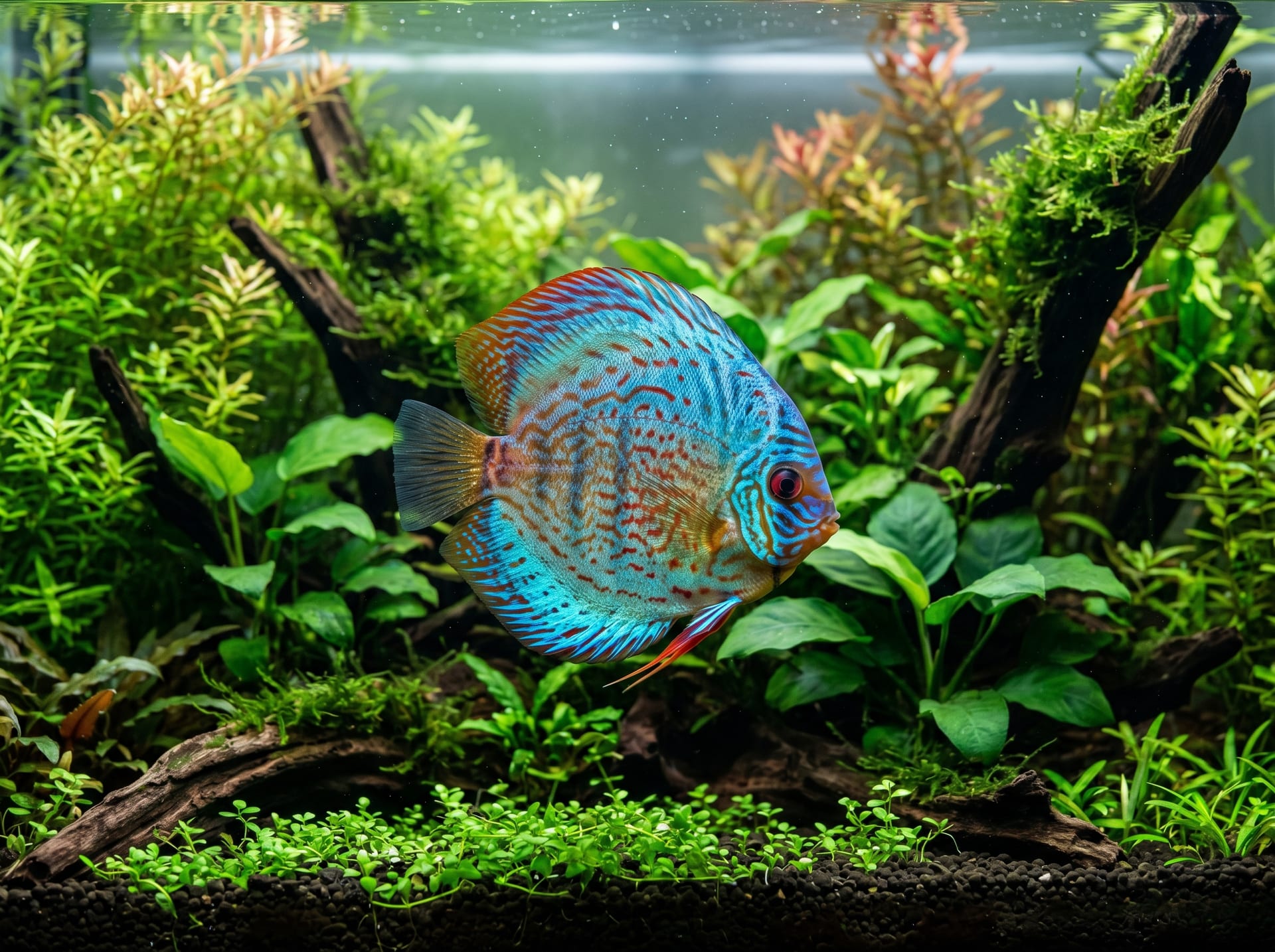
The discus, known as the "King of Tropical Fish," captivates aquarists with its beautiful disc-shaped body and vibrant coloration. While breeding difficulty is relatively high, those with proper knowledge and a suitable environment can succeed even as beginners to intermediate hobbyists. The joy of successful breeding is incomparable. This guide walks you through each step, from pairing to fry independence.
Sexing and Pairing Discus
The first step in discus breeding is creating a healthy pair. However, discus are difficult to sex, as males and females look virtually identical.
Sexing Indicators
- Dorsal and Anal Fin Shape: Males tend to have pointed fin tips, while females typically have rounder fins.
- Body Build: Males are generally slightly larger, with a more pronounced forehead protrusion.
- Ovipositor: Near spawning, a tube-like ovipositor becomes visible on the female's abdomen.
However, these are only indicators and not definitive. The most reliable method is to raise 6–10 fish together and allow them to pair naturally. In a group setting, mature individuals will gradually come together, and you'll observe territoriality—with the pair chasing away other fish. At this point, you can confirm pairing has occurred.
Once pairing is confirmed, move the pair to a dedicated breeding tank (60–90 cm) to avoid conflicts with tank mates.
Setting Up the Breeding Tank and Spawning Surface
Once pairing is established, create an environment conducive to breeding. It's important to replicate the water conditions of the Amazon basin, discus's native habitat.
Target Water Parameters
| Parameter | Target |
|---|---|
| Temperature | 28–30°C (82–86°F) |
| pH | 6.0–7.0 (soft water) |
| Hardness | GH 3–8 |
Raising the temperature slightly above normal maintenance levels (28–30°C) encourages spawning. Water changes also trigger breeding, so perform 30–50% changes daily or every other day. The stimulus from water changes can trigger spawning.
Spawning Surface Setup
Discus spawn on flat vertical surfaces. The following work as spawning surfaces:
- Unglazed Terra Cotta Pots (vertical): Most popular and readily available.
- PVC Pipe or PVC Sheets: Easy to clean and sanitary.
- Broad-Leaved Plants (e.g., Amazon Sword): Closest to natural conditions.
Placing the spawning surface slightly toward the center rather than in a corner helps parents feel secure. Covering three sides with black paper to shield them from external view reduces stress and encourages breeding behavior.
Spawning to Hatching: Egg Care
Once conditions are right and the pair is mature, you'll notice them cleaning the spawning surface. This signals spawning is imminent. Typically, spawning occurs within 1–3 days of cleaning.
Spawning Process
The female deposits eggs on the spawning surface, which the male then fertilizes. They alternate this process, resulting in approximately 100–300 eggs per spawn. After spawning, both parents take turns fanning the eggs with their fins to provide fresh water and oxygen.
Incubation Period
At 28–30°C, eggs hatch in approximately 60 hours (2–3 days). Newly hatched fry remain attached to the spawning surface without moving—this stage is called the "wiggler" stage. Wigglers survive on their yolk sac, so no feeding is needed during this period.
If Eggs or Fry Are Consumed
First-time spawners sometimes consume their eggs or fry (egg-eating or fry-eating). This usually results from stress or inexperience. Often, parents learn and settle down after a few spawning cycles, so be patient. If it persists, you can move the spawning surface with eggs to a separate tank with aeration for artificial incubation.
Mucus-Feeding Stage: The Remarkable Fry-Feeding Period
Once wigglers leave the spawning surface and begin swimming, they enter the "mucus-feeding stage"—the most unique and critical phase of discus breeding.
What Is Mucus Feeding?
For roughly 5 days to 2 weeks after hatching, fry feed on secretions from the parents' skin (discus milk). You'll observe fry clinging to and nibbling at the parents' bodies. This mucus contains not just nutrients but also immune factors, making it essential for fry growth and health.
Important Considerations During This Stage
- Do not move parents to another tank. Keeping parents and fry together is absolutely essential during this stage.
- Minimize obstacles so fry can freely move between parents.
- Proper parent nutrition is critical. Feed high-protein foods (frozen bloodworms, beef heart, etc.) 3–4 times daily to maintain parent vigor.
- Water quality decline reduces mucus quality, so continue daily water changes.
If there are many fry or parents show signs of stress, rotating one parent out for rest periods can be effective.
Transitioning to Prepared Foods
As the mucus-feeding stage winds down, fry spend more time away from parents and swim freely around the tank. Begin transitioning to prepared foods at this point.
Timing of Food Transition
Around 2–3 weeks post-hatch is the target. When fry reach about 5–7 mm and comfortably venture away from parents, it's time to switch.
Choosing Initial Foods
| Food | Characteristics |
|---|---|
| Newly Hatched Brine Shrimp | Most digestible and highly attractive. Daily hatching is labor-intensive but highly effective. |
| Frozen Daphnia | Easier to transition to after fry are accustomed to brine shrimp. |
| Discus-Specific Pellets (powder/fine granules) | Convenient with good nutritional balance. Pay attention to particle size. |
We strongly recommend starting with live brine shrimp. They readily stimulate fry appetite and are easily digested. Feed small amounts 3–5 times daily, removing uneaten food promptly.
Timing of Parent Separation
Separate parents from fry once fry reliably eat prepared food and reach about 1.5–2 cm in length. Prolonged cohabitation may delay the next spawn, so move fry to a separate tank once they're clearly independent.
Fry Growth Management: Tips for Healthy Development
Separated fry require frequent care to maximize growth rate.
Water Change Frequency for Optimal Growth
Fresh water during the fry stage promotes growth hormone secretion. "High-frequency water changes" of 30–50% once or twice daily are effective. Fry are sensitive to temperature and water-quality fluctuations, so always prepare water at the same temperature and parameters before changing.
Fry Tank Setup
- Bare-bottom tanks (no substrate) are recommended for easier maintenance.
- Use sponge filters to prevent fry from being sucked in.
- Avoid overstocking, which causes uneven growth and disease. Provide about 1–2 L per fry.
Growth Timeline
With proper conditions and feeding, fry reach 4–5 cm by 3 months post-hatch and 7–9 cm by 6 months. While individual variation exists, water-change and feeding frequency significantly impact growth rate.
Discus breeding is labor-intensive, but the joy of observing fry clinging to parents and watching daily growth is incomparable to breeding other fish. Initial attempts may be unsuccessful, but both parents and fry become more stable with experience. Take your time and approach this challenge patiently.