Complete Guide to Crested Gecko Care | Cage, Temperature, Diet, and Breeding Basics
A beginner's guide to caring for the popular crested gecko. This guide covers vertical enclosures, temperature management, the use of commercial food (CGD), and the basics of breeding.

Key Takeaways
A beginner's guide to caring for the popular crested gecko. This guide covers vertical enclosures, temperature management, the use of commercial food (CGD), and the basics of breeding.
Related Species
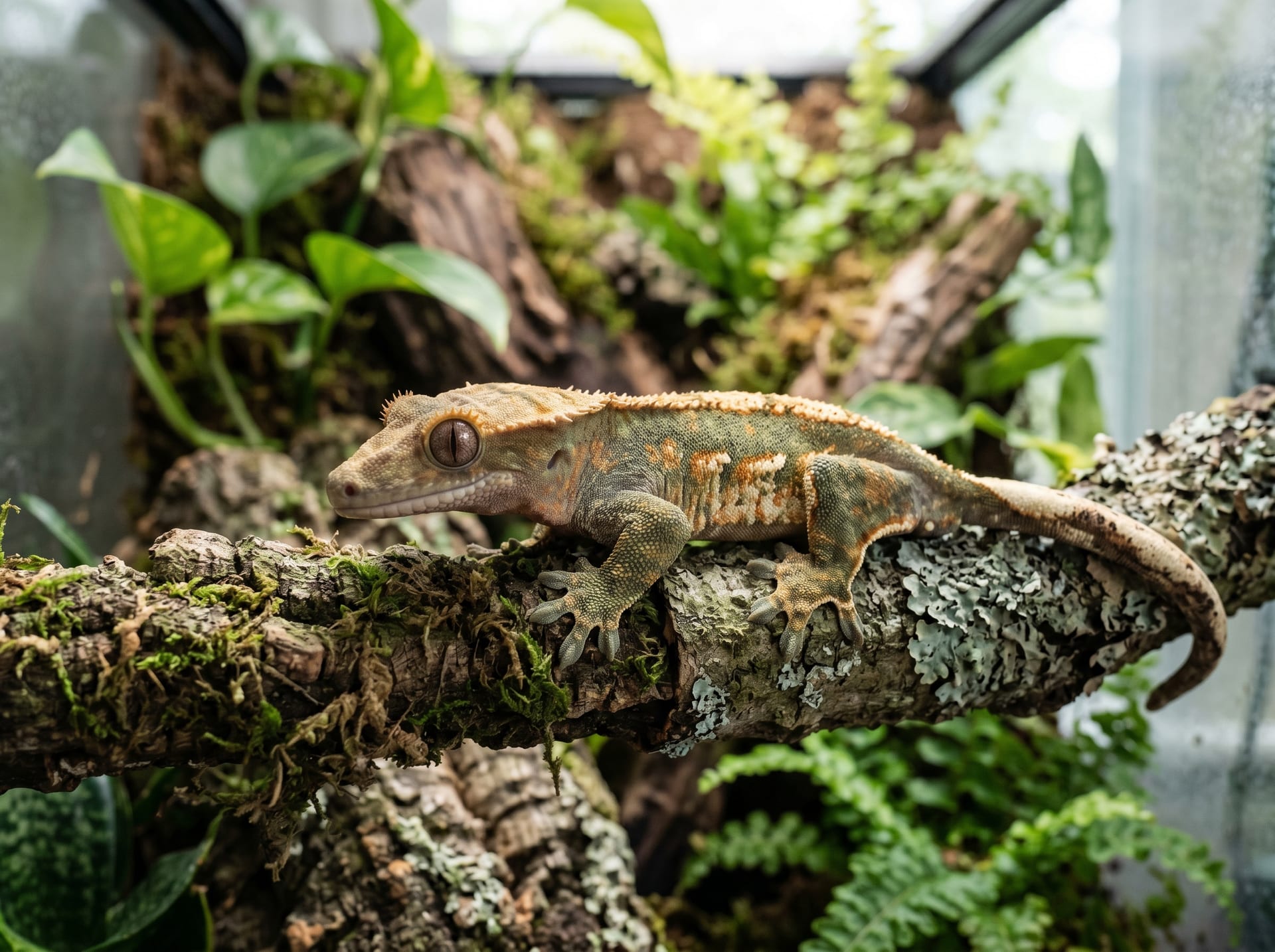
The Appeal of Crested Geckos and Their Position as a Beginner Species
The crested gecko (Correlophus ciliatus) is a gecko native to New Caledonia. The distinctive ridges (crest) running from the head along the back are its most notable feature, with coloration and patterns varying significantly between individuals.
Despite being thought extinct until 1994, it was rediscovered, and many morphs (varieties) have since been developed by breeders. Variations number in the dozens, including Flame, Harlequin, Pinstripe, and Lily White. Featured morphs are explained with characteristics and selection tips at Crested Gecko Morph Guide.
Its docile temperament, minimal odor, and the ease of keeping it with commercially available specialized food have made it increasingly popular worldwide as a beginner reptile species. Basking lamps are not required, and complex temperature management is unnecessary, making it an accessible species even for beginners.
Enclosure Setup
Because crested geckos are arboreal, tall vertical enclosures are essential. For adults, provide an enclosure measuring at least 45×45×60cm or larger. Choose mesh-type for emphasis on ventilation, or glass-type for emphasis on humidity retention. Because Japanese summers are humid, enclosures with mesh sides are easier to manage.
Coconut husk substrate or fine-grained volcanic soil are standard choices for bedding. Adopting bioactive bedding (an ecosystem substrate incorporating decomposers such as isopods and springtails) promotes fecal breakdown and makes it easier to maintain cleanliness.
When arranging the layout, consider vertical movement patterns. Combining cork bark, bamboo perches, and houseplants (such as pothos and white butterfly plants) provides climbing and hiding spaces, promoting the individual's well-being.
Temperature and Humidity Guidelines
- Daytime: 22–26°C (ideally 22–24°C)
- Nighttime: 18–22°C (nighttime temperature reduction is effective for stress relief)
- Maximum: Exceeding 28°C carries the risk of sudden death from heat stress. Summer requires ice packs and air conditioning management
Maintain humidity at 60–80%. Misting once or twice daily (preferably at night) is a common approach, but using an automatic misting timer makes management easier. Since crested geckos are often observed licking water droplets in the enclosure after misting, many keepers make misting rather than water bowls the primary source of hydration.
Diet — Combining CGD and Live Food
The defining feature of crested gecko care is that they can be completely maintained on commercially available specialized food (CGD = Crested Gecko Diet) alone. Brands such as Repashy, Pangea, and Clarks sell powdered food that is mixed with water and fed as a gel. The nutritional balance is calculated, and geckos can grow healthily on CGD alone.
Feeding frequency is once daily to once every two days for juveniles (under 6 months), and once every 2–3 days for adults. Placing the food in a cup positioned on the enclosure wall or high on a branch encourages natural feeding behavior. Remove any remaining food within 24 hours to prevent spoilage.
Offering live crickets or dubia roaches once or twice weekly (appropriately sized: no wider than the head) expands the nutritional profile, and many individuals show dramatically improved feeding response. Always dust live food with calcium powder before feeding, and remove any remaining insects the day after feeding.
Breeding — From Egg-Laying to Hatching
Breeding can be attempted with mature individuals (at least 18 months old; females weighing 35g or more as a guideline). Before breeding, a conditioning period where both males and females are well-nourished is important, and calcium supplementation must not be neglected.
Breeding Process
- House mature males and females together (copulation typically occurs at night)
- After confirming copulation, provide an egg-laying shelter filled with moistened coconut husk or volcanic soil
- Females lay one clutch of 2 eggs once or twice monthly. Provide active nutritional supplementation to females immediately after egg-laying
- Partially bury eggs in an incubation medium mixed with vermiculite and distilled water (volumetric ratio 1:1), maintained at 22–25°C
- Fertile eggs hatch in 60–90 days. Lower temperatures require longer incubation, but high temperatures increase the risk of deformities
- After hatching, house hatchlings individually in small enclosures, and monitor for shedding and first feeding during the initial days
Eggs can be distinguished as fertile or infertile using candling (shining a flashlight through them). Fertile eggs display a visible blood vessel network, while infertile eggs appear yellowish and opaque.
Health Management and Symptoms to Watch For
Habitual daily observation leads to early detection of problems.
Health Checkpoints
- Body weight: Weigh juveniles once weekly and adults once monthly, recording the data. Sudden weight loss may indicate infection or internal parasites
- Tail dropping (autotomy): Crested geckos may drop their tails when startled. Crested geckos do not regrow their tails (called a "nob tail"). Handle carefully and only touch individuals after they become accustomed to handling
- Incomplete shedding: Old skin frequently remains around the eyes and toes. Soak in a moistened container for about 30 minutes to soften, then gently remove with a cotton swab
- Mouth rot (stomatitis): If pus or abnormal discharge appears around the mouth, consult a veterinarian experienced with reptiles promptly
- Cryptosporidium infection: Watch for cases where weight loss continues without improvement. Confirm through fecal examination
When introducing new individuals, strongly recommend isolating them from existing animals for a quarantine period of at least two weeks.
Summary — A Reptile for the Long Term
If proper temperature management is maintained, crested geckos rank among the easiest reptiles to care for. They are favored by a wide range of keepers, from beginners to collectors, due to their ease of care with specialized food and the visual diversity offered by different morphs.
With a lifespan of 15–20 years under proper care, they become long-term companions once acquired. Obtain healthy individuals and care information as a package from BreederDirect breeders, and begin care from a solid foundation.