Complete Guide to Building a Mixed Reef Tank | SPS, LPS, and Soft Coral Coexistence
We explain light intensity and water flow zoning, chemical attack countermeasures, and placement strategies.
Key Takeaways
We explain light intensity and water flow zoning, chemical attack countermeasures, and placement strategies.
A mixed reef tank, in which SPS (such as Acropora), LPS (such as Euphyllia), and soft corals (such as Sinularia) coexist in a single aquarium, is the dream of many reef aquarists. However, since each type requires different environmental conditions, haphazard placement can lead to mutual decline. In this article, we explain concrete strategies for allowing three types of corals to coexist beautifully.
✍️
BreederDirect Editorial
The BreederDirect editorial team specializes in care information for animals, covering veterinary care and breeding to deliver beginner-friendly guides.
Find Coral on BreederDirect
Buy directly from verified breeders
Browse Related Listings
Find Coral listings related to this article on BreederDirect. Buy directly from verified breeders.
Basic Characteristics of SPS, LPS, and Soft Corals
To succeed with a mixed reef tank, it's important to first understand the characteristics of each group.
SPS (Small Polyp Stony): They prefer strong light (PAR 200–400) and vigorous water flow. They are sensitive to water quality fluctuations, and stable alkalinity and calcium are essential. Because their growth is slow, they tend to adapt slowly to environmental changes as well
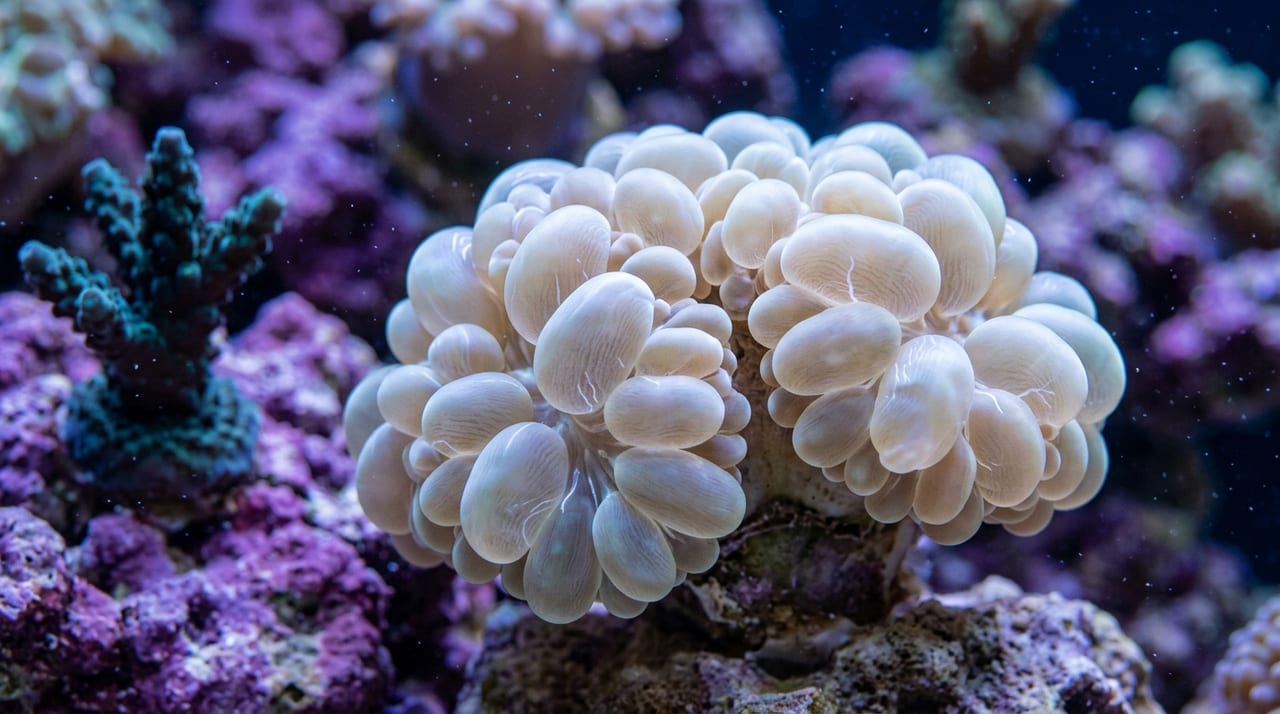
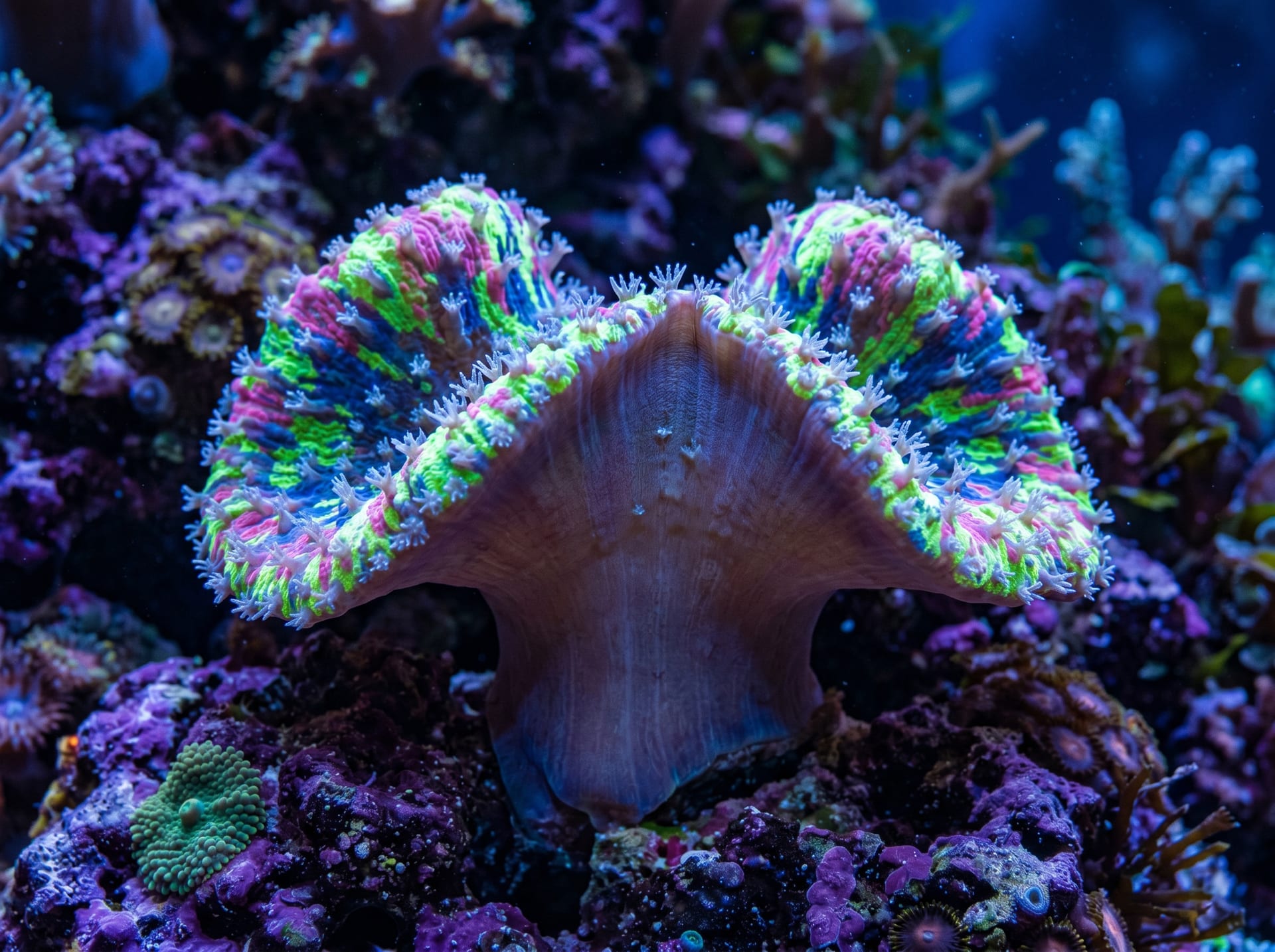
LPS (Large Polyp Stony): They prefer moderate light (PAR 80–200) and gentle water flow. They may attack nearby corals using sweeper tentacles or mesenteric filaments (digestive filaments), so adequate spacing is necessary
Soft Corals: They thrive under weak to moderate light (PAR 50–150) and are relatively tolerant of water quality fluctuations. They release chemical compounds such as terpenes into the water, which can inhibit the growth of other corals
Common Precautions: All types dislike sudden environmental changes. When introducing new corals, be sure to acclimate them to light gradually over 2–3 weeks, moving them step by step to their target position
Light Intensity Zoning Design
Creating zones of different light intensities within a single tank is the key to mixed reef success.
Upper Zone (within 15 cm from the water surface): High-intensity light area with PAR 250–400. Place SPS corals such as Acropora, common corals, and similar species
Middle Zone (15–30 cm from the water surface): Medium-intensity light area with PAR 100–250. This is ideal for LPS corals such as Euphyllia species and similar corals
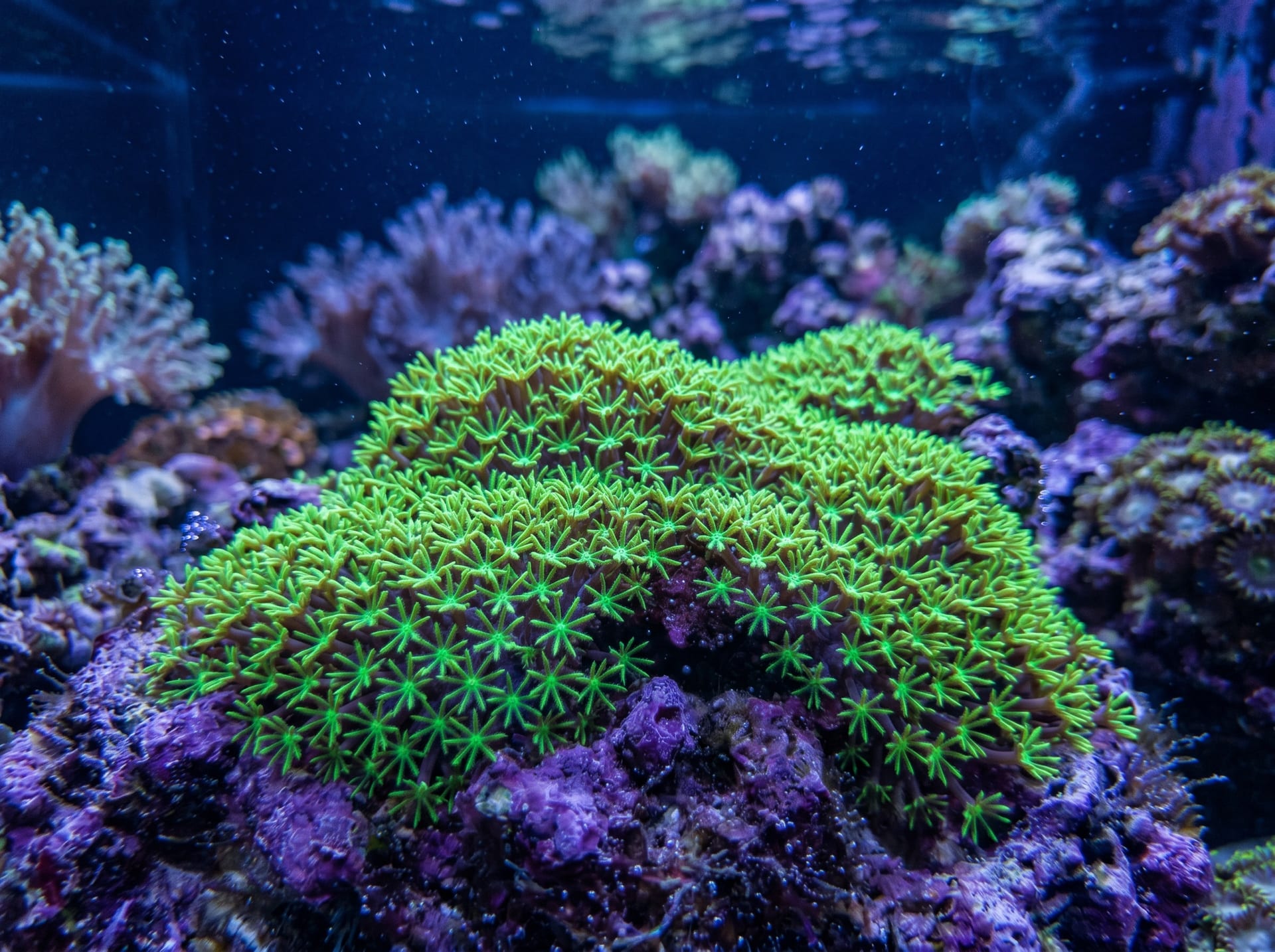
Lower Zone (30 cm and deeper from the water surface) and rock crevices: Low-intensity light area with PAR 50–150. Place soft corals such as zoanthids (button polyps), star polyps, and Sinularia
Utilizing Overhangs: By creating overhangs with live rock, you can efficiently place SPS corals on top and LPS or soft corals in the shaded areas
Lighting Adjustment: Use dimmable LEDs and adjust the ratio of white and blue channels. For tanks with many SPS corals, a blue-heavy spectrum (70:30) is ideal. We provide detailed comparisons of equipment selection in our Complete Guide to Choosing Lighting for Coral Tanks
Water Flow Zoning Design
Water flow, like light, should be varied by zone.
Strong Random Water Flow in SPS Areas: Acropora species prefer fresh seawater constantly flowing across their polyps. Position multiple flow pumps in opposition and operate them in random pulse mode
Gentle Indirect Water Flow in LPS Areas: Ideal flow gently sways the tentacles of Euphyllia species. If water flow is too direct, polyps will not open
Slightly Weak Water Flow in Soft Coral Areas: Star polyps and zoanthids (button polyps) are fine with weak water flow, but complete stagnation leads to detritus accumulation
Example of Pump Placement: Directing a main pump (large) toward the upper SPS zone and sub-pumps (small) toward the middle and lower zones creates natural zoning. See Top 5 Recommended Water Flow Pumps | Optimal Flow for Coral Tanks for guidance on pump selection
Avoiding Dead Spots: Design the tank so that no area experiences complete flow stagnation—ensure gentle circulation reaches into the corners and deep areas within the rock structure
Countermeasures Against Chemical and Physical Attacks (Allelopathy)
Coral-to-coral attacks are the biggest challenge in mixed reef tanks.
Terpene Release by Soft Corals: Sinularia and leather corals release terpene-based chemical compounds into the water that may inhibit SPS growth. Continuously use activated carbon to adsorb and remove terpenes, replacing it weekly without fail
Sweeper Tentacles of LPS: Euphyllia species and similar LPS extend sweeper tentacles up to 20 cm or more at night and attack nearby corals. Ensure at least 15–20 cm of space around LPS corals
Mesenteric Filaments: Euphyllia species may use digestive filaments to dissolve the tissue of nearby corals. Maintaining distance to avoid contact is the only effective solution
Encroachment by Zoanthids: Zoanthids (button polyps) grow quickly and can overgrow other corals. Trim them regularly to limit their territory
Based on this theory, here are practical placement tips.
Island Layout: The classic pattern of stacking live rock into an island shape in the center of the tank, with SPS at the peak, LPS on the slopes, and soft corals at the base. This design is easy to maintain and allows water flow to circulate throughout
Left-Right Separation Layout: A pattern where SPS/LPS rock structures are arranged on the left side and soft coral structures on the right. This minimizes terpene impact but reduces visual unity in the tank
Terraced Layout: Create steps with live rock, placing SPS on the upper tier, LPS on the middle tier, and soft corals on the lower tier. This naturally creates a light gradient and is visually appealing
Planning for Growth: Corals grow over time. When placing them, reserve space 2–3 times their current size to prevent future contact problems
Using a Frag Rack: When introducing new corals, initially place them on a frag rack, confirm their adaptation to the environment, then add them to the main layout. This is the safest approach
Water Chemistry Management Balance Points
Find the sweet spot for water quality where all three coral types can thrive.
Nitrate: The ideal range for mixed reef tanks is 2–10 ppm. SPS prefer lower levels, but reducing it to zero causes LPS and soft coral colors to fade
Phosphate: Target 0.03–0.08 ppm. If too high, SPS skeletons become brittle; if too low, the risk of STN (Skeleton Tissue Necrosis) increases
Alkalinity: Maintain stability at 7.5–8.5 dKH. It's important to keep fluctuations within 0.5 dKH per day
Water Change Frequency: The standard is a 10–15% water change every two weeks. Water changes serve both to replenish trace elements and to remove terpenes and other compounds
Feeding: Target feeding LPS 2–3 times per week with frozen brine shrimp and similar foods is effective. For SPS, add amino acid-based liquid supplements
Realizing Your Ideal Mixed Reef Tank with BreederDirect
At BreederDirect, you can purchase corals directly from specialized breeders for SPS, LPS, and soft corals. If you tell the breeder that you want to maintain a mixed reef tank, they can often provide advice on compatible species and placement. Choose healthy individuals from trusted breeders and complete your dream mixed reef tank with careful planning and placement.