Coral Growth Rate and Size: Guide by Species | ブリちょく
Coral| ✍️ BreederDirect Editorial
Coral Growth Rate and Size: Guide by Species
Coral growth rates vary greatly depending on the species. This guide explains growth speed benchmarks for soft corals, LPS, and SPS, tips for growing larger colonies, and the development process from frags with detailed information.
Key Takeaways
Coral growth rates vary greatly depending on the species. This guide explains growth speed benchmarks for soft corals, LPS, and SPS, tips for growing larger colonies, and the development process from frags with detailed information.
Related Species
Coral Growth Rate and Size: Complete Guide by Species
When keeping corals, you may wonder: "Why isn't this one getting any bigger?" or "When will this frag I purchased become a full colony?" In fact, coral growth rates can differ by several to dozens of times depending on the species. Choosing the right type to match your husbandry style and tank environment is the first step to maintaining a beautiful reef tank long-term. This article breaks down growth rate benchmarks for three coral groups—soft corals, LPS, and SPS—and details the main factors affecting growth.
---
Coral Growth Varies Greatly Among 3 Groups
Corals are often kept in the same tanks as marine fish, but biologically they belong to the phylum Cnidaria. They harbor zooxanthellae algae within their bodies that conduct photosynthesis, and they grow by forming a skeleton (calcium carbonate) using light energy and inorganic nutrients in the water.
Generally, corals are classified into three groups:
Soft Corals: Soft corals without a skeleton. Fast-growing and beginner-friendly.
LPS (Large Polyp Stony Coral): Hard skeleton with large polyps. Intermediate difficulty.
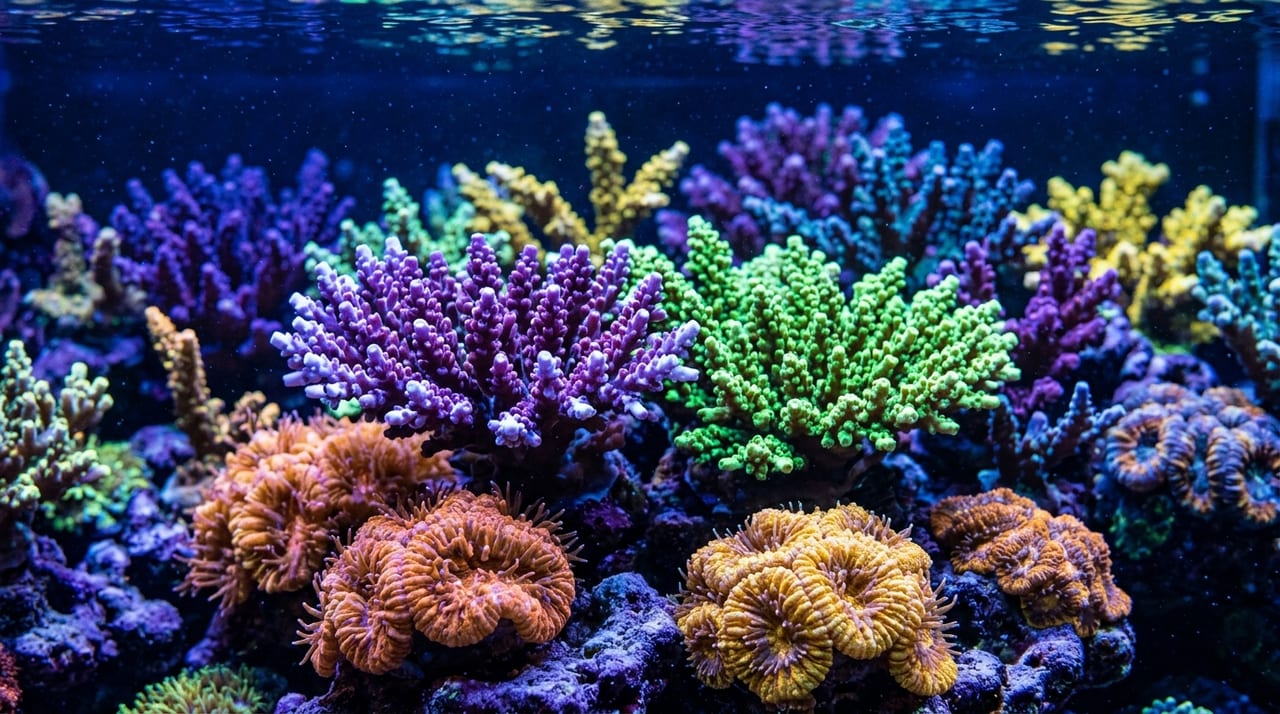
SPS (Small Polyp Stony Coral): Slow skeleton formation and requires precise water quality management. Advanced difficulty.
This grouping directly correlates not only to care difficulty but also to growth rate.
---
Growth Rate and Final Size by Species
Soft Corals (Fast Growth)
Soft corals don't form skeletons, so they can direct energy toward cell division and tissue expansion. This results in faster growth and the ability to enjoy visible changes over a short period.
Species
✍️
BreederDirect Editorial
The BreederDirect editorial team specializes in care information for animals, covering veterinary care and breeding to deliver beginner-friendly guides.
Find Coral on BreederDirect
Buy directly from verified breeders
Browse Related Listings
Find Coral listings related to this article on BreederDirect. Buy directly from verified breeders.
While soft corals grow fast, many species release strong allelopathic compounds, so care must be taken in positioning nearby corals.
LPS (Moderate Growth)
LPS corals have a hard skeleton yet are relatively easy to care for and are popular for their showy appearance. They grow slower than soft corals, but you can enjoy watching them steadily increase in size over several months.
Species
Growth Rate Estimate
Final Size Range
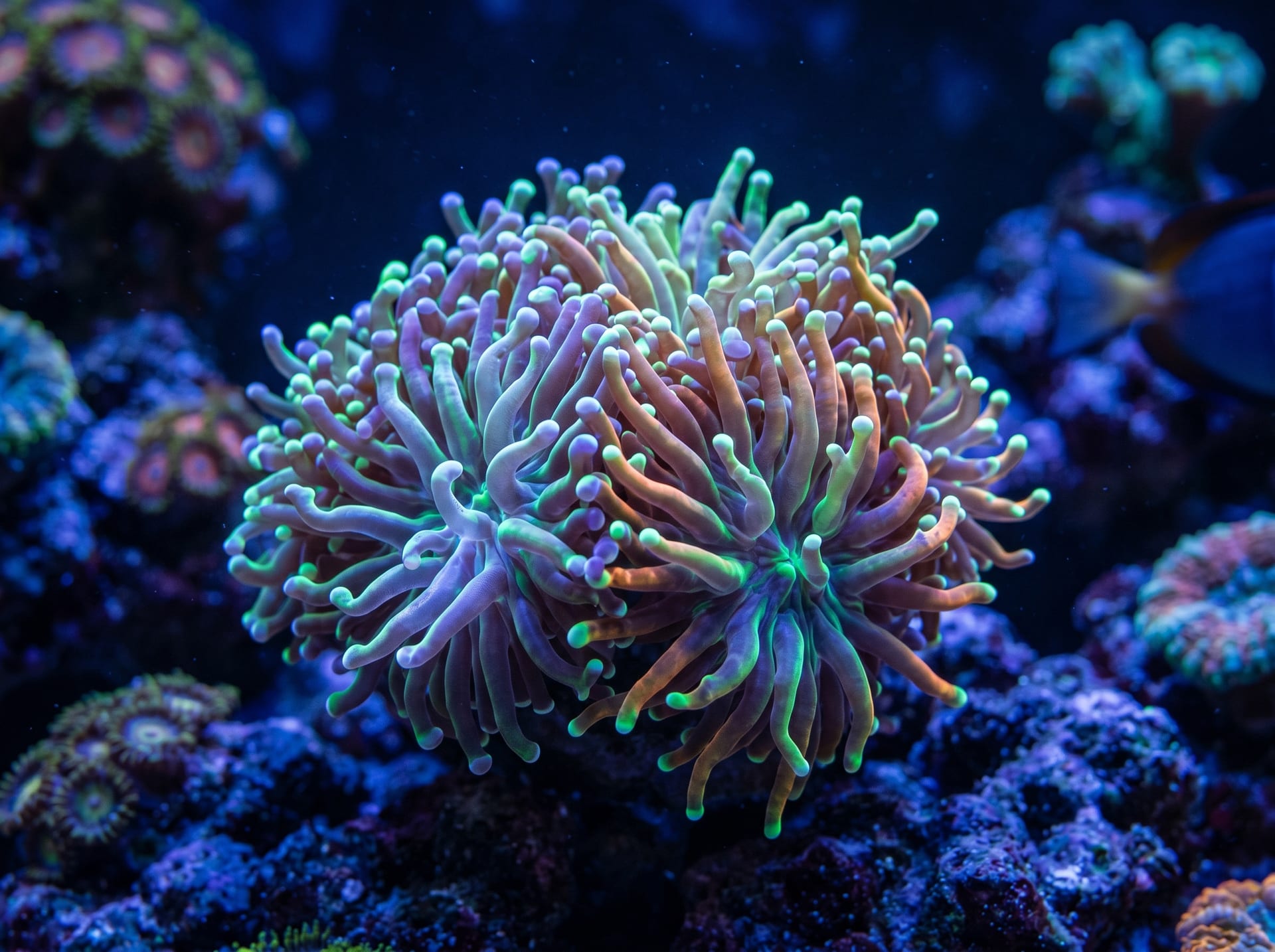
Flowing Torch
Branch extends 0.5–1 cm/month
Large colony 30+ cm diameter
Mushroom Coral
Expands 1–2 cm/year
Wild specimens exceed 1 m diameter
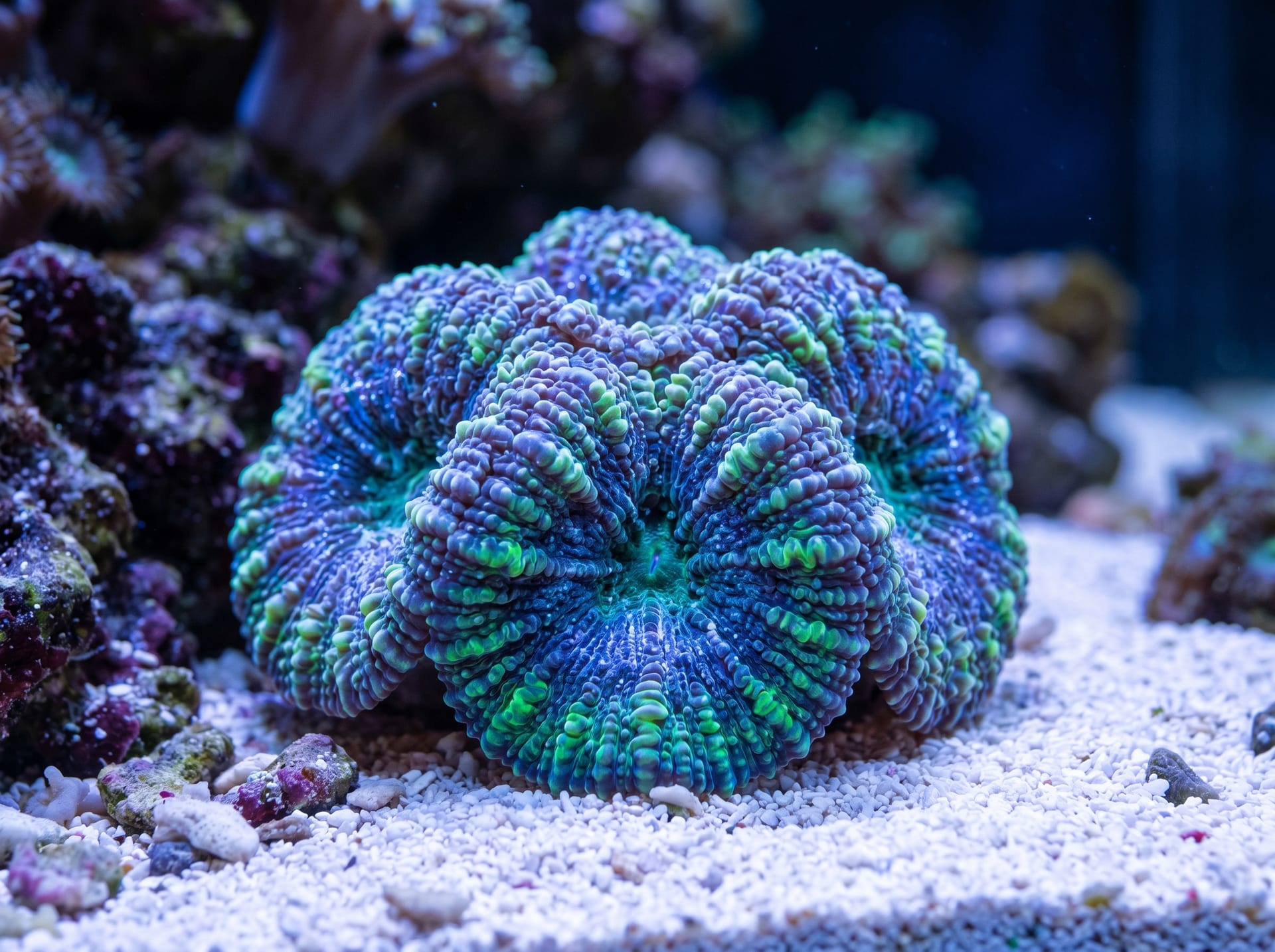
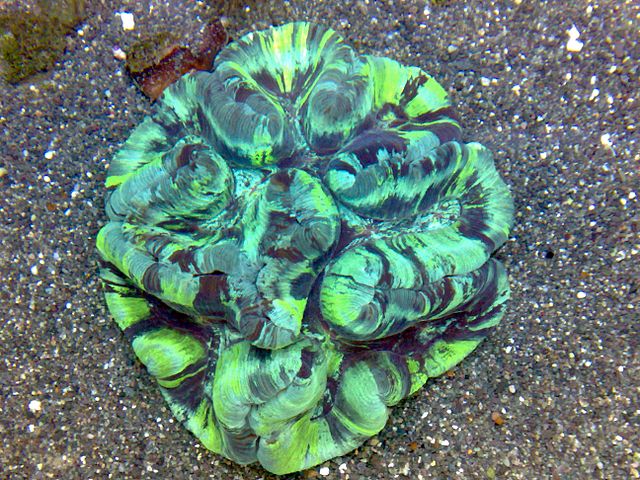
Large Brain Coral
~0.5 cm/month
10–20 cm diameter in tanks
Trumpet Coral
1–2 polyp splits/month
20–30 cm wide as colony
LPS corals open and close their polyps dramatically, so many keepers feel the size changes dramatically between open and closed states. To consistently track growth, measure the skeleton portion when polyps are retracted.
SPS (Slow Growth)
SPS corals grow the slowest and have strict water quality requirements. However, the satisfaction of watching a beautiful colony develop is unmatched.
Species
Growth Rate Estimate
Final Size Range
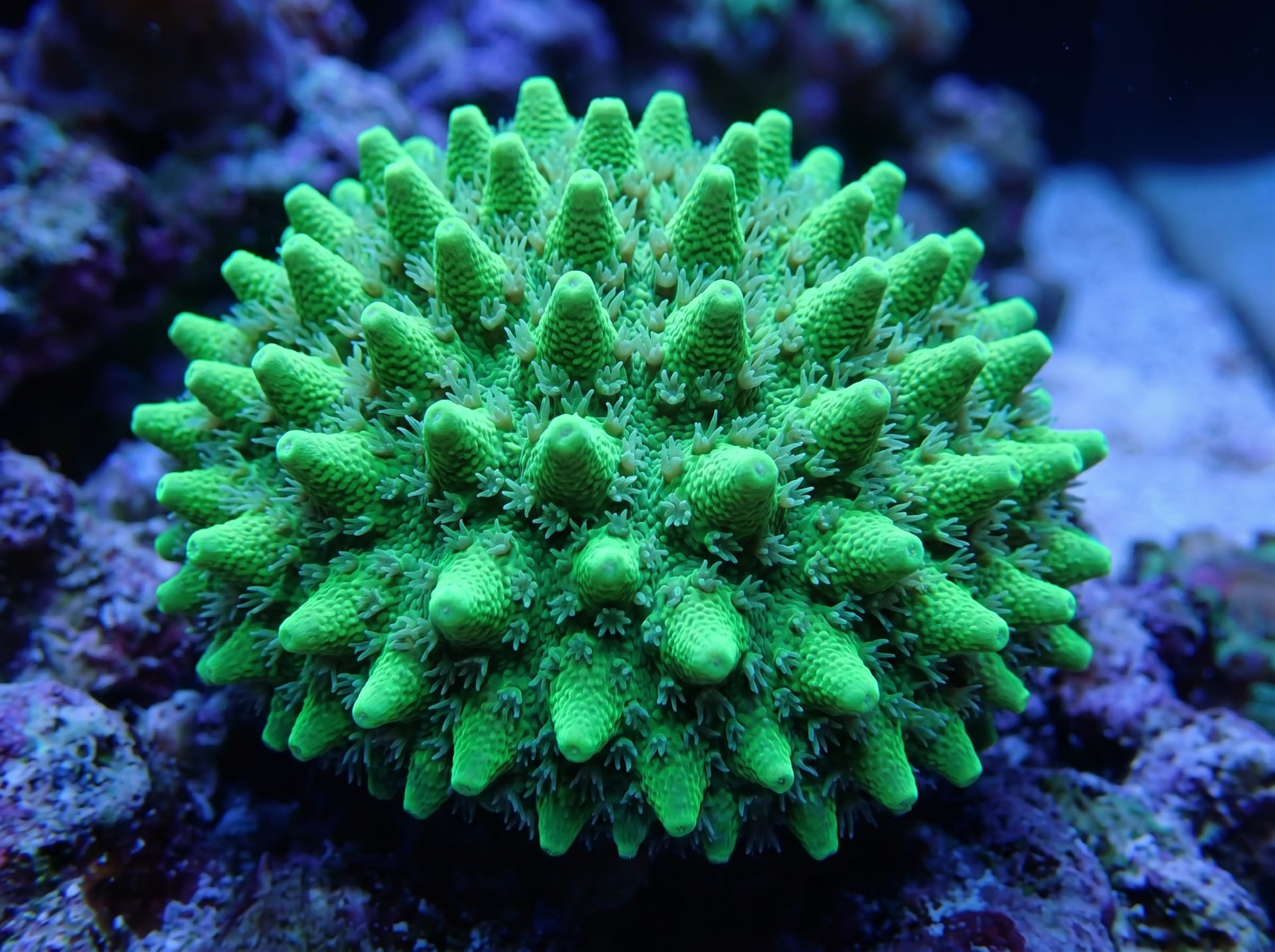
Acropora
0.3–0.5 cm/month
10–30 cm diameter in tanks
Common Coral
~0.5 cm/month
Table-form, 30+ cm wide
Montipora
0.5–1 cm coverage/month
Can cover entire rock surface
When growing SPS from frags to full colonies, it typically takes six months to over a year. Patience and a long-term perspective are essential.
---
4 Key Factors Influencing Coral Growth
Even with high-quality specimens, corals cannot grow adequately without a proper environment. Managing these four elements is critical.
1. Light Intensity and Spectrum
Light is one of the most critical factors for coral growth. The zooxanthellae within the coral conduct photosynthesis, and that energy is used to form the skeleton.
Soft Corals & LPS: Medium to high light (PAR 50–200)
SPS: High light (PAR 200–400+)
Color Temperature: 14,000–20,000K blue-white light is standard for reef tanks
Sudden light changes cause "light stress," so newly introduced corals should be placed in lower-light areas initially and gradually acclimated.
2. Water Flow Quality and Strength
Random multidirectional flow encourages polyp extension and helps remove waste products. Conversely, strong unidirectional flow can damage polyps.
Wavemakers or controllers creating random flow are ideal
Target circulation rate: 10–20 times tank volume per hour
3. Water Parameters
LPS and SPS are especially sensitive to water chemistry changes. Stabilizing these values is key to promoting growth:
Parameter
Target Range
Calcium (Ca)
400–450 ppm
Alkalinity (KH)
7–10 dKH
Magnesium (Mg)
1,250–1,350 ppm
Nitrate (NO₃)
1–10 ppm (lower is better)
Phosphate (PO₄)
0.03–0.1 ppm
Calcium and KH are directly involved in skeleton formation, so continuous supplementation using kalkwasser or calcium reactors is essential for SPS keeping.
4. Nutrients and Trace Elements
While "corals prefer low nutrients" is a common belief, environments approaching zero nutrients can starve corals and halt growth. Maintaining moderate nitrate and phosphate levels and regularly supplementing trace elements like iodine and strontium support healthy growth.
---
From Frag to Colony: Understanding Growth Stages
Knowing the general timeline for a frag purchased from a breeder to develop into a full colony helps you enjoy long-term keeping without frustration.
Weeks 1–2 after introduction: The coral adapts to its new environment, the attachment site stabilizes, and polyps gradually begin to extend.
Months 1–3: Tissue spreads across the frag base, and the shape becomes more defined.
Months 3–6: Growth reaches 2–3 times the original size and takes on a recognizable colony shape.
Months 6–12+: Depending on species, the colony becomes visually prominent. SPS requires even longer to reach this stage.
Regular photography is recommended to track growth. Photographing at the same angle and under consistent lighting once a month will reveal dramatic changes over several months.
---
ブリちょく's Reliable and Safe System
ブリちょく is a domestic breeder-direct marketplace platform where you can connect directly with specialist coral and livestock breeders.
Peace of Mind Through Direct Breeder Sales: No middlemen means you can directly confirm the animal's condition and history.
Consult with Expert Breeders: Ask questions freely before and after purchase about growth rate, care difficulty, water management tips, and more.
Perfect for Those Wanting to Enjoy Growing from Frags: Frags cut by domestic breeders are quarantined, making introduction risk low.
Complete Success-Based Model: Listings are free, and fees apply only when a sale is completed, allowing breeders to confidently list high-quality specimens.
The true joy of coral keeping lies in watching a small frag develop into a magnificent colony. Visit ブリちょく's Coral Category to welcome healthy specimens from trusted breeders and enjoy their long-term growth.