The Science of LED Wavelengths and Coral Coloration | Practical Guide to Photosynthesis, Pigment Proteins, and Spectrum Selection
Explaining the science of LED wavelengths for enhancing coral color. Practical introduction to the spectrum needed for photosynthesis in symbiotic zooxanthellae algae, the roles of blue and ultraviolet wavelengths in activating fluorescent proteins (GFP and RFP), and methods for setting PAR/PUR values.
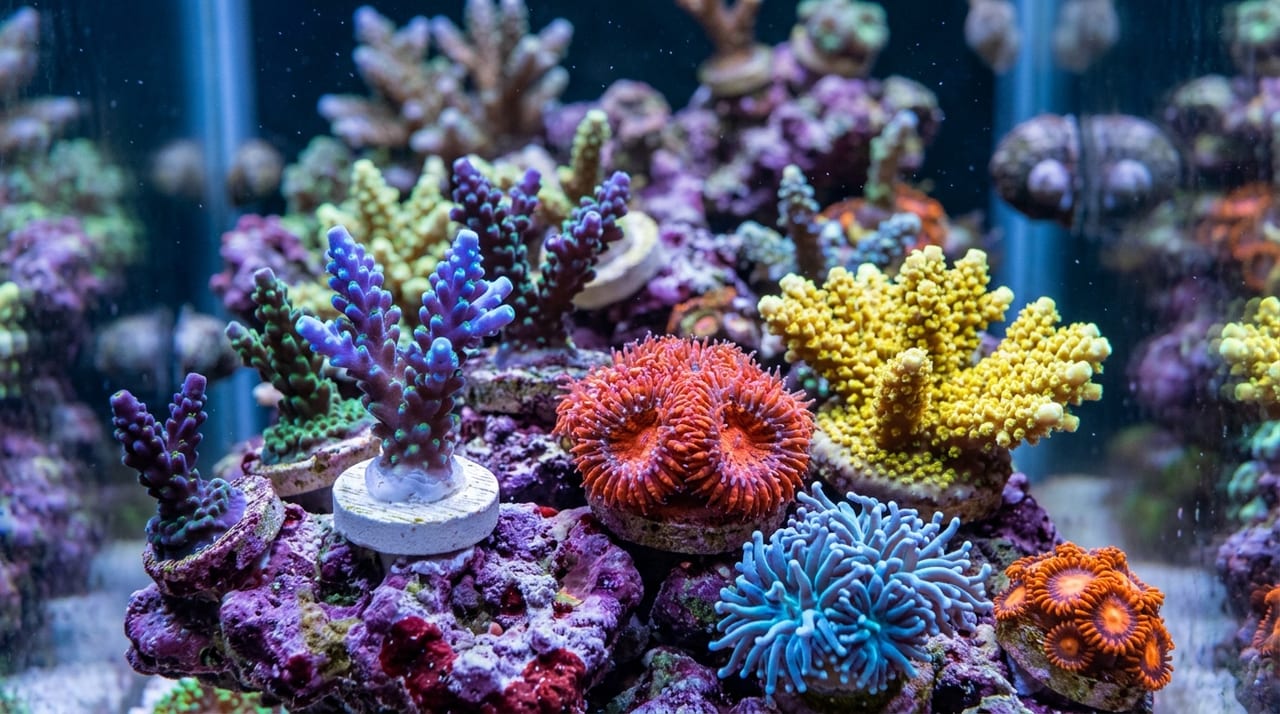
Key Takeaways
Explaining the science of LED wavelengths for enhancing coral color. Practical introduction to the spectrum needed for photosynthesis in symbiotic zooxanthellae algae, the roles of blue and ultraviolet wavelengths in activating fluorescent proteins (GFP and RFP), and methods for setting PAR/PUR values.
The vibrant fluorescent colors and vivid coloration of corals are goals that many reef tank enthusiasts pursue. However, there may be fewer people than expected who scientifically understand "why those corals display color" or "which LEDs can enhance coloration." In this article, we will thoroughly explain the mechanisms of coral coloration and how to select LED wavelengths.
The Truth About Coral Color: Two Pigmentation Systems
Coral coloration can be broadly classified into two mechanisms.
1. Brown to Green Coloration Derived from Symbiotic Algae (Zooxanthellae)
Zooxanthellae, which live symbiotically within coral tissue, possess photosynthetic pigments (chlorophyll a and c, carotenoids) and display brown to greenish coloration at normal densities. Insufficient light causes increased algal density, darkening the overall appearance, while excessive light triggers bleaching.
2. Fluorescent Color Derived from Fluorescent Proteins (FPs)
Corals possess unique fluorescent proteins such as GFP (green fluorescent protein), RFP (red fluorescent protein), and CFP (cyan). These proteins absorb light at specific wavelengths and re-emit it at longer wavelengths (fluorescence).
| Protein | Excitation Wavelength | Fluorescent Color |
|---|---|---|
| GFP (Green) | 395–480nm | ~510nm (Green) |
| RFP (Red) | 480–570nm | 580–610nm (Red/Orange) |
| CFP (Cyan) | 395–450nm | 475nm (Blue-Green) |
| Chromista-type | 400–430nm | ~500nm |
Fluorescence is visible to the eye when blue light is applied in darkness. This is one reason why blue lighting in reef tanks is considered effective for enhancing coloration.
Wavelengths Required for Photosynthesis: The Difference Between PAR and PUR
PAR (Photosynthetically Active Radiation) is a metric indicating the photosynthetic photon flux density (μmol/m²/s) of visible light from 400–700nm. This concept originated from plant research and is widely used for corals as well.
However, PUR (Photosynthetically Usable Radiation) is a more realistic metric that indicates only the light quantity at wavelengths the coral's symbiotic algae can actually utilize. Chlorophyll a has absorption peaks around 430nm (blue) and 680nm (red).
Recommended PAR Levels for Corals
| Coral Type | Recommended PAR (μmol/m²/s) |
|---|---|
| Soft Corals | 50–150 |
| LPS Corals (Low-Light Species) | 100–250 |
| LPS Corals (High-Light Species) | 200–400 |
| SPS Corals (Acropora) | 300–600 |
It is not uncommon for PAR to differ by 5–10 times between the top of the tank (directly under the light) and near the substrate. We strongly recommend measuring PAR with a PAR meter (such as the Apogee MQ-510).
LED Wavelengths and Practical Coloration Enhancement
Blue (420–480nm): Essential for Fluorescence and Photosynthesis
Blue and royal blue wavelengths (420–480nm) are the most important spectrum for enhancing coral coloration.
- Directly excite GFP and RFP, bringing out their fluorescent colors
- Stimulate the absorption peak of chlorophyll a (around 430nm), enhancing photosynthetic efficiency in symbiotic algae
- The wavelength band with the highest light transmittance in seawater, closely resembling the natural light environment of coral reefs
It is generally said that allocating 60–80% of total LED output to 420–480nm wavelengths tends to produce coloration-enhancement effects.
Ultraviolet (360–420nm): Additional Excitation of Fluorescent Proteins
Near-ultraviolet light (380–420nm) has an excitation effect on fluorescent proteins, creating a distinctive "fluorescent" appearance. However, excessive exposure can stress symbiotic algae, so 5–15% of total output is recommended. Premium LED fixtures such as Radion G6 and AI Hydra include Violet channels (around 420nm) that correspond to this wavelength.
Green to Yellow (500–590nm): Creating Natural Appearance
Green-to-yellow channels have limited direct coloration-enhancement effects on the coral itself, but are important for creating a natural appearance in the overall tank. When mixed, they produce a near-daylight white color, enhancing visual aesthetics.
Red (630–680nm): Supporting Photosynthesis in Symbiotic Algae
Small amounts of red LED supplement the second absorption peak of chlorophyll a (around 680nm), enhancing photosynthetic efficiency in symbiotic algae. However, excessive red light risks promoting diatom and cyanobacteria growth. Around 2–8% of total output is recommended.
Practical Examples of Spectrum Configuration
Blue-Heavy Configuration Prioritizing Fluorescent Colors
- Royal Blue (450nm): 80%
- Violet (420nm): 15%
- White (4,000K–6,500K): 5%
Use this configuration to maximize the coral's fluorescent colors. The tank's appearance will be blue-centered.
Balanced Configuration (Aesthetics-Focused)
- Royal Blue (450nm): 50%
- Violet (420nm): 10%
- White (6,500K): 30%
- Green (520nm): 5%
- Red (660nm): 5%
This configuration emphasizes balance between coloration enhancement and visual aesthetics. A two-stage program—high white during the day, increased blue from evening onward—is effective.
The Importance of Light Acclimation (Acclimation)
When introducing new corals or changing lighting, always allow for a light acclimation period.
- First 1–2 weeks: Start at 50–60% of target PAR
- Increase by 10–20% per week
- Observe coral polyp extension, coloration, and bleaching response daily
Rapid changes in light intensity can trigger bleaching and tissue necrosis (RTN/STN). Manage SPS corals and specimens moved from low-light tanks with special care.
Summary
Realizing vibrant coral coloration requires a scientific understanding of LED wavelengths. By using blue (420–480nm) to excite fluorescent proteins and supporting symbiotic algae with ultraviolet and red channels that provide the wavelengths necessary for photosynthesis, you can achieve both vivid coloration and coral health. By combining actual PAR measurement with a PAR meter and a gradual light acclimation process, you can maintain beautiful corals in your tank long-term.