Complete guide to major coral issues including bleaching, RTN, STN, and Brown Jelly. Explains causes and solutions. Covers water quality adjustment, lighting management, and quarantine treatment for recovery.
Key Takeaways
Complete guide to major coral issues including bleaching, RTN, STN, and Brown Jelly. Explains causes and solutions. Covers water quality adjustment, lighting management, and quarantine treatment for recovery.
Coral problems progress at different rates—some develop gradually while others deteriorate rapidly. Early detection and appropriate treatment based on the underlying cause are key to recovery. This guide comprehensively explains symptoms, causes, and solutions for major coral issues.
✍️
BreederDirect Editorial
The BreederDirect editorial team specializes in care information for animals, covering veterinary care and breeding to deliver beginner-friendly guides.
Find Coral on BreederDirect
Buy directly from verified breeders
Browse Related Listings
Find Coral listings related to this article on BreederDirect. Buy directly from verified breeders.
Symptoms
- Coral color fades and becomes pale or white
- Complete bleaching makes the skeleton visible through tissues
- Polyps do not open properly
- Fluorescent colors fade and tissues become thin and translucent
Causes
- Rapid temperature increase (sustained above 28°C / 82°F)
- Sudden changes in light intensity (lighting replacement, tank repositioning)
- Water quality degradation (nitrate and phosphate accumulation)
- Rapid salinity fluctuation
- Chemical contamination (pesticides, detergents, copper ions, etc.)
Bleaching is often discussed in the context of SPS corals like Acropora, but also occurs in soft corals such as Leathers and Mushroom corals. Regardless of species, early detection and prompt intervention are critical for recovery.
Treatment
1. Stabilize water temperature to 24–26°C (75–79°F). Avoid rapid cooling; aim for 1°C adjustment per day
2. Temporarily reduce lighting intensity to approximately 50%
3. Increase water change frequency to improve water quality (2x per week, 15–20% changes)
4. Mild bleaching may recover over weeks to months with environmental improvement
5. Even completely bleached corals may recover if tissue remains. Avoid rushing; maintain stable conditions consistently. Recovery is possible.
---
RTN (Rapid Tissue Necrosis)
Symptoms
- Coral tissue sloughs off rapidly over hours to days
- White skeleton becomes exposed
- Occurs primarily in SPS corals (Acropora, etc.)
- Infectious; spreads to adjacent corals if untreated
Causes
- Sudden water quality changes (large water changes, overdosed supplements)
- Temperature shock (during shipping or failed acclimation)
- Bacterial infection (pathogenic Vibrio species)
- Accumulated stress leading to immune suppression
Treatment
1. Perform a frag cut at least 2cm above the affected area to separate healthy tissue
2. Apply iodine solution to the cut surface for sterilization
3. Conduct a 5–10 minute iodine dip using Coral RX or similar
4. Immediately isolate the infected coral to prevent spread to other corals
5. Emergency water quality check; verify that KH, Ca, and Mg have not fluctuated drastically
---
STN (Slow Tissue Necrosis)
Symptoms
- Tissue recedes more slowly than RTN (over days to weeks)
- Typical pattern: base becomes white and recedes progressively
Causes
- Insufficient light (aging bulbs, shading from coral growth)
- Poor water flow causing detritus accumulation at the base
- Excess nutrient levels
- Low or unstable alkalinity (KH)
Treatment
1. Review lighting intensity and spectrum. Use a PAR meter for accurate measurement
2. Adjust flow pump position to ensure water current reaches the coral base
3. Stabilize KH (7–9 dKH) and calcium (400–450 ppm)
4. Maintain nitrate below 5 ppm
5. If progression continues, attempt a frag cut to rescue healthy tissue
---
Brown Jelly
Symptoms
- Brown to yellow gelatinous substance appears on coral surface
- Sticky or viscous texture
- Rapid coral death if left untreated
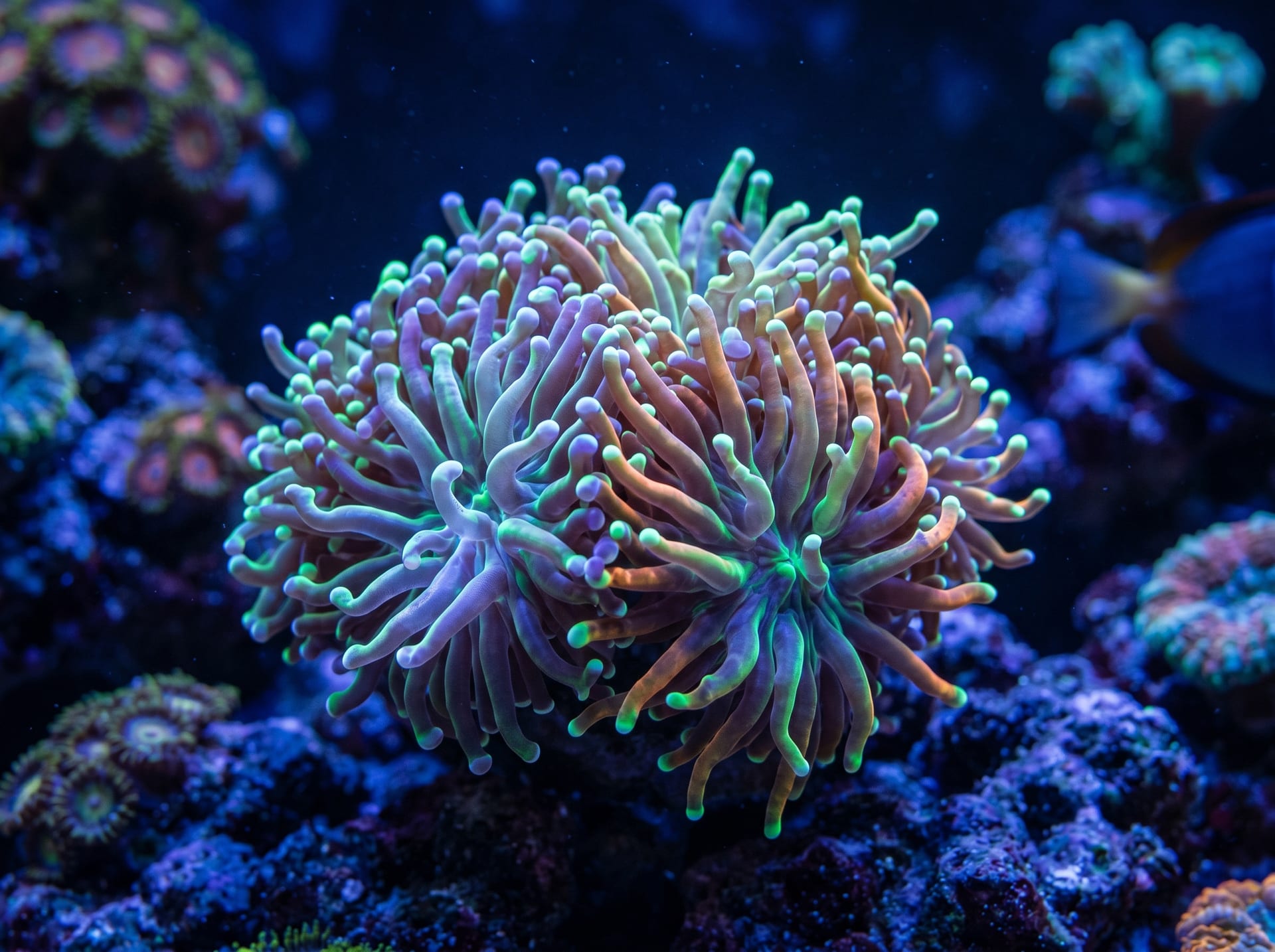
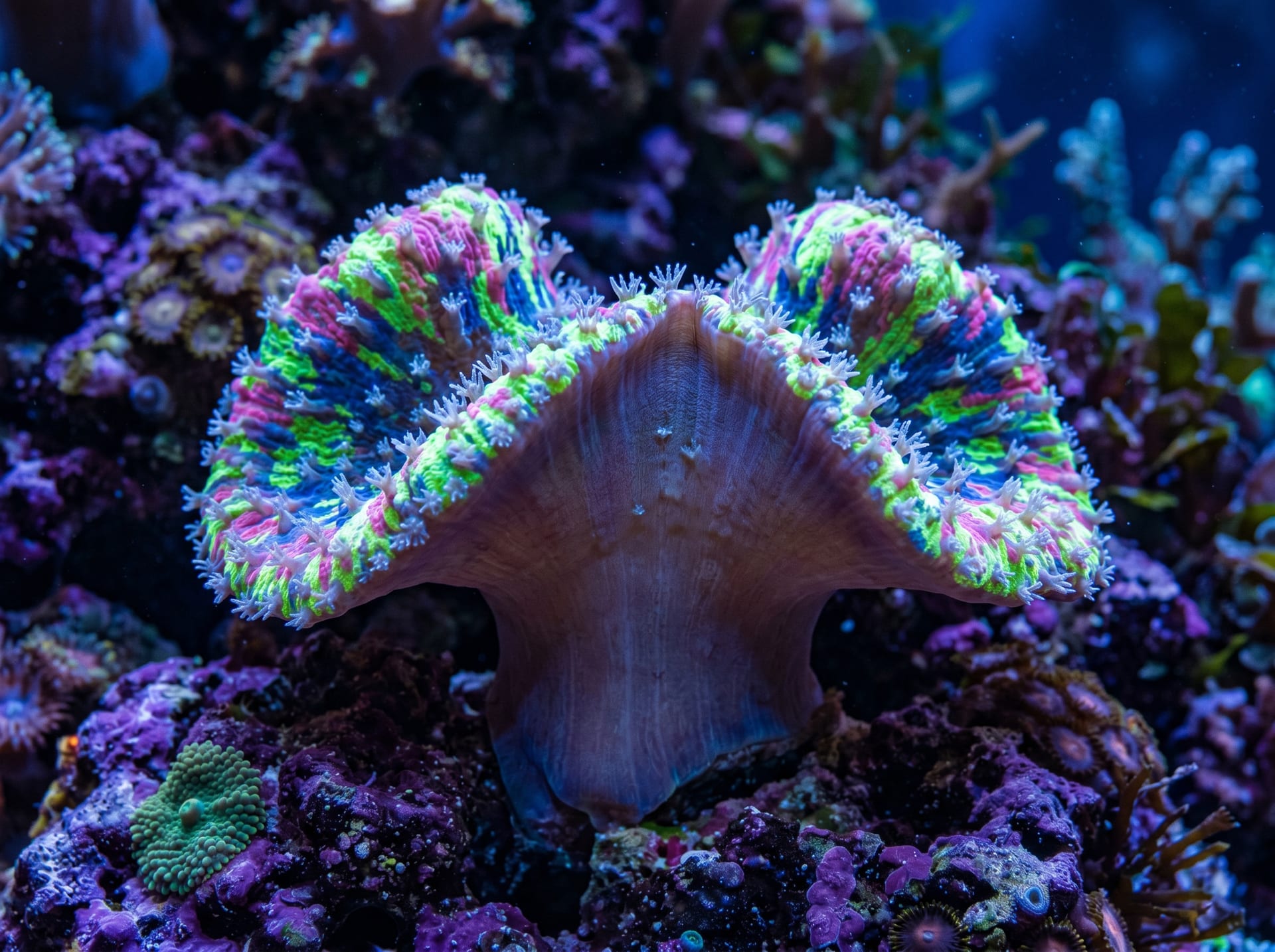
- Particularly common in LPS corals like Fungia and Goniopora
Causes
- Bacterial infection (primarily Vibrio pathogens)
- Secondary infection following tissue damage from shipping stress or water quality swings
Treatment
1. Carefully remove gelatinous material with a turkey baster (avoid dispersing it in the tank)
2. Excise the affected area with adequate margins
3. Perform iodine dip treatment for sterilization
4. Conduct substantial water change in main tank (30–50%)
5. Monitor other corals daily for signs of spread
---
Coral Pests and Control
Flatworms (Platyhelminths) feed on coral tissue. The Acropora Eating Flatworm (AEFW) is particularly destructive and difficult to detect due to color-matching camouflage. Treat with reef dips, followed by a second dip one week later (eggs are resistant to treatment).
Nudibranchs (Sea Slugs) are hard to spot as they blend with coral coloration and are most active at night. Prevent introduction by dipping new corals, and remove immediately upon discovery. Observation under red lighting at night is effective.
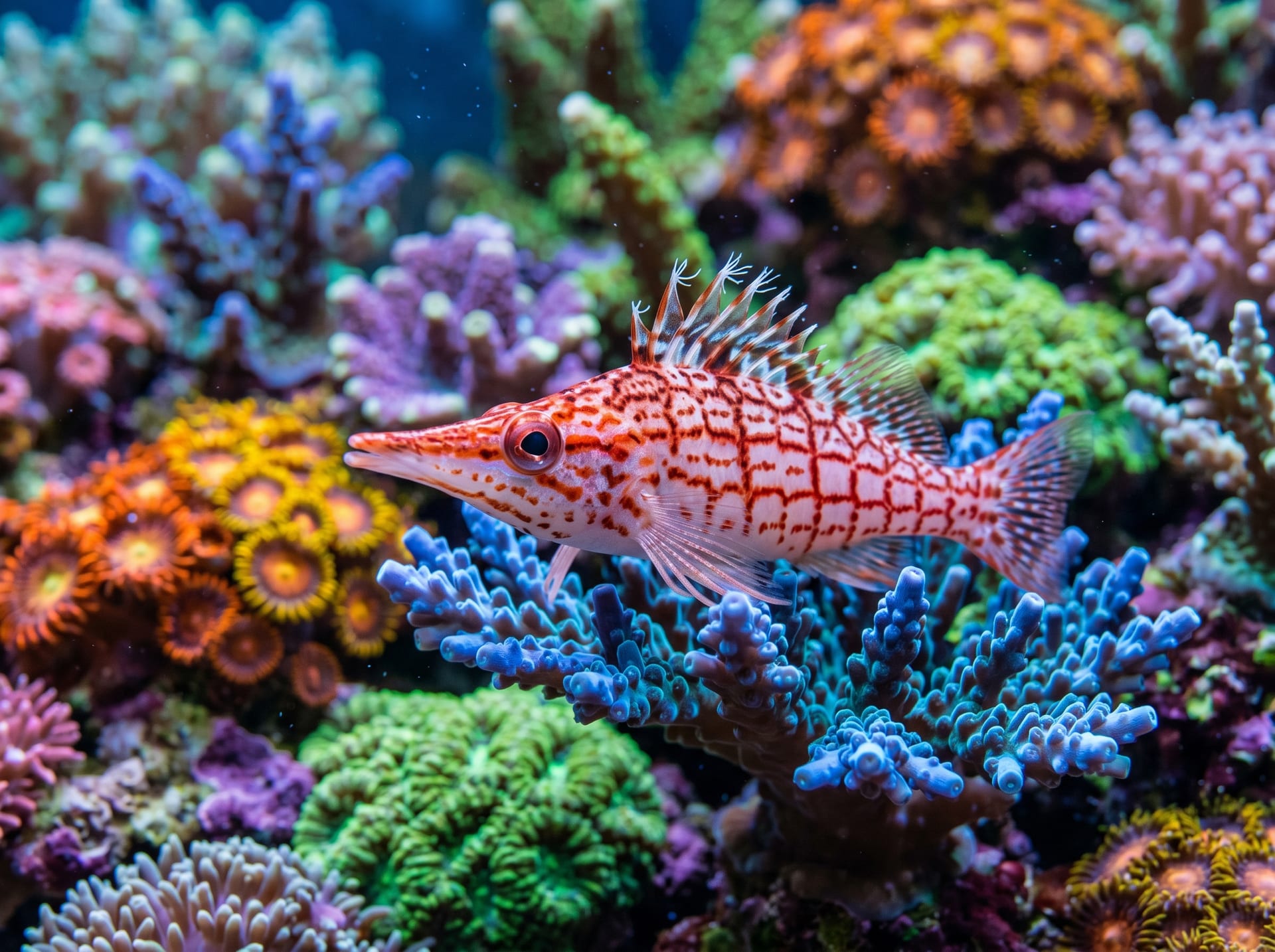
Snails consume SPS coral tissue, leaving white spots. Remove by hand or introduce predators such as Hawkfish.
---
Prevention & Management Fundamentals
Stable water chemistry: Measure KH, Ca, and Mg regularly; minimize fluctuations
Temperature control: Maintain 24–26°C (75–79°F) consistently. Chiller essential in summer
New coral dipping: Always quarantine and dip new corals with reef dip solution before introduction
Regular water changes: 10% per week prevents nutrient accumulation
Lighting schedule management: Increase light gradually over 2 weeks, never abruptly
Quarantine tank use: Isolate new corals in a separate tank for 2–4 weeks before moving to display tank
---
Frequently Asked Questions (FAQ)
Q. Can bleached corals recover?
A. Mild bleaching may recover over weeks to months with improved conditions. Even completely bleached corals can recover if tissue remains.
Q. What is the difference between RTN and STN?
A. RTN progresses rapidly (hours to days); STN progresses slowly (days to weeks). RTN requires immediate intervention.
Q. What is the most effective pest prevention method?
A. Dipping at introduction is most critical. Use dedicated dip products such as CoralRx, Bayer Dip, or commercial reef dips.
Daily Prevention & Management Routine
Most coral problems and diseases stem from neglected daily care. Daily observation should focus on polyp extension and color changes; record weekly water tests (KH, Ca, Mg, NO₃, PO₄). Monthly equipment inspections (pump, skimmer, lighting) are recommended, and quarterly ICP analysis (including trace elements) is ideal. As of 2026, consumer-grade ICP test kits are now widely available, and many aquarists combine professional analysis with accessible home testing to maintain comprehensive water quality oversight.