Frag Corals vs Wild-Collected Corals: How to Choose | ブリちょく
Coral| ✍️ BreederDirect Editorial
Frag Corals vs Wild-Collected Corals: How to Choose
A comparison of frag corals (captive propagated) vs wild-collected corals, covering acclimation risk, price, sustainability, and which is best for your tank.
Key Takeaways
A comparison of frag corals (captive propagated) vs wild-collected corals, covering acclimation risk, price, sustainability, and which is best for your tank.
When purchasing corals, products displayed in shops and online markets often carry labels such as "Frag" and "Wild." Many people are uncertain which to choose. This article explains the differences between the two and how to select the right option.
What Are Frag Corals?
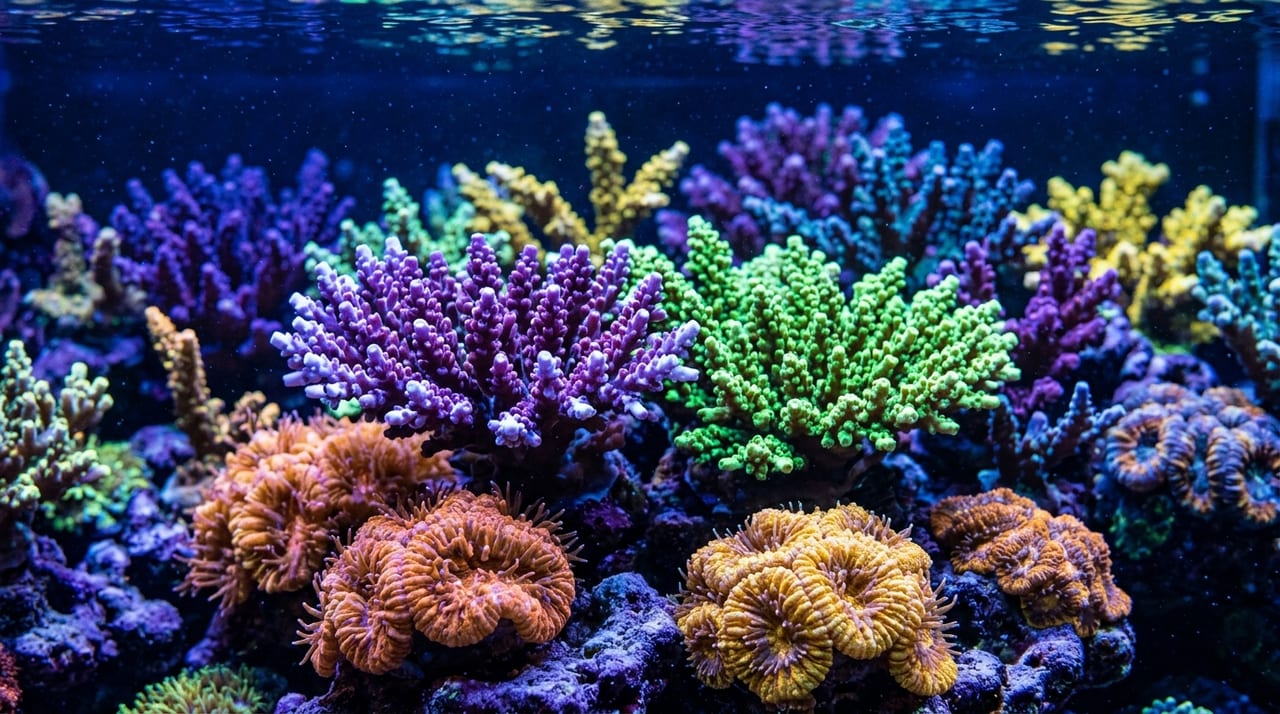
A Frag (Fragment) is a cultured fragment created by cutting a small piece from a parent colony and attaching it to a dedicated plug or rock fragment. Breeders and large-scale reef tank keepers both domestically and internationally propagate multiple fragments from the same individual and distribute them to market.
✍️
BreederDirect Editorial
The BreederDirect editorial team specializes in care information for animals, covering veterinary care and breeding to deliver beginner-friendly guides.
Find Coral on BreederDirect
Buy directly from verified breeders
Browse Related Listings
Find Coral listings related to this article on BreederDirect. Buy directly from verified breeders.
Main characteristics:
- Arrive acclimated to aquarium conditions, resulting in low introduction stress
- Relatively low risk of pesticides and pests
- Stable coloring can be expected
- Predictable color and form due to identical genetics (clones)
Drawbacks:
- Often smaller in size compared to wild specimens
- Popular strains may command premium prices
What Are Wild Corals?
Wild (WC: Wild Collected) refers to natural specimens collected from ocean waters in Fiji, Indonesia, the Maldives, and other regions. In Japan, they are sometimes referred to as "wild specimens" or "WC strains."
Main characteristics:
- Often larger and more impressive specimens
- Appeal of unique forms and colors derived from nature
- May include rare species not commonly available on the market
Drawbacks:
- Time required to adapt from collection environment (high salinity, intense lighting) to aquarium conditions
- Risk of parasitic pests such as Nudibranchia and red bugs
- Inadequate dipping treatment may introduce pests into the tank
- Concerns about environmental impact (overharvesting issues)
Comparison of Introduction Risks
Item
Frag
Wild
Adaptation stress
Low
High
Pest risk
Low
Medium to high
Dipping necessity
Recommended
Essential
Bleaching risk
Low
High
Quarantine period
1–2 weeks recommended
2–4 weeks recommended
When purchasing wild specimens, be sure to perform quarantine for 2–4 weeks in a separate tank and carry out dipping treatment. If planarian flatworms or red bugs are discovered, remove them early.
Price and Value Considerations
Frag corals benefit from stable production, making prices more predictable. Conversely, wild specimens have limited supply, and rare species or large specimens often command high prices.
However, "expensive does not necessarily mean better." Even cultured frags can achieve value exceeding wild specimens through years of careful maintenance and growth. In fact, in Western coral circles, "named frags" derived from renowned breeders command exceptionally high prices in collections.
Environmental Impact and Sustainability
From a coral reef protection perspective, the proliferation of frag corals plays an important role. Reducing collection pressure on natural reefs and promoting captive-bred specimens contribute to marine environmental conservation.
When purchasing wild specimens, it is important to select products imported through legitimate channels compliant with CITES (Convention on International Trade in Endangered Species). Make a habit of purchasing from trusted shops and certified breeders.
Frags Recommended for Beginners
For those just beginning coral husbandry, I strongly recommend purchasing frag corals. The reasons are as follows:
Already adapted to aquarium conditions: Specimens maintained in tanks for extended periods after collection are accustomed to changes in pH, temperature, and salinity.
Lower pest risk: As cuttings from breeder-managed tanks, the introduction of pests is minimal.
Easier to predict growth: By confirming growth records with the breeder, you can better visualize the specimen's future appearance.
Summary
The question is not which is superior—frags or wild—but rather choosing the option that best matches your tank situation, experience level, and goals.
The ideal approach is to start with frags as a beginner, gain experience, and then progress to enjoying wild specimens. Regardless of which you choose, purchasing from trusted breeders or sellers and performing appropriate quarantine and dipping procedures are key to maintaining the health of your entire tank.