Cat Urinary Disease Prevention Guide | FLUTD, Cystitis, and Urinary Stones: Causes and Solutions
Detailed explanation of feline urinary diseases (FLUTD, idiopathic cystitis, urinary stones, urethral obstruction): causes, signs of early detection, prevention methods through diet, hydration, and stress management, and emergency responses.
Key Takeaways
Detailed explanation of feline urinary diseases (FLUTD, idiopathic cystitis, urinary stones, urethral obstruction): causes, signs of early detection, prevention methods through diet, hydration, and stress management, and emergency responses.
Cats are more prone to urinary tract issues than dogs. Male cats in particular have a higher risk of severe urethral obstruction because their urethra is narrower, which can be life-threatening in the worst cases. To keep your cat healthy for many years, prevention and early detection of urinary diseases are extremely important. This article provides a detailed explanation of FLUTD (Feline Lower Urinary Tract Disease) in general, from causes to prevention and management.
What is FLUTD: Overview of Feline Urinary Diseases
FLUTD (Feline Lower Urinary Tract Disease) is a collective term for a group of diseases affecting the bladder and urethra in cats. It causes symptoms such as frequent urination, hematuria (blood in urine), and difficulty urinating. The main causative diseases are as follows:
Idiopathic Cystitis (FIC: Feline Idiopathic Cystitis) is the most common form of FLUTD, accounting for approximately 55–65% of cases. It is an idiopathic (unexplained) type where inflammation occurs despite the absence of bacterial infection or stones, and stress is considered to be a major contributing factor.
Urinary stones (urolithiasis) are formed when mineral crystals accumulate in the bladder or urethra. There are two main types: struvite stones and calcium oxalate stones. Struvite forms more easily in alkaline urine and can be dissolved with therapeutic food. Calcium oxalate forms in acidic urine and cannot be dissolved, so surgery may be necessary in some cases.
Urethral obstruction occurs mainly in male cats when stones or urethral plugs (masses of mucus and crystals) block the urethra, preventing urination completely. This is an emergency condition that can lead to kidney failure and death if not treated within 24 hours.
Bacterial cystitis is relatively rare in cats with FLUTD (about 1–3%) but is more likely to occur in senior cats or immunocompromised cats.
Symptom Checklist for Early Detection
If you notice any of the following symptoms, seek veterinary care promptly.
- Frequent trips to the litter box but urinating only small amounts (frequent urination and oliguria)
- Urinating outside the litter box (indicating discomfort or pain during urination)
- Vocalization or straining while urinating
- Hematuria (urine appears pink to red in color)
- Excessive licking of the genital area or penis
- Loss of energy and appetite
- Vomiting or lethargy (critical signs of urethral obstruction—emergency)
In particular, if a male cat has not urinated for 12 hours or more, there is a possibility of urethral obstruction and same-day veterinary care is necessary.
Diet Management: Hydration and Proper Nutritional Balance
Increasing water intake is the most important aspect of preventing urinary diseases. Diluted urine suppresses crystal formation.
Diet consisting only of dry food tends to result in insufficient water intake. Switching to or combining wet food is the most effective hydration method. Wet food, which contains about 80% moisture, significantly increases urine volume.
To increase water intake, water fountains (circulating water bowls) can increase water consumption in many cats. It is also important to maintain water freshness by changing water 2–3 or more times daily. Additionally, placing water bowls in multiple locations can help promote drinking.
Using pH balance and therapeutic food is also important. If struvite stones are suspected, pH-control food that acidifies urine is effective. For calcium oxalate prevention, limit foods containing excessive calcium and oxalic acid (such as spinach and nuts). Commercial urinary support foods are recommended to be used under veterinary guidance.
Stress Management: Environmental Measures Essential for FIC Prevention
Since stress is the greatest trigger for idiopathic cystitis (FIC), creating an environment that eliminates stressors directly contributes to prevention.
Optimizing the litter box environment is important. The basic rule for the number of litter boxes is "number of cats plus one." Keep them always clean and adjust the type, depth, and presence/absence of lids to your cat's preferences. Place litter boxes in quiet, easily accessible locations.
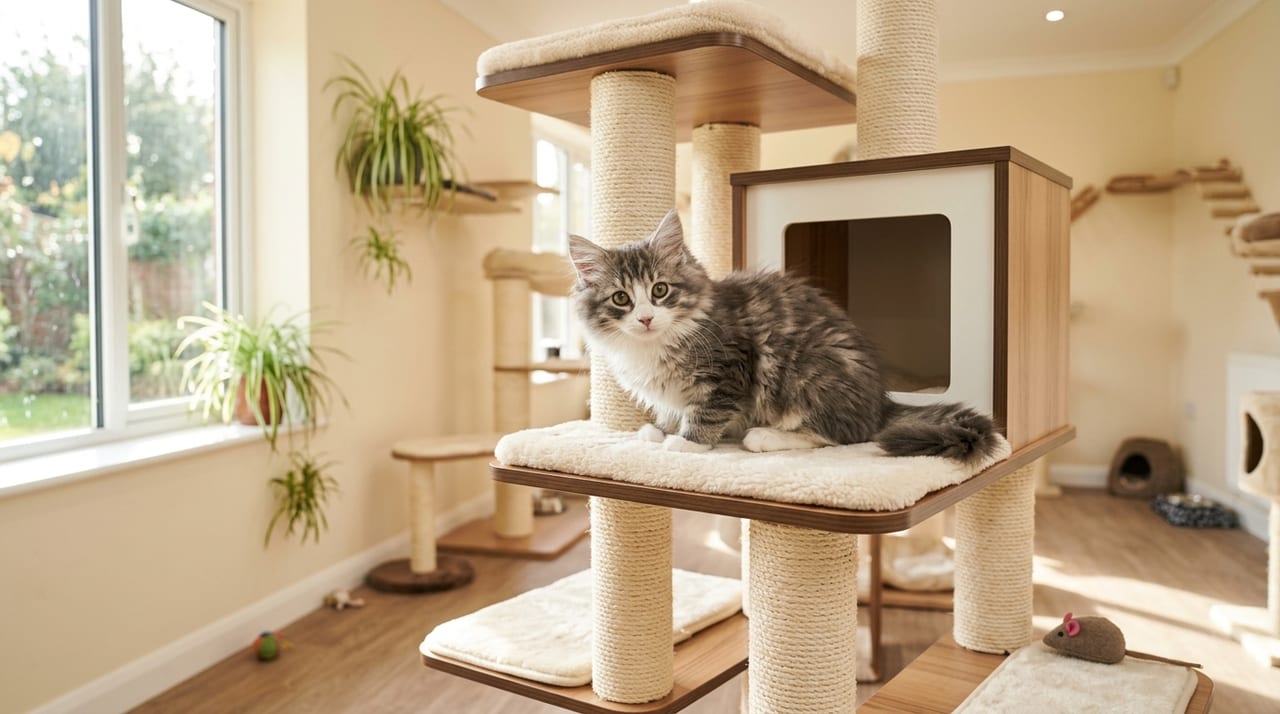
Consideration for multi-cat households is also necessary. Multiple-cat households, in particular, increase the risk of urinary problems in male cats. Ensure adequate feeding areas, resting areas, and elevated spaces (cat trees) so that the environment is not monopolized by any single cat.
Stabilizing the living environment is also important. Pay special attention before and after major changes such as moving, changes in family composition, or renovations. Using Feliway (pheromone products) and maintaining routines support emotional stability.
Regular exercise and playtime help relieve stress. Set aside 15–20 minutes daily for play and satisfy your cat's natural hunting instincts with interactive toys.
Neutering, Spaying, and Urinary Disease
While older views suggested that neutering in male cats might narrow the urethra, current research has not proven a direct causal relationship between FLUTD risk and neutering. Rather, neutered cats tend to adopt a more indoor lifestyle with reduced activity levels, making diet management and ensuring adequate exercise more important from the perspective of obesity prevention (obesity increases FLUTD risk).
Summary: Daily Observation and Coordination with Your Veterinarian Are the Best Prevention
In most cases, feline urinary diseases are preventable or can be kept from becoming serious with early treatment. The best strategy is to make daily litter box checks (monitoring urine volume, color, and frequency) a habit and combine them with a moisture-rich diet, a stress-free environment, and regular veterinary checkups. If you own a male cat, be sure to remember "no urination for 12 hours" as a red line requiring immediate attention. A healthy urinary system is directly linked to your cat's longevity and quality of life. When adopting from a breeder, it is also recommended that you ask about urinary disease risks specific to the breed beforehand.