Guide to Cat Sleep Behavior and Resting Place Habits | Understanding Cat Sleep: Why Cats Sleep 14-16 Hours a Day
A scientific explanation of why cats sleep 14-16 hours a day, sleep patterns, and how to choose sleeping places. This practical guide covers cats' habits of prioritizing safety, warmth, and height, signs of sleep changes indicating health status, and how to create a comfortable sleep environment.
Key Takeaways
A scientific explanation of why cats sleep 14-16 hours a day, sleep patterns, and how to choose sleeping places. This practical guide covers cats' habits of prioritizing safety, warmth, and height, signs of sleep changes indicating health status, and how to create a comfortable sleep environment.
Cats spend most of their day sleeping. Adult cats sleep for 14-16 hours, while kittens and senior cats may sleep even longer, sometimes approaching 20 hours. Many cat owners worry, wondering "Is my cat okay since it sleeps so much?" However, this is the cat's natural biological rhythm and is also a sign of good health. This article scientifically explains cat sleep patterns, habits, and how to choose sleeping places, supporting you in creating a comfortable sleep environment.
Why Do Cats Sleep So Much?
Cat ancestors were solitary hunting carnivores. The strategy of concentrating energy intensively in short hunting periods and resting their bodies to await the next prey during the remaining time was formed over a long evolutionary history. This "energy-efficient lifestyle" is inherited by modern house cats, and even when provided with adequate food as pets, their sleep duration remains unchanged.
Cat sleep has the following stages:
- Light sleep (dozing or polyphasic sleep): Accounts for 70-80% of total sleep and is sensitive to sounds. This is the stage when cats lie down with their ears twitching or eyes half-open. They maintain a state of readiness to wake and move immediately.
- Deep sleep (non-REM and REM sleep): Accounts for the remaining 20-30%. Cats are believed to dream during this stage, with their limbs twitching and whiskers trembling. During this stage, growth hormone is secreted and cell repair occurs.
Unlike human sleep, cats don't sleep in long blocks but follow a polyphasic pattern, repeating short "sleep sessions" multiple times throughout the day. Each sleep session ranges widely from 15 minutes to several hours, and it's known that cats gradually synchronize with their owner's daily rhythm.
How Cats Choose Sleeping Places and Their Habits
The main criteria cats use when choosing sleeping places are three: "safety," "warmth," and "height."
Security and Field of Vision
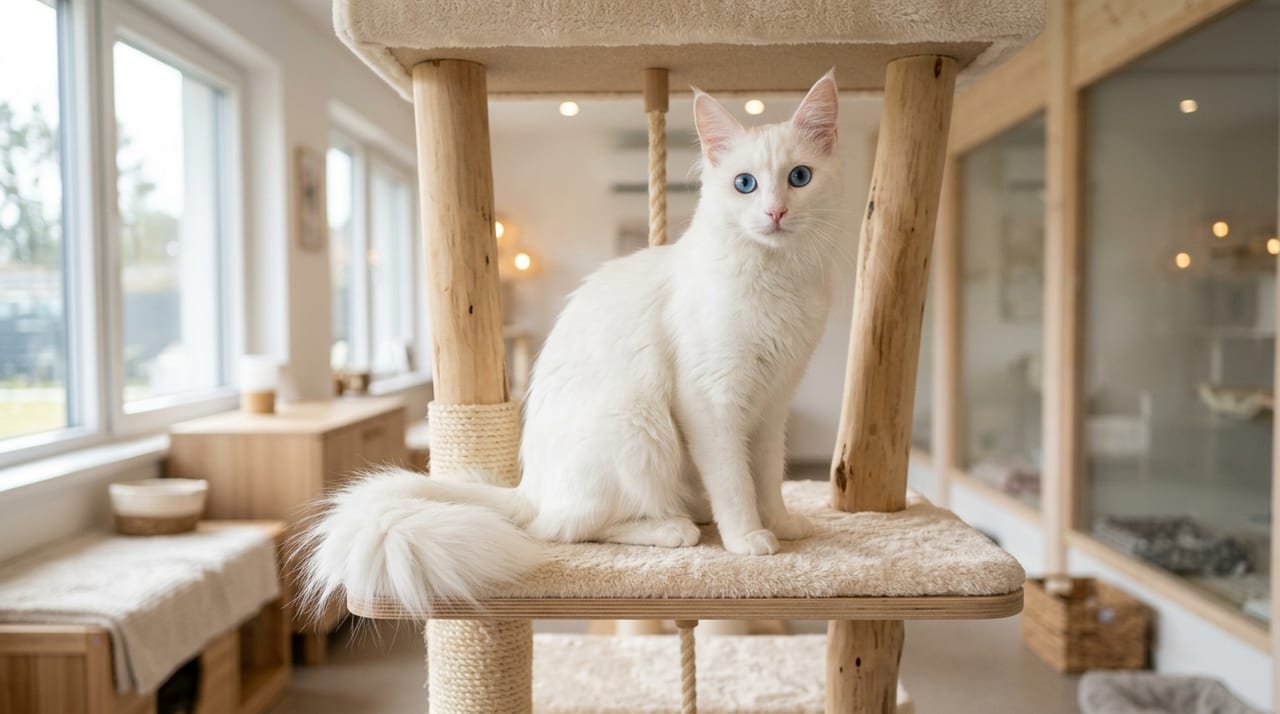
Even while sleeping, cats maintain their instinct to protect themselves from predators. They prefer places where they can have their back to a wall, dome-shaped beds surrounded on all sides, and areas under furniture—places where they're less likely to be caught off guard. On the other hand, elevated spots with a view of the entire room (the top of a cat tower, the top of the refrigerator, etc.) are also popular. High places provide cats with a sense of security because they can visually monitor their territory.
Warmth and Thermoregulation
Cats' thermoregulation is more sensitive than humans', with an optimal temperature of around 38-39°C (100-102°F), which is quite high. They seek warmth in sunny spots, on top of warm appliances, and beside their owner's body. It's natural for them to change their preferred sleeping places seasonally, moving to cool floors or concrete walls in summer. Cat heating mats and electric blankets (low mode) carry the risk of burns, so it's important to set them up in a way that allows cats to move freely.
Distance from Owners
Cats that have developed a strong bond often choose to sleep on their owner's bedding or near the pillow. This is a sign that the cat considers the human a "social partner." However, sleeping near the owner's head can worsen allergies and there's a small risk of accidental crushing during sleep movements, so creating a dedicated cat space at the foot of the bed is also an effective solution.
Creating Sleeping Places That Cats Will Love
Here are key tips for providing comfortable sleeping places for your cat:
Variety in height: By providing multiple resting spots at different heights—such as cat towers, wall shelves, and window sills—you create an environment where cats can choose based on their mood. For multi-cat households, the guideline is to have the number of cats plus one space.
Private enclosed spaces: Leave some "hiding places" such as commercial cat houses, paper bags, or cardboard boxes. These shelters are particularly important psychological supports when bringing a new cat home or after a move, during times of environmental change.
Material variety: By providing multiple materials with different textures—such as fleece, cotton, rattan, and marble boards—you allow cats to choose based on the season and their physical condition.
Sunbathing spot: Setting up a safe, sunny spot near a window helps with both vitamin D synthesis from UV rays and thermoregulation. However, be careful about heat stroke in summer and always ensure there's a shaded area to escape to.
Health Checks Through Sleep Changes
Changes in your cat's sleep pattern are important health indicators. Observe the following points regularly:
| Sign of Change | Possible Causes |
|---|---|
| Sudden significant increase in sleep time | Infection, pain, internal organ disease, anemia, hypothyroidism, etc. |
| Conversely, inability to sleep and restlessness | High blood pressure, hyperthyroidism, pain, strong stress |
| Avoiding previously favored spots | Anxiety about that location (memory of pain, competition with another cat) |
| Increased snoring or snuffling sounds | Upper respiratory infection, polyps, obesity |
| Sudden loud vocalization at night (nocturnal crying) | Cognitive dysfunction (CDS), high blood pressure, endocrine disease (especially in senior cats) |
In particular, if senior cats (age 10 and over) begin showing a reversal of their sleep-wake cycle or nighttime wandering, it's important to suspect feline cognitive dysfunction (CDS) and consult a veterinarian early.
Actions That Disrupt Cat Sleep
The following environmental factors can decrease your cat's sleep quality:
- Frequently picking up a sleeping cat: Suddenly moving a cat during deep sleep raises stress hormone (cortisol) levels. The basic rule is to wait until the cat comes to you on its own.
- Loud sounds and vibrations: Loud television, proximity to washing machines, hallways where children run around—noisy environments decrease sleep quality. It's ideal to establish a quiet "cat-only zone."
- Unilaterally changing sleeping spots: A favorite place is part of a cat's territory. Even when changing bed covers for laundry, maintain familiar scents by leaving a towel with the cat's scent. This helps preserve comfort.
Summary
Cat sleep is not mere "laziness" but a rational survival strategy born from evolutionary adaptation as a hunting animal. When owners correctly understand their cat's sleep habits, they can provide an appropriate environment and detect changes in health status early. Providing multiple sleeping places and ensuring safety, warmth, and privacy is one of the most fundamental forms of care that supports a cat's daily well-being. An environment where a cat can sleep deeply and securely becomes the foundation for a long and healthy life.