Complete Guide to Cat Scratching Habits and Scratcher Selection | Placement Locations, Materials, and Training Methods to Protect Furniture
Cat scratching is instinctive behavior. This guide thoroughly explains how to choose materials, shapes, and placement locations, as well as practical training methods to protect your furniture.
Key Takeaways
Cat scratching is instinctive behavior. This guide thoroughly explains how to choose materials, shapes, and placement locations, as well as practical training methods to protect your furniture.
Why Do Cats Scratch? The Nature of the Habit
Cat scratching is not a simple act done solely for "nail maintenance." It carries multiple biological and psychological meanings layered together, and is an essential instinctive behavior for cats.
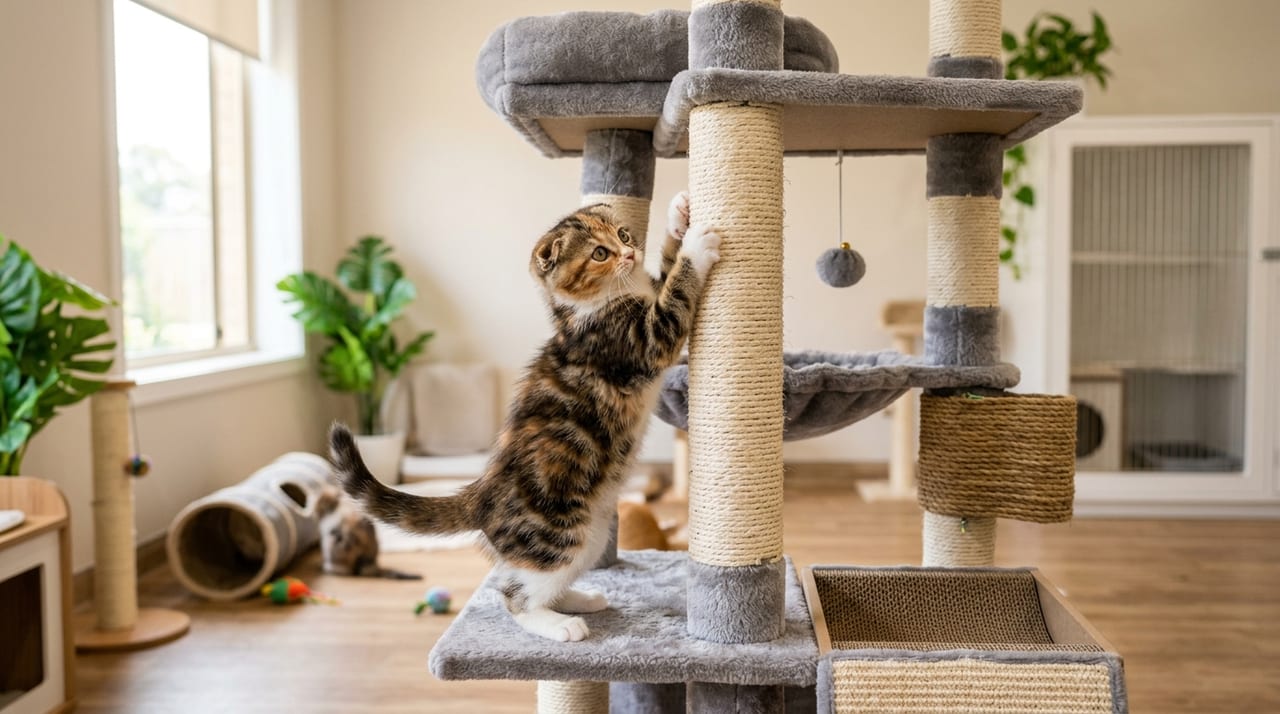
Cat claws have a double structure, with the sharp new claw underneath exposed as the old outer sheath is shed. Scratching helps facilitate this "shedding." At the same time, the motion of extending the front legs forward and scratching also serves as a full-body stretch, providing important muscle and joint care—especially crucial for indoor cats whose exercise is often limited.
Equally important, but often overlooked, is scratching's role as a marking behavior. Between the toe pads on a cat's front paws are scent glands, and during scratching, cats deposit pheromones onto objects. By combining visual marks (the scratches) with chemical signals (pheromones), cats leave a message in their environment that says "this is my territory."
Additionally, scratching often intensifies at emotionally heightened moments—after arriving home, after eating, after waking up—indicating scratching also serves as emotional release. Attempting to stop such a multifaceted behavior is virtually impossible. The most realistic approach for owners is to focus on a single goal: directing scratching to appropriate locations.
Choosing Scratcher Materials and Shapes
Commercial scratchers come in many combinations of materials and shapes. Since preferences vary greatly among cats, trying multiple types initially and observing their reactions is the quickest way to find what works.
Here's an overview of the main materials and their characteristics.
| Material | Characteristics | Suitable for |
|---|---|---|
| Sisal rope/jute | Coarse fibers provide natural satisfaction easily. Highly durable, low odor | A versatile option that suits most cats |
| Cardboard | Affordable and disposable. Many variations available | Cats that prefer softer textures |
| Carpet/fabric | Soft, comfortable texture | Cats that like fabric materials (note: may increase attraction to furniture) |
| Wood/bark | Natural materials. Wild-like texture | Cats with outdoor experience or strong instincts |
Shapes generally fall into two categories: "vertical" (standing scratchers) and "horizontal" (flat scratchers). If your cat targets vertical surfaces like walls or sofa arms, try a vertical scratcher first. If they prefer horizontal surfaces like floors or carpets, start with a horizontal scratcher. An incline-style scratcher at a 45-degree angle can provide both textures, making it a convenient option when preferences are still unclear.
For sizing, the scratcher should reach to the height or length a cat can achieve with their front legs fully extended. For adult cats, a height of 45 cm or more is the general standard. Lightweight, unstable products are often rejected by cats, so choosing one with a wide base that won't tip over is equally important.
Placement Location Determines Usage Rate
The primary reason scratchers go unused after purchase is incorrect placement. The key to success is understanding when and where cats want to scratch, then placing the scratcher in those locations.
The following locations tend to increase usage:
- Near sleeping areas: Cats tend to scratch as a stretch soon after waking. Simply placing a scratcher along their post-wake route can significantly increase usage.
- Along frequently traveled routes and doorways: Hallway corners and entrances where cats pass daily are high-traffic zones where territorial marking urges intensify.
- In rooms where you spend long periods: Cats sometimes use scratching to get their owner's attention. Always place at least one scratcher in the living room.
- Right in front of furniture already being scratched: Cats tend to return to spots they've already registered as "scratching places." Placing a scratcher directly beside damaged furniture makes the transition smoothest.
For multi-cat households, the guideline is "one scratcher per cat, plus one additional." Strong territorial cats may resist sharing a single scratcher, which can prevent subordinate cats from using it.
Practical Strategies for Protecting Furniture
Introducing a scratcher won't immediately stop furniture scratching. During the transition period, it's wise to simultaneously protect your furniture with additional measures.
Applying sticky tape or commercially available protective sheets to furniture is simple and effective. Most cats dislike the sticky, clingy texture and abandon the attempt after a few tries. Choosing clear products minimizes visual impact.
You can also temporarily cover sofa corners and similar areas with aluminum foil. Most cats dislike the crinkly texture and light reflection, and will avoid the area. This low-cost method is easy to try.
Silicone nail caps (soft claws) physically prevent scratching damage. Since some cats dislike them, acclimating kittens early makes application easier later. Remember they require periodic replacement.
Additionally, regularly rounding and trimming claw tips every 2–4 weeks is effective. Indoor cats especially don't naturally wear down their claws, so regular trimming becomes essential. Establishing this habit from kittenhood makes cats more tolerant as adults.
Correct Training Approaches and What Not to Do
Effectively guiding cat behavior in the right direction requires understanding exactly what to avoid and what to do.
What not to do: The most common mistakes are scolding sharply or spraying water when a cat scratches furniture. Cats have a different ability to link behavior with punishment than humans do, so scolding doesn't teach "furniture scratching is bad." Instead, they may become fearful of their owner or simply scratch in hidden places, making the problem worse.
Effective approaches involve "positive reinforcement"—immediately praising and rewarding your cat with treats or petting when they use the scratcher. Cats learn best from positive responses immediately following good behavior.
To strengthen attraction to the scratcher, try sprinkling catnip spray or powder on it. Also, "imitation prompting"—scratching the scratcher with your own fingers to demonstrate—is known to be particularly effective with kittens.
Application for Senior and Multi-Cat Households, and Health Indicators
Scratching environments should be adjusted based on your cat's age and the number of cats in the household.
Senior cats may find it painful to reach up and extend their front legs on vertical scratchers due to joint pain or declining muscle strength. Switching to horizontal or gently angled incline-style scratchers preserves their scratching instincts while reducing physical strain. If a senior cat suddenly stops scratching, consider consulting a veterinarian, as joint arthritis or nail disease could be underlying causes.
Furthermore, scratching frequency and intensity reflect a cat's mental health. Cats that scratch actively are generally psychologically fulfilled, while a sudden decrease in scratching can signal illness or stress. Developing a habit of observing your cat's daily scratching patterns allows you to detect changes in health early. Scratchers are not just tools for protecting furniture—they're also valuable instruments for monitoring your cat's health.